Best Risk Management Software in 2026: 9 Platforms Compared
By ToolNimba Editorial Team November 9, 2026 11 min read

- Top pick
 LogicGate Risk Cloud
No-code GRC for mid-market teams
Starting priceSee websiteCheck out LogicGate Risk CloudRead our review - Runner-up
 Resolver
Risk intelligence and incident workflows
Starting priceSee websiteCheck out ResolverRead our review - Also great
 ServiceNow GRC
Teams already on ServiceNow
Starting priceSee websiteCheck out ServiceNow GRCRead our review
How we researched this
We compared official pricing and feature pages, app store listings, privacy policies and public user reviews. Prices change, so check the provider's site before you pay.
Key takeaways
- Most enterprise risk platforms are quote only, so expect a demo and a written quote before you can compare totals.
- LogicGate and Onspring-style no-code platforms suit mid-market teams that want to configure workflows without heavy IT help.
- Archer and MetricStream suit large regulated organizations with complex control libraries and long implementations.
- Drata and Vanta-style compliance automation suit teams that need SOC 2 or ISO evidence fast, rather than a full GRC program.
- Run a pilot with your real risk register, since feature lists hide reporting gaps that only show up with your own data.
Quick comparison
| Name | Best for | Starting price | Free plan | |
|---|---|---|---|---|
| LogicGate Risk Cloud | No-code GRC for mid-market teams | See website | Free trial | Visit |
| Resolver | Risk intelligence and incident workflows | See website | Free trial | Visit |
| ServiceNow GRC | Teams already on ServiceNow | See website | Free trial | Visit |
 MetricStream | Large regulated risk programs | See website | No | Visit |
 Archer | Enterprise integrated risk management | See website | No | Visit |
 Riskonnect | Integrated risk across insurance and safety | See website | Free trial | Visit |
 AuditBoard | Audit, risk, and compliance in one suite | See website | Free trial | Visit |
 OneTrust | Privacy-led governance and risk | See website | Free trial | Visit |
 Drata | Fast compliance automation for SOC 2 and ISO | See website | Free trial | Visit |
The best risk management software
Risk management software tracks risks, controls, incidents, audits, and third-party vendors in one system, instead of scattered spreadsheets. Some platforms cover full governance, risk, and compliance programs, while others focus on compliance evidence or incident response. We compared official product pages, published pricing notes, and program coverage to build this list.
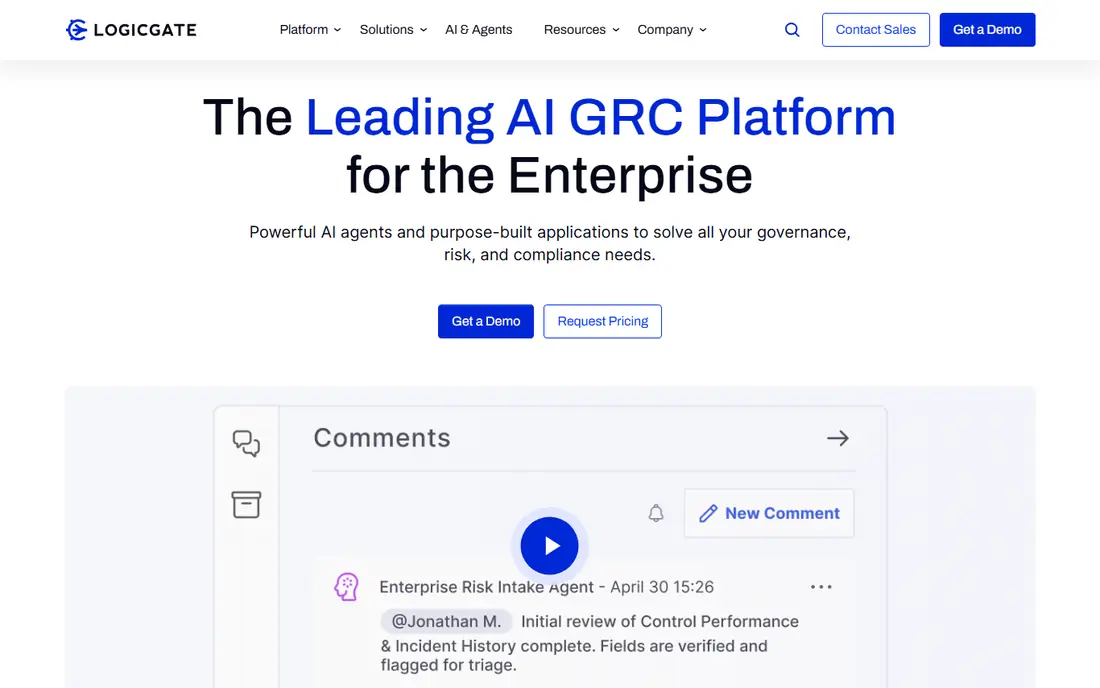
LogicGate Risk Cloud is a no-code governance, risk, and compliance platform that lets business users build risk registers, assessments, workflows, and reports without writing code. Prebuilt applications cover enterprise risk, third-party risk, cyber risk, audit, and compliance, with a graph database that links controls, assets, and risks. LogicGate is named a leader in recent analyst reports for GRC tools, and its platform data cites fast implementation compared with industry averages.
LogicGate suits mid-market teams and enterprises that want business owners to run risk programs without waiting on IT. The trade is reporting depth. Teams with complex board reporting needs should test dashboards and exports in a pilot. Pricing is quote only, with published comparisons noting starting figures near $1,000 or more per year before modules, so request a full quote.
- Drag and drop builder for risk workflows
- Prebuilt apps for enterprise risk, third-party risk, and audit
- Strong customer support record
- Pricing is quote only
- Standalone reporting can feel thin for complex board reports

Resolver helps security and risk leaders move from incidents to insights, with workflows for risk assessment, incident management, and reporting. More than 1,000 organizations use Resolver across health care, hospitals, academic institutions, critical infrastructure, manufacturing, hospitality, technology, financial services, and retail. The platform integrates with tools such as Okta, Slack, Jira, Microsoft Teams, and ServiceNow.
Resolver suits teams where incident response and risk reduction are linked, such as safety, security, and operational risk. It suits less well as a pure compliance evidence tool, where Drata or AuditBoard may move faster. Ask for a quote tied to your user count and modules, since published starting figures vary widely by source.
- Strong incident to insight workflow
- Used across health care, critical infrastructure, and finance
- Good integrations with common tools
- Pricing is quote only
- Some published comparisons list older starting figures that may not match a current quote
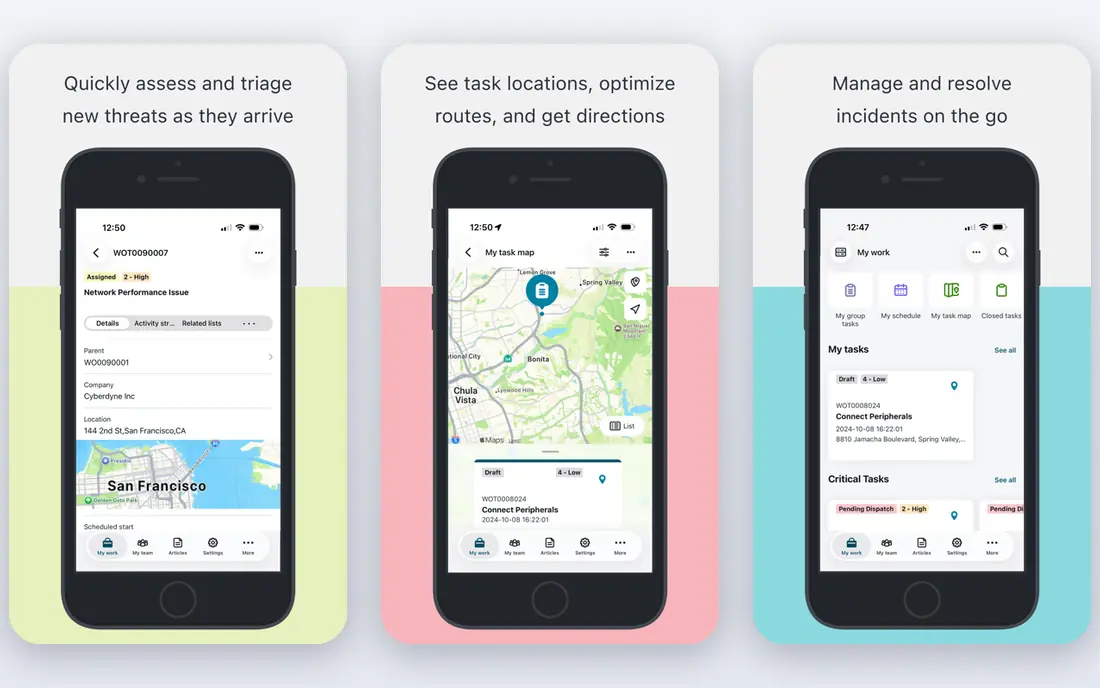
ServiceNow Governance, Risk, and Compliance brings policy and compliance, risk management, audit management, and vendor risk onto the ServiceNow workflow platform. Teams already using ServiceNow for IT service management gain shared workflows, approvals, and reporting, plus links between incidents, changes, and risks. The platform is widely used in large enterprises with complex IT estates.
ServiceNow GRC suits organizations already committed to ServiceNow, where a separate GRC tool would duplicate workflows. It suits less well for small teams, where the platform cost and implementation effort outweigh the benefits. Plan for a multi-month rollout and staff who can configure ServiceNow, or budget for a partner to do it.
- Risk, policy, audit, and vendor modules on one workflow platform
- Strong integration with IT service workflows
- Mature enterprise tooling
- Pricing is quote only
- Implementation typically takes months
- Best value requires ServiceNow skills in house
MetricStream offers enterprise governance, risk, and compliance software with modules for enterprise risk, operational risk, audit, policy, third-party risk, and regulatory compliance. Its federated data model and AI features are built for large, interconnected programs across banking, energy, health care, and other regulated industries. Published comparisons place MetricStream starting pricing near $75,000 per year, with final pricing by quote.
MetricStream suits large regulated organizations with complex control libraries and dedicated GRC staff. It suits less well for mid-market teams that want fast setup without consultants. If reporting is a priority, test ad-hoc reporting in a pilot, since users report that custom reports can be cumbersome outside standard views.
- Deep risk, audit, and compliance coverage for banking, energy, and health care
- AI and predictive analytics features
- Federated data model
- Quote only with high starting figures near $75,000 per year in comparisons
- Deeper changes often need IT or consultants
Archer, from RSA, is an integrated risk management platform used by large enterprises to manage enterprise risk, IT risk, third-party risk, business continuity, and audit. It offers a broad set of applications, control libraries, and reporting tools, with a long track record in regulated industries. Pricing is by quote and varies by applications, users, and deployment.
Archer suits enterprises that need a proven, broad platform and have staff to administer it. It suits less well for teams that want a light, no-code tool they can configure in weeks. Compare Archer with MetricStream on implementation time and admin effort, not just feature lists, since both can cover similar ground at different costs.
- Long standing enterprise risk platform
- Broad use cases from IT risk to third-party risk
- Strong control and policy libraries
- Quote only pricing
- Implementation and admin effort are significant
- Interface can feel heavy for small teams
Riskonnect provides integrated risk management software covering enterprise risk, claims administration, safety, business continuity, and third-party risk. It is widely used by organizations that manage insurable risk alongside operational risk, such as health care, manufacturing, and public sector bodies. The platform links risk, claims, and safety data for a fuller picture of total cost of risk.
Riskonnect suits organizations where insurance, claims, and safety sit alongside enterprise risk. It suits less well for a team that only needs a simple risk register, where a lighter tool will be faster and cheaper. Ask for a quote scoped to the modules you will use in year one, rather than the full suite.
- Covers enterprise risk, claims, safety, and insurance risk in one platform
- Strong for organizations with insurable risk
- Good analytics
- Quote only pricing
- Breadth can mean longer setup for teams that only need one risk area
AuditBoard offers a connected platform for audit, risk, and compliance, with modules for SOX management, internal audit, enterprise risk, and third-party risk. It is popular with audit and finance teams that need control testing, evidence collection, and reporting in one place. The interface is more modern than many older GRC platforms, which helps adoption among business users.
AuditBoard suits mid-market to enterprise teams where audit and risk must stay connected, especially for SOX programs. It suits less well for teams that only need incident tracking or compliance evidence, where a narrower tool may cost less. Demo control testing and reporting with your own framework before you commit.
- Connected audit, risk, and compliance modules
- Strong for SOX and internal audit teams
- Modern interface compared with older GRC tools
- Quote only pricing
- Full suite cost rises with modules
- Smaller teams may not need the full audit depth
OneTrust began in privacy management and now covers governance, risk, and compliance, including third-party risk, AI governance, and ethics and compliance. It offers regulatory content and workflows for privacy programs across many jurisdictions, plus risk assessment and vendor tools. Pricing is by quote and varies by modules and data volumes.
OneTrust suits organizations where privacy, AI governance, and vendor risk are central, such as global companies under multiple privacy laws. It suits less well as a first risk register for a team with no privacy program, where LogicGate or Resolver may be simpler. Scope the modules to your top two programs first, then expand.
- Strong privacy, AI governance, and third-party risk coverage
- Broad regulatory content
- Good for global privacy programs
- Quote only pricing
- Breadth across privacy and GRC can complicate scoping
- Implementation needs clear priorities
Drata is a compliance automation platform that connects to your cloud tools, collects evidence continuously, and maps controls to frameworks such as SOC 2, ISO 27001, and HIPAA. It helps startups and mid-market companies prepare for audits without building a full GRC program first. Setup is faster than enterprise GRC suites, with prebuilt frameworks and auditor sharing tools.
Drata suits teams whose main goal is passing a compliance audit on a deadline. It suits less well for organizations that need deep enterprise risk modeling, scenario analysis, or complex operational risk workflows. Use Drata for compliance evidence, and pair it with a risk platform if enterprise risk becomes a separate program later.
- Automates evidence collection for SOC 2, ISO 27001, and HIPAA
- Fast setup compared with full GRC suites
- Clear auditor workflows
- Not a full enterprise risk platform
- Risk depth is lighter than Archer or MetricStream
- Pricing is quote only
How we picked these
We compared official product pages, program coverage, and published pricing notes for governance, risk, and compliance platforms. We kept platforms that manage risks, controls, and assessments as a core function, not just single-purpose audit or privacy tools. We included both full GRC suites and compliance automation, because buyers often compare them even though they solve different problems. Where pricing was not published, we wrote See website.
What to check before you buy
Start with your risk register and your frameworks. List the risks, controls, and regulations you must cover in year one, then test each shortlisted platform with that real data. A demo with sample risks hides reporting gaps, permission complexity, and import effort. Check how evidence, assessments, and incidents flow between modules, since disconnected modules recreate spreadsheet work.
Also check total cost and timeline. Ask for implementation fees, admin effort, training, and renewal terms in writing, since enterprise GRC pricing is quote only and renewals can rise. Plan for the person who will own the platform day to day, because even a no-code tool needs an owner to keep risks, controls, and reports current.
Sources
- https://www.logicgate.com
- https://www.resolver.com
- https://www.servicenow.com
- https://www.metricstream.com
- https://www.archerirm.com
- https://www.riskonnect.com
- https://www.auditboard.com
- https://www.onetrust.com
- https://www.drata.com
- https://rankite.com/blog/top-10-risk-management-software
- https://www.selecthub.com/grc-software-tools/logicgate-vs-metricstream/
Frequently asked questions
What is the best risk management software for a small business?
LogicGate and Drata are the strongest small to mid-market picks, depending on your goal. LogicGate suits teams that want a configurable risk and compliance platform, while Drata suits teams that need SOC 2 or ISO evidence fast. Enterprise suites such as Archer and MetricStream are usually too heavy and costly for small teams.
What is the best risk management platform for enterprises?
Archer, MetricStream, and ServiceNow GRC lead for large enterprises with complex control libraries and global programs. LogicGate also serves enterprises that want no-code configuration. The right pick depends on whether you already use ServiceNow, how deep your control libraries are, and how much admin staff you can dedicate.
How much does risk management software cost?
Most enterprise platforms are quote only, with published comparisons noting MetricStream starting near $75,000 per year and LogicGate starting near $1,000 or more before modules. Drata, AuditBoard, Resolver, and others also price by quote. Request a written quote for your users, modules, and implementation before comparing totals.
What is the difference between GRC software and risk management software?
Risk management software focuses on identifying, assessing, and treating risks. GRC software covers governance, risk, and compliance together, including policies, audits, and controls. Many products do both, but compliance automation tools such as Drata focus more on audit evidence than on enterprise risk modeling. Match the product to the program you actually run.
Does risk management software replace spreadsheets?
It can, when the platform covers your risks, controls, and reporting in one place. It fails when teams buy a broad suite but only use one module, leaving the rest of the work in spreadsheets. Pilot with your real register and reports, and only retire spreadsheets once the platform proves it can produce the reports your board and auditors need.
Which risk management tool is best for third-party risk?
LogicGate, Archer, MetricStream, and OneTrust all offer third-party risk modules with vendor assessments and monitoring. OneTrust stands out where privacy and AI vendor risk matter, while LogicGate suits teams that want configurable vendor workflows. Compare assessment templates, monitoring depth, and integration with your vendor list before you decide.