Best Sales Enablement Tools in 2026: 9 Tools Compared
By ToolNimba Editorial Team November 1, 2026 10 min read

- Top pick
 Seismic
Large enterprises with big content libraries
Starting priceSee websiteCheck out SeismicRead our review - Runner-up
 Highspot by Seismic
Content, plays, and guidance during live deals
Starting priceSee websiteCheck out Highspot by SeismicRead our review - Also great
 Showpad
Field sales teams presenting in person
Starting priceSee websiteCheck out ShowpadRead our review
How we researched this
We compared official pricing and feature pages, app store listings, privacy policies and public user reviews. Prices change, so check the provider's site before you pay.
Key takeaways
- Seismic and Highspot now sit under one roof after their 2026 merger, so buyers should ask which product line a quote actually covers.
- Most dedicated enablement platforms hide pricing behind a demo, which makes the total contract, not the headline seat price, the number that matters.
- HubSpot Sales Hub is the clearest low-cost entry point for small teams that already live in a CRM.
- Spekit and Dock suit teams that want enablement inside daily workflows or buyer-facing deal rooms without a heavy enterprise rollout.
- Coaching-led tools such as Gong Enable and Mindtickle fit teams whose main gap is rep readiness, not content storage.
Quick comparison
| Name | Best for | Starting price | Free plan | |
|---|---|---|---|---|
| Seismic | Large enterprises with big content libraries | See website | No | Visit |
| Highspot by Seismic | Content, plays, and guidance during live deals | See website | No | Visit |
| Showpad | Field sales teams presenting in person | See website | No | Visit |
 Mindtickle | Onboarding, certification, and AI role play | See website | No | Visit |
 Allego | Video coaching for large, distributed teams | See website | No | Visit |
 Spekit | Guidance inside Salesforce and other daily tools | See website | No | Visit |
 HubSpot Sales Hub | Enablement inside your CRM | $20 per seat per month | Yes | Visit |
 Gong Enable | Coaching built from recorded calls | See website | No | Visit |
 Dock | Buyer-facing deal rooms | See website | Yes | Visit |
The best sales enablement tools
Sales enablement tools help reps find the right content, follow the right play, and learn the right skills without digging through shared drives. We compared official feature pages, pricing pages, and public reviews to build this list.
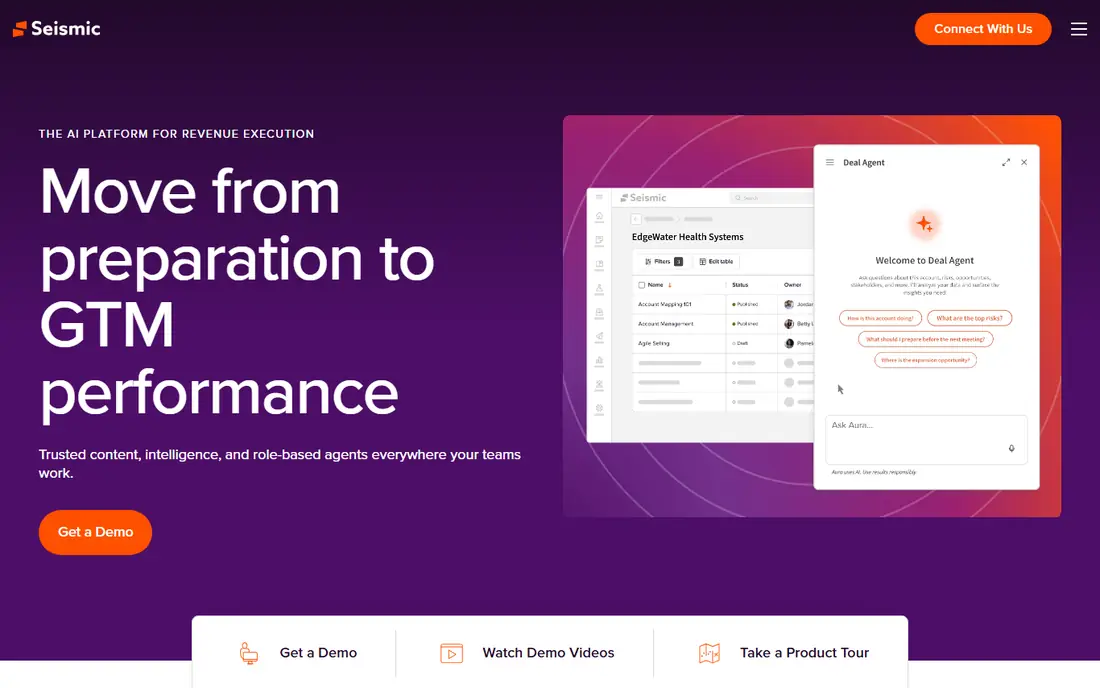
Seismic is the enterprise workhorse of this list. Its strength is governed content: teams can control versions, approvals, and permissions across thousands of assets, then personalize decks and proposals with live CRM data through features such as LiveDocs. For a company in financial services or life sciences, that control is often the whole point.
The catch is scale and cost. Seismic does not publish list pricing, and public estimates put annual contracts well into five or six figures for larger deployments. Smaller teams will find the setup effort hard to justify. If your library is small and your reps already find what they need, Seismic is more platform than you need.
- Strong content governance and personalization
- Deep CRM integrations
- Built for regulated industries
- Pricing is quote-based and often enterprise-sized
- Implementation can take months
Highspot by Seismic
Best for: Content, plays, and guidance during live deals
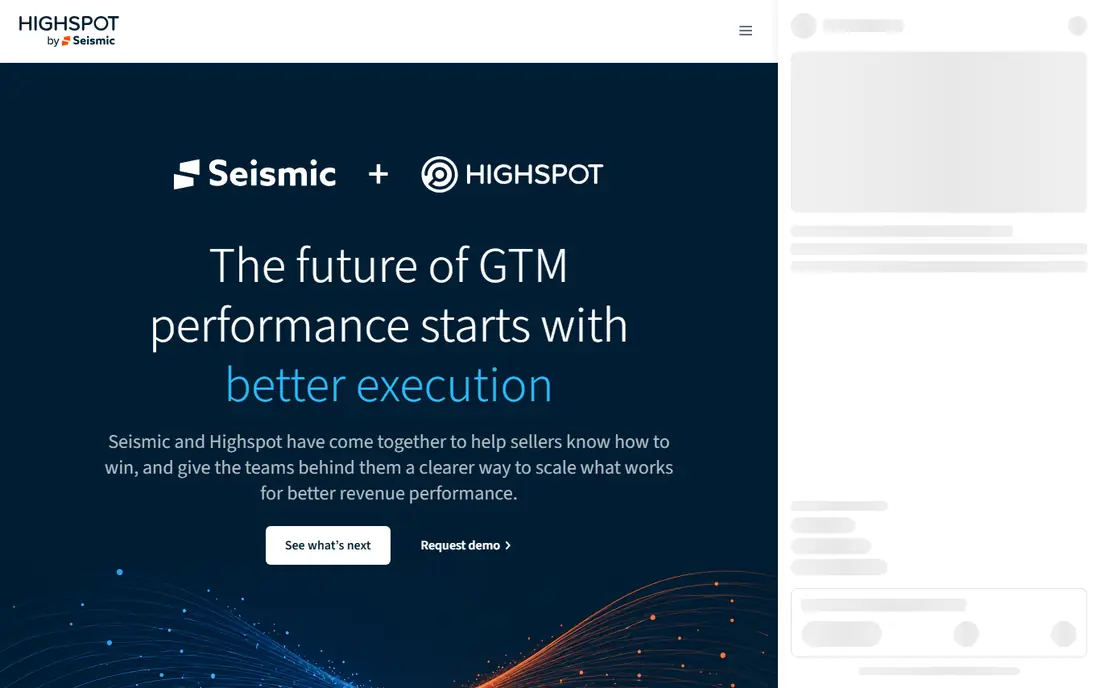
Highspot has long been known for making content easy to find and linking it to how a deal should be run. Reps open curated collections for a persona or deal stage, and managers can see which pages a buyer actually spent time on. That combination of content and coaching in one place is why mid-market and enterprise teams kept shortlisting it.
The big change in 2026 is that Seismic completed its merger with Highspot, and Highspot now sells as Highspot by Seismic. Buyers should ask directly whether they are buying the Highspot product line, the Seismic platform, or a combined package. Pricing remains quote-based, so budget for a sales-led process and a minimum seat count.
- AI-guided content recommendations
- Training tied to sales plays
- Clear buyer engagement analytics
- Now part of Seismic, so the roadmap is in transition
- Pricing is quote-based
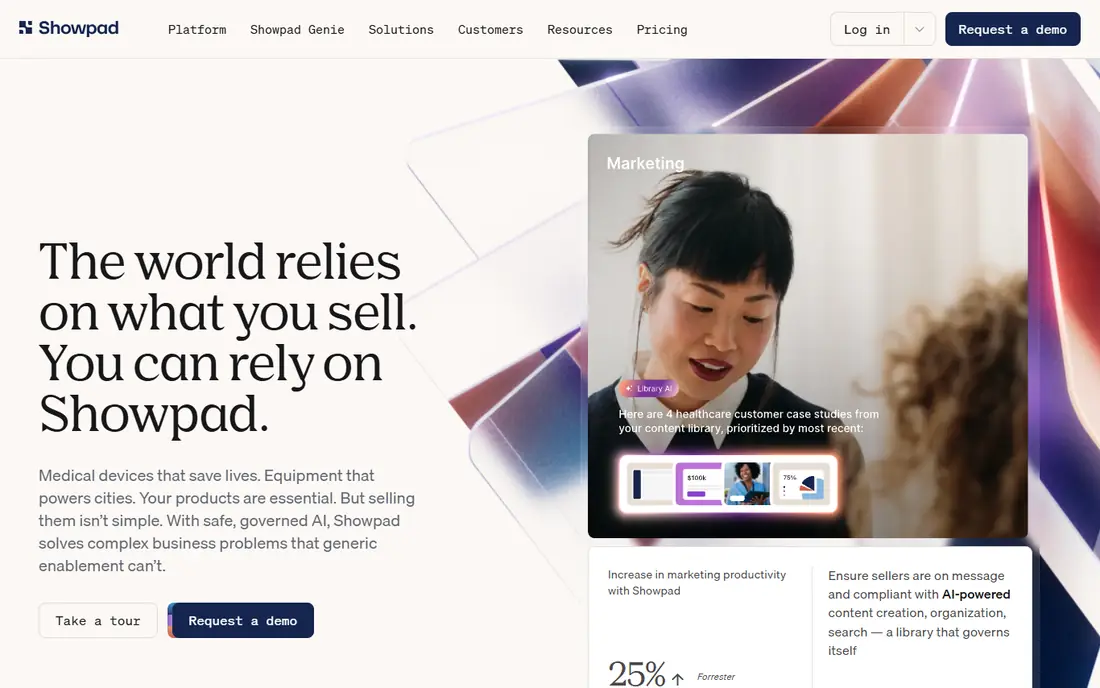
Showpad is built for reps who meet buyers face to face. Its mobile app puts approved content, presentations, and shared spaces in one place, so a rep in a plant, clinic, or showroom is not hunting through email attachments. Managers get engagement data on what was shared and viewed after the meeting.
That field-first design is also its limit. Teams that sell entirely over video calls may not need Showpad's offline and mobile strengths as much, and they may get similar content features for less elsewhere. Pricing is quote-based, so expect a demo and a conversation about seat counts before you see a number.
- Strong mobile experience for in-person selling
- Buyer engagement tracking
- Built-in micro-learning
- Pricing is quote-based
- Less suited to teams that only sell remotely
Mindtickle starts from a different question than Seismic: are your reps actually ready? It combines onboarding paths, certifications, AI role play, and coaching with analytics that tie readiness to performance. Managers can see skill gaps across a team instead of guessing from win rates alone.
That depth comes with a heavier setup than a content-only tool. You need someone to design paths and keep coaching programs current, or the platform becomes an expensive course library. For teams with high hiring volume or long ramp times, that investment usually pays back. For a small, stable team, it may be overkill.
- Strong readiness analytics
- AI role play and coaching
- Structured onboarding paths
- Pricing is quote-based
- Heavier than a simple content library
Allego blends learning, content, and coaching, with video practice at its center. Reps record pitches, get AI-assisted and manager feedback, and build confidence before they face a real buyer. It is a natural fit for distributed teams and regulated industries where consistent messaging matters.
The trade-off is commitment. Allego pricing is contract-based, often multiyear, and the platform rewards teams that run coaching as a regular habit. If managers will not review practice videos or run programs, much of the value sits unused. Ask for a pilot with a real team before signing a long term.
- Video-based practice and feedback
- Content and coaching in one platform
- Strong in regulated industries
- Pricing is quote-based and usually multiyear
- Broad feature set takes time to adopt
Spekit takes the opposite approach to the portal model. Instead of asking reps to open another system, it delivers governed answers, playbooks, and content inside Salesforce, Slack, and the browser through an extension. Its AI Sidekick can answer deal-specific questions from approved material, which cuts down on side-channel questions to managers.
That in-flow design is a real advantage for adoption, since reps do not have to change where they work. The downside is that teams looking for a single, polished content hub may find Spekit feels more like a layer across tools than a destination. Pricing is quote-based, though public estimates put it in the tens of dollars per user per month range for mid-market teams.
- Answers and guidance surface inside CRM and browser workflows
- Lighter setup than legacy platforms
- AI sidekick for in-the-moment help
- Pricing is quote-based
- Less of a traditional content portal for teams that want one
HubSpot Sales Hub is the most practical starting point on this list for small businesses and startups. The free tier covers core CRM tools, and the Starter plan at $20 per seat per month adds the basics many teams need first: email templates, sequences, and deal tracking. Because enablement lives inside the CRM, reps do not juggle a second login.
The honest limit is depth. HubSpot will not replace a dedicated enterprise content governance platform or a full coaching suite. Teams that outgrow it usually keep HubSpot as the CRM and add a specialist tool later. That is a sensible path, and it keeps early costs low while you learn what your team actually uses.
- Free CRM tools to start
- Sequences, templates, and playbooks in one place
- Easy for small teams to adopt
- Full enablement depth requires higher tiers
- Best value if you already use HubSpot
Gong Enable, launched in early 2026, builds coaching from the calls a team already records in Gong. Managers can create training from real conversations, run AI role play, and spot deal risks without relying on generic scripts. For teams already on Gong, this is a natural extension rather than a new system to learn.
As a standalone buy, the case is weaker. Gong Enable works best when it can draw on a library of recorded calls, and pricing is quote-based as an add-on. Teams without Gong should compare it against Mindtickle or Allego first, and weigh whether they also want Gong's conversation intelligence or only the coaching piece.
- Coaching grounded in real customer conversations
- AI trainers and deal insights
- Strong for existing Gong customers
- Pricing is quote-based
- Best value as an add-on to Gong, not a standalone purchase
Dock focuses on the buyer side of enablement. Instead of only helping reps internally, it gives buyers a single shared workspace with content, next steps, onboarding checklists, and mutual action plans. That clarity can shorten deals, especially when several stakeholders need to stay aligned.
Dock is also one of the fastest tools here to try, with a free tier and setup measured in days rather than months. The limit is scope: it will not replace the governance, training, and analytics of a full enterprise platform. Use Dock when your bottleneck is buyer confusion and deal coordination, and pair it with a content or coaching tool if those are separate gaps.
- Free tier to start
- Deal rooms, onboarding, and content in one shared space
- Fast to set up
- Not a full enterprise content governance platform
- Pricing scales with team size
How we picked these
We compared official feature and pricing pages, product announcements about the Seismic and Highspot merger and the Gong Enable launch, and public reviews for each platform. We favored tools that are actively sold and supported in 2026, cover at least one core enablement job well (content, readiness, coaching, or buyer engagement), and serve a distinct team size or selling style. Where vendors do not publish pricing, we say so instead of repeating a third-party estimate as a fact.
What to check before you sign
Start by naming the single problem you are solving. If reps cannot find content, shortlist Seismic, Highspot, and Spekit. If new hires take too long to ramp, look at Mindtickle and Allego first. If deals stall after the first call, a buyer workspace such as Dock may matter more than another content library.
Budget for the full contract
Ask what is included in the quote: implementation, migration, training, support, and minimum seats. Several platforms on this list charge for services on top of licenses, and multiyear terms are common. A pilot with one real sales team, using your own content, tells you more than a vendor demo with sample data.
Test adoption, not just features
The best platform is the one reps open every day. Check mobile access for field teams, CRM integration for office teams, and how long it takes a new rep to find and share an asset. If a tool needs a dedicated admin to stay useful, make sure you have that person before you buy.
Sources
- https://www.seismic.com
- https://www.highspot.com
- https://www.showpad.com
- https://www.mindtickle.com
- https://www.allego.com
- https://www.spekit.com
- https://www.hubspot.com
- https://www.gong.io
- https://www.dock.us
- https://tldv.io/blog/sales-enablement/
- https://www.mutinyhq.com/blog/the-best-sales-enablement-tools-in-2026-a-buyer-s-guide-for-b2b-sales-teams