Best Search Visibility Tracking Tools in 2026: 9 Tools Compared
By ToolNimba Editorial Team November 1, 2026 10 min read

- Top pick
 Semrush
All-in-one SEO tracking and research
Starting price$139.95 per monthCheck out SemrushRead our review - Runner-up
 Ahrefs
Rank tracking plus backlink research
Starting price$129 per monthCheck out AhrefsRead our review - Also great
 SE Ranking
Most keywords per dollar in a suite
Starting price$129 per monthCheck out SE RankingRead our review
How we researched this
We compared official pricing and feature pages, app store listings, privacy policies and public user reviews. Prices change, so check the provider's site before you pay.
Key takeaways
- Google Search Console is free and essential, but it only covers your own site, so pair it with a tracker for competitors.
- SE Ranking offers the most tracked keywords per dollar in a full SEO suite, with 2,000 daily checks on its Core plan.
- AccuRanker is the specialist pick for speed and precision, with on-demand refreshes that agencies value on client calls.
- Ahrefs and Semrush suit teams that want rank tracking plus research, audits, and backlinks in one login.
- AI Overviews and AI Mode visibility is now a deciding feature, so check whether a tracker reports those results or only classic rankings.
Quick comparison
| Name | Best for | Starting price | Free plan | |
|---|---|---|---|---|
| Semrush | All-in-one SEO tracking and research | $139.95 per month | No | Visit |
| Ahrefs | Rank tracking plus backlink research | $129 per month | No | Visit |
| SE Ranking | Most keywords per dollar in a suite | $129 per month | No | Visit |
 AccuRanker | Fast, precise dedicated tracking | See website | No | Visit |
 Nightwatch | Agencies wanting classic plus AI tracking | $39 per month | No | Visit |
 Moz Pro | Small teams and Domain Authority workflows | $49 per month | No | Visit |
 Mangools SERPWatcher | Budget tracking for single sites | $29.90 per month | No | Visit |
 Wincher | Simple daily tracking for freelancers | $29 per month | Yes | Visit |
 Google Search Console | Free first-party data for your own site | Free | Yes | Visit |
The best search visibility tracking tools
Search visibility tracking means knowing where your pages rank, which SERP features you win, and whether AI Overviews or AI answers mention you. We compared official pricing pages and recent rank tracking comparisons to build this list, focusing on tools that are actively sold and updated in 2026.
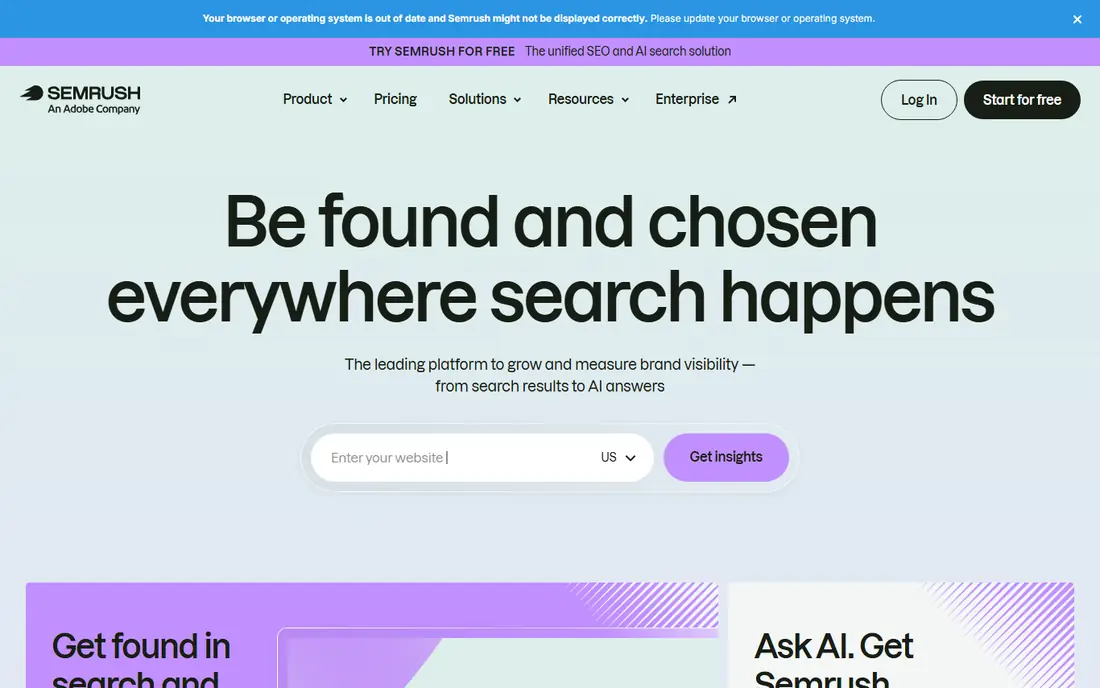
Semrush is the default all-in-one choice for SEO teams. Position tracking sits alongside site audits, keyword research, backlink data, and competitor analysis, so a ranking change can be investigated without switching tools. AI Overview visibility is reported as a SERP feature, which matters now that AI answers take clicks from classic results.
The entry plan at $139.95 per month tracks 500 keywords, which is enough for a single site but thin for an agency. Teams that need AI Mode tracking or larger keyword sets should budget for add-ons and higher tiers. If you already use Semrush for research, its tracker is the path of least resistance.
- Daily rank tracking plus audits, keyword research, and competitor data
- AI Overview visibility as a SERP feature
- Strong reporting
- Entry plan tracks 500 keywords
- AI Mode tracking needs an add-on
- Price rises with projects and users
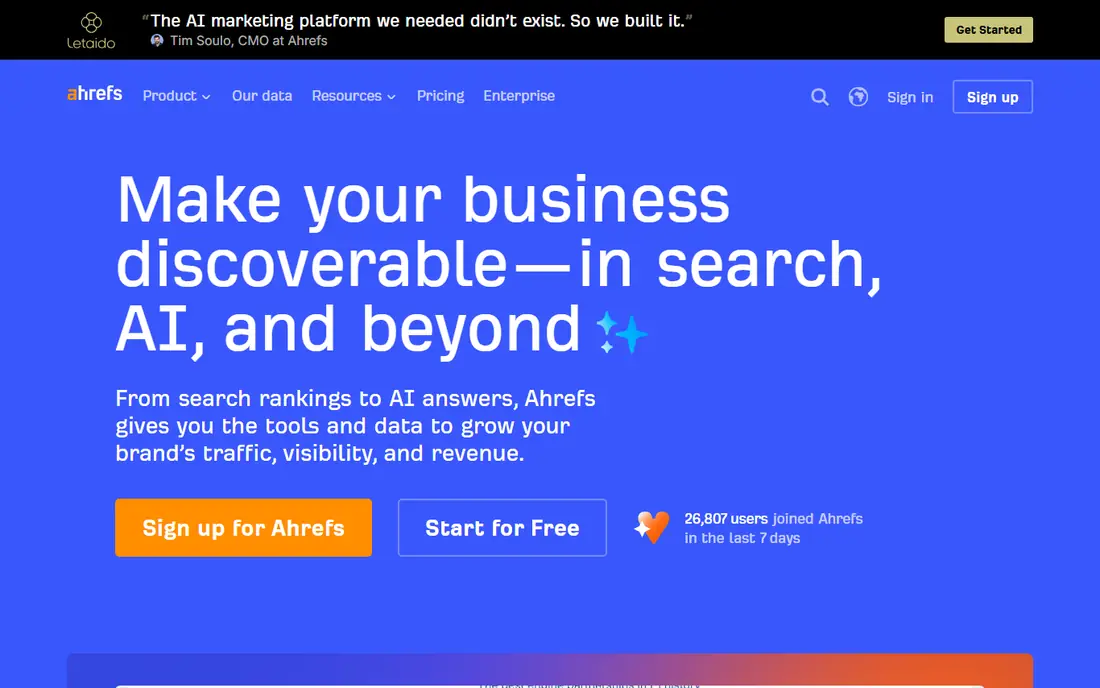
Ahrefs is the pick for link-focused SEO teams. Its rank tracker benefits from the same large databases that power its backlink and keyword tools, and SERP snapshots help explain why a ranking changed. For teams that build links and content together, that combination is hard to beat.
The limits are update frequency and entry allowances. Rank tracking updates weekly by default, not daily, and the $29 per month Starter plan tracks only 50 keywords. The Lite plan at $129 per month raises that to 750 keywords. If daily movement matters to you, check the update settings and plan limits before buying.
- Large backlink and keyword databases
- SERP snapshots
- AI visibility reported as a SERP feature
- Weekly rank updates by default on all plans
- Starter plan tracks only 50 keywords
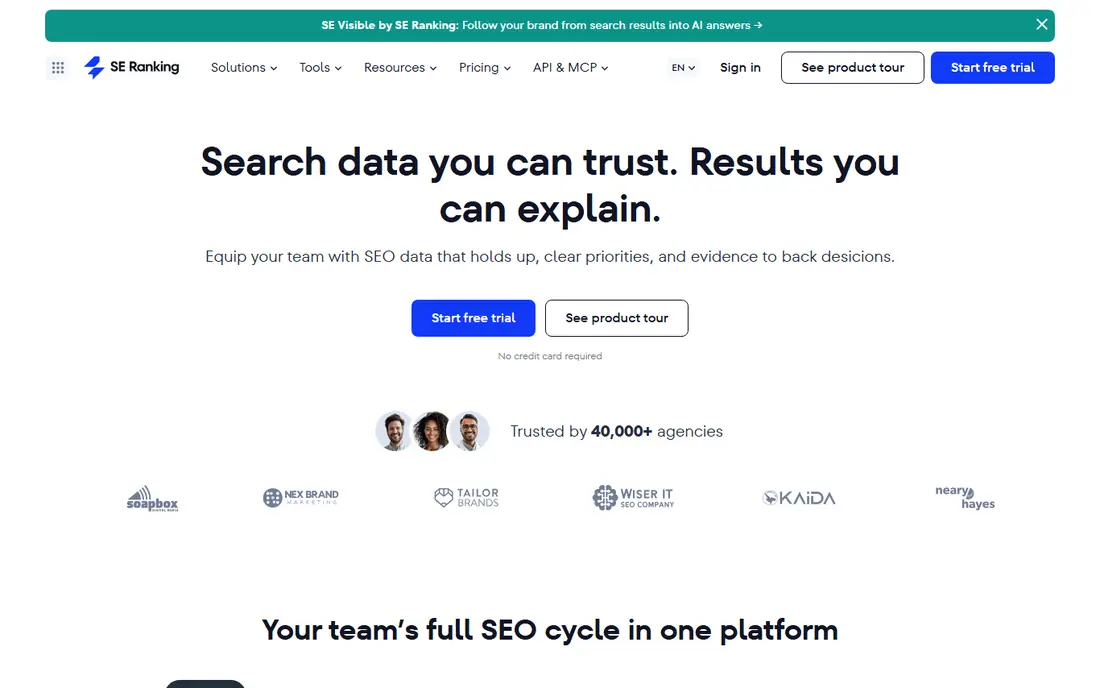
SE Ranking wins on unit cost. The Core plan at $129 per month, or $103.20 per month billed annually, includes 2,000 keywords checked daily, plus site audits, backlink monitoring, and AI search visibility across ChatGPT, Perplexity, and Google AI Overviews. For agencies and multi-site owners, that allowance is the headline.
The trade-off is focus. SE Ranking is a full suite, not a specialist tracker, so its interface and reporting are broader and busier than AccuRanker's. AI visibility may also require an add-on depending on the plan. If you want one login for SEO plus generous tracking, SE Ranking is the value pick.
- 2,000 keywords checked daily on Core
- Site audit and backlink monitoring included
- AI search visibility available
- AI visibility can carry an add-on fee
- Interface is busier than a dedicated tracker
AccuRanker does one job and does it fast. When a client asks why a money keyword moved, you can refresh it on demand during the call instead of waiting for the next scheduled check. SERP feature tracking is deep, and unlimited users and domains on every plan suit agencies with many clients.
That precision costs more than a suite tracker for the same keyword count, and you get no site audit or backlink index in return. Recent comparisons put the Professional plan around $224 per month for 2,000 keywords, though older sources list lower figures, so check the current pricing page. Buy AccuRanker when speed and accuracy are the job, not when you need an all-in-one suite.
- On-demand refreshes on any keyword
- Deep SERP feature tracking
- Unlimited users and domains on every plan
- No free plan
- Specialist price with no audit or backlink suite included
- Recent pricing varies by source
Nightwatch bridges classic SEO and AI visibility in one dashboard. It tracks Google rankings alongside AI engine prompts, adds local tracking, and produces visual reports that agencies can share with clients. On-demand refreshes help when a ranking moves and you need a fresh check.
Entry pricing is listed from $39 per month in some comparisons, though newer plan pages show higher starter prices in euros, so confirm the current figure for your region. AI prompt allowances are also limited on lower tiers. For agencies that want one login for Google and AI tracking without paying for two tools, Nightwatch is a strong middle ground.
- Traditional rank tracking plus AI search tracking
- Local tracking and visual reports
- On-demand refreshes
- Pricing varies by plan and currency
- AI prompt allowances are limited on entry tiers
Moz Pro suits small businesses and teams that already think in Moz metrics. Domain Authority gives a quick, if imperfect, sense of a site's competitive strength, and Link Explorer plus local tools round out a practical SEO workflow. AI Overviews by keyword reporting keeps the tracker current with how search results now look.
The Starter plan at $49 per month and Standard at $99 per month track fewer keywords than SE Ranking at a similar price, and the tracker itself is less deep than AccuRanker or Nightwatch. Choose Moz when you value its metrics and workflow over raw keyword volume.
- Familiar Domain Authority metric
- Link Explorer and local tools
- AI Overviews by keyword reporting
- Smaller keyword allowances than SE Ranking
- Tracking depth is thinner than specialist tools
Mangools bundles SERPWatcher with KWFinder and three other tools, starting at $29.90 per month billed annually. That bundle makes it a good budget pick for a single site: you get rank tracking plus keyword research for less than a suite plan. The Performance Index gives a simple, at-a-glance view of whether your rankings are rising or falling.
The allowance is the limit. The Basic plan tracks 200 keywords daily, and counting desktop and mobile separately doubles usage, so agencies will outgrow it fast. For a single site with a focused keyword list you can actually act on, 200 keywords is usually enough.
- Low price with KWFinder and other tools bundled
- Simple Performance Index
- Daily tracking
- Basic plan tracks only 200 keywords
- Desktop plus mobile on the same term counts double
Wincher is the simplest tracker on this list, and that is its appeal. It tracks rankings daily, shows landing page insights, and offers a limited free plan so freelancers and small site owners can test it without paying. The interface stays out of the way, which suits owners who check rankings weekly rather than daily.
The trade-off is depth. Wincher lacks the audit, backlink, and AI visibility breadth of the suites above, and its AI Overview coverage is not clearly stated on its pages. Use it when you want a clean, affordable daily tracker for a small portfolio, not when you need a full SEO platform.
- Simple daily tracking
- Limited free plan to test
- Landing page insights
- Fewer features than full suites
- AI Overview tracking is not clearly stated
Google Search Console
Best for: Free first-party data for your own site
Google Search Console is the baseline every site owner should use, and it costs nothing. It reports actual clicks, impressions, and average positions for your own site, with 16 months of history, and it now includes impressions from AI Overviews and AI Mode. No third-party tool can replace that first-party data.
The limit is scope. Search Console only covers sites you verify, so it cannot track competitors or estimate their traffic. Data also lags by 2 to 3 days. Use it as the foundation, then add a paid tracker from this list when you need competitor data, daily updates, or local precision.
- Free official Google data on clicks, impressions, and positions
- 16 months of history
- AI Overviews and AI Mode impressions included
- Only covers your own verified sites
- No competitor tracking
- Data is typically 2 to 3 days behind
How we picked these
We compared official pricing pages and recent rank tracking comparisons, favoring tools that track daily or weekly rankings, report SERP features, and are actively sold in 2026. We included a free baseline, budget options, full suites, and a dedicated specialist, and we noted where AI Overview and AI Mode coverage is included, an add-on, or unclear. Prices change often, so confirm allowances and update frequency on the vendor page before buying.
What to check before you buy
Start by counting keywords the way the vendor counts them. Some tools count desktop and mobile separately, some count each location separately, and some cap projects or domains. A plan that looks generous can shrink fast once those rules apply to your real keyword list.
Decide how fresh your data must be
Daily updates suit agencies and competitive niches, while weekly updates suit small sites that change slowly. On-demand refresh is worth paying for only if clients or managers actually ask for live answers. Otherwise, a cheaper daily tracker gives you the same trend lines for less.
Pair first-party data with competitor data
Search Console tells you what happened on your site. A paid tracker tells you what happened to competitors and across the SERP. The best setup for most teams is both: Search Console for truth, plus one paid tool for context. Adding a second paid tracker rarely adds as much as acting on the first one's findings.
Sources
- https://www.semrush.com
- https://ahrefs.com
- https://seranking.com
- https://accuranker.com
- https://nightwatch.io
- https://moz.com
- https://mangools.com
- https://www.wincher.com
- https://search.google.com/search-console
- https://rankite.com/blog/best-seo-tracking-software
- https://pagecontent.io/blog/best-rank-tracking-tools
- https://subscribepr.com/blog/best-rank-tracking-tools-2026/