Best SEO Competitor Analysis Tool in 2026: 8 Tools Compared
By ToolNimba Editorial Team November 1, 2026 9 min read

- Top pick
 Semrush
All in one competitor research
Starting price$139.95 per monthCheck out SemrushRead our review - Runner-up
 Ahrefs
Backlink and content gap analysis
Starting price$129 per monthCheck out AhrefsRead our review - Also great
 SE Ranking
Budget all in one SEO
Starting priceSee websiteCheck out SE RankingRead our review
How we researched this
We compared official pricing and feature pages, app store listings, privacy policies and public user reviews. Prices change, so check the provider's site before you pay.
Key takeaways
- Semrush is our pick for most teams because it covers keyword gaps, backlink gaps, traffic, and paid search in one place.
- Ahrefs is the stronger choice when backlinks and content gaps are the main job.
- Similarweb is the best source for market level traffic and audience data that keyword tools do not show.
- Budget teams can start with SE Ranking, SpyFu, or Ubersuggest and still get real competitor data.
- No single tool covers everything, so most teams pair one all in one tool with one specialist tool.
Quick comparison
| Name | Best for | Starting price | Free plan | |
|---|---|---|---|---|
| Semrush | All in one competitor research | $139.95 per month | Free trial | Visit |
| Ahrefs | Backlink and content gap analysis | $129 per month | No | Visit |
| SE Ranking | Budget all in one SEO | See website | Free trial | Visit |
 Similarweb | Traffic and market intelligence | See website | Free trial | Visit |
 SpyFu | PPC and keyword history | $39 per month | Free trial | Visit |
 Moz Pro | Simple metrics and rank tracking | $49 per month | Free trial | Visit |
 Serpstat | Budget all in one platform | See website | Free trial | Visit |
 Ubersuggest | Freelancers and beginners | $12 per month | Yes | Visit |
The best SEO competitor analysis tools
Competitor analysis means finding which keywords rivals rank for, where their links come from, and where their traffic comes from. The tools below differ in data depth, price, and focus, so we compared official feature pages, pricing pages, and public reviews to sort them by job, not just by brand.
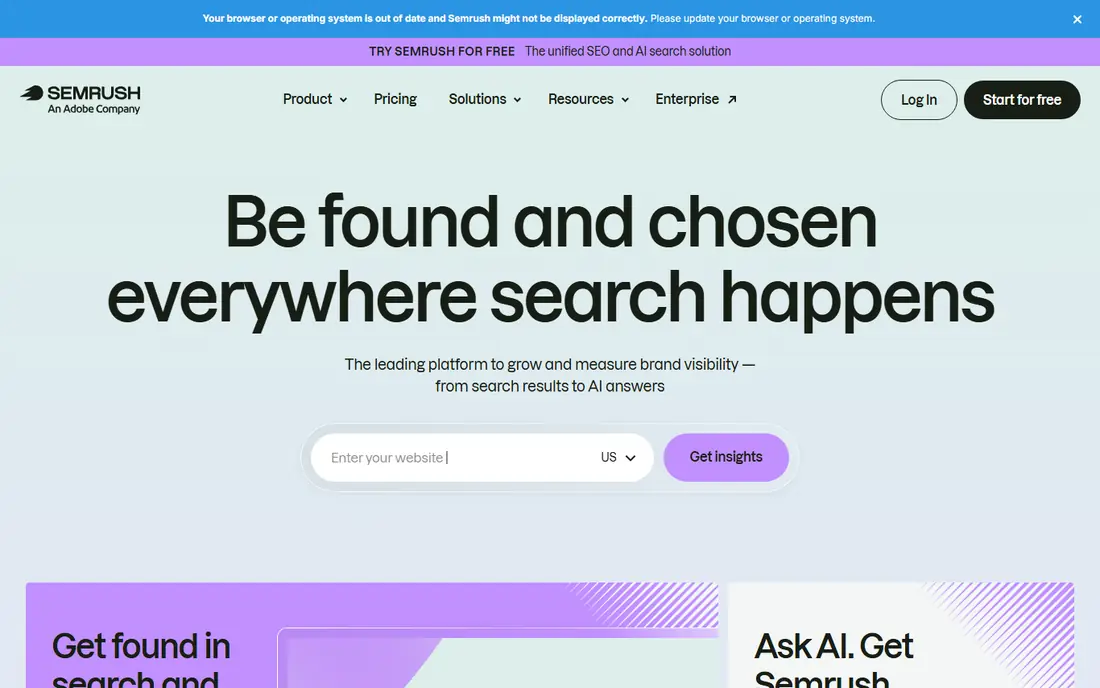
Semrush is our pick for most teams because one subscription answers several competitor questions at once. Keyword Gap shows terms rivals rank for that you do not, Backlink Gap finds linking sites you are missing, and Traffic Analytics estimates how rivals get visits. That combination makes it easy to turn a competitor list into a work plan.
The catch is cost and complexity. At $139.95 per month for the starting plan, it is a serious spend for a solo site, and new users can spend weeks learning the menus. Teams that will use it weekly get the value back. Occasional users may do better with a cheaper tool and a free trial first.
- Keyword Gap and Backlink Gap tools
- Traffic Analytics
- Paid search and AI visibility data
- Price climbs fast for larger teams
- The range of tools can feel heavy for beginners
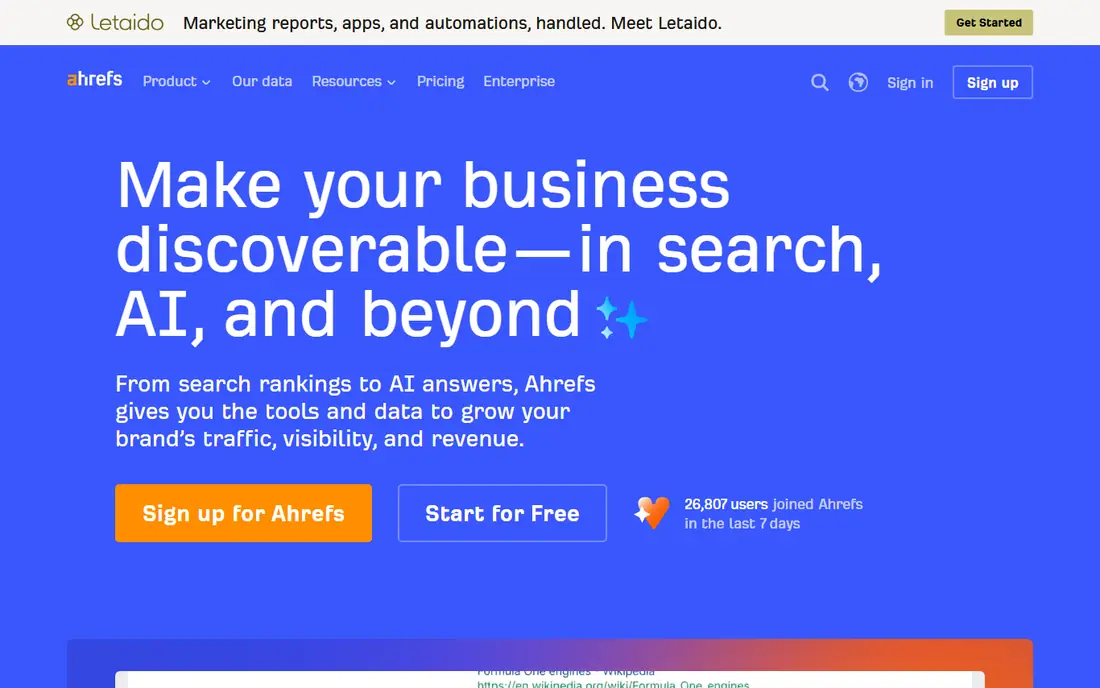
Ahrefs is the tool we reach for when links and content gaps matter most. Site Explorer lets you enter a rival domain and see its top pages, ranking keywords, and referring domains in a clear layout. Content Gap then shows keywords several rivals rank for that your site misses, which is a direct brief for new pages.
The weakness is price and the lack of a full free plan. At $129 per month, it is in the same range as Semrush, so the choice comes down to focus. Pick Ahrefs if links and content drive your plan. Pick Semrush if you also need paid search and broader marketing data in the same login.
- Large backlink index
- Site Explorer for any domain
- Content Gap tool
- No free plan beyond limited free tools
- Traffic estimates are estimates, not exact counts
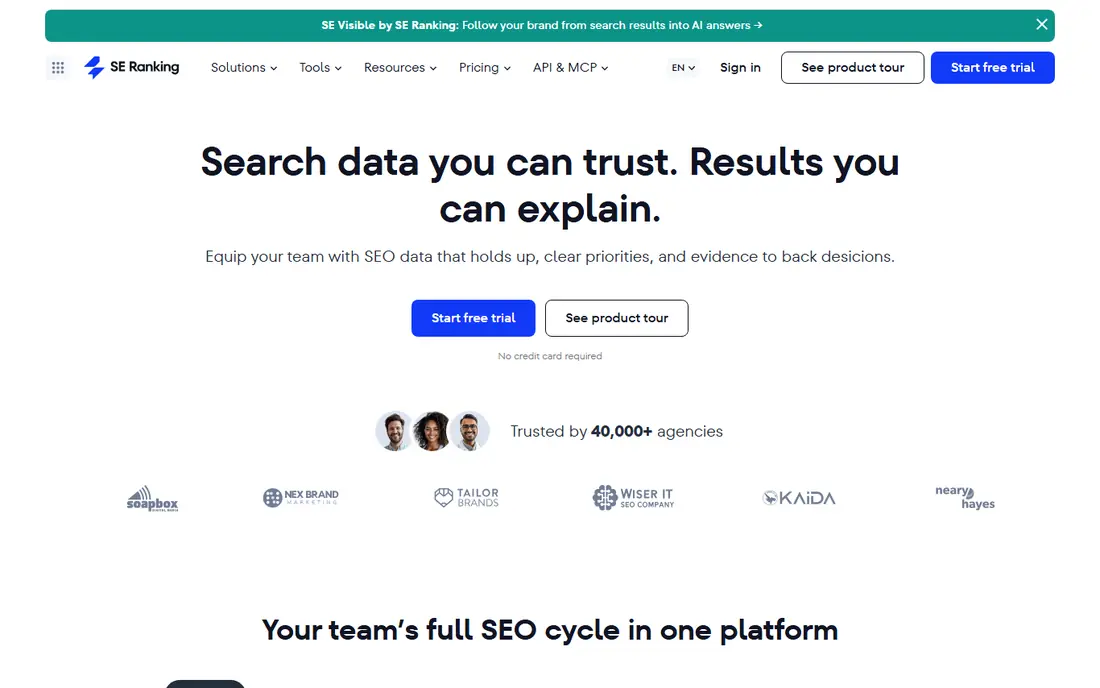
SE Ranking is the best value all in one option for small teams and agencies. It covers competitor research, rank tracking, backlink checks, and site audits without the top tier price of Semrush or Ahrefs. The interface is calm and easy to explain to clients, which matters when reports go to non specialists.
The trade off is data depth. Its backlink index does not match Ahrefs, so link building teams may still need a second source. For keyword gaps, rank tracking, and routine competitor checks, SE Ranking covers the job well and leaves budget for content.
- Competitor research plus rank tracking and audits
- Friendly interface
- Agency friendly pricing
- Backlink data is thinner than Ahrefs
- Some advanced features sit on higher plans
Similarweb answers a different question from the SEO tools above: how much traffic does a rival get, and where does it come from. Its traffic source breakdown, audience data, and referral views help you see whether a rival wins through search, social, direct visits, or referrals. That context stops you from copying a rival keyword plan when its real strength is elsewhere.
The limit is keyword detail. Similarweb is not the tool for building a page level keyword gap list. Use it to pick the right rivals and to judge market size, then use Semrush, Ahrefs, or SE Ranking for the keyword work underneath.
- Traffic sources and audience data
- Market share views
- Strong for benchmarking sites
- Less useful for keyword level gap work
- Paid plans are expensive for small sites
SpyFu is the specialist for history. It shows which keywords a rival has bought and ranked for over time, and what ad copy it has run. That long view helps you spot seasonal pushes, dropped keywords, and ads that a rival keeps running because they work. At $39 per month, it is also far cheaper than the all in one platforms.
The catch is breadth. SpyFu does not replace a full SEO platform for audits or deep backlink work. It fits best as a second tool for teams that run paid search, or as a low cost first tool for freelancers who mainly need competitor keyword research.
- Long keyword and ad history for rivals
- Ad copy views
- Lower price than the big platforms
- Backlink and audit features are weaker
- Interface feels dated next to newer tools
Moz Pro suits teams that want dependable metrics without a steep learning curve. Domain Authority gives a quick shorthand for comparing sites, Keyword Explorer helps size a topic, and rank tracking is straightforward. Beginners often find Moz easier to learn than Semrush or Ahrefs, which is a real advantage when the tool must be used by a small team.
The honest weakness is data scale. For deep link analysis, Ahrefs stays ahead, and Moz paid plans can feel limited next to SE Ranking at a similar price. Moz still earns a place for teams that value simple, trusted metrics and clean reporting over raw data depth.
- Domain Authority metrics many teams still use
- Keyword Explorer
- Clear rank tracking
- Backlink index is smaller than Ahrefs
- Some data updates feel slower
Serpstat is another budget all in one platform, and it appeals to freelancers and small agencies who need several SEO jobs covered for one fee. Its competitor tools show rival keywords and ads, while rank tracking and audits round out routine work. For teams in markets where its data is strong, it is a practical low cost base.
Coverage is the caveat. In some countries and niches, its keyword and backlink data are thinner than the larger platforms. Check your own rivals in a trial before committing, and use the trial to compare its keyword lists against a tool you already trust.
- Keyword research, rank tracking, backlinks, and audits in one plan
- Lower cost entry point
- Data coverage varies by market
- Interface takes time to learn
Ubersuggest is the easiest starting point on this list. At $12 per month, with a free tier for a few daily searches, it lets a freelancer or beginner check a rival domain, see top keywords, and get content ideas without a large subscription. The layout is simple, which helps when SEO is one job among many.
The limit is scale. Ubersuggest will not match Semrush or Ahrefs for backlink depth, traffic accuracy, or large keyword gap work. Treat it as a starter tool. When competitor work becomes weekly and client facing, move up to SE Ranking or one of the larger platforms.
- Very low starting price
- Simple competitor overviews
- Daily free searches
- Data depth is limited
- Not built for agency scale reporting
How we picked these
We compared official feature pages and pricing pages, app and review listings, and public comparisons of competitor tools. We did not claim hands on testing. We ranked tools by how well they answer a specific competitor question, such as keyword gaps, backlink gaps, traffic sources, or ad history, rather than by feature count alone.
How to choose the right tool
Start by naming your main question. If it is which keywords rivals rank for that you miss, start with a keyword gap tool such as Semrush, Ahrefs, or SE Ranking. If it is where links come from, Ahrefs leads. If it is how much traffic a rival gets and from where, Similarweb leads.
Next, set a realistic budget and a trial plan. Run the same three rivals through two tools during their trials and compare the keyword and link lists side by side. The tool whose data matches what you can verify in search results, and whose reports you will actually read, is the right one. A powerful tool that sits unused is worse than a simpler tool used every week.
Finally, plan for one specialist add on if needed. Many teams keep one all in one platform for weekly work and add SpyFu for ad history or Similarweb for market data when a project calls for it. That pairing usually costs less than buying the top tier of a single platform.
Sources
- https://www.semrush.com
- https://ahrefs.com
- https://seranking.com
- https://www.similarweb.com
- https://www.spyfu.com
- https://moz.com
- https://serpstat.com
- https://neilpatel.com/ubersuggest/
- https://www.mediasearchgroup.com/blog/best-seo-tools-for-competitive-analysis/
- https://optinmonster.com/competitor-research-tools/