Best Small Business Bookkeeping Software in 2026: 10 Tools Compared
By ToolNimba Editorial Team November 10, 2026 10 min read

- Top pick
 QuickBooks Online
The industry standard
Starting price$38 per monthCheck out QuickBooks OnlineRead our review - Runner-up
 Xero
Growing businesses and teams
Starting price$25 per monthCheck out XeroRead our review - Also great
 FreshBooks
Invoice-driven service businesses
Starting price$23 per monthCheck out FreshBooksRead our review
How we researched this
We compared official pricing and feature pages, app store listings, privacy policies and public user reviews. Prices change, so check the provider's site before you pay.
Key takeaways
- QuickBooks Online remains the industry standard and the one most accountants already know, with Simple Start at $38 per month.
- Zoho Books is the best value for full accounting, with a free plan under $50,000 in yearly revenue and paid plans from $15 per month billed annually.
- Wave is genuinely free for core accounting and invoicing, which suits a simple business with a zero software budget.
- Watch the limits on entry plans, since caps on users, invoices, or bank connections are what force most upgrades.
Quick comparison
| Name | Best for | Starting price | Free plan | |
|---|---|---|---|---|
| QuickBooks Online | The industry standard | $38 per month | Free trial | Visit |
| Xero | Growing businesses and teams | $25 per month | Free trial | Visit |
| FreshBooks | Invoice-driven service businesses | $23 per month | Free trial | Visit |
 Zoho Books | Best value full accounting | $15 per month | Yes | Visit |
 Wave | Simple books on a zero budget | Free | Yes | Visit |
 Sage Accounting | Inventory and job costing | $25 per month | Free trial | Visit |
 Bench | Handing books to a real bookkeeper | $199 per month | Free trial | Visit |
 Patriot Accounting | Very small businesses wanting simplicity | $20 per month | Free trial | Visit |
 Kashoo | Non-accountants wanting simplicity | $18 per month | Free trial | Visit |
 AccountEdge | Desktop-first businesses | $20 per month | No | Visit |
The best small business bookkeeping software
Good bookkeeping software does three things well: it tracks income and expenses, it sends invoices that get paid, and it produces reports your accountant can use at tax time. The tools below differ in price, depth, and who they suit, and the right one depends on how your business already runs. This is general information, not tax or financial advice.
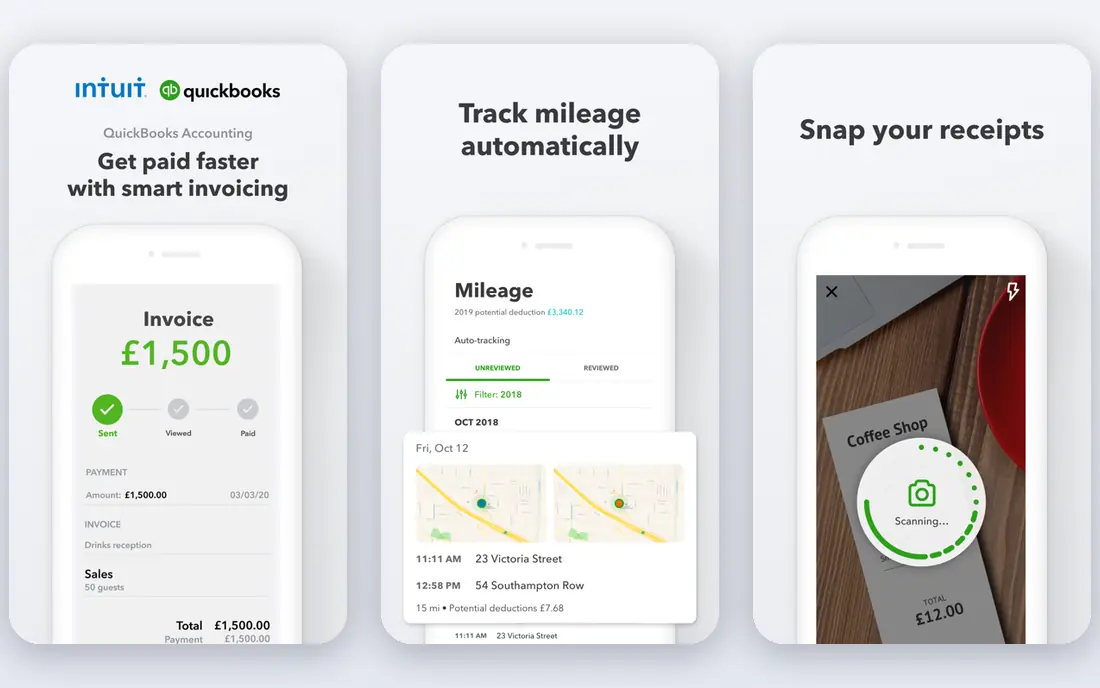
QuickBooks Online is the default answer for US small businesses, and the reason is practical: most accountants already use it, which makes tax season easier. Simple Start costs $38 per month and covers income, expenses, invoicing, and basic reports, while higher plans add inventory, project tracking, and more users. The integration range is unmatched, from banks to payroll to payment processing.
The limits show on the entry plan, which allows only one user, and the price climbs steeply as you add users and features. Promotional discounts also expire, so judge the regular price. Still, if you want the safest choice and room to grow, QuickBooks Online is the pick most accountants will recommend.
- Most accountants already know it
- Widest integration range
- Scales from solo to mid-size business
- Entry plan allows only one user
- Prices rise after promotional periods
- Interface can feel busy
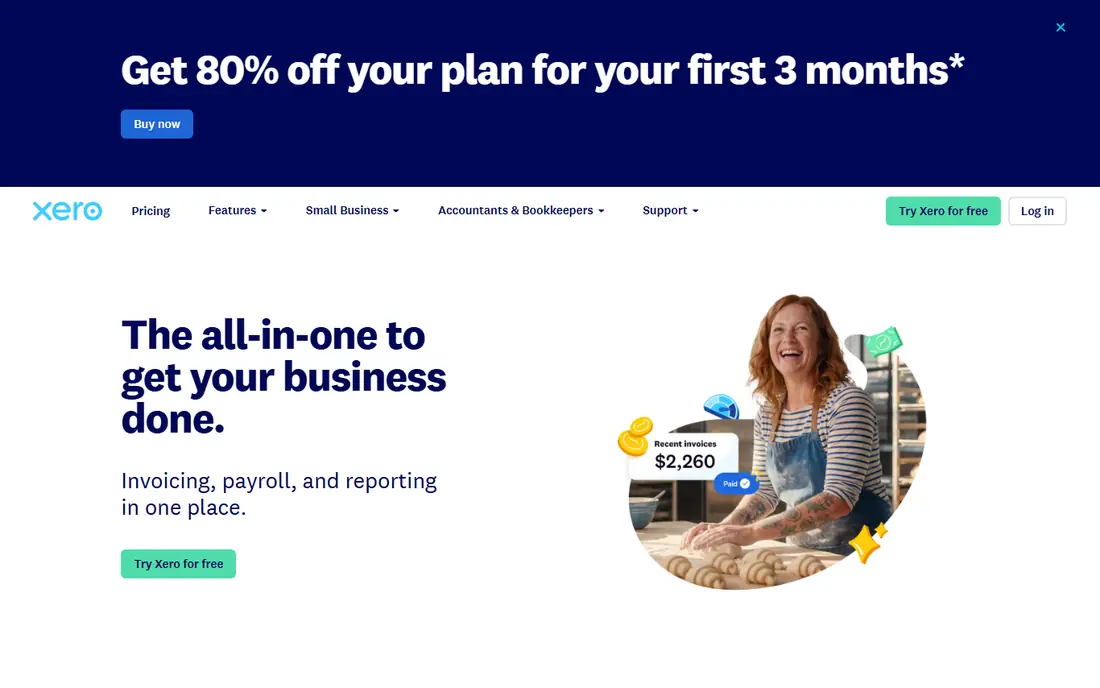
Xero is the clean, modern alternative that scales well with a team. Every plan includes unlimited users, which saves real money when several people touch the books, and multi-currency support comes standard. The Early plan starts at $25 per month, with quotes, invoicing, and bank reconciliation included.
The Early plan caps are the catch: 20 invoices and 5 bills a month push growing businesses to higher plans quickly. US payroll is also weaker than QuickBooks, so many US businesses pair Xero with a separate payroll tool. For a growing business with a bookkeeper or a small team, Xero is often the smarter financial choice.
- Unlimited users on all plans
- Multi-currency included
- Clean interface that bookkeepers like
- Early plan caps at 20 invoices and 5 bills a month
- US payroll is weaker than QuickBooks
- Top plans cost more
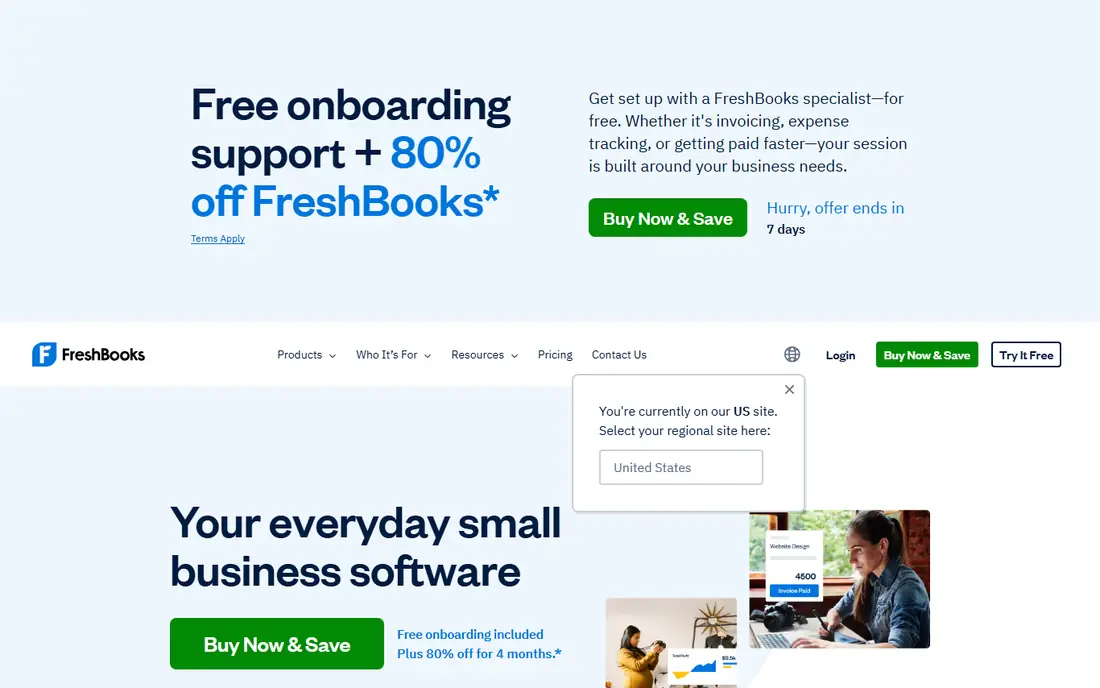
FreshBooks is built around getting paid, which fits service businesses that invoice constantly. Time tracking flows into invoices, clients get a clean portal, and expenses and mileage are easy to record. The Lite plan starts at $23 per month and covers invoicing and accounting for up to 5 clients.
The limits matter for product businesses. FreshBooks is not built for inventory tracking or complex bookkeeping, and lower plans lack the double-entry depth an accountant may want. If you sell services and live in invoices, FreshBooks is the most pleasant tool here. If you sell products, QuickBooks or Xero fits better.
- Best invoicing and time tracking in this list
- Easy client portal
- Good expense and mileage tools
- Lite plan covers only 5 clients
- Not built for complex bookkeeping or inventory
- No full double-entry depth on lower plans
Zoho Books gives you the most accounting per dollar on this list. The free plan covers businesses with under $50,000 in yearly revenue, and the Standard plan starts at $15 per month billed annually, or $20 month to month, with three users included. It is real double-entry accounting, not a lite invoicing tool, with inventory, projects, and tax handling.
The ecosystem is the trade-off. Zoho Books shines brightest inside the Zoho suite, and its third-party integration range is smaller than QuickBooks. The Standard plan also caps at 1,000 invoices a year. For a cost-conscious business that wants full accounting without the QuickBooks price, Zoho Books is the best value pick.
- Free plan for businesses under $50,000 in yearly revenue
- Full double-entry accounting
- Deep Zoho app integration
- Fewer third-party integrations than QuickBooks
- Standard plan caps at 1,000 invoices a year
Wave is genuinely free for core accounting, which makes it the right pick for a solopreneur or a very small business with a zero software budget. The Starter plan is free and includes unlimited invoices, estimates, bills, and bookkeeping records, with no revenue cap like the Zoho free plan.
The catch is bank feeds. Automatic bank import now requires the Pro plan at $19 per month, so free users enter transactions by hand or upload statements. Wave also has fewer features than paid rivals, and moving to another system later takes effort. For simple books on a zero budget, though, Wave is hard to argue against.
- Free core accounting and invoicing with no revenue cap
- Unlimited invoices and bookkeeping records
- Simple interface
- Automatic bank import now requires the paid Pro plan
- Fewer features than paid rivals
- Migration out can be painful
Sage Accounting suits businesses that need more than invoices: inventory tracking, job costing, and deeper reporting for a product or project business. Plans start near $25 per month, and the feature set goes further into operations than the simpler tools on this list.
The learning curve is steeper, and the interface feels less modern than Xero or FreshBooks. Sage rewards a business that will use its depth, and it can overwhelm a freelancer who only needs invoices. If your business tracks stock or costs jobs, Sage is worth the extra learning. If not, a simpler tool will serve you better.
- Deep inventory and job costing
- Strong reporting
- Trusted brand with long history
- Steeper learning curve than FreshBooks or Wave
- Interface feels dated to some users
Bench is different from everything else here, because it is a service, not just software. A dedicated bookkeeper categorizes your transactions, reconciles accounts, and produces monthly reports and tax-ready financials, starting at $199 per month. For an owner who hates bookkeeping and keeps falling behind, that done-for-you model is the point.
The price is far above any software plan, and you give up the hands-on control of doing it yourself. Bench also suits businesses with regular transactions rather than complex inventory or project accounting. If your books are months behind and you want them handled, Bench is the most direct fix.
- A real bookkeeper does your books monthly
- Clean reports and tax-ready financials
- Good for owners who hate bookkeeping
- Service price starts at $199 per month
- Less hands-on control than doing it yourself
- Not a pure software tool
Patriot Accounting is built for very small businesses that want bookkeeping without a learning curve. Setup is quick, the interface is simple, and plans start at $20 per month, with a payroll add-on from the same vendor for businesses that need it. It covers the basics: income, expenses, invoicing, and reports.
The depth is limited. Reporting and integrations are thinner than QuickBooks or Xero, and a growing business will likely outgrow it. But for a tiny business with straightforward books, Patriot removes the friction that keeps owners from doing their books at all, and that is worth more than a longer feature list.
- Easy setup
- Simple interface
- Payroll add-on available from the same vendor
- Limited reporting and integrations
- Less depth than QuickBooks or Xero
Kashoo is the simplest real accounting tool on this list. It is designed for owners with no accounting background, with a clean interface and straightforward income and expense tracking. Pricing runs near $216 per year, about $18 per month, which keeps it affordable for a small business.
The feature set is deliberately small, and the user community and integration range are smaller than the big names. A business with inventory, payroll, or complex reporting needs will outgrow Kashoo fast. But for a solo owner who wants books that are simple, correct, and actually done, Kashoo is a friendly place to start.
- Extremely user-friendly interface
- Simple income and expense tracking
- Good for owners with no accounting background
- Very limited feature set
- Small user community and fewer integrations
AccountEdge suits businesses that prefer desktop software and local data storage over the cloud. The Pro plan starts near $20 per month, and the software covers full small business accounting with inventory and payroll options. Owners who distrust cloud-only tools or work offline will like keeping data on their own machine.
The trade-offs are real. The Pro plan is single user, there is no native cloud access for working from anywhere, and the product history leans Mac. For a desktop-first business with one bookkeeper, AccountEdge is a solid, private option. For a team that needs cloud access from many devices, Xero or QuickBooks fits better.
- Local data storage with no cloud dependence
- One-time purchase history
- Solid small business accounting depth
- Single user on the Pro plan
- No native cloud access
- Mac-focused history may limit Windows users
How we picked these
We compared official pricing pages and recent 2026 roundups of bookkeeping software, and we favored tools with published prices, a clear small business plan, and a track record with US owners. We checked starting prices against vendor sites and September 2026 comparison pages, and we used regular list prices rather than first-year promotions, since promotions expire and books do not. Prices exclude taxes and payment processing fees.
What to check before you buy
Start with the limits on the entry plan, not the feature list. Caps on users, invoices, bills, or bank connections are what force most upgrades, and they vary widely. QuickBooks Simple Start allows one user, Xero Early caps at 20 invoices a month, and FreshBooks Lite covers 5 clients, so match the plan to your real volume.
Next, think about your accountant. If your accountant works in QuickBooks, using QuickBooks saves time and fees at tax time. If you work with a bookkeeper, ask which tool they prefer before you choose, since their time costs more than the software.
Finally, test the bank connection and the invoice flow with real data during the trial. A tool that connects cleanly to your bank and produces an invoice your customers pay quickly will save hours every month. A tool that fights your bank feed will cost you that time back.
Sources
- https://solomoneystack.com/bookkeeping-software/
- https://gatpsolutions.com/blog/bookkeeping-software-for-small-business/
- https://www.spotsaas.com/blog/best-quickbooks-alternatives-2026
- https://ownworkhq.com/best-accounting-software-for-freelancers/
- https://quickbooks.intuit.com
- https://www.xero.com
- https://www.freshbooks.com
- https://www.zoho.com/books
- https://www.waveapps.com
- https://www.sage.com
- https://www.bench.co
- https://www.patriotsoftware.com
- https://www.kashoo.com
- https://www.accountedge.com
Frequently asked questions
What is the best bookkeeping software for small businesses?
QuickBooks Online is the best all-around pick for most US small businesses, since it is the industry standard and most accountants know it. Xero is the best pick for growing teams, Zoho Books is the best value, and Wave is the best free option.
What is the best bookkeeping software for a small business on a budget?
Wave is free for core accounting with no revenue cap, and Zoho Books is free for businesses under $50,000 in yearly revenue. Both cover real bookkeeping, though Wave bank feeds now require the paid Pro plan.
Is QuickBooks or Xero better for a small business?
QuickBooks wins on US tax depth, accountant familiarity, and integrations, while Xero wins on unlimited users, multi-currency support, and a cleaner interface. A US business with complex taxes usually suits QuickBooks, while a team or international business often suits Xero.
Can I do my own bookkeeping without an accountant?
Yes, for a simple business, especially with Wave, Kashoo, or FreshBooks. As transactions, payroll, or inventory grow more complex, an accountant or a service like Bench saves time and reduces errors, particularly at tax time.
What is the best app for small business bookkeeping on the go?
QuickBooks Online, Xero, FreshBooks, and Wave all offer mobile apps for invoicing, expense capture, and checking balances. The best mobile experience depends on your main task: FreshBooks leads for invoicing from the field, while QuickBooks and Xero lead for full bookkeeping on the go.