Best Software Engineering Bootcamps in 2026: 9 Programs Compared
By ToolNimba Editorial Team November 10, 2026 9 min read

- Top pick
 General Assembly
Brand recognition and campus network
Starting price$16,450 totalCheck out General AssemblyRead our review - Runner-up
 Flatiron School
Structured curriculum and career coaching
Starting price$14,900 totalCheck out Flatiron SchoolRead our review - Also great
 Springboard
Mentor-led online learning
Starting price$9,900 totalCheck out SpringboardRead our review
How we researched this
We compared official pricing and feature pages, app store listings, privacy policies and public user reviews. Prices change, so check the provider's site before you pay.
Key takeaways
- Tuition for leading software engineering bootcamps usually falls between about $10,000 and $20,000, with cheaper part-time options below that range.
- General Assembly and Flatiron School offer the widest recognition, while Springboard, TripleTen, and Nucamp offer lower-cost online routes.
- App Academy suits learners who cannot pay upfront, because its income share option defers tuition, though total cost can be higher later.
- Costs vary by format and cohort, and job outcomes are not guaranteed, so read refund, financing, and career support terms before enrolling.
Quick comparison
| Name | Best for | Starting price | Free plan | |
|---|---|---|---|---|
| General Assembly | Brand recognition and campus network | $16,450 total | No | Visit |
| Flatiron School | Structured curriculum and career coaching | $14,900 total | No | Visit |
| Springboard | Mentor-led online learning | $9,900 total | No | Visit |
 App Academy | No upfront tuition option | See website | No | Visit |
 Coding Dojo | Learning three full stacks | $9,995 total | No | Visit |
 TripleTen | Career changers new to tech | See website | No | Visit |
 Nucamp | Budget-friendly part-time learning | See website | No | Visit |
 Hack Reactor | Advanced JavaScript depth | See website | No | Visit |
 Tech Elevator | Career change with local campuses | $16,500 total | No | Visit |
The best software engineering bootcamps
We compared official programme pages, pricing pages, and public reviews, focusing on curriculum, format, tuition, and career support. Costs vary by format and location, and outcomes are not guaranteed. Treat any placement claim as a marketing figure until you read its terms.

General Assembly remains one of the most recognised bootcamp names, which helps when a hiring manager scans a resume. Its Software Engineering programme covers full-stack development, including JavaScript, Python, APIs, and databases, with career coaching, mock interviews, and portfolio projects. Online and campus formats suit different schedules. The price reflects that brand and support, and the full-time pace leaves little room for outside work. Check current tuition for your format, since prices vary by location and cohort. For learners who value a known name and a structured path, General Assembly is a solid first shortlist pick.
- Widely recognised name with employers
- Full-time and part-time formats
- Structured career coaching and portfolio work
- Tuition is high for a short programme
- Pace can feel intense for complete beginners
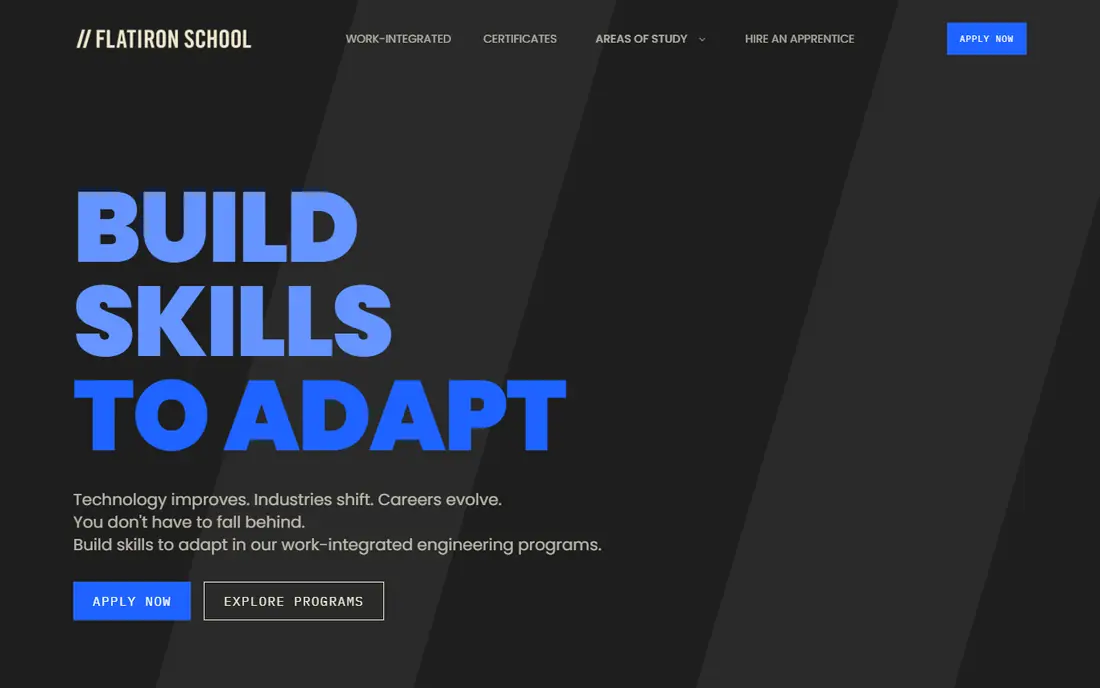
Flatiron School offers a structured route into software engineering, with JavaScript, Python, SQL, and modern development practices at its core. Career coaching runs alongside the technical work, and graduates build portfolio projects that show real application building rather than only tutorial exercises. Full-time and part-time formats give learners some control over pace. Flatiron tuition has been listed in different ranges over time, so confirm the current figure for your chosen format before applying. The programme also expects substantial pre-work and steady effort. Learners who want clear structure and coaching will find that discipline helpful rather than limiting.
- Clear, structured software engineering curriculum
- Career coaching alongside technical training
- Full-time and part-time options
- Tuition varies by programme and format
- Pre-work and pace demand a serious time commitment

Springboard suits learners who want online flexibility without learning alone. Each student works with a mentor, follows a structured curriculum, and builds projects for a portfolio. The software engineering programme is designed for career changers, with career coaching to help with applications and interviews. The trade-off is discipline. Without a classroom schedule, progress depends on your own routine, and mentor quality can vary. Springboard tuition is lower than the largest campus brands, which makes it a strong value pick for motivated online learners. Read the job guarantee terms closely, since eligibility conditions apply.
- One-to-one mentor support
- Fully online and self-paced within deadlines
- Career support for job searching
- Self-paced study needs strong discipline
- Outcomes depend heavily on mentor fit and student effort
App Academy is known for a rigorous curriculum and for letting some students defer tuition through an income share agreement. That option suits career changers who cannot pay five figures before they earn, and the programme covers full-stack development with a heavy emphasis on coding practice and pair programming. The income share route is not free. Payments begin after employment under the agreement terms, and the total paid can be higher than upfront tuition. Admission is also selective, and the pace is intense. If you can handle that pace and want deferred payment, App Academy deserves a close look.
- Income share option with no upfront tuition
- Rigorous, selective curriculum
- Strong focus on job-ready coding skill
- Total cost under income share can exceed upfront tuition
- Admission is competitive and pace is demanding
Coding Dojo stands out by teaching three full stacks rather than one. That breadth helps learners who are unsure which stack they will use at work, and it gives graduates more examples for interviews and portfolio projects. The programme also offers part-time online options for learners who keep a job. Breadth has a cost. Covering three stacks in a short programme means less depth in each one than a single-stack specialist course. Learners who already know their target stack may prefer a deeper programme. Learners who want broad exposure will find Coding Dojo a practical choice.
- Three full-stack curricula in one programme
- Online and campus formats
- Career services for graduates
- Breadth can feel rushed compared with single-stack depth
- Tuition varies by format
TripleTen, formerly Practicum, is built for career changers starting from little or no coding experience. The online programme moves step by step through web development, with tutor support, code reviews, and career coaching. That beginner focus helps learners who feel lost in faster, more technical programmes. Recognition among US employers is growing but still trails General Assembly and Flatiron School in some hiring circles. Tuition also varies, so check the current price for your region and format. For a careful, supported start, TripleTen is a strong online option.
- Beginner-friendly, fully online structure
- Tutor and career support
- Flexible pacing for working learners
- Pricing varies by programme and region
- Brand recognition trails larger US bootcamps
Nucamp is the cheapest credible route into software development on this list, with part-time programmes that fit around work. Its web development tracks start with fundamentals and build toward full-stack skills, with workshops and instructor support. That structure makes it ideal for testing whether you enjoy coding before spending five figures. It is not a direct substitute for a full-time immersive programme. Hours are fewer, projects are smaller, and career support is lighter. Think of Nucamp as a low-risk entry point, and a stepping stone to a deeper programme or a junior role, rather than a guaranteed job pipeline.
- Lowest-cost credible route on this list
- Part-time evening and weekend schedules
- Good way to test interest in coding
- Less intensive than full-time immersive programmes
- Career support is lighter than premium bootcamps
Hack Reactor, now part of Galvanize, is known for depth in JavaScript and for an intensive immersive format. Students build complex applications, practise technical interviews, and work in teams, which mirrors real engineering work more closely than lecture-only courses. Its network in tech hubs can help graduates reach hiring managers. The programme is demanding, with substantial pre-work and long days during the immersive. Tuition is also at the higher end, so confirm the current figure before applying. Learners who already have some coding experience and want depth will get the most from Hack Reactor.
- Deep JavaScript and full-stack focus
- Intensive immersive format
- Strong alumni and employer network in tech hubs
- Tuition is high and should be confirmed on site
- Pace and pre-work are demanding
Tech Elevator suits career changers who want a cohort, a campus or live online classes, and close career support. Its programme covers full-stack development with Java, JavaScript, and related tools, depending on the track, and includes career coaching, interview practice, and employer introductions. That local cohort model helps learners who study better with peers. Locations are fewer than General Assembly, so campus access depends on where you live. Online cohorts close much of that gap. At a similar price to other premium bootcamps, Tech Elevator competes on support and cohort experience rather than on low cost.
- Campus and online formats with cohort support
- Career coaching and employer connections
- Clear full-stack curriculum
- Fewer locations than the largest national brands
- Tuition is high for a short programme
How we picked these
We compared official programme pages, pricing pages, and public reviews for each bootcamp. We favoured programmes with a clear software engineering curriculum, published tuition or financing options, and career support, and we noted where prices vary by format. We did not claim hands-on attendance, and we did not promise job placement, since outcomes depend on the student, the market, and the terms of each programme.
How to choose a software engineering bootcamp
Match format to your life
Full-time immersive programmes finish fastest but need full attention for months. Part-time and self-paced programmes take longer but let you keep working. Be honest about weekly hours, since falling behind in an immersive is hard to recover from.
Check the total cost, not just tuition
Add living costs, lost income, and financing charges to tuition. Income share agreements, loans, and deferred plans can raise the total paid. Ask for the full repayment schedule in writing before you sign.
Read outcome claims with care
Ask who counts as placed, over what period, and what happens if you do not find work. A job guarantee often has conditions on applications, attendance, and location. Portfolio quality, interview practice, and local hiring demand matter as much as any headline rate.
Sources
Frequently asked questions
What is the best software engineering bootcamp for beginners?
TripleTen and Nucamp are strong beginner-friendly picks, while General Assembly and Flatiron School suit beginners who want a structured, intensive programme. Beginners should start with free prep material from the school to test pace and interest before paying tuition.
What is the best online software engineering bootcamp?
Springboard, TripleTen, and App Academy offer strong online options, with different trade-offs. Springboard adds mentor support, TripleTen adds beginner-friendly pacing, and App Academy adds a deferred-tuition option. Choose based on support style and total cost.
How much do software engineering bootcamps cost?
Most leading programmes cost between about $10,000 and $20,000, with part-time options such as Nucamp costing less. Costs vary by format, location, and cohort, so confirm current tuition on the school site and add financing charges to the total.
Do bootcamps guarantee a job?
No bootcamp can guarantee a job, and any guarantee claim usually has strict conditions. Career support, portfolio work, and interview practice help, but hiring depends on skills, location, and market conditions. Read refund and guarantee terms before enrolling.
How long does a software engineering bootcamp take?
Full-time programmes usually take about 12 to 16 weeks, while part-time programmes can take six months or more. Self-paced programmes vary with student effort. Factor in pre-work and job searching time on top of the headline programme length.
Is a bootcamp better than a computer science degree?
It depends on your goal and timeline. A bootcamp is faster and more focused on job-ready skills, while a degree covers theory more deeply and suits some employers and roles better. Many graduates combine a bootcamp with self-study and portfolio work to cover both sides.