Best Supply Chain Management Software in 2026: 9 Tools Compared
By ToolNimba Editorial Team November 12, 2026 9 min read

- Top pick
 Oracle SCM Cloud
End-to-end global operations
Starting priceSee websiteCheck out Oracle SCM CloudRead our review - Runner-up
 SAP Supply Chain Management
SAP-centric planning
Starting priceSee websiteCheck out SAP Supply Chain ManagementRead our review - Also great
 Blue Yonder
Retail and manufacturing planning
Starting priceSee websiteCheck out Blue YonderRead our review
How we researched this
We compared official pricing and feature pages, app store listings, privacy policies and public user reviews. Prices change, so check the provider's site before you pay.
Key takeaways
- Oracle SCM, SAP and Blue Yonder lead for large global operations, but all are quote based and need long implementations.
- Kinaxis and o9 Solutions suit teams that need fast scenario planning and forecasting when disruptions hit.
- Manhattan Associates is the warehouse and distribution specialist, while Infor Nexus connects a multi-tier supplier network.
- Small businesses should not buy an enterprise suite first. Start with inventory or ERP tools, then move up when volume and complexity demand it.
Quick comparison
| Name | Best for | Starting price | Free plan | |
|---|---|---|---|---|
| Oracle SCM Cloud | End-to-end global operations | See website | No | Visit |
| SAP Supply Chain Management | SAP-centric planning | See website | No | Visit |
| Blue Yonder | Retail and manufacturing planning | See website | No | Visit |
 Kinaxis | Concurrent scenario planning | See website | No | Visit |
 Manhattan Associates | Warehouse and distribution | See website | No | Visit |
 Infor Nexus | Supplier network visibility | See website | No | Visit |
 Coupa | Supply chain design | See website | No | Visit |
 E2open | Multi-enterprise visibility | See website | No | Visit |
 o9 Solutions | AI forecasting and digital twins | See website | No | Visit |
The best supply chain management software
Supply chain management software plans and runs the flow of goods from suppliers to customers. It can cover demand planning, procurement, manufacturing, inventory, warehousing, transportation and order fulfillment. Suites combine several of those areas, while point tools cover one area in depth, so the right pick depends on company size and the weakest link in your chain.
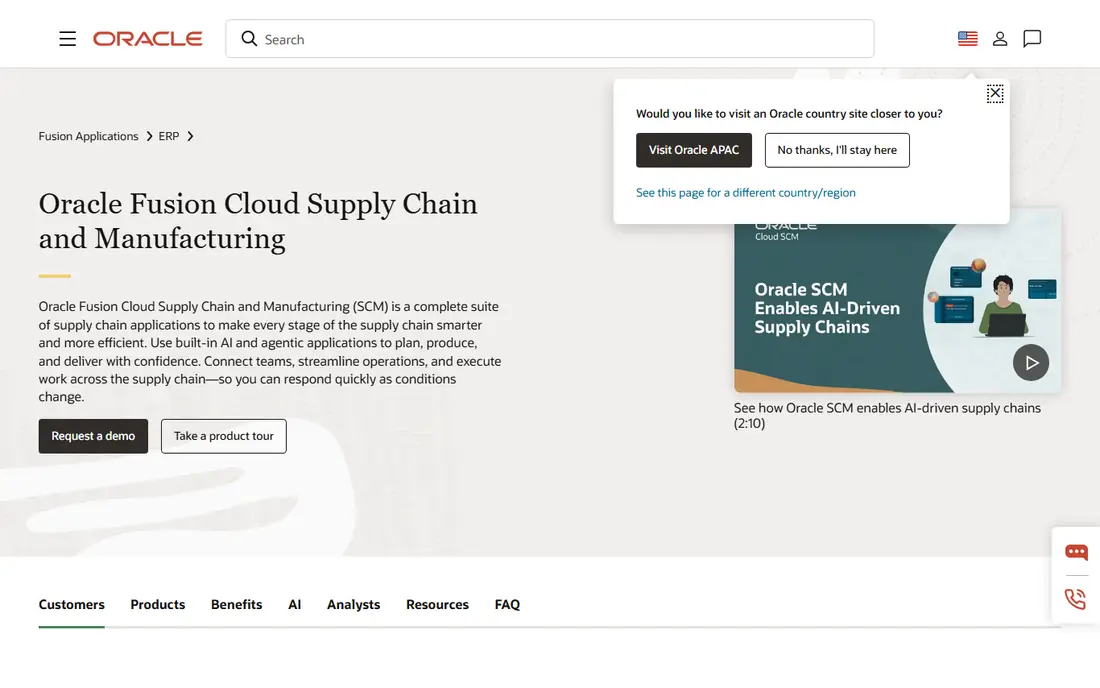
Oracle SCM Cloud covers procurement, inventory, order management, warehouse and transportation in one cloud suite. That breadth suits midsize to large companies that already use Oracle applications and need a consistent global process. Multi-language and multi-currency support helps teams operating across regions.
The main costs are time and integration, not just licenses. Oracle does not publish a simple starting price, and implementation scope depends on modules, users and existing systems. Get a written quote that lists licenses, implementation, training and support separately, and pilot one region or product line before a global rollout.
- Broad suite from procurement to logistics
- Strong global and multi-currency support
- Cloud updates
- Pricing is quote based
- Integration work can be lengthy for complex estates
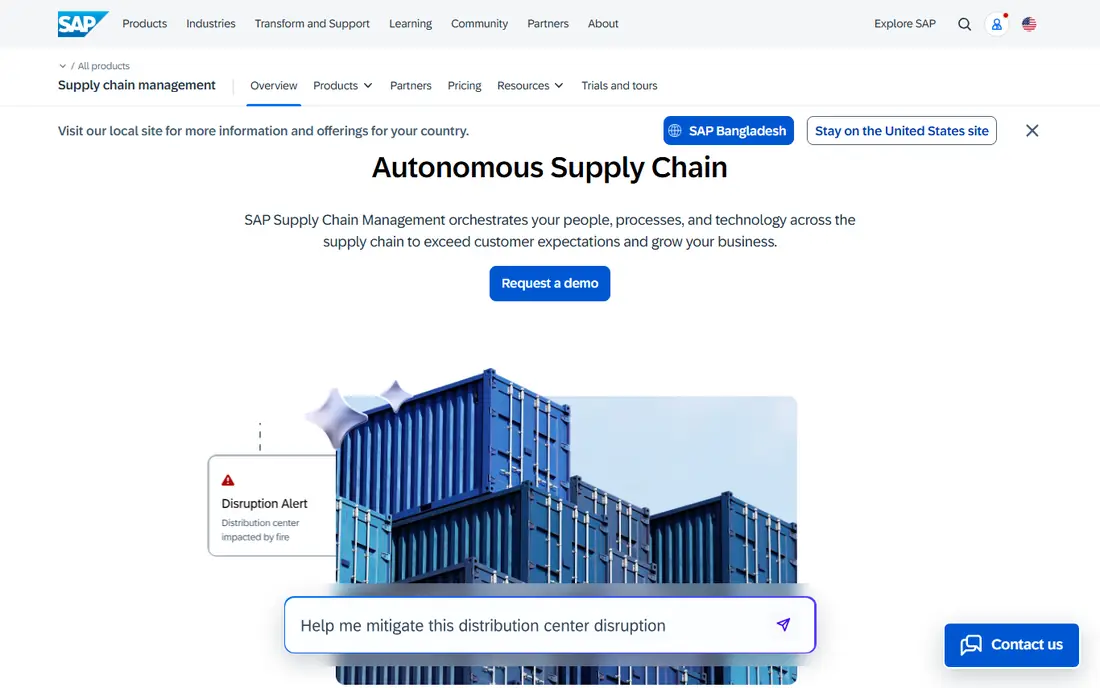
SAP supply chain tools, including SAP Integrated Business Planning, suit companies already centered on SAP for finance and operations. Demand planning, supply planning, inventory optimization and manufacturing can share the same data model, which reduces reconciliation work. That integration is the main reason SAP shops stay with SAP for supply chain work.
For companies outside the SAP ecosystem, the case is weaker. Licensing is quoted, implementation is long and specialist consultants are usually needed. If you already run SAP, compare SAP IBP modules first. If you do not, weigh Oracle, Blue Yonder and Kinaxis on planning strength alone.
- Deep planning with SAP Integrated Business Planning
- Strong manufacturing integration
- Global scale
- Quote based pricing
- Implementation often takes many months
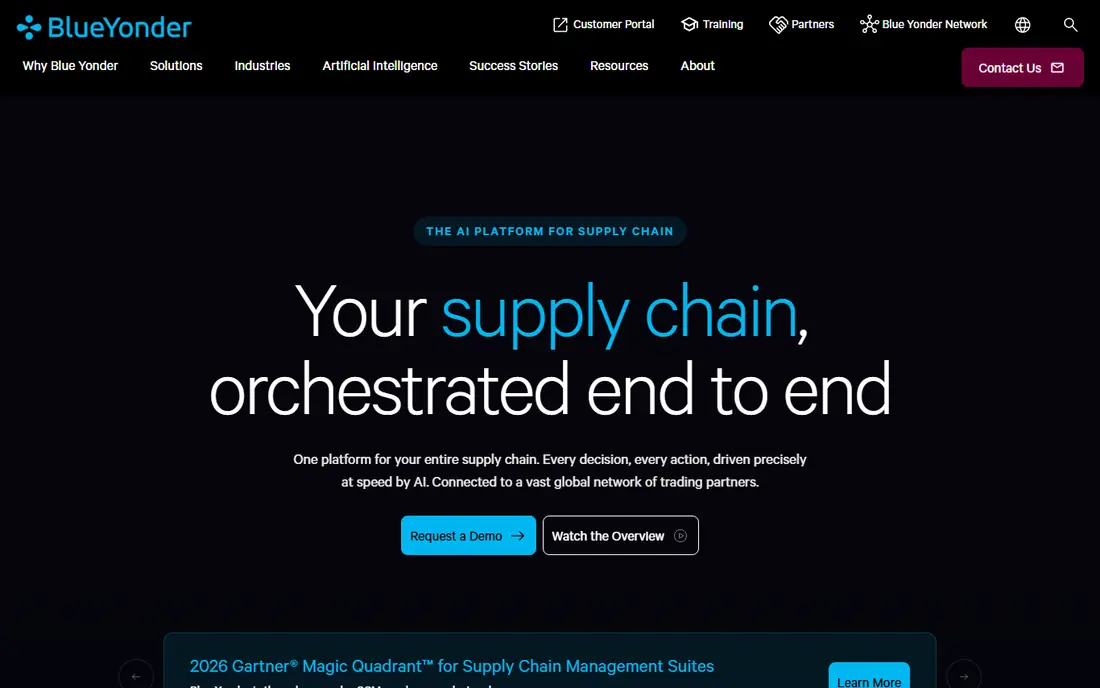
Blue Yonder is known for demand planning, supply planning and fulfillment for retail, consumer goods, automotive and third-party logistics operations. Its Luminate Platform uses machine learning to flag issues and recommend actions, and scenario tools help planners model disruptions without leaving the system. For omnichannel retail, tying assortment, space and warehouse execution to demand is a clear strength.
Third-party summaries place Blue Yonder entry costs in the six-figure annual range, which signals an enterprise commitment. Users also report lengthy implementation and a learning curve. That makes Blue Yonder a strong fit for larger operations with dedicated planning teams, and a poor fit for small businesses.
- Strong AI planning and forecasting
- Good retail and omnichannel fulfillment
- Scenario tools
- High entry cost in third-party summaries
- Interface and rollout need vendor support
Kinaxis Maestro, formerly RapidResponse, lets planners test scenarios concurrently across demand, supply, inventory and capacity. When a supplier fails or demand shifts, teams can see the impact across the network and compare options quickly, rather than waiting for a batch planning run. That speed is valuable for complex manufacturing and electronics supply chains.
Setup is the trade-off. Building an accurate model needs clean data and skilled planners, and pricing is quoted based on scope. Companies with simpler chains may not need concurrent planning at this level. Companies that live with frequent disruption often find the scenario speed justifies the investment.
- Fast concurrent planning
- Strong what-if scenarios
- Good for complex supply networks
- Quote based pricing
- Model setup needs skilled planners
Manhattan Associates specializes in warehouse management, transportation and order fulfillment for high-volume distribution. If your main problem is picking, packing, shipping and labor in warehouses, Manhattan is often the specialist to compare first. Its Active platform covers execution in detail, with tools for slotting, labor and yard operations in larger deployments.
It is less of a pure demand planning suite than Kinaxis or o9 Solutions. Many companies pair Manhattan execution with a separate planning tool. For a distribution-led business, that pairing makes sense: plan in one system, execute precisely in Manhattan.
- Strong warehouse and transportation execution
- Good for high-volume distribution
- Scalable
- Planning depth is narrower than Kinaxis or o9
- Enterprise implementation effort
Infor Nexus connects buyers, suppliers, carriers and banks on a shared network, giving visibility into orders, shipments and inventory across tiers. That network view helps companies spot delays beyond their direct suppliers, which is hard to do with internal systems alone. Supplier finance features can also help smaller suppliers manage cash flow.
The catch is adoption. A network tool only helps if key suppliers and logistics partners actually use it, so onboarding must be part of the plan. Pricing is quoted, and scope depends on transaction volume and partner count. For global sourcing teams, Nexus is worth a pilot with your top suppliers.
- Multi-tier supplier network
- Order and shipment visibility
- Supplier finance options
- Value depends on supplier adoption
- Pricing is quote based
Coupa is best known for procurement and spend management, and its supply chain design tools, built from the LLamasoft acquisition, add network modeling and optimization. That combination suits teams that need to redesign a network, test facility locations or model sourcing changes, while also controlling procurement spend.
Daily warehouse execution and transportation management are not the core strength. Companies that need both design and execution may pair Coupa design with a specialist execution tool. For procurement-led teams redesigning a network, Coupa is a strong starting point for a demo.
- AI-native supply chain design from LLamasoft acquisition
- Strong spend and procurement roots
- Design strength differs from daily execution
- Pricing is quote based
E2open provides a multi-enterprise network for planning, logistics, trade and channel data across partners. That breadth helps companies that need to see orders, shipments and inventory across many external partners in one place. Logistics and compliance tools add value for global trade operations.
Breadth can also make scoping harder. A pilot should focus on one use case, such as shipment visibility or demand sensing, before expanding to the full network. Pricing is quoted, and recent third-party summaries note a limited freemium entry for some E2open offerings, but enterprise use should be quoted directly with the vendor.
- Multi-enterprise network visibility
- Logistics and trade compliance tools
- Broad partner network
- Scope can feel broad and complex
- Pricing and implementation need careful scoping
o9 Solutions builds an AI-driven digital twin of the supply chain, letting planners forecast demand, test scenarios and align commercial and operational plans. That model suits large consumer goods, retail and manufacturing companies with complex assortments and frequent promotions. Scenario speed and forecast detail are the main strengths.
Like other enterprise suites, o9 needs clean master data, skilled planners and a scoped implementation. Pricing is quoted, and total cost includes services as well as licenses. For a large team that needs integrated business planning with AI forecasting, o9 deserves a place on the shortlist alongside Kinaxis and Blue Yonder.
- AI forecasting
- Digital twin modeling
- Strong scenario planning for large enterprises
- Enterprise pricing and implementation
- Needs clean data to deliver value
How we picked these
We compared official product pages, recent third-party comparisons from October 2026 and vendor documentation, and we favored suites that still serve large and midsize operations today. We mixed planning, execution and network tools because supply chain management covers all three, and we state each tool focus clearly. Most enterprise pricing is quote based, so we use See website rather than repeating unverified estimates as list prices.
What to check before you buy
Start with the weakest link, not the largest suite. If stockouts are the problem, demand planning matters most. If warehouse errors are the problem, execution matters most. If supplier delays are invisible, network visibility matters most. Buying a full suite for a single problem often adds cost and rollout time without fixing the bottleneck.
Scope implementation honestly. Mid-market rollouts often take three to nine months, while enterprise suites can take nine to eighteen months or longer for global deployments. Ask vendors for a phased plan, data migration scope, integration list and training plan, and check references from companies of similar size and complexity. Also confirm data ownership, exit terms and what happens to historical planning data if you switch vendors later.
Sources
Frequently asked questions
What is supply chain management software?
It plans and runs the flow of goods from suppliers to customers, covering demand planning, procurement, manufacturing, inventory, warehousing, transportation and fulfillment. Suites combine several areas, while point tools focus on one area in depth. The right choice depends on which part of your chain needs the most help.
How much does supply chain management software cost?
Most enterprise suites are quote based and can run into six or seven figures per year, plus implementation services that often exceed first-year licenses. Mid-market ERP bundles with supply chain features cost less, while inventory tools for small businesses cost far less. Always get a written quote for your users, modules and transaction volume.
What is the difference between SCM and ERP?
ERP manages core business records such as finance, human resources, orders and inventory transactions. SCM manages the flow of goods, including planning what to make, sourcing materials, running warehouses and moving freight. Modern suites blur the line, with ERP vendors adding SCM modules and SCM suites adding financial features.
Which supply chain software is best for small businesses?
Most suites in this list target large enterprises. Small businesses should look at ERP bundles such as NetSuite, or lighter inventory tools such as Cin7, Katana or Fishbowl, depending on whether they need manufacturing or simple stock control. Buying an enterprise suite too early is one of the costliest mistakes in operations.
How long does implementation take?
Mid-market implementations often take three to nine months. Enterprise suite deployments often take nine to eighteen months, with global rollouts taking longer. Data migration, integrations and change management drive the timeline more than software configuration alone, so plan staffing for those areas from the start.