Best Tool for Lead Generation in 2026: 8 Tools Compared
By ToolNimba Editorial Team November 10, 2026 9 min read

- Top pick
 HubSpot
Inbound leads and CRM follow-up
Starting priceSee websiteCheck out HubSpotRead our review - Runner-up
 Apollo
All-in-one prospecting for small teams
Starting price$49 per user per monthCheck out ApolloRead our review - Also great
 ZoomInfo
Enterprise contact and intent data
Starting priceSee websiteCheck out ZoomInfoRead our review
How we researched this
We compared official pricing and feature pages, app store listings, privacy policies and public user reviews. Prices change, so check the provider's site before you pay.
Key takeaways
- Apollo is our pick for most small teams because it combines a prospect database, outreach and a free plan in one product.
- HubSpot is the best lead generation platform if inbound content, forms and CRM follow-up matter as much as prospecting.
- ZoomInfo has deep company and contact data, but its price and annual contract put it out of reach for many small businesses.
- Credit-based pricing can surprise you, so model your monthly list size before choosing a data tool.
Quick comparison
| Name | Best for | Starting price | Free plan | |
|---|---|---|---|---|
| HubSpot | Inbound leads and CRM follow-up | See website | Yes | Visit |
| Apollo | All-in-one prospecting for small teams | $49 per user per month | Yes | Visit |
| ZoomInfo | Enterprise contact and intent data | See website | Free trial | Visit |
 Lusha | Quick contact lookup for sellers | $29 per month | Yes | Visit |
 Hunter | Email finding and verification | $34 per month | Yes | Visit |
 Clay | Custom enrichment workflows | See website | Yes | Visit |
 LinkedIn Sales Navigator | Social selling on LinkedIn | See website | Free trial | Visit |
 Instantly | Cold email outreach at scale | See website | No | Visit |
The best tools for lead generation
Lead generation covers several jobs: finding the right people, getting accurate contact details, reaching out, and following up until a lead becomes a meeting. No single tool does all of those jobs equally well, so the best choice depends on whether your bottleneck is data, outreach, inbound traffic or follow-up. The tools below cover each part of that chain.
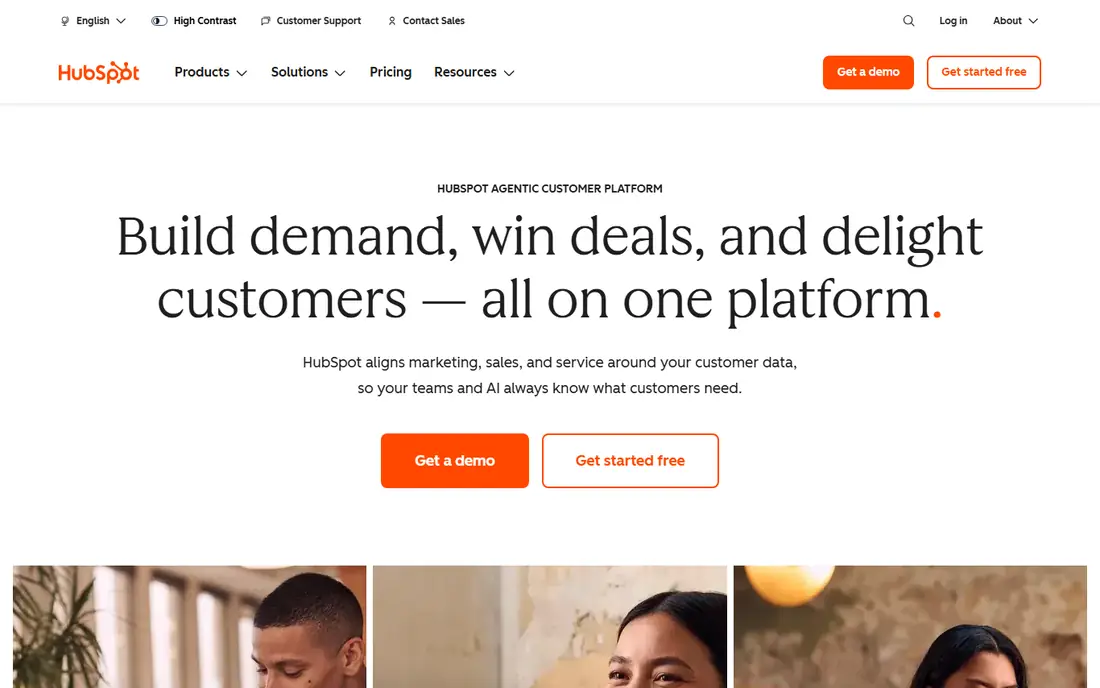
HubSpot is the best lead generation platform for teams that win leads through content, search and referrals rather than cold outreach alone. You can capture leads with forms and landing pages, score them, route them to the right person and track every follow-up in the free CRM. That closed loop is where many standalone prospecting tools fall short, because they find names but do not help you work them.
The catch is cost at scale. The free tools are genuinely useful, but marketing automation, advanced reporting and larger contact limits sit on paid plans that can grow fast. HubSpot still earns the top spot for inbound-led teams, because it keeps lead capture and follow-up in one place instead of spreading them across three disconnected tools.
- Free CRM to start
- Forms, landing pages and email in one system
- Strong reporting as you grow
- Paid marketing and sales plans rise quickly in price
- Some advanced features need higher tiers
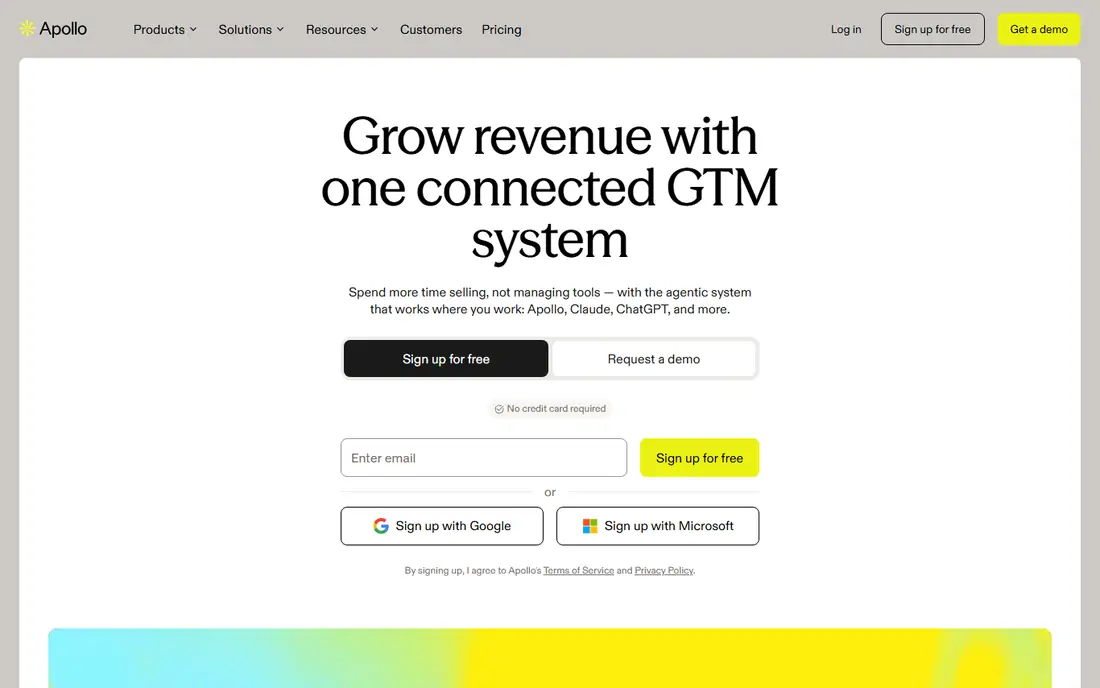
Apollo is our pick for most small sales teams because it does the most in one login. You can search for companies and contacts, enrich records, build sequences and track replies without buying a separate database and a separate outreach tool. The free plan lets a solo seller test the workflow before paying, and the paid entry plan is far cheaper than enterprise data platforms.
Apollo is not perfect. Credits limit how much data you can pull each month, and accuracy varies, so you should verify key contacts before a major campaign. For a team that needs a practical prospecting engine on a modest budget, though, Apollo is hard to beat.
- Large contact database
- Built-in outreach sequences
- Free plan for getting started
- Credit limits can bind on larger lists
- Data quality varies by industry and region
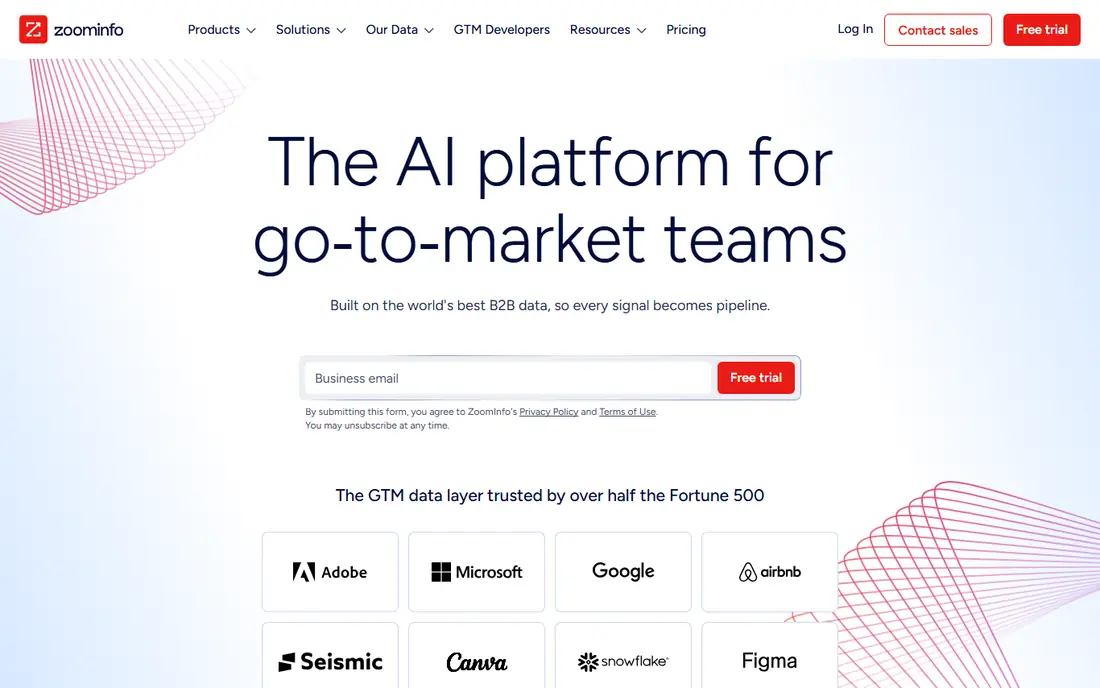
ZoomInfo is the enterprise standard for B2B contact data. Its database depth, company details and intent signals help larger teams prioritize accounts that are actively researching a purchase, and its integrations keep that data flowing into Salesforce, HubSpot and outreach tools. If your deals are large and your team is sizable, that depth can pay for itself.
For a small business, ZoomInfo is usually overkill. Pricing is quoted and annual, and entry costs run into thousands per year. Choose it when data quality and intent signals directly support high-value deals, not when you just need a few hundred contacts a month.
- Deep company and contact database
- Intent signals for targeting
- Strong integrations with major CRMs
- High price and annual contracts
- More platform than most small teams need
Lusha is built for speed. A seller can open a LinkedIn profile or company page, pull contact details with the browser extension and move on to the next prospect in seconds. That simple workflow suits individual reps and small teams who do not want to learn a full platform just to find an email address.
Credits are the limit to watch. Each lookup uses credits, and heavy prospecting can burn through a plan faster than expected. Lusha is best as a lookup layer on top of a CRM, rather than as your only lead generation system.
- Simple browser extension
- Fast email and phone lookup
- Easy to use for individual sellers
- Credit-based model
- Phone data coverage varies
- Less depth than enterprise platforms
Hunter does one job well: finding and verifying professional email addresses. Enter a company domain and you get likely addresses with confidence scores, and the verification tool helps you avoid bounces that hurt deliverability. That narrow focus makes it easy to learn and easy to trust for email-led outreach.
Hunter will not replace a prospect database or a CRM. It has no deep company intelligence and no phone-first prospecting. Pair it with a CRM and an outreach tool, and use it where email accuracy matters most.
- Reliable domain search and email verification
- Simple pricing
- Useful free tier for light use
- Focused on email, not phone data
- No full outreach platform built in
Clay is for teams that build lead lists as a workflow, not a one-off search. You can pull data from many providers, enrich it, score it, write personalized lines and push the result to your CRM or outreach tool, all in one automated flow. Growth teams use it to turn a rough list into a clean, researched prospect list without manual spreadsheet work.
That power comes with complexity. Clay takes time to set up well, and credit usage across providers can be hard to predict at first. It is the best pick for teams that already know their ideal customer and want to automate enrichment, rather than for a first-time prospector.
- Flexible enrichment from many data sources
- Workflow automation for list building
- Popular with growth teams
- Learning curve is steeper than simple lookup tools
- Costs rise with credits and usage
LinkedIn Sales Navigator is the best tool for relationship-led selling. Its advanced search, saved lead lists and alerts help you spot job changes, company growth and posts that give you a real reason to reach out. For sellers whose buyers live on LinkedIn, that context beats a cold list.
Sales Navigator does not give you verified emails or phone numbers on its own, so most teams pair it with a lookup tool like Lusha or Hunter. It also costs more than a simple database, so judge it on meetings booked from LinkedIn, not on list size alone.
- Advanced LinkedIn search and lead lists
- Alerts for job changes and company news
- InMail for outreach
- No email or phone data by itself
- Pricey for solo users
- Results depend on LinkedIn activity
Instantly focuses on the sending side of lead generation. It helps teams run cold email campaigns, manage multiple inboxes, warm up sending domains and track replies, which matters when deliverability decides whether your emails reach the inbox at all. Agencies and outbound teams like its straightforward campaign setup.
Instantly does not find leads for you, so you still need Apollo, ZoomInfo or another data source. It also demands care: poor list quality and aggressive sending can damage your domain. Used with verified lists and sensible volumes, it is a strong outreach engine.
- Built for high-volume cold email
- Deliverability tools included
- Simple campaign setup
- Needs a separate lead source
- Misuse can harm domain reputation
- Pricing varies by plan
How we picked these
We compared official feature and pricing pages, app listings and public reviews, and we kept only tools that are actively sold and genuinely used for lead generation in 2026. We looked for a clear job each tool does well, whether that is data, enrichment, outreach or inbound capture, and we noted where pricing is credit-based, seat-based or quoted. Prices that vary by plan or region are marked as See website rather than guessed.
How to choose a lead generation tool
Start with your bottleneck. If you cannot find enough good prospects, buy data first. If you have lists but no replies, fix outreach and deliverability. If leads arrive but go cold, fix CRM follow-up before buying more data.
Model the real monthly cost
Add seats, credits and any outreach or CRM add-ons together for your actual team size and list volume. A tool that looks cheap per seat can cost more than a rival once credits, extra users and integrations are included.
Protect deliverability and consent
Verify emails before sending, keep volumes sensible, honor opt-outs promptly and follow the rules that apply to your market and channel. A burned domain or a spam complaint costs far more than a slower campaign.
Trial with one campaign, not a demo list
Run a single real campaign end to end during the trial: build the list, enrich it, send it, follow up and log the replies. That test tells you more about data quality and workflow fit than any feature page.
Sources
Frequently asked questions
What is the best lead generation software for small businesses?
Apollo is a strong default for small teams because it combines data and outreach at a modest price, while HubSpot suits teams that rely on inbound leads. Pick based on whether your leads come mainly from outreach or from content and referrals.
What is the best lead generation tool for B2B?
For B2B prospecting, Apollo and ZoomInfo lead on data depth, with LinkedIn Sales Navigator best for social selling. ZoomInfo fits larger teams with bigger deal sizes, while Apollo fits smaller budgets.
Are free lead generation tools worth using?
Yes, for getting started. HubSpot has a useful free CRM, Apollo and Hunter offer free tiers, and Lusha gives limited free lookups. Free plans usually limit credits or contacts, so expect to pay once volume grows.
How much does lead generation software cost?
Entry prices here range from $29 to $49 per user per month, with enterprise platforms quoted annually at much higher totals. Credit-based tools add a variable cost, so model your monthly list size before you buy.
Do I need a CRM as well as a lead generation tool?
In most cases, yes. A prospecting tool finds leads, but a CRM tracks follow-up, meetings and deals. HubSpot combines both, while Apollo, ZoomInfo and Instantly work best when synced to a CRM you already use.