Best Tools for API Threat Detection in 2026: 8 Tools Compared
By ToolNimba Editorial Team November 3, 2026 10 min read

- Top pick
 Salt Security
Enterprise behavioral detection
Starting priceSee websiteCheck out Salt SecurityRead our review - Runner-up
 Traceable AI
Microservice tracing
Starting priceSee websiteCheck out Traceable AIRead our review - Also great
 Cequence
Runtime API protection
Starting priceSee websiteCheck out CequenceRead our review
How we researched this
We compared official pricing and feature pages, app store listings, privacy policies and public user reviews. Prices change, so check the provider's site before you pay.
Key takeaways
- Salt Security is our pick for large enterprises that need behavioral detection across a large API estate.
- Traceable AI suits complex microservice environments, with tracing that follows API calls across services.
- 42Crunch is the best starting point for API-first teams, with a free tier for OpenAPI contract analysis.
- Cequence and Wallarm focus on runtime protection against abuse, bots, and business-logic attacks.
- No single tool covers every API risk, so pair runtime detection with testing and contract checks.
Quick comparison
| Name | Best for | Starting price | Free plan | |
|---|---|---|---|---|
| Salt Security | Enterprise behavioral detection | See website | No | Visit |
| Traceable AI | Microservice tracing | See website | No | Visit |
| Cequence | Runtime API protection | See website | No | Visit |
 Akto | Full-lifecycle API security | See website | Free trial | Visit |
 42Crunch | OpenAPI contract security | Free | Yes | Visit |
 Wallarm | API and application protection | See website | Free trial | Visit |
 Imperva API Security | Edge-scale API protection | See website | No | Visit |
 Beagle Security | Automated API testing | See website | Free trial | Visit |
The best tools for API threat detection
API threats look different from website attacks. Abuse often uses valid credentials, normal-looking requests, and business logic, not just known malware patterns. The tools below detect that behavior by learning normal API traffic, watching for anomalies, and blocking abuse in real time.
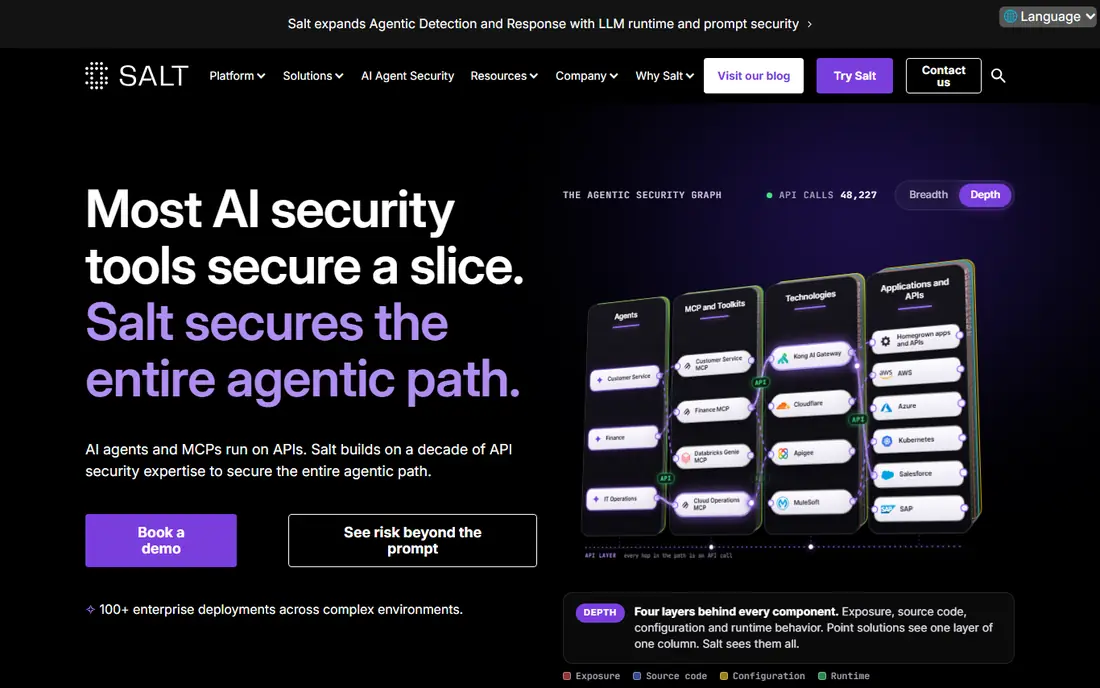
Salt Security is the enterprise pick in this list. It builds a baseline of normal API behavior from traffic, then flags deviations such as credential stuffing, data scraping, and account takeover attempts that signature tools miss. Continuous discovery finds shadow and forgotten APIs, which are a common source of breaches, and runtime protection can block abuse as it happens.
The catch is scale and cost. Pricing is enterprise and quoted on request, and a large deployment needs time to tune baselines and reduce false positives. Smaller teams may find the platform more than they need. For organizations with many public APIs and real attack traffic, Salt's behavioral approach is the strongest fit.
- Behavioral analytics across the API lifecycle
- Continuous discovery
- Runtime protection
- Enterprise pricing on request
- Deployment takes planning for large estates
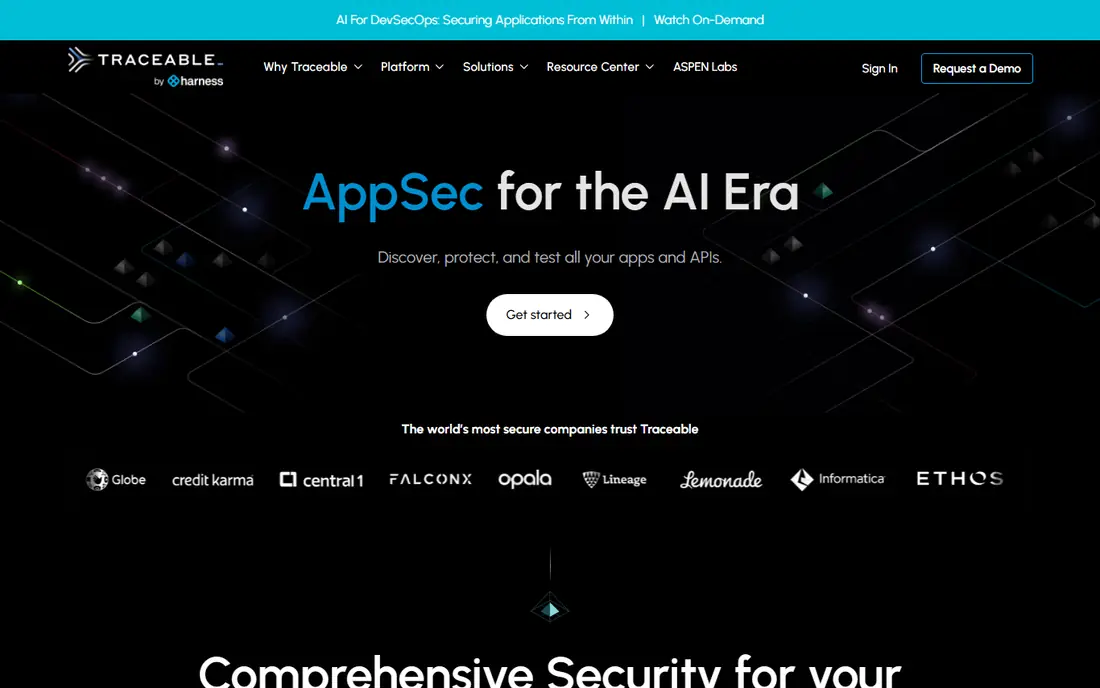
Traceable AI suits teams whose APIs call other APIs behind the scenes. Its tracing follows a request across microservices, so security teams can see where sensitive data flows and where an attack moves after entry. That visibility helps with both threat detection and incident response, since you can trace abuse to the affected service rather than guessing.
The limit is fit. A company with a handful of simple APIs will not use the full tracing depth, and enterprise pricing reflects that larger scope. Traceable also needs careful deployment to cover internal traffic, not just gateway traffic. For complex estates, that depth is exactly what makes it worth the effort.
- Deep tracing across services
- Discovery and runtime protection
- Abuse and anomaly detection
- Enterprise pricing on request
- Best value in complex environments, not simple APIs
Cequence focuses on the runtime problem: APIs under attack from bots, scrapers, and credential abuse. It inventories endpoints, assesses risks such as weak access controls and sensitive data exposure, and applies protection against automated abuse. A testing tool also lets teams check APIs before production, which catches issues earlier.
The honest catch is tuning. Legitimate partners and automation can look like bots, so teams need to review policies and allowlists during rollout. Pricing is custom, so budget planning needs a vendor conversation. For public APIs facing constant automated abuse, Cequence's runtime focus is a strong match.
- API discovery and risk assessment
- Bot and abuse detection
- Pre-production testing
- Custom pricing
- Requires tuning to separate abuse from legitimate automation
Akto covers the full API lifecycle in one platform, from discovery and security testing to runtime protection. That breadth appeals to teams that want one vendor instead of stitching separate tools together. It supports REST, GraphQL, and other common API styles, and its testing checks for authorization flaws and common API risks.
The trade is that breadth can mean less depth in any single area compared with a specialist. Pricing is custom and usage-based, so costs depend on your API volume and endpoints. Check support hours and roadmap fit before committing, especially if you need enterprise support coverage. For mid-size teams wanting one platform, Akto is a practical choice.
- Discovery, testing, and runtime protection in one platform
- Usage-based pricing
- Broad API coverage
- Custom pricing details
- Smaller vendor than Salt or Imperva, so check support coverage
42Crunch is the best starting point for API-first teams that define APIs with OpenAPI contracts. It analyzes contracts for security flaws, enforces policies, and catches misconfigurations at design time, before code ships. A free tier for individuals makes it easy to test on a real spec, with paid team plans for larger use.
The limit is scope. Contract analysis catches design flaws, but it does not replace runtime detection of live abuse, bots, or stolen credentials. Pair 42Crunch with a runtime tool for production coverage. For teams that want to shift security left and fix specs early, it is the clearest, lowest-cost entry point here.
- Free tier for individuals
- Strong OpenAPI analysis
- Checks design-time risks early
- Contract focus misses some runtime abuse
- Team plans start higher than the free tier
Wallarm protects APIs and web applications together, which suits teams that do not want separate tools for each layer. It discovers APIs, detects attacks and abuse, and blocks malicious traffic, with bot mitigation for automated threats. Deployment options cover cloud and on-premises environments, which helps regulated teams.
The catch is that full pricing is quoted rather than published, so comparing costs takes a sales conversation. Like other runtime tools, Wallarm needs tuning to avoid blocking legitimate traffic during the first weeks. For teams that want unified API and application protection, it is a solid, established option.
- API discovery and protection
- Bot mitigation
- Works across cloud and on-premises deployments
- Pricing on request for full plans
- Policy tuning needed at rollout
Imperva API Security fits organizations that already rely on edge protection and want API security at the same layer. It discovers APIs, builds a positive security model of allowed behavior, and blocks requests that break that model. That approach works well for high-volume public APIs, where edge blocking stops abuse before it reaches origin servers.
The downside is complexity and cost for smaller teams. Enterprise pricing and configuration effort make it a poor fit for a startup with a few APIs. For large enterprises with existing Imperva deployments, adding API security at the edge is efficient and consistent with the rest of their protection.
- Large-scale edge protection
- Discovery and positive security policies
- Strong enterprise support
- Enterprise pricing
- Can be complex to configure for smaller teams
Beagle Security is the testing pick in this list. It runs automated API penetration tests, including GraphQL coverage, and integrates with CI/CD pipelines so scans run on every deployment. Remediation guidance is written for developers, which helps fixes land faster than a raw vulnerability report.
The limit is that testing finds flaws before or between releases, but it does not watch live traffic for abuse in the way Salt or Cequence do. Beagle's Essential plan is reported around $119 per month, so check current pricing before budgeting. Pair it with a runtime tool for production, and use it to keep new API releases from shipping known flaws.
- Automated API penetration testing
- CI/CD integration
- GraphQL support
- Testing focus, not full runtime protection
- Paid plans start above free testing options
How we picked these
We compared official feature pages, pricing pages, documentation, and public reviews for API security platforms with real threat detection, not just API management. We weighed discovery coverage, behavioral and anomaly detection, runtime protection, testing depth, and deployment options. We did not claim hands-on testing; our findings rest on published features, pricing models, and plan details. We favored tools that address live API abuse, since that is the core of threat detection, and we noted where a tool is stronger at testing or design-time checks.
Choosing API threat detection for your estate
Start with an inventory. You cannot protect APIs you do not know about, so discovery comes first, especially for shadow APIs left over from old projects. Count endpoints, note which ones are public, and identify which ones handle sensitive data or money. That inventory also sets pricing, since several vendors charge by endpoint or traffic volume.
Separate testing from runtime protection
Testing tools find flaws in code and contracts before release, while runtime tools watch live traffic for abuse. Most teams need both, but the balance depends on risk. Public APIs with real users need runtime protection first, while internal APIs in active development benefit most from testing and contract checks. Budget for both over time rather than assuming one tool covers everything.
Plan for false positives
Behavioral detection learns normal traffic, and that learning period produces alerts that turn out to be legitimate. Assign an owner for triage during rollout, review allowlists for partners and automation, and track alert volume weekly. A tool that floods your team with low-quality alerts will get ignored, which is worse than a narrower tool your team actually uses.
Test with real attack patterns
Before committing, run each shortlisted tool against realistic abuse: credential stuffing, broken object-level authorization, excessive data scraping, and bot traffic. Check how clearly it explains each alert and whether blocking works without breaking legitimate clients. A demo with clean traffic tells you little; a trial with messy, real traffic tells you what you need to know.
Sources
- https://www.salt.security
- https://www.traceable.ai
- https://www.cequence.ai
- https://www.akto.io
- https://www.42crunch.com
- https://www.wallarm.com
- https://www.imperva.com
- https://www.beaglesecurity.com
- https://beaglesecurity.com/blog/article/best-api-security-tools.html
- https://accuknox.com/blog/best-api-security-tools-2026