Best Tools for Tracking LLM Brand Visibility in 2026: 8 Tools Compared
By ToolNimba Editorial Team November 10, 2026 10 min read

- Top pick
 Profound
Enterprise brands and agencies
Starting priceSee websiteCheck out ProfoundRead our review - Runner-up
 Peec AI
Agencies and mid-market teams
Starting price$85 per monthCheck out Peec AIRead our review - Also great
 Otterly.AI
Small teams on a budget
Starting price$29 per monthCheck out Otterly.AIRead our review
How we researched this
We compared official pricing and feature pages, app store listings, privacy policies and public user reviews. Prices change, so check the provider's site before you pay.
Key takeaways
- AI answers change from run to run, so track mention trends over weeks, not single rankings on one day.
- Profound leads on engine breadth for large brands, while Otterly.AI is the cheapest credible starting point.
- Peec AI suits agencies and mid-market teams that want prompt-level detail and multi-country tracking.
- Tools bundled with SEO suites, such as Semrush, Ahrefs, and SE Ranking, suit teams that already pay for those platforms.
- Check which engines are included at your price tier, since Claude, Gemini, and Google AI Mode are often paid add-ons.
Quick comparison
| Name | Best for | Starting price | Free plan | |
|---|---|---|---|---|
| Profound | Enterprise brands and agencies | See website | Free trial | Visit |
| Peec AI | Agencies and mid-market teams | $85 per month | Free trial | Visit |
| Otterly.AI | Small teams on a budget | $29 per month | Free trial | Visit |
 Semrush AI Visibility Toolkit | Teams already using Semrush | $99 per month | No | Visit |
 Ahrefs Brand Radar | Teams already using Ahrefs | See website | No | Visit |
 SE Ranking | SEO teams adding AI tracking | See website | Free trial | Visit |
 Scrunch AI | Crawler analytics plus visibility | See website | Free trial | Visit |
 Brand24 | PR teams and mention monitoring | $199 per month | Free trial | Visit |
The best tools for tracking LLM brand visibility
When buyers ask ChatGPT or Perplexity for a recommendation, the answer is now part of your marketing. These tools run buyer-style prompts through AI engines, record whether your brand is mentioned or cited, and show how competitors compare. The best one for you depends on budget, engine coverage, and whether you need action steps or just measurement.
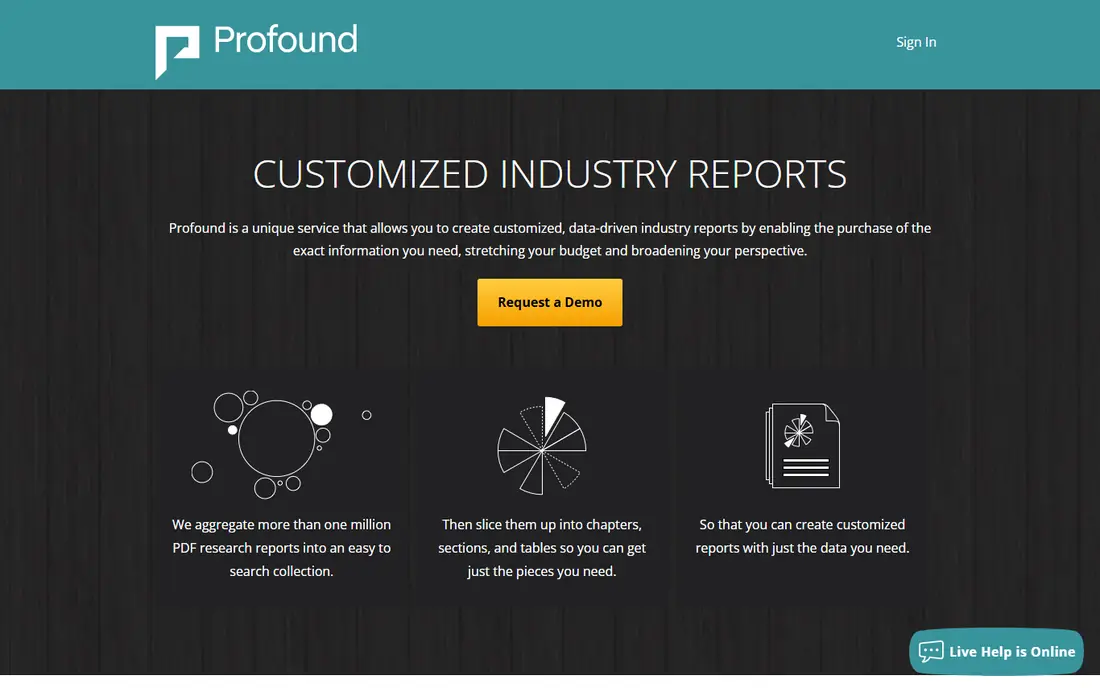
Profound is the name most large brands reach for when AI visibility becomes a board-level question. On enterprise plans it tracks up to nine answer engines, including ChatGPT, Perplexity, Gemini, Claude, and Google AI surfaces, and it connects AI crawler activity to traffic analytics. That breadth matters because a brand can rank well in ChatGPT and barely appear in Perplexity.
The trade-off is access. Pricing is custom for enterprise plans, with a free trial that covers a limited prompt set, so small teams cannot simply sign up and start. If you manage a large brand or an agency book of clients, Profound's depth justifies the sales process. Smaller teams should start cheaper and graduate to it.
- Widest engine coverage on enterprise plans
- Crawler and traffic analytics
- Content agents tied to findings
- Enterprise pricing is custom, so budgeting needs a sales conversation
- Entry plans cover fewer engines
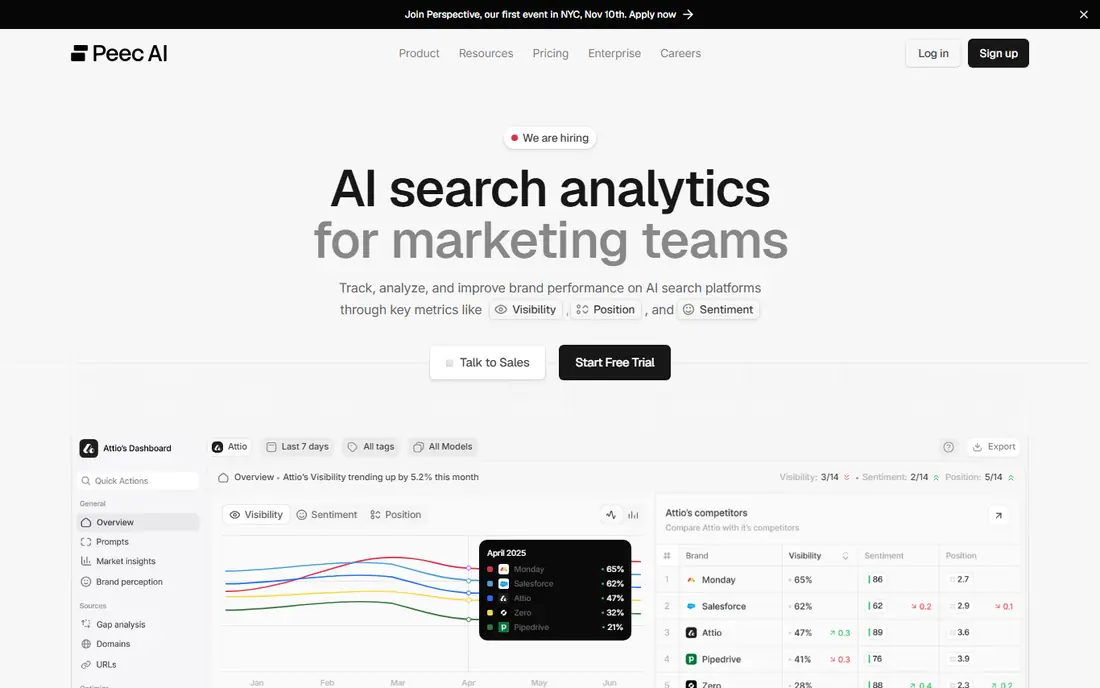
Peec AI is built for teams that want to understand why an AI engine recommends a competitor. It tracks mentions, citations, sentiment, and share of voice at the prompt level, and its citation gap analysis shows which sources engines trust in your category. Agencies like the unlimited seats and per-client project structure, which keep reporting simple across accounts.
Starter pricing is listed at 85 euros per month, with 50 prompts and three chosen models, and higher tiers add more prompts and engines. That model limit is the main catch: adding engines raises the bill, so pick the engines your buyers actually use. A seven-day free trial lets you test it with real prompts before committing.
- Prompt-level tracking with sentiment and share of voice
- Unlimited seats
- Multi-country support
- Entry plan lets you pick only three models
- Prices are shown in euros
Otterly.AI is the sensible first tracker for a small brand. Its Lite plan starts at $29 per month and covers ChatGPT, Google AI Overviews, Perplexity, and Microsoft Copilot with daily tracking, which is enough to learn whether AI answers mention you at all. Unlimited team members mean the whole marketing team can watch the same dashboard without seat fees.
The limits are clear and fair at this price. Lite covers 15 prompts, and Gemini, Google AI Mode, and Claude are paid add-ons. If your buyers live on those engines, budget for the add-ons or step up a tier. For a first 90 days of AI visibility data, Otterly.AI is the cheapest honest starting point.
- Lowest credible entry price
- Daily tracking
- Unlimited team members
- Entry plan covers 15 prompts and core engines only
- Gemini and Claude cost extra
Semrush AI Visibility Toolkit
Best for: Teams already using Semrush
Semrush's AI Visibility Toolkit suits teams that already live in Semrush. It tracks prompts across ChatGPT, Google AI, Gemini, and Perplexity, reports brand mentions and citations, and adds a site audit for AI readiness. Keeping AI visibility next to keyword and backlink data makes it easier to connect a visibility gap to a content fix.
Pricing starts at $99 per month per domain as an add-on, which is reasonable inside an existing Semrush budget but steep as a standalone purchase. If you do not use Semrush for SEO, a dedicated tracker such as Peec or Otterly will give you more for the money. If you do, this is the lowest-friction option.
- Sits inside a familiar SEO suite
- Tracks major engines plus AI Overviews
- Includes an AI-readiness audit
- Priced per domain as an add-on
- Needs a Semrush plan underneath for full value
Ahrefs Brand Radar extends a tool many SEO teams already trust into AI search. It tracks how brands appear across AI platforms and the web, tying mentions back to the pages and links that engines cite. For teams that already use Ahrefs to study competitors, that continuity is valuable: the same competitor set, the same reporting habits, one more data source.
The catch is cost structure. Brand Radar is an add-on with its own index pricing on top of an Ahrefs subscription, and the entry tier covers only a handful of custom prompts daily. Check the current Ahrefs pricing page for the combined total before assuming it is cheap. As a second tracker inside an existing stack, it earns its place.
- Strong brand mention and web citation data
- Fits Ahrefs backlink workflows
- Multi-platform tracking
- Full Brand Radar pricing sits on top of an Ahrefs plan
- Entry prompt limits are small
SE Ranking appeals to SEO teams that want AI visibility without buying another standalone tool. Its AI tracking sits alongside rank tracking, site audits, and competitor research, so a team can watch traditional rankings and AI mentions in one dashboard. That single-workflow advantage matters when one person owns both search channels.
Dedicated trackers go deeper on prompt analysis and citation sources, so SE Ranking is a compromise: broader, but less specialized. Pricing depends on the SEO plan you choose, so confirm the current SE Ranking pricing page and whether AI tracking is included at your tier. For small SEO teams, it is a practical middle ground.
- Combines AI visibility with rank tracking and audits
- 14-day free trial
- Good value inside an SEO suite
- AI features are part of a wider suite, so depth is less than dedicated trackers
- Pricing varies by plan
Scrunch AI stands out by watching what AI crawlers do, not just what chatbots say. It tracks which AI agents visit your site, how they interact with your content, and how your brand is perceived in AI answers, alongside competitor signals. For technical SEO teams, that crawler data explains why visibility changed, rather than just reporting that it did.
That depth comes at a higher entry price than Otterly or Peec, and the setup rewards teams comfortable with analytics. A free trial helps you judge whether crawler data changes your decisions. If your main question is simply whether buyers see your brand, a cheaper tracker answers it; if you need to know why, Scrunch earns consideration.
- Tracks AI crawler behavior as well as mentions
- Brand perception analysis
- Competitor signals
- Entry pricing is higher than budget trackers
- Setup suits technical teams
Brand24 comes from social listening, and that heritage shapes its AI tracking. It monitors brand mentions, including references in AI summaries, with real-time alerts, sentiment scoring, and volume trends that PR teams already know how to read. When a story breaks or a competitor launches, Brand24 tells you quickly and in a format a comms team can act on.
Prompt-level AI tracking is thinner here than in Peec or Profound, since Brand24 is built for mentions rather than controlled prompt panels. Entry pricing starts around $199 per month, so it suits PR and brand teams with a monitoring budget, not solo marketers. Pair it with a prompt tracker if you need both mention alerts and controlled visibility measurement.
- Real-time mention alerts across web and AI surfaces
- Sentiment and volume trends
- Strong reporting
- AI tracking is part of a wider listening tool, so prompt-level depth is thinner
- Entry price is high
How we picked these
We compared official product and pricing pages and recent independent comparisons, and kept only tools that track brand presence inside AI answers today. We favored tools with stated engine coverage, prompt-level reporting, and transparent entry pricing, and we treated single-screenshot checks and manual prompt runs as measurement, not monitoring. Prices change often, so confirm the current figure on each vendor site before you buy.
How to set up tracking that means something
Start with 25 to 50 prompts your buyers actually ask, not branded searches for your own name. Mix comparison questions, problem questions, and best-of questions, since unbranded prompts are where AI recommendations are won or lost. Add your main competitors to the same prompt set, so share of voice means something.
Then be patient with the data. AI answers vary from run to run, so judge trends over four to eight weeks rather than reacting to one day's result. When visibility moves, check what changed: new comparison pages, review placements, or citation sources often explain the shift better than any dashboard setting. Tracking without content fixes is just watching; pair each report with one concrete page or citation improvement.
What to check before you pay
Confirm which engines are included at your tier, how many prompts and competitors you get, and whether historical data exports with you if you leave. Ask whether sentiment and citation data are included or gated to higher plans, and whether multi-country tracking matters for your buyers. A cheap plan that misses your buyers' main engine is not a bargain.
Sources
Frequently asked questions
What does an LLM brand visibility tool actually track?
It runs defined prompts through AI engines such as ChatGPT, Gemini, and Perplexity, then records whether your brand is mentioned, cited, recommended, or replaced by a competitor. Good tools store the prompt, engine, date, and competitor set so trends can be compared over time.
How many prompts should I track?
Start with 25 to 50 unbranded buyer prompts covering comparisons, problems, and best-of questions. That range is large enough to show trends and small enough to act on, and most entry plans cover it.
Why do AI visibility results change every day?
AI engines vary their answers from run to run, and they update their sources over time. Treat visibility as a trend over weeks, not a fixed ranking, and look for sustained movement rather than single-day swings.
Is Profound worth it for a small business?
Usually not at first. Profound suits large brands and agencies that need wide engine coverage and deep analytics. Small teams get more value from Otterly.AI or Peec AI, and can move to Profound when the brand and budget grow.
Do I still need traditional SEO if I track AI visibility?
Yes. AI engines cite web pages, reviews, and comparison content, so the pages that earn citations are usually the same pages that rank well in search. AI tracking shows where you stand; SEO and content work still drive the improvement.
Can a tool improve my AI visibility, or only measure it?
Most tools on this list mainly measure, though some add recommendations or content agents. The improvement itself comes from publishing clear comparison pages, earning review and citation placements, and keeping brand facts accurate and consistent across the web.