Best Trading Platform Canada in 2026: 9 Platforms Compared
By ToolNimba Editorial Team November 10, 2026 9 min read

- Top pick
 Wealthsimple
Beginners and simple investing
Starting priceFreeCheck out WealthsimpleRead our review - Runner-up
 Questrade
Self-directed investors who want choice
Starting priceFreeCheck out QuestradeRead our review - Also great
 Qtrade Direct Investing
Long-term investors
Starting priceFreeCheck out Qtrade Direct InvestingRead our review
How we researched this
We compared official pricing and feature pages, app store listings, privacy policies and public user reviews. Prices change, so check the provider's site before you pay.
Key takeaways
- Wealthsimple and Questrade both offer commission-free stock and ETF trades in Canada, so the choice often comes down to account breadth and desktop tools.
- Currency conversion is a hidden cost for US investing, so check FX fees and US dollar accounts before you pick a platform.
- Bank brokerages still charge per trade in most cases, but they suit investors who want banking and investing in one place.
- Active traders should weigh options pricing, order types and research tools more heavily than the headline stock commission.
Quick comparison
| Name | Best for | Starting price | Free plan | |
|---|---|---|---|---|
| Wealthsimple | Beginners and simple investing | Free | Yes | Visit |
| Questrade | Self-directed investors who want choice | Free | Yes | Visit |
| Qtrade Direct Investing | Long-term investors | Free | Yes | Visit |
 Interactive Brokers | Active and global traders | See website | No | Visit |
 Moomoo | Active traders who want low fees | $1.49 per trade | Yes | Visit |
 TD Direct Investing | Bank customers who want research | $9.99 per trade | No | Visit |
 RBC Direct Investing | RBC customers | $9.95 per trade | No | Visit |
 CIBC Investor's Edge | Transparent bank pricing | $6.95 per trade | No | Visit |
 National Bank Direct Brokerage | Bank brokerage with no stock commission | Free | Yes | Visit |
The best trading platform Canada options
We compared official pricing pages, account lineups and trading tools for the main Canadian platforms. This is not financial advice, and trading carries risk, including the risk of losing money. The right pick depends on how often you trade, whether you hold US dollars, and which registered accounts you need.

Wealthsimple is our pick for most people who are just starting out in Canada. The app keeps buying and selling simple, and it supports TFSA, RRSP, FHSA and other common account types. Recurring purchases help new investors build a habit without watching the market every day.
The catch is currency. If you trade US stocks often, conversion fees and the cost of a US dollar account can add up at lower balance tiers. Wealthsimple also suits long-term buyers better than traders who need deep charting and complex order types. For a first brokerage, though, its clarity is hard to beat.
- Commission-free stock and ETF trades
- Simple app and recurring investing
- Wide registered account lineup
- US dollar accounts cost extra at lower tiers
- No full desktop trading platform for advanced users
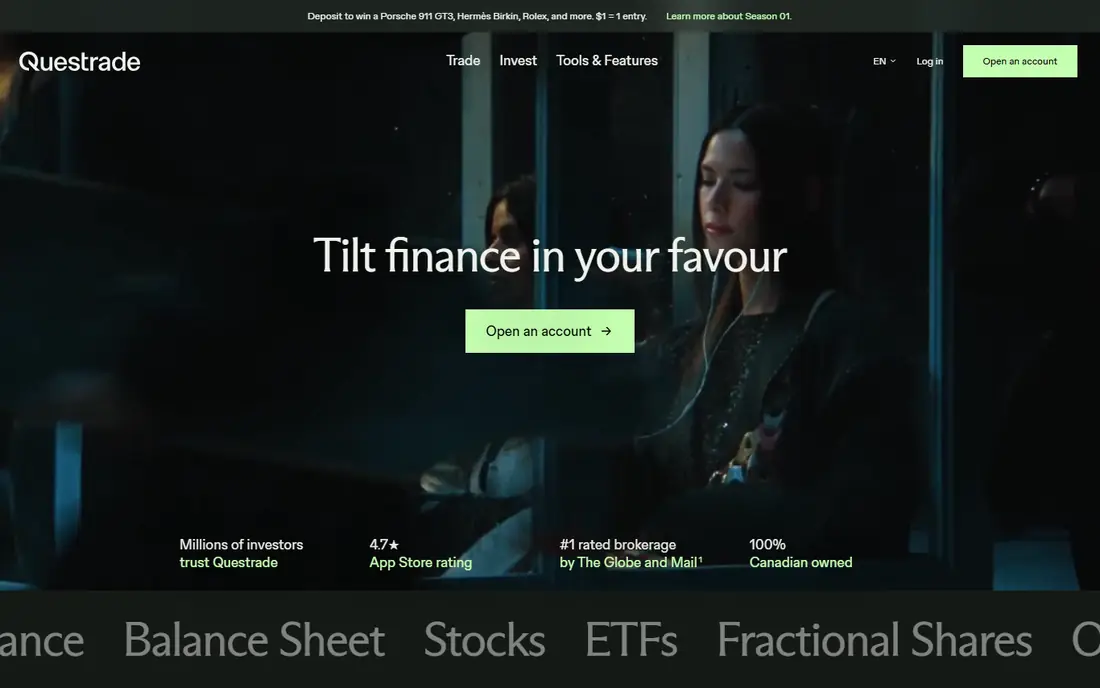
Questrade gives self-directed investors more room to grow than most commission-free rivals. It covers a broad set of accounts, including corporate and trust accounts in some cases, and its desktop platform suits investors who want more than a phone app. Options pricing is also competitive for active traders.
The trade-off is complexity. New investors may find the number of platforms and account choices confusing at first. Questrade also charges for some data and services that beginners may not need. If you plan to hold US dollars or trade more often over time, that extra depth is worth the learning curve.
- Commission-free stock and ETF trades
- Free US dollar accounts
- Desktop platform for active traders
- Managed portfolios have a minimum
- Interface can feel busy for total beginners

Qtrade Direct Investing suits investors who buy and hold rather than trade every day. Its research, screeners and educational material help long-term investors compare ETFs and build a diversified portfolio. The platform feels orderly, which matters when you check your account once a week rather than once an hour.
Active traders may want more advanced charting and faster order tools elsewhere. Qtrade also has account and service fees in certain situations, so read its fee schedule before opening an account. For steady, long-term investing, it remains a strong Canadian choice.
- Commission-free stock and ETF trades
- Strong research and education tools
- Full registered account lineup
- Advanced trading tools are less deep than some rivals
- Account fees can apply in some cases
Interactive Brokers is built for traders who want markets beyond Canada and the United States. It offers a wide range of asset classes, advanced order types and professional-grade tools. Frequent traders who value low per-share pricing and global access often find it hard to match.
Beginners should approach it with care. The platform assumes you already understand order types, margin and market structure, and its interface reflects that. If you mainly buy Canadian ETFs in a TFSA, a simpler platform will serve you better and cost less in time.
- Very broad global market access
- Advanced trading tools and order types
- Competitive pricing for frequent traders
- Steep learning curve
- Platform can overwhelm beginners
Moomoo appeals to active traders who want a modern app without bank brokerage prices. Its charting, screeners and market data suit people who follow stocks closely and trade more than a few times a month. The app is also easy to navigate for a trading-focused product.
The main limits are scope and support for every account type a long-term Canadian investor might need. Moomoo is not a full replacement for a bank brokerage if you need complex estate, corporate or trust accounts. Check its account list and FX terms before moving a large portfolio.
- Low-cost trades
- Active trading tools and market data
- Fractional share options in some cases
- Account lineup is narrower than bank brokerages
- Currency conversion still needs checking
TD Direct Investing is the pick for TD customers who want investing and banking under one roof. Its research tools, market commentary and trading platforms are stronger than most discount rivals. Active traders can also qualify for lower pricing based on trading volume.
The obvious downside is cost. At $9.99 per trade for standard accounts, frequent trading adds up fast compared with commission-free platforms. TD suits investors who trade less often, value research, and already bank with TD. If you trade weekly, run the numbers first.
- Deep research and analyst coverage
- Full account lineup
- Strong desktop and mobile tools
- Higher per-trade cost
- Some ETFs are free while most trades are not
RBC Direct Investing gives RBC customers a familiar route into self-directed investing. It supports the main registered accounts, bonds, mutual funds and other investments beyond stocks and ETFs. For investors who already hold RBC accounts, transfers and cash management are straightforward.
Cost is the main drawback. Frequent traders will pay far more here than on commission-free platforms, and the platform design is less modern than newer apps. RBC Direct Investing makes most sense for buy-and-hold investors who value the bank relationship over the lowest possible commission.
- Wide account and investment choice
- Integrated with RBC banking
- Solid research tools
- Per-trade pricing is high for frequent traders
- Interface feels dated in places
CIBC Investor's Edge stands out among bank brokerages for its clearer, lower standard commission. Active traders can pay less, and younger investors with a qualifying chequing account may see fees waived. That makes it a reasonable middle ground between free apps and pricier bank platforms.
It still charges per trade, so it is not the cheapest route for frequent trading. Its tools are solid rather than outstanding, and investors who want the deepest research may prefer TD. For CIBC customers who trade occasionally, the pricing is easier to justify.
- Lower bank brokerage commission than many rivals
- Discounts for active and younger investors
- Broad account choice
- Still costs per trade
- Research tools trail the best bank platforms
National Bank Direct Brokerage
Best for: Bank brokerage with no stock commission
National Bank Direct Brokerage is unusual among big bank brokerages because online stock and ETF trades carry no commission. That makes it attractive to bank customers who want free trades without leaving a bank platform. It supports TFSA, RRSP, FHSA and other registered accounts.
The platform itself is less polished than Wealthsimple or Questrade, and it does not offer fractional shares. Investors who want to buy small slices of expensive US stocks will need another platform. For bank customers who buy whole shares and hold for the long term, it is a strong, low-cost option.
- Commission-free online stock and ETF trades
- Full bank brokerage account lineup
- No fractional share complexity for some investors
- No fractional shares
- Platform is less modern than newer apps
How we picked these
We compared official pricing pages, account lineups, trading tools and public reviews for Canadian brokerages available in October 2026. We favored platforms that are regulated in Canada, support TFSA and RRSP accounts, and clearly publish their fees. We did not claim hands-on testing, and we treated promotional offers as temporary rather than as a reason to pick a platform.
What to check before you open an account
Start with the account types you actually need, then look at FX fees if you buy US stocks. A platform that is free for Canadian trades can still cost you on every currency conversion. Next, check options pricing, data fees and account maintenance fees, because those charges hit active traders hardest.
Also think about how you will invest. A simple app suits automatic ETF purchases, while a desktop platform suits stock picking and options. If you need help, a managed portfolio or a bank adviser may suit you better than a self-directed account, even if the fee is higher. Confirm the current fee schedule on the broker's own site before you transfer money.
Sources
Frequently asked questions
What is the best trading platform in Canada for beginners?
Wealthsimple is our pick for most beginners because stock and ETF trades are commission-free and the app is easy to use. Questrade is a close second for beginners who want more account choice and a desktop platform later. Both support TFSA and RRSP accounts.
Which Canadian trading platform has the lowest fees?
Wealthsimple, Questrade, Qtrade and National Bank Direct Brokerage all offer commission-free online stock and ETF trades. The lowest total cost still depends on FX fees, options pricing and any account fees, so compare the full fee schedule rather than the headline commission alone.
Can I trade US stocks from Canada?
Yes, most Canadian platforms let you buy US-listed stocks and ETFs. You will either hold US dollars in a US dollar account or pay a currency conversion fee on each trade. If you trade US stocks often, a platform with free US dollar accounts can save real money.
Is my money protected with a Canadian brokerage?
Canadian brokerages that are members of the Canadian Investment Regulatory Organization are generally covered by the Canadian Investor Protection Fund up to its limits. Coverage rules have conditions, so check the broker's own disclosure and CIPF membership before you open an account.
Should I choose a bank brokerage or an independent platform?
Bank brokerages suit customers who want banking and investing together and value in-person support. Independent platforms usually offer lower commissions and more modern apps. Your choice should follow how often you trade, which accounts you need, and whether you value the bank relationship.