Best Vocabulary Apps in 2026: 8 Apps Compared
By ToolNimba Editorial Team November 11, 2026 9 min read

- Top pick
 Vocabulary.com
Deep adaptive learning
Starting priceFreeCheck out Vocabulary.comRead our review - Runner-up
 Magoosh Vocabulary Builder
GRE, SAT, and TOEFL prep
Starting priceFreeCheck out Magoosh Vocabulary BuilderRead our review - Also great
 Quizlet
Custom flashcard sets
Starting priceFreeCheck out QuizletRead our review
How we researched this
We compared official pricing and feature pages, app store listings, privacy policies and public user reviews. Prices change, so check the provider's site before you pay.
Key takeaways
- Vocabulary.com is our pick for deep word learning because its adaptive questions teach words in context rather than as bare definitions.
- Magoosh Vocabulary Builder is the best free option for GRE, SAT, and TOEFL prep, with curated lists by difficulty.
- Anki is the most powerful free tool for long-term retention, but it takes setup and patience to use well.
- Short daily sessions beat rare long sessions, so pick an app whose daily habit you will actually keep.
Quick comparison
| Name | Best for | Starting price | Free plan | |
|---|---|---|---|---|
| Vocabulary.com | Deep adaptive learning | Free | Yes | Visit |
| Magoosh Vocabulary Builder | GRE, SAT, and TOEFL prep | Free | Yes | Visit |
| Quizlet | Custom flashcard sets | Free | Yes | Visit |
 Anki | Spaced repetition control | Free | Yes | Visit |
 Drops | Visual five-minute sessions | Free | Yes | Visit |
 WordUp | Daily visual word learning | Free | Yes | Visit |
 Memrise | Language vocabulary in context | Free | Yes | Visit |
 Lingui | Spaced repetition for English learners | $9.99 per month | Yes | Visit |
The best vocabulary apps
Vocabulary apps differ in what they actually teach. Some drill test words, some teach words through reading and context, and some use images and games to make recall stick. We compared official app store listings, product pages, and feature descriptions for the apps below, focusing on free access, learning method, and who each app suits best.
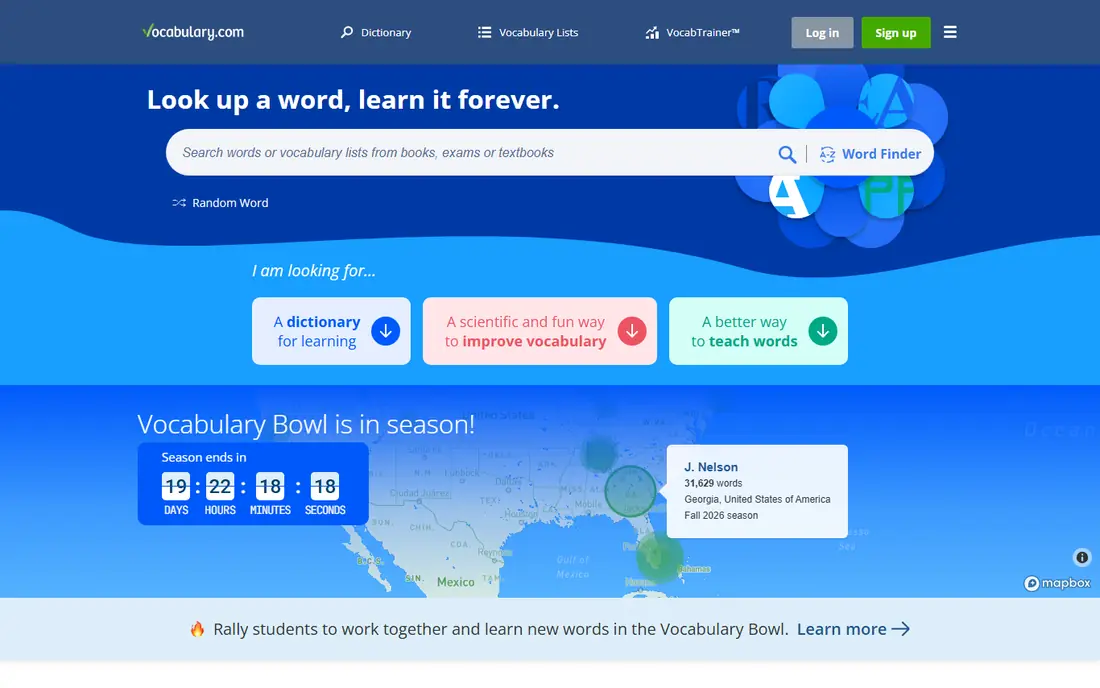
Vocabulary.com stands out because it does not just show a word and a definition. Its adaptive system asks questions, gives examples, and adjusts difficulty based on your answers, so words you struggle with return more often. Definitions include usage notes and word history, which helps you understand nuance rather than memorizing a single meaning.
The free version limits daily use, and unlimited access requires a premium subscription, with pricing listed as See website on some pages and around 9.99 dollars per month in app store coverage. That limit is worth checking before you build a daily habit around it. For learners who want real understanding rather than quick drilling, Vocabulary.com is our pick.
- Adaptive questions adjust to your level
- Words taught in context
- Dictionary and word lists included
- Free use has daily limits
- Premium needed for unlimited access

Magoosh Vocabulary Builder is a free app focused on the words that appear most often on the GRE, SAT, and TOEFL. The GRE list covers 1,200 high-frequency words grouped into basic, intermediate, and advanced levels, with definitions and example sentences for each word. Levels open as you progress, and spaced repetition brings back words you missed.
The narrow focus is both strength and limit. If you are preparing for one of those tests, the curation saves time. If you want general English vocabulary for work or conversation, the lists feel test-shaped rather than everyday. For test prep, it is the best free vocabulary app in this list.
- Free test word lists
- Words grouped by difficulty
- Example sentences for every word
- Narrow focus on test prep
- Less useful for general conversation vocabulary
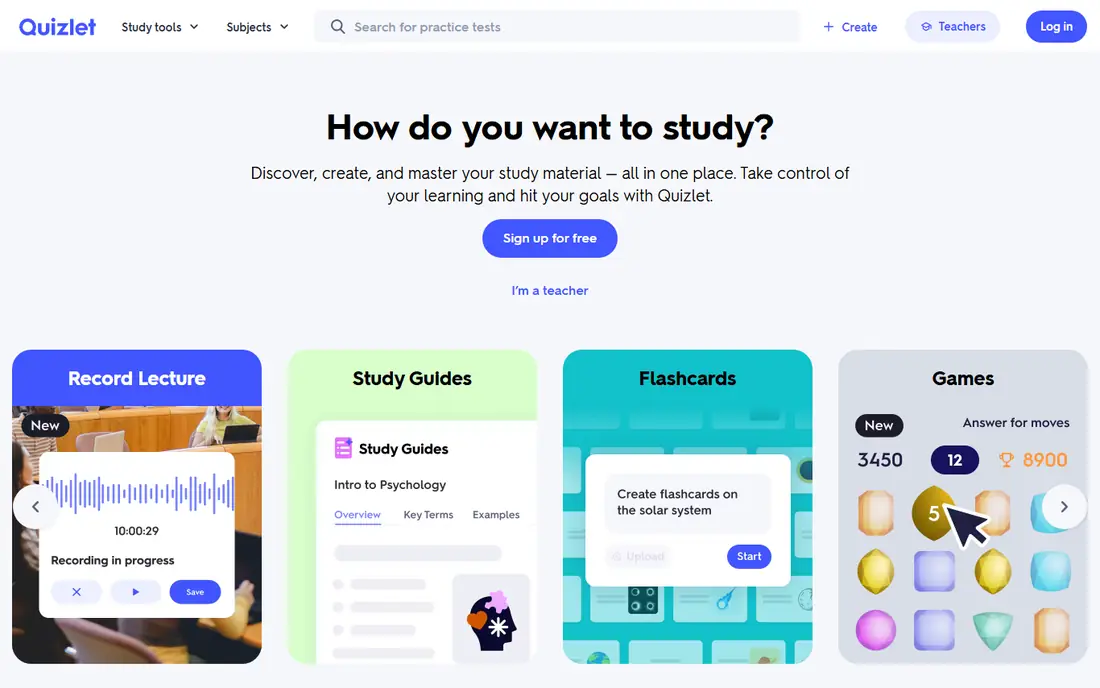
Quizlet is the most flexible flashcard app here because you can build your own sets or use sets made by teachers and other learners. Learn mode, flashcards, and tests give you several ways to study the same words, and the app works well for school vocabulary, professional terms, and language learning alike. That flexibility makes it useful beyond a single exam.
Quality varies, since anyone can publish a set, so check a set before you trust it for an exam. Offline access, advanced study tools, and an ad-free experience require Quizlet Plus, priced through the app stores. For learners who want to study their own word lists, Quizlet is hard to beat.
- Huge library of user sets
- Custom sets easy to make
- Learn and test modes included
- Quality varies across user sets
- Offline access and advanced tools need Plus
Anki is the gold standard for spaced repetition, and serious learners swear by it for a reason. You can build decks with text, images, and audio, import shared decks from the community, and control exactly when cards return based on how well you recalled them. The desktop and Android apps are free and open source, which keeps long-term costs at zero for most users.
The interface is the price of that power. Anki feels dated, setup takes patience, and the iOS app is a one-time paid purchase rather than free. Learners who want a polished, guided experience should choose Vocabulary.com or Drops instead. Learners who want maximum control over retention should invest the setup time in Anki.
- Powerful spaced repetition
- Huge shared deck library
- Free on desktop and Android
- Steep learning curve
- IOS app is a paid one-time purchase
- Interface feels dated
Drops teaches vocabulary through images and quick matching games in five-minute sessions, which makes it easy to fit into a commute or a break. The visual approach helps words stick without long study blocks, and the app covers many languages, so English learners and language learners alike can use it for word building.
The free version limits daily session time, and premium gives unlimited time and extra features. Drops is also lighter on definitions and nuance than Vocabulary.com, so it suits building recognition more than deep understanding. For a low-friction daily habit, Drops is a strong choice.
- Visual, game-like sessions
- Short daily format
- Good for language learners
- Free daily time is limited
- Vocabulary depth is lighter than Anki or Vocabulary.com
WordUp uses a simple swipe interface to teach words with images, definitions, and examples, which suits casual daily practice. You can learn a few words each day without committing to a long lesson, and the app tracks words you already know so it can focus on new ones. That low-effort format helps learners who have failed to stick with heavier apps.
The free version includes ads, and premium removes ads and adds extra features. WordUp is less structured than a test-prep app and less deep than Vocabulary.com, so it fits general vocabulary building rather than exam cramming. For a pleasant daily word habit, it is a good fit.
- Simple swipe learning
- Images and examples for words
- Good daily habit format
- Free version includes ads
- Premium needed for full features
Memrise teaches vocabulary inside phrases and real video clips from native speakers, which helps English learners hear how words sound in real speech. Spaced repetition schedules reviews, and courses cover everyday topics as well as travel and work vocabulary. That context makes words easier to use in conversation than words learned from a bare list.
Course depth varies, and some advanced features sit behind a paid plan, with pricing listed as See website on the vendor site. Memrise is best for learners building English vocabulary for speaking and listening, rather than for GRE-style academic words. Pair it with reading for the best results.
- Words learned through video and phrases
- Spaced repetition built in
- Broad language coverage
- Vocabulary depth varies by course
- Full features need a paid plan
Lingui is a newer English vocabulary app that pairs swipe-based flashcards with spaced repetition and CEFR-based levels, from beginner to advanced. Quizzes test recall in context, and the level system helps learners see progress rather than studying random words. That structure suits English learners who want a clear path.
The free version limits daily practice, and full access costs 9.99 dollars per month or 49.99 dollars per year based on app store listings. The word library is also smaller than Quizlet or Anki community decks. For English learners who want a guided, level-based app, Lingui is worth trying on the free version first.
- CEFR-based word levels
- Swipe flashcards with spaced repetition
- Quizzes included
- Free version has daily limits
- Smaller library than Quizlet or Anki
How we picked these
We compared official app store listings, product pages, and feature descriptions, and we favored apps that are available in October 2026, offer a real free tier or free app, and teach vocabulary through a clear method rather than a bare word list. We checked that each app homepage loads and matches the app named. We did not claim hands-on testing. Prices change, so confirm premium pricing in the app store before you subscribe.
How to build vocabulary that sticks
Pick one method and use it daily. Spaced repetition works because it brings words back just before you would forget them, which is why Anki, Vocabulary.com, and Lingui all use it in some form. Ten minutes a day for a month beats two hours once a month, since recall strengthens with repeated, spaced exposure rather than single long sessions.
Next, learn words in context. A definition alone rarely helps you use a word correctly, so favor apps that show example sentences, phrases, or video. When you meet a new word in reading, add it to your own set in Quizlet or Anki with a sentence you wrote yourself. That personal example makes recall far stronger than a copied definition.
Finally, match the app to your goal. Test prep calls for Magoosh or Vocabulary.com, general English calls for Memrise or Lingui, and custom lists call for Quizlet or Anki. If an app feels like a chore after a week, switch methods rather than quitting vocabulary work entirely. The best vocabulary app is the one you open every day.
Sources
- https://www.vocabulary.com
- https://magoosh.com
- https://quizlet.com
- https://apps.ankiweb.net
- https://languagedrops.com
- https://www.wordupapp.com
- https://www.memrise.com
- https://lingui.app
- https://brighterly.com/blog/best-vocabulary-learning-apps/
- https://engvarta.com/best-apps-to-build-english-vocabulary-fast/
Frequently asked questions
What is the best vocabulary app?
Vocabulary.com is our pick for deep learning because it teaches words in context with adaptive questions. Magoosh is best for free test prep, Anki is best for long-term retention control, and Drops is best for a quick daily habit. Choose by goal, not by download count.
What is the best free vocabulary app?
Magoosh Vocabulary Builder is fully free for GRE, SAT, and TOEFL words, while Vocabulary.com, Quizlet, Anki, and Drops all offer useful free tiers. Anki is free on desktop and Android, though its iOS app is a paid purchase. Try the free tier for a week before paying for premium.
What is the best app to learn English vocabulary?
Memrise and Lingui both suit English learners, with Memrise adding video and phrase context and Lingui adding CEFR levels and spaced repetition. Vocabulary.com also helps advanced learners understand nuance and usage. Combine an app with daily reading for the fastest progress.
What is the best vocabulary builder app for test prep?
Magoosh Vocabulary Builder is the best free test-prep choice, with curated GRE, SAT, and TOEFL lists by difficulty. Vocabulary.com and Quizlet also help, since Vocabulary.com teaches nuance and Quizlet lets you study teacher-made or custom sets for a specific exam.
How many words should I learn per day?
Five to fifteen new words per day is a realistic target for most learners, with reviews of older words on top. More than that often leads to shallow recall and burnout. Track which words you actually remember a week later, and slow down if retention drops.