Best Weightlifting Apps in 2026: 9 Apps Compared
By ToolNimba Editorial Team November 10, 2026 9 min read

- Top pick
 Strong
Fast simple logging
Starting priceFreeCheck out StrongRead our review - Runner-up
 Hevy
Value and community
Starting priceFreeCheck out HevyRead our review - Also great
 Fitbod
Auto-generated sessions
Starting price$12.99 per monthCheck out FitbodRead our review
How we researched this
We compared official pricing and feature pages, app store listings, privacy policies and public user reviews. Prices change, so check the provider's site before you pay.
Key takeaways
- The best weightlifting apps differ by style: fast logging, auto-generated programs, or coach-written plans.
- Strong is our pick for experienced lifters who bring their own program, while Hevy is best for value and community.
- Fitbod suits lifters who want every session planned for them, and Boostcamp suits lifters who want proven programs for free.
- Free tiers are useful, but routine caps, history limits, and chart access often decide whether a free plan lasts.
- Our pick for most lifters starting out is Hevy, with Strong as the best simple logger and Fitbod for hands-off programming.
Quick comparison
| Name | Best for | Starting price | Free plan | |
|---|---|---|---|---|
| Strong | Fast simple logging | Free | Yes | Visit |
| Hevy | Value and community | Free | Yes | Visit |
| Fitbod | Auto-generated sessions | $12.99 per month | Free trial | Visit |
 JEFIT | Large exercise library | Free | Yes | Visit |
 Boostcamp | Proven programs for free | Free | Yes | Visit |
 Caliber | Coach-designed plans | Free | Yes | Visit |
 Alpha Progression | Prescribed sets and progression | Free | Yes | Visit |
 StrengthLog | Ad-free logging and programs | Free | Yes | Visit |
 Ladder | Coach-led team training | $29.99 per month | Free trial | Visit |
The best weightlifting apps
A good weightlifting app should make logging fast, show progress clearly, and match how you train. Some apps only log what you do, others build the whole session, and a few add coaching. We compared official app store listings, pricing pages, and public comparisons, and we focused on apps that are current in 2026.
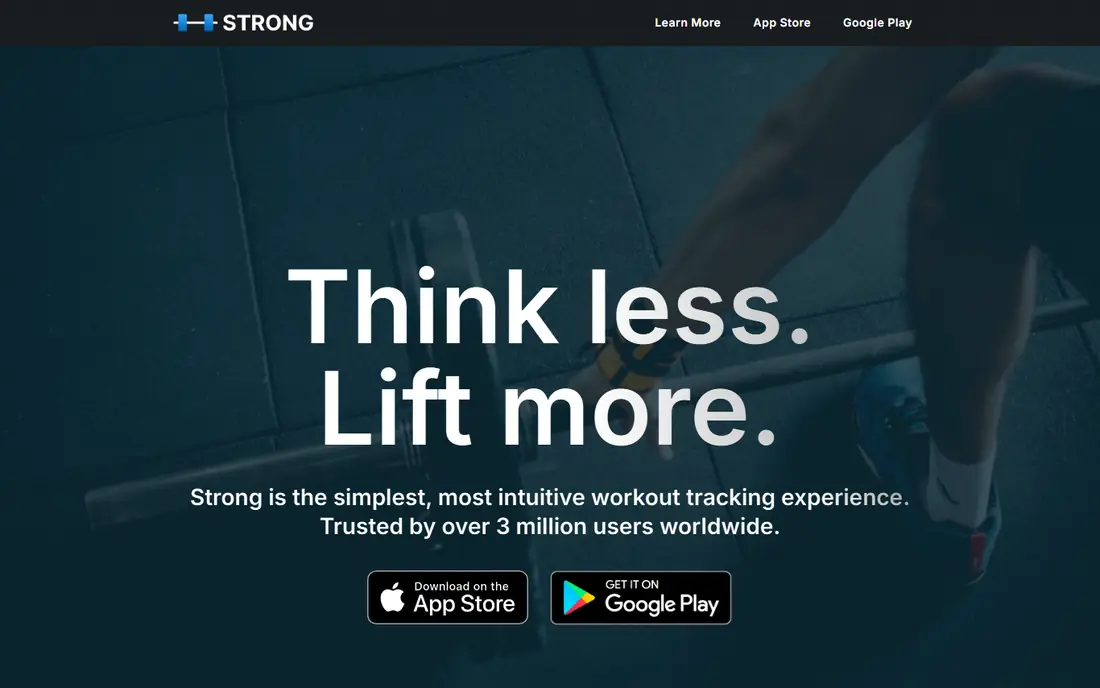
Strong is the fastest plain logger in this list, and that speed is why experienced lifters stick with it. You bring your program, Strong stays out of the way, and logging sets, reps, and weight takes a few taps. The plate calculator, rest timer, and Apple Watch app help during barbell sessions, and history graphs show personal records over time.
The free tier caps the number of routines, and full charts and CSV export need Pro. Strong also does not build programs for you, so beginners who need guidance may prefer Fitbod or Boostcamp. If you already know what to lift, Strong is our pick for a simple, reliable log.
- Very fast set logging
- Plate calculator
- Apple Watch support
- Free tier caps routines
- Advanced charts need Pro
- No auto-generated programs
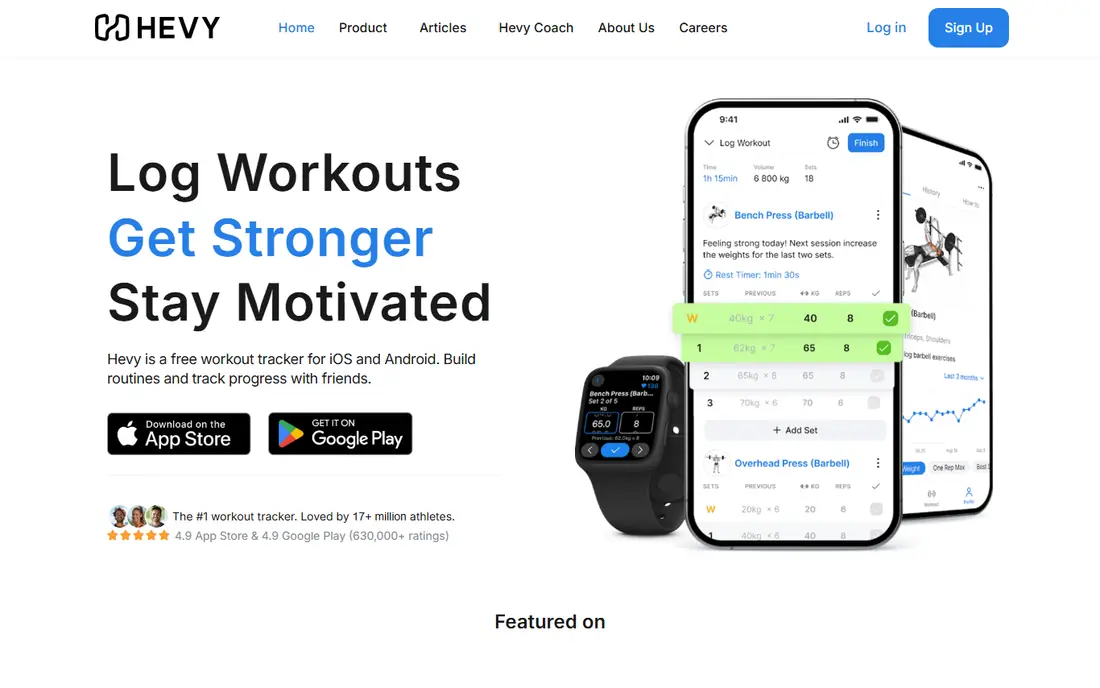
Hevy combines fast logging with a social feed, which makes it feel more alive than a plain notebook. You can follow friends, comment on workouts, and track volume per muscle group, which helps spot muscles you under-train. The free tier covers logging, and Pro is among the cheapest in this list, with a lifetime option.
The free tier limits routines and the length of history graphs, so long-term lifters may need Pro sooner than expected. Hevy Trainer, which suggests progression, also sits on paid plans. For value, community, and clean analytics, Hevy is our pick for most lifters.
- Low Pro price
- Social feed and friends
- Per-muscle volume tracking
- Free tier caps routines and history graphs
- Best programming tools need Pro
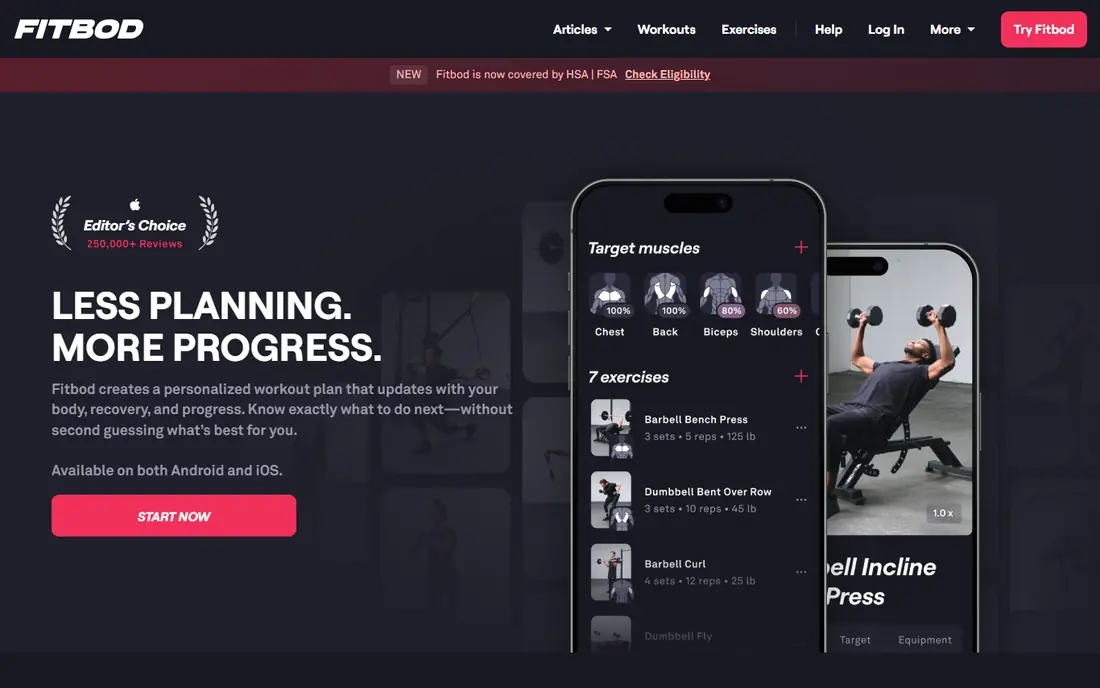
Fitbod is the hands-off choice. Tell it your equipment, goals, and available muscles, and it builds each session, picks exercises, and adjusts weights based on recovery. That automation suits lifters who do not want to plan, who train in different gyms, or who want variety without thinking about programming.
The drawback is price and control. Fitbod offers a trial, not a free logging tier, and its annual price is higher than Strong or Hevy. Advanced lifters who follow a specific barbell program may find the automation restrictive. If you want the app to plan everything, Fitbod is the strongest option here.
- Builds each session around equipment and recovery
- Large exercise library
- Adjusts weights automatically
- No free logging tier
- Highest price in this list
- Less control for advanced lifters
JEFIT pairs a large exercise library with logging and analysis. The free tier covers logging with ads, while Elite adds a periodised 12-week plan, deeper per-muscle analysis, and more customisation. Exercise demos and muscle maps help beginners learn form and target the right muscles.
The interface is busier than Strong or Hevy, and ads on the free tier can distract during workouts. Long-time users with years of JEFIT data often stay for the history alone. If you want a deep library plus analysis at a mid-range price, JEFIT is a solid choice.
- Large exercise database with demos
- 12-week plans on Elite
- Deep progress analysis
- Free tier has ads
- Some features need Elite
- Interface is busier than Strong
Boostcamp is the best free route to a proven program. Its library includes many programs from named coaches, with plate calculators, rest timers, and exercise swaps built in. The free tier covers tracking and progression for those programs, which is more generous than most rivals.
Pro adds unlimited tools and extra features, but the free tier alone is useful for lifters who want structure without paying. Boostcamp is less social than Hevy, so lifters who want a community feed may prefer Hevy. If you want to follow a trusted program for free, start with Boostcamp.
- Large program library
- Many coach-written programs
- Free tier is generous
- Pro needed for unlimited tools
- Less social depth than Hevy
Caliber offers unlimited logging on its free tier, plus coach-designed strength plans and hundreds of exercise videos. That combination suits lifters who want structure but do not want to pay for a full coach. Plus adds more plan features, and one-to-one coaching is available at a much higher price for lifters who want personal guidance.
The free tier is generous, but the jump to human coaching is large, so most users will stay on Plus or free. If you want a clean logger with coach-written plans and no routine cap, Caliber is a strong, underrated option.
- Unlimited logging on free tier
- Coach-designed plans
- Large exercise video library
- Paid coaching costs far more
- Plus features vary by billing term
Alpha Progression focuses on precise progression. It prescribes target reps and weights for each set based on your past sessions, which helps lifters apply progressive overload without guessing. The interface is clean, and logging is fast once a plan is set up.
The free tier covers logging and manual plans, but the plan generator and next-set advice need Pro. That makes Alpha Progression best for lifters who value exact progression over social features. If you train alone and want clear targets each session, it is worth trying.
- Prescribes each set based on past performance
- Clean interface
- Good for progressive overload
- Plan generator needs Pro
- Smaller community than Hevy
StrengthLog is a calm, ad-free logger with a large exercise list and many built-in programs. The free tier includes unlimited logging, which is a clear advantage over apps that cap routines or history. Premium adds more programs and features for lifters who want deeper planning.
The community is smaller than Hevy, so social motivation is weaker. Premium also costs more than Hevy Pro or Strong Pro. If you dislike ads and want a quiet, reliable logger with programs included, StrengthLog is a good fit.
- No ads on free tier
- Many programs
- 500 plus exercises
- Smaller user base
- Premium price is higher than Hevy or Strong
Ladder takes a different approach: you join a team led by a coach, follow that coach weekly program, and train alongside other members. That structure suits lifters who need accountability, enjoy group energy, and want a coach to handle programming. Programs cover strength, bodybuilding, and general fitness goals.
The price is the highest in this list, and there is no free tier, only a trial. Lifters who already have a program will not need Ladder. Lifters who struggle to stay consistent and like coach-led training may find the team format worth the cost.
- Coach-written team programs
- Community within teams
- Structured weekly training
- Highest monthly price here
- No free tier
- Less flexible for custom programs
How we picked these
We compared official app store listings, pricing pages, and public comparisons for weightlifting apps that log sets, reps, and weight, and show progress over time. We required a current app with real strength logging, not just general fitness classes. We included fast loggers, auto-generated programs, coach plans, and free options so readers can match the app to training style. We did not claim hands-on testing, and pricing should be checked on the app store listing before purchase because subscription lengths vary.
What to check before you choose
Start with training style, not feature count. If you follow your own barbell program, a fast logger beats an auto-programmer. If you want the app to plan sessions, choose Fitbod, Boostcamp, or Caliber. If you need accountability, Ladder team training may help more than any chart.
Check free tier limits carefully
Free means different things here. Some apps cap routines, others cap history graphs, and some show ads. Test the free tier for two weeks with your real routine before paying, and check whether your history stays accessible if you stop paying.
Make sure progression is clear
A good app should show personal records, volume trends, and per-muscle balance without digging through menus. Check one-rep max estimates, rest timers, and plate calculators, because those small tools affect every workout.
Consider watch and offline use
If you train with an Apple Watch or Wear OS device, check watch support and offline logging. Gym Wi-Fi is often weak, so an app that fails without a connection will frustrate you. Strong and Hevy both handle watch and offline use well for most lifters.
Sources
Frequently asked questions
What is the best weightlifting app?
Strong is best for fast logging, Hevy for value and community, Fitbod for auto-generated sessions, and Boostcamp for free proven programs. The best choice depends on whether you bring your own program or want the app to plan it.
What is the best strength training app for beginners?
Boostcamp and Caliber are strong for beginners because they offer coach-designed programs and clear logging without a high price. Fitbod also suits beginners who want every session planned, though it costs more and has no free tier.
Is Strong or Hevy better?
Strong is faster and simpler for experienced lifters with a set program. Hevy offers better value, a social feed, and per-muscle volume tracking at a lower Pro price. Choose Strong for speed, Hevy for community and analytics.
Are weightlifting apps free?
Many offer free tiers, including Strong, Hevy, JEFIT, Boostcamp, Caliber, Alpha Progression, and StrengthLog. Free tiers usually cap routines, history, or charts, while Fitbod and Ladder offer trials rather than free logging.
Can weightlifting apps track progressive overload?
Yes, most apps in this list track sets, reps, weight, volume, and personal records over time. Alpha Progression and Fitbod go further by prescribing next-session targets, while Strong and Hevy show trends you can use to plan progression yourself.
Do I need a coach app or just a logger?
A logger is enough if you know what to lift and stay consistent. A coach app such as Ladder or Caliber Plus helps if you need structure, accountability, or a new program. Start with a logger, and add coaching only if consistency or programming becomes the problem.