Elasticsearch Alternatives in 2026: 8 Tools Compared
By ToolNimba Editorial Team November 9, 2026 8 min read

- Top pick
 OpenSearch
Elasticsearch migration
Starting priceFreeCheck out OpenSearchRead our review - Runner-up
 Meilisearch
Instant app search
Starting price$30 per monthCheck out MeilisearchRead our review - Also great
 Typesense
Fast typo-tolerant search
Starting priceSee websiteCheck out TypesenseRead our review
How we researched this
We compared official pricing and feature pages, app store listings, privacy policies and public user reviews. Prices change, so check the provider's site before you pay.
Key takeaways
- OpenSearch is the closest drop-in alternative for teams migrating from Elasticsearch, with a compatible API and dashboards.
- Meilisearch and Typesense suit app and site search, with typo tolerance, fast setup and simple APIs.
- Apache Solr suits enterprise teams that need mature, highly configurable full-text search.
- Self-hosted open source tools cost infrastructure and engineering time, while managed cloud plans trade control for convenience.
Quick comparison
| Name | Best for | Starting price | Free plan | |
|---|---|---|---|---|
| OpenSearch | Elasticsearch migration | Free | Yes | Visit |
| Meilisearch | Instant app search | $30 per month | Yes | Visit |
| Typesense | Fast typo-tolerant search | See website | Yes | Visit |
 Apache Solr | Enterprise full-text search | Free | Yes | Visit |
 Algolia | Hosted product search | See website | Yes | Visit |
 Manticore Search | High-performance search | Free | Yes | Visit |
 Quickwit | Log and trace search | Free | Yes | Visit |
 Qdrant | Vector and hybrid search | See website | Yes | Visit |
The best Elasticsearch alternatives
Elasticsearch is powerful, but it can be heavy to run, costly at scale and complex for simple app search. Teams switch for easier setup, lower operating costs, open source licensing or a better fit for product search, logs or vector search. The tools below cover each of those paths.
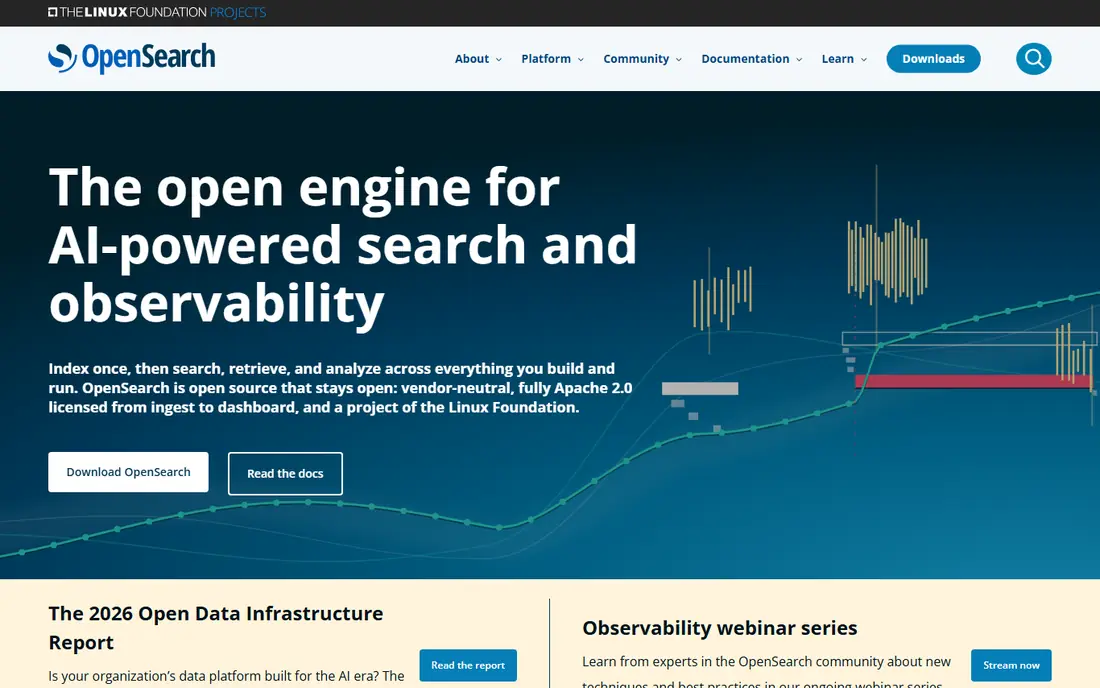
OpenSearch is the most direct alternative for teams already running Elasticsearch. It began as a fork, it offers a compatible API for many workloads, and it includes dashboards for search and observability. Teams can often migrate with less rewriting than a move to a different search engine.
Migration is not automatic. Queries, plugins, security settings and dashboards need testing, and managed hosting on AWS or another provider adds infrastructure costs. For a team that wants to stay close to Elasticsearch without its licence or cost structure, OpenSearch is the natural first trial.
- Elasticsearch-compatible API in many cases
- Dashboards included
- Open source
- Migration still needs testing
- Managed hosting costs vary by provider
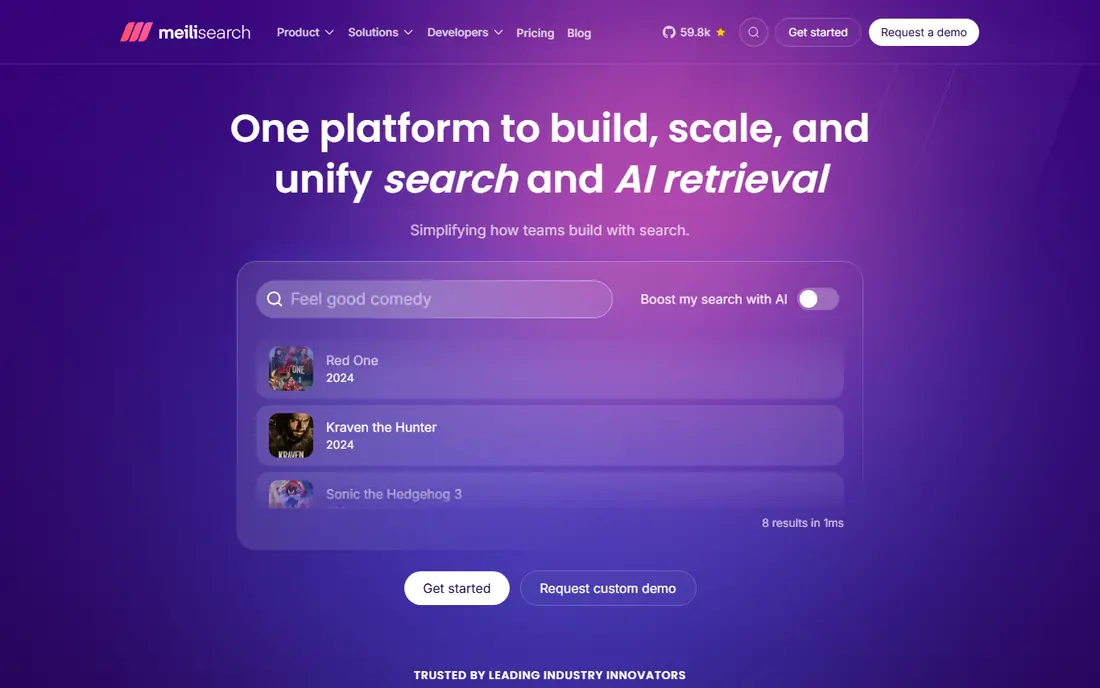
Meilisearch is built for instant search in apps and websites. It handles typos, filters, sorting and faceting with a simple API, and its built-in dashboard lets developers test queries visually. Product catalogues, docs sites and internal tools get a fast, relevant search box with little configuration.
The open source version is mainly single-node, so very large or high-availability deployments need Enterprise features or careful architecture. Managed cloud plans start around $30 per month in many listings. For most app search jobs, Meilisearch hits a sweet spot between power and simplicity.
- Very fast setup
- Typo tolerance
- Simple REST API and dashboard
- Single-node limits on the open source version
- Horizontal scaling needs Enterprise
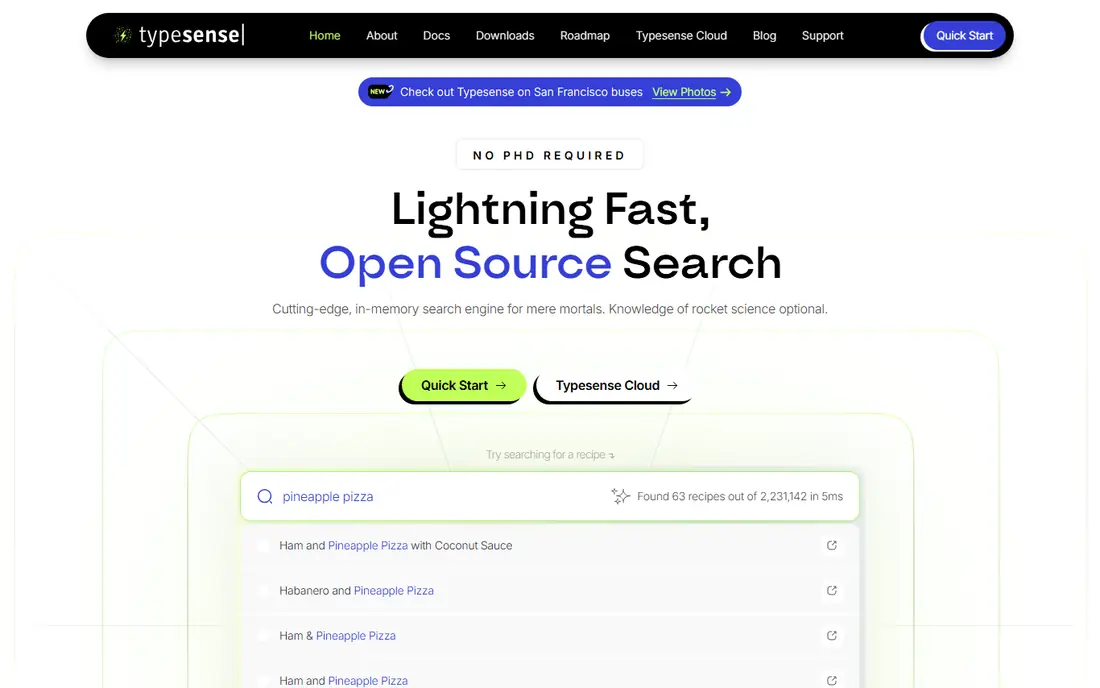
Typesense is a strong rival to Meilisearch for app and product search. It offers typo tolerance, faceting, filtering and semantic search features, with clustering for high availability in the open source version. Its resource-based managed pricing avoids per-query fees, which helps catalogues with high search volume.
It is API-first, with no built-in admin dashboard comparable to Meilisearch, so developers comfortable with APIs will move fastest. Self-hosting is free apart from infrastructure, while managed cloud pricing depends on memory and CPU. For predictable costs at scale, Typesense is a compelling choice.
- Fast, typo-tolerant search
- Clustering built in
- No per-query fees on self-hosted use
- No built-in dashboard like Meilisearch
- Managed pricing varies by resources
Apache Solr is the veteran enterprise search platform, built on Lucene and used for large catalogues, docs and content sites. It offers deep text analysis, faceting, geospatial search and plugin options, with a long track record in production. Teams with complex relevance needs value that control.
That control comes with complexity. Solr needs Java expertise, careful schema design and tuning, and it is overkill for a simple site search box. If your team already knows Lucene or needs enterprise-grade configurability, Solr remains a serious alternative. If you need speed of setup, Meilisearch or Typesense will be faster.
- Mature and highly configurable
- Faceting, geospatial and text analysis
- Large ecosystem
- Complex setup
- Needs Java expertise and tuning for large deployments
Algolia is the hosted choice for product and site search at scale. It offers fast, typo-tolerant search, merchandising, personalisation, analytics and A/B testing, with frontend libraries that speed up development. Ecommerce teams use it to tune ranking, promotions and recommendations without running servers.
Usage-based pricing can rise quickly with search volume, records and features, so total cost needs modelling at your real traffic. Self-hosted tools give more control and predictable infrastructure costs. If you want a managed service with strong merchandising, Algolia is the benchmark to compare against.
- Fast hosted search
- Merchandising and analytics
- Strong frontend libraries
- Usage-based pricing can rise fast
- Less control than self-hosted tools
Manticore Search suits teams that need raw full-text performance with a familiar SQL-like query style. It is multithreaded, supports vector search, and handles large indexes efficiently on modest hardware. Developers moving from MySQL-style workflows often find its syntax comfortable.
Its ecosystem is smaller than Solr or OpenSearch, so plugins, hosted options and community examples are fewer. Self-hosting is free apart from infrastructure, which keeps costs low. For performance-focused search without enterprise complexity, Manticore is worth a trial.
- Fast full-text search
- SQL-like syntax
- Vector search support
- Smaller ecosystem than Solr or OpenSearch
- Managed options less common
Quickwit is aimed at observability rather than product search. It indexes logs, metrics and traces efficiently, separates compute from storage for cost control, and integrates with observability workflows. Teams drowning in log volume use it as a lighter, cheaper alternative to Elasticsearch for that specific job.
It is not the right pick for a customer-facing product search box, and its ecosystem is newer than Elasticsearch or Solr. If your Elasticsearch bill is driven by logs, Quickwit can cut costs sharply. If you need app search, choose Meilisearch, Typesense or Algolia instead.
- Built for logs, metrics and traces
- Decoupled compute and storage
- Fast for large log volumes
- Not a general product search tool
- Newer ecosystem than Elasticsearch
Qdrant is a vector database for AI search, recommendations and retrieval-augmented generation. It stores embeddings, finds similar items, and supports hybrid search that combines vector similarity with filters. AI teams use it to power semantic search, chatbots and recommendation features.
It does not replace full-text search on its own, so many teams pair Qdrant with Meilisearch, Typesense or OpenSearch for keyword search. Managed cloud offers a free tier, with usage-based pricing beyond it. If your next search feature is semantic or AI-driven, Qdrant belongs on the shortlist.
- Vector search for AI apps
- Hybrid retrieval
- Managed cloud with a free tier
- Not a full-text replacement alone
- Needs embeddings for best results
How we picked these
We compared official docs, pricing pages and public comparisons for search engines, focusing on use case, setup effort, scaling, hosting options and cost model. We favoured tools still available in 2026, with open source or managed options, and with a real search function rather than only analytics. We did not claim hands-on testing, and managed prices change, so check the vendor site before you commit.
Choosing by workload, not by brand
Start with the workload. App and product search points to Meilisearch, Typesense or Algolia. Logs and observability point to OpenSearch or Quickwit. Enterprise full-text points to Solr or OpenSearch. AI and semantic search points to Qdrant, often paired with a full-text engine. Picking by workload avoids paying for a general platform when a focused tool fits better.
Self-hosted versus managed
Self-hosting saves licence and per-query costs, but it costs server time, updates, backups and on-call work. Managed cloud removes much of that burden, but pricing models differ: some charge by resources, some by usage, and some by records and searches. Model total cost at your data size and query volume for a year, not just the entry monthly price.
Migration testing that matters
Test relevance, not just speed, by running real user queries against both old and new engines and comparing top results. Check facets, filters, sorting, language handling and typo tolerance, since those details decide user satisfaction. Plan a gradual cutover with a rollback path, especially for customer-facing search.
Sources
Frequently asked questions
What is the best open source alternative to Elasticsearch?
OpenSearch is the closest open source alternative for Elasticsearch-style workloads, with a compatible API and dashboards. For app search, Meilisearch and Typesense are simpler open source options. Apache Solr is the most mature open source choice for highly configurable enterprise search.
Is Meilisearch better than Typesense?
Both are excellent for app search, with typo tolerance and fast setup. Meilisearch offers a built-in dashboard and a smoother onboarding experience, while Typesense offers built-in clustering and resource-based pricing. Try both with your real data and queries, since relevance and developer fit decide the winner.
Can I self-host Elasticsearch alternatives for free?
Yes, OpenSearch, Meilisearch, Typesense, Solr, Manticore, Quickwit and Qdrant all offer free self-hosted versions, apart from infrastructure costs. Managed cloud plans charge for hosting, support and scale. Self-hosting still needs engineering time for setup, updates and monitoring.
Do I need vector search for AI apps?
Vector search helps AI apps find semantically similar content, even when keywords do not match exactly. Qdrant and newer features in Meilisearch, Typesense and OpenSearch cover this need. For classic keyword search, a full-text engine alone is enough, and adding vectors only helps when meaning matters more than exact terms.
How hard is it to migrate from Elasticsearch?
Difficulty depends on queries, plugins, dashboards and data size. OpenSearch migrations are often the smoothest, while moves to Meilisearch or Typesense need more rewriting. Test relevance and performance with real queries, plan a staged cutover, and keep the old cluster running until the new search proves itself.