Best Facebook Alternatives in 2026: 10 Platforms Compared
By ToolNimba Editorial Team November 9, 2026 9 min read

- Top pick
 Bluesky
Public conversation with custom feeds
Starting priceFreeCheck out BlueskyRead our review - Runner-up
 Mastodon
Community-run, ad-free posting
Starting priceFreeCheck out MastodonRead our review - Also great
 Threads
Instagram users wanting a fresh feed
Starting priceFreeCheck out ThreadsRead our review
How we researched this
We compared official pricing and feature pages, app store listings, privacy policies and public user reviews. Prices change, so check the provider's site before you pay.
Key takeaways
- No single app replaces every part of Facebook, so pick an alternative for the job you miss most: friends, groups, photos or local news.
- Bluesky and Mastodon are the strongest open, chronological options for public conversation, while MeWe is the closest Facebook-style layout.
- The best facebook alternatives are free to join, but smaller networks only work if your friends, groups or community move with you.
- Threads is easy to start if you already use Instagram, but it is owned by Meta, so it is not a clean break from Facebook.
Quick comparison
| Name | Best for | Starting price | Free plan | |
|---|---|---|---|---|
| Bluesky | Public conversation with custom feeds | Free | Yes | Visit |
| Mastodon | Community-run, ad-free posting | Free | Yes | Visit |
| Threads | Instagram users wanting a fresh feed | Free | Yes | Visit |
 MeWe | Closest Facebook-style experience | Free | Yes | Visit |
 Minds | Creator rewards and open posting | Free | Yes | Visit |
 Vero | Ad-free sharing without algorithms | Free | Yes | Visit |
 Diaspora | Privacy-focused decentralized posting | Free | Yes | Visit |
 Friendica | Self-hosted federated networking | Free | Yes | Visit |
 Nextdoor | Local neighbors and local news | Free | Yes | Visit |
 Pixelfed | Photo sharing without ads | Free | Yes | Visit |
The best facebook alternatives
Facebook itself is not listed here, since this article covers replacements for it. We compared official product pages, app listings and public reviews, and we kept only platforms that are live, free to join and offer posting, groups or feeds for ordinary users.
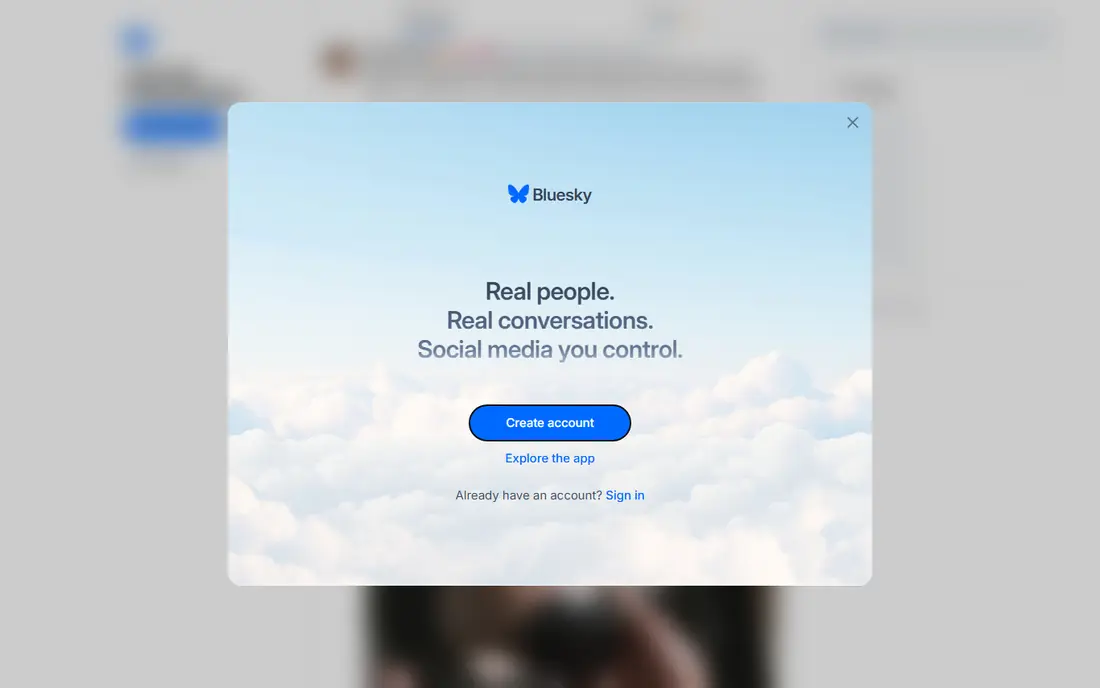
Bluesky is the most lively public alternative to Facebook for conversation. You can follow custom feeds built around interests, use starter packs to find people quickly, and control your own feed far more than on an algorithmic timeline. That control is the main reason many former Facebook and Twitter users settled here.
The catch is scope. Bluesky is built for public posts, not for private family groups, Marketplace or event planning, so it replaces only part of Facebook. If your main need is public discussion and discovery, it is an excellent start. If you need groups and events, pair it with another platform below.
- Custom feeds and starter packs
- Chronological options
- Portable identity on an open protocol
- Smaller audience than Facebook
- Groups and events are weaker than Facebook groups
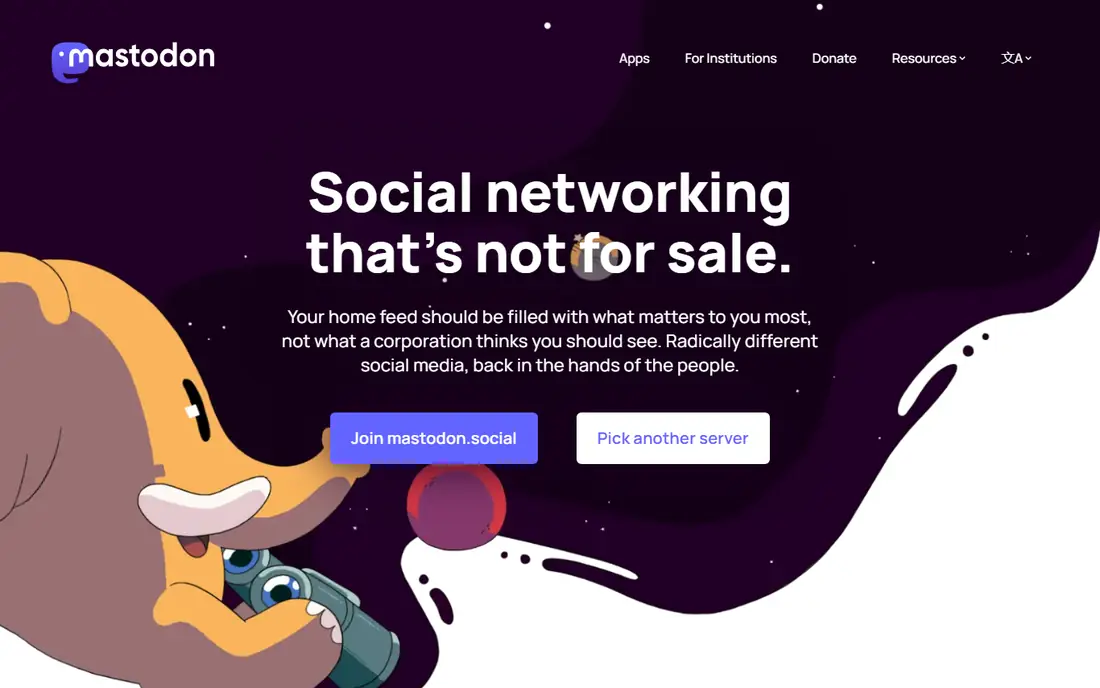
Mastodon is a network of independent servers that talk to each other, rather than one company-run feed. You pick a server, often themed around an interest or region, and you can still follow people on other servers. There are no ads, and timelines are chronological unless you choose otherwise.
New users often stall at server choice, which is the main barrier. Pick a large general server to start, and you can move later without losing your posts in most cases. For users who want community control and privacy, Mastodon is the most principled alternative here.
- No ads and no algorithmic feed by default
- Independent servers with their own rules
- Chronological timelines
- Choosing a server confuses new users
- Audience is split across servers
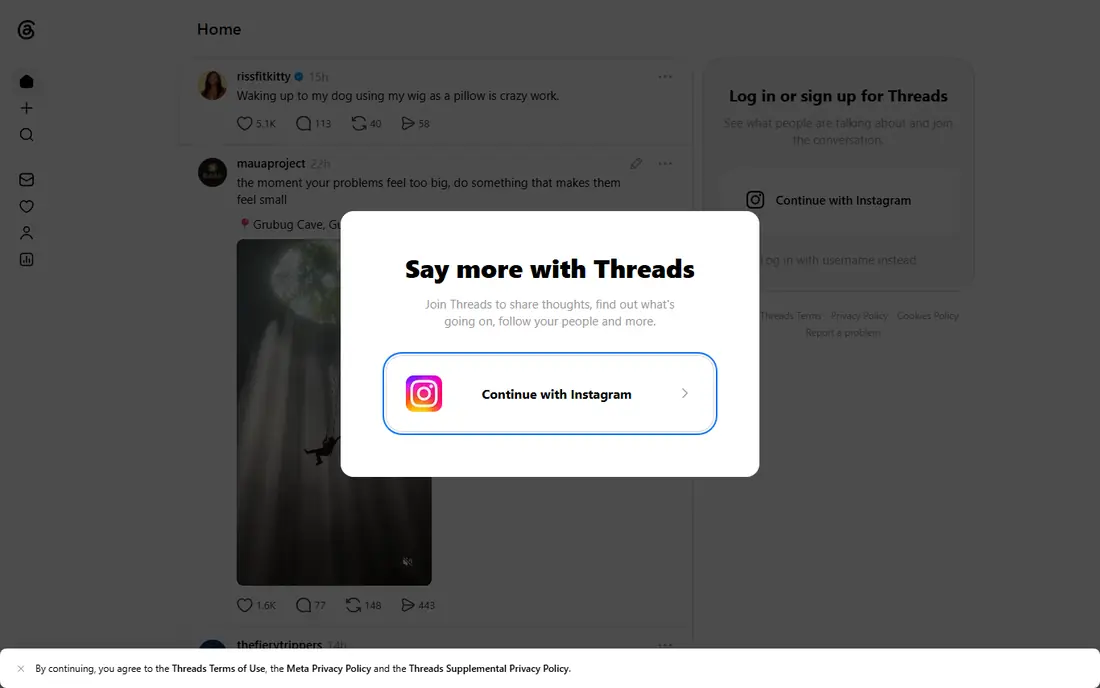
Threads is the easiest alternative to try, because it builds on an Instagram account and needs no new social graph to get started. Posting is simple, discovery is strong, and the audience is far larger than most independent alternatives. For casual public posting, it feels familiar from day one.
The honest catch is ownership. Threads is a Meta product, so users leaving Facebook over Meta data practices will not find a clean break here. Treat Threads as a lighter Meta feed, not as an independent alternative, and pair it with Mastodon or Bluesky if independence matters.
- Easy start from Instagram
- Large audience
- Simple posting and discovery
- Owned by Meta, so it is not independent of Facebook
- Groups and events are limited
MeWe is the closest layout match to Facebook in this list. It offers a newsfeed, groups, pages, chat, stories and events-style community tools, so Facebook users can find their way around quickly. Its pitch is privacy: no ads, no targeting and no feed manipulation on the core service.
The audience is the limit. Your groups will only thrive if members actually move, so MeWe works best when a whole group agrees to move together. For a single user, it can feel quiet at first, even though the feature set is complete.
- Groups, pages, chat and stories in one place
- No ads on the core feed
- Familiar layout for Facebook users
- Smaller active audience than Facebook
- Some extra features are paid
Minds suits creators and users who want open posting without heavy algorithmic filtering. It combines a feed, groups, blogs and video, and it offers token rewards and tipping for popular posts. That creator focus makes it a good home for writers, artists and commentators who felt limited elsewhere.
The community is smaller and more outspoken than Facebook, so the tone will not suit everyone. If you want a quiet family network, MeWe or Nextdoor fit better. If you want open reach as a creator, Minds is worth trying.
- Open posting with fewer algorithmic limits
- Creator rewards and tipping
- Groups and blogs
- Content mix is broader and less moderated in feel
- Smaller mainstream audience
Vero is built around sharing what you like, from photos and music to films and books, in a chronological feed with no ads and no algorithmic sorting. You can sort contacts into close friends, friends and acquaintances, which gives more control over who sees each post than a single public feed.
Its user base is smaller than the major alternatives, and past growth spurts have not all stuck. Vero works best as a close-circle sharing app rather than as a full Facebook replacement, especially for photo and recommendation sharing.
- Chronological feed with no ads
- Sharing for photos, music, films and books
- Close-friend controls
- Smaller user base
- Growth has been uneven over the years
Diaspora is one of the oldest decentralized Facebook alternatives, built on independent pods that connect to each other. You choose a pod, control who sees your posts, and avoid a single company holding all user data. There are no ads, and the privacy model is clear.
The interface and community feel older than Bluesky or MeWe, and the active user base is small. Diaspora suits privacy-minded users who value the model over polish, and who are happy to join a quieter network with like-minded members.
- Decentralized pods you can choose or host
- No ads
- Strong privacy controls
- Smaller community
- Interface feels older than newer apps
Friendica is a federated social network that can connect with Mastodon and other fediverse platforms, while also offering Facebook-style features such as groups, events and photo albums. Users can join a public instance or host their own server for full control.
Self-hosting needs technical skill, so most users should join an established instance first. Friendica is the most flexible option here, but that flexibility comes with a learning curve that casual Facebook users may not want.
- Connects to fediverse networks
- Groups, events and photo albums
- Self-hosting option
- Setup is technical for self-hosting
- Public instances vary in size and rules
Nextdoor replaces the local half of Facebook better than any global alternative. It organizes posts by neighborhood, so local news, recommendations, lost pets, safety alerts and buy-and-sell posts reach the people who live nearby. For many Facebook users, that local feed was the part they used most.
It does not replace global friends, interest groups or public conversation, so pair it with Bluesky or MeWe for those jobs. Address checks also bother some users, though they help keep neighborhood posts tied to real local areas.
- Real neighborhood groups
- Local recommendations and alerts
- Buy-and-sell posts
- Only covers local life, not global friends
- Address verification can feel intrusive
Pixelfed is the photo half of a Facebook alternative. It offers an Instagram-style grid, stories-style sharing on some instances, and a chronological, ad-free feed, all on federated servers. For users who mainly shared photos on Facebook, Pixelfed covers that job cleanly.
It is not a groups, events or Marketplace replacement, so treat it as one piece of a move away from Facebook rather than the whole move. Pair it with a conversation platform and a local platform for a fuller replacement.
- Instagram-style photo feed
- No ads
- Federated servers with chronological timelines
- Photo-focused, not a full Facebook replacement
- Audience is smaller than Instagram
How we picked these
We compared official product pages, app listings and public reviews, and we kept platforms that are live, free to join and usable by ordinary consumers in the US. We left out platforms that are invite-only, defunct or focused only on video, messaging or dating, since those replace only a narrow slice of Facebook.
How to leave Facebook without losing your people
Move one job at a time, not everything at once. Start with the job you use most: public conversation, close friends, local news or photos. Pick the platform above that covers that job, invite the five people you talk to most, and use it for two weeks before adding a second platform.
Next, handle groups and events directly. A group move only works if the group agrees together, so propose a trial period and keep the Facebook group open during the trial. Download your photos and posts from Facebook settings before you deactivate anything, and tell close contacts where to find you, since many people will not notice a quiet departure.
Keep safety and privacy in mind
Smaller networks still need the same care as large ones. Check privacy settings on each new platform, limit who can see personal posts, and be careful with location details on local networks. Users must be 18 or older for some features on adult-oriented platforms, and parents should check age rules for teens on any social app before signing up.
Sources
Frequently asked questions
What are the best alternatives to Facebook for friends and family?
MeWe is the closest Facebook-style option for friends, groups and chat, while Bluesky and Mastodon suit public conversation. For most families, a mix works best: MeWe or a private group chat for family, plus Bluesky for public posts.
What is the best alternative to Facebook for privacy?
Mastodon and Diaspora are the strongest privacy choices, thanks to decentralized servers, no ads and chronological feeds. MeWe also pitches privacy with no ads or targeting on its core feed, though it is a single company rather than a decentralized network.
Is Threads a real Facebook alternative if it is owned by Meta?
Threads is a lighter, simpler feed from Meta, and it is easy to start from Instagram. It is not independent of Meta, so users leaving Facebook over Meta data practices should choose Bluesky, Mastodon, MeWe or Diaspora instead.
Can I replace Facebook Marketplace with these alternatives?
None of these platforms fully replaces Marketplace. Nextdoor covers local buy-and-sell posts for neighbors, and MeWe groups can host local sales, but for a full marketplace, a dedicated local selling site or app will still be needed alongside a social alternative.
Are Facebook alternatives free?
Yes, all ten platforms in this list are free to join, with optional paid features on some, such as MeWe extras. Federated platforms such as Mastodon, Diaspora and Friendica are free to use on public servers, though hosting your own server has its own costs.
Why do Facebook alternatives feel quiet at first?
Smaller networks depend on your own contacts moving with you, unlike Facebook, where almost everyone already has an account. Invite a core group, post regularly for two weeks, and judge the platform by that group, not by its total user count.