Gumroad Alternatives in 2026: 9 Platforms Compared
By ToolNimba Editorial Team November 9, 2026 11 min read

- Top pick
 Lemon Squeezy
Software and SaaS with tax handled
Starting priceFreeCheck out Lemon SqueezyRead our review - Runner-up
 Payhip
Budget digital product sales
Starting priceFreeCheck out PayhipRead our review - Also great
 Sellfy
Flat-fee storefront plus print on demand
Starting price$29 per monthCheck out SellfyRead our review
How we researched this
We compared official pricing and feature pages, app store listings, privacy policies and public user reviews. Prices change, so check the provider's site before you pay.
Key takeaways
- Lemon Squeezy and Payhip are the closest no-monthly-fee alternatives to Gumroad, but their per-sale fees work very differently.
- Sellfy suits sellers who prefer a flat monthly price and no platform fee, especially once sales become regular.
- Podia and Teachable fit course creators better than a simple file store, because they add lessons, community, and email tools.
- Tax handling matters as much as fees, so check whether the platform acts as merchant of record before you sell abroad.
Quick comparison
| Name | Best for | Starting price | Free plan | |
|---|---|---|---|---|
| Lemon Squeezy | Software and SaaS with tax handled | Free | Yes | Visit |
| Payhip | Budget digital product sales | Free | Yes | Visit |
| Sellfy | Flat-fee storefront plus print on demand | $29 per month | Free trial (14 days) | Visit |
 Podia | Courses, coaching, and community | $42 per month | Free trial (14 days) | Visit |
 Teachable | Structured online courses | $29 per month | Free trial | Visit |
 Easy Digital Downloads | WordPress digital product stores | Free | Yes | Visit |
 Ko-fi | Small creators and donations | Free | Yes | Visit |
 SendOwl | Secure delivery and license keys | $19 per month | Free trial | Visit |
 Stan Store | Link-in-bio creators | $29 per month | No | Visit |
The best gumroad alternatives
We compared official pricing pages and recent fee summaries for platforms that sell digital products today. Alternatives to Gumroad fall into three groups: hosted storefronts that charge per sale, flat-fee storefronts that charge monthly, and WordPress tools that give you more control. The best Gumroad alternatives for you depend on what you sell, how often you sell, and whether you want the platform to handle sales tax.
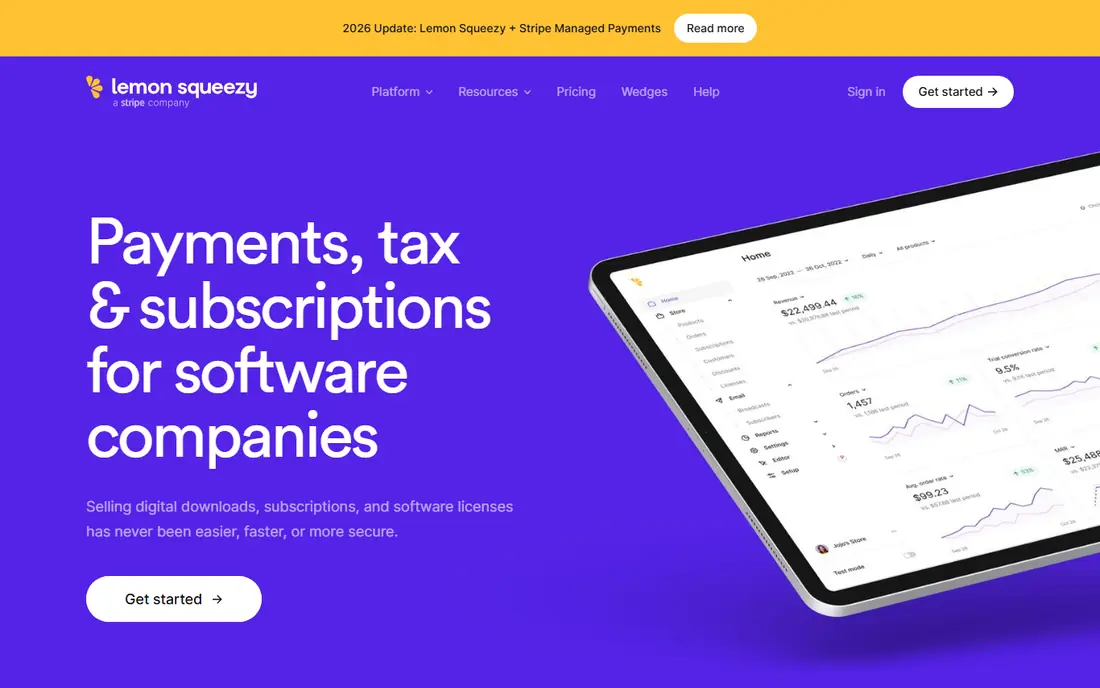
Lemon Squeezy is our pick for software and SaaS sellers who want global tax handled without setting up tax registrations themselves. As merchant of record, it collects and remits applicable sales tax and VAT on your behalf, which removes a major headache for sellers with customers in many countries. It also supports subscriptions, license keys, and hosted checkout, which suit software products well.
The fee is 5 percent plus 50 cents per sale, with payment processing included in that rate on standard sales, according to recent fee summaries. That is lower than Gumroad direct fees for many sellers, but it still adds up on high-volume, low-price products. If you sell mainly to one country and already handle tax, a flat-fee store may cost less.
- Acts as merchant of record for tax handling
- No monthly fee
- License management and subscriptions
- Per-sale fee of 5 percent plus 50 cents
- Less marketplace traffic than Gumroad Discover
Payhip is the closest hosted match to Gumroad for many creators, because you can start free, list unlimited products, and sell digital files, courses, memberships, and coaching. It pays out to your connected Stripe or PayPal account, and it includes an affiliate program on all plans, which helps if other creators promote your products. Paid plans lower the platform fee to 2 percent or zero.
The free plan fee of 5 percent, plus separate payment processing, means you should run the numbers at your average sale price. For low-price products, the combined fees can take a noticeable share. Still, for a first store with no monthly commitment, Payhip is one of the simplest alternatives to Gumroad to test.
- Free plan with unlimited products
- Built-in affiliate program
- EU and UK VAT handling on digital sales
- Payment processing fees are extra
- Free plan charges a 5 percent platform fee
Sellfy suits creators who sell regularly and prefer predictable costs. Paid plans charge no platform transaction fee, so once you pass a certain sales volume, the flat monthly price can beat a per-sale fee model. It also supports print-on-demand merchandise alongside digital products, which lets a creator sell both files and merch from one storefront.
The monthly fee is a drawback in slow months, and plans have annual sales caps that you should check before choosing a tier. Sellfy is less course-focused than Podia or Teachable, so course creators who need drip content and student tools may prefer those platforms. For a straightforward store with steady sales, Sellfy offers clear, predictable pricing.
- No platform transaction fee on paid plans
- Digital, physical, and print-on-demand products
- Built-in email marketing
- Monthly cost even in slow months
- Annual sales limits vary by plan
Podia is an all-in-one platform for creators who sell courses, memberships, coaching, and digital downloads together. It includes a website builder, email marketing, and community features, so you can run a course business without stitching together several tools. Higher plans remove the Podia platform fee, which helps once course sales become regular.
The entry Mover plan still charges a 5 percent platform fee on top of payment processing, so check the total cost at your course price. Podia is more than a simple file store, and that breadth can feel like overkill if you only sell one ebook. For course and community sellers, though, the combined tools often justify the monthly price.
- Courses, community, and email in one place
- No platform fee on higher plans
- Clean storefront and checkout
- Entry plan charges a 5 percent platform fee
- Less suited to simple one-file sales
Teachable is built for structured online courses, with lessons, quizzes, certificates, and drip schedules that help students progress in order. That structure suits teachers, coaches, and trainers who sell a curriculum rather than a single file. It also offers sales pages and checkout tools designed for course launches.
The entry plan charges a transaction fee, and higher plans remove it, so the real cost depends on your course price and volume. Teachable is less flexible as a general storefront than Payhip or Sellfy, and it is not the best choice for a single digital file. For course-first sellers, it remains one of the most proven alternatives to Gumroad.
- Strong course structure and student tools
- Quizzes, certificates, and drip content
- Established course marketplace experience
- Entry plan charges a platform transaction fee
- Monthly cost for a small course catalog
Easy Digital Downloads is a WordPress plugin that turns a WordPress site into a digital product store. The core plugin is free, and paid passes add features such as software licensing, subscriptions, and lower or zero platform fees on payments. That control appeals to sellers who already run WordPress and want to own their checkout, customer data, and design.
The trade-off is maintenance. You handle hosting, updates, security, and payment setup yourself, which takes more time than a hosted storefront. If you are comfortable with WordPress, Easy Digital Downloads can be very cost-effective over time. If you want a store live today with no technical work, a hosted option will feel easier.
- Free core plugin for WordPress
- Full control over your store and data
- Software licensing and subscriptions via extensions
- Needs WordPress hosting and maintenance
- Some features require paid passes
Ko-fi started as a tip jar for creators, and it has grown into a simple shop for digital products, memberships, and commissions. Donations carry no platform fee, and the Gold plan, at a low monthly price, removes the shop sales fee, which makes it one of the cheapest hosted options for small creators. Setup is quick, and the interface is friendly for audiences who already follow you elsewhere.
Ko-fi is not a full course platform, so sellers who need structured lessons, quizzes, and student progress tracking should look at Podia or Teachable instead. For artists, writers, and small creators selling a few products alongside tips and memberships, Ko-fi is a low-risk, low-cost alternative.
- No fee on donations
- Low-cost Gold plan removes shop fees
- Simple shop and membership tools
- Less powerful for complex courses
- Shop fee applies on the free plan
SendOwl focuses on delivery rather than storefront design. It handles secure download links, license key generation, and checkout integration for sellers who already have a website or audience. That makes it useful for software sellers and creators who do not want to rebuild their site around a new platform.
Because SendOwl is not a complete store builder, you may still need a website, email tool, and sales pages elsewhere. The monthly fee also means it suits sellers with regular sales better than occasional sellers. If secure delivery and license management are your main needs, SendOwl is a focused, proven choice.
- Secure file delivery and license keys
- Works with existing websites and payment tools
- Good for software sellers
- Monthly fee with no free plan
- Less of a full storefront than Podia or Sellfy
Stan Store is built for creators whose audience lives on social media. It turns a link in bio into a small store for digital products, courses, memberships, and bookings, with a checkout that works well on mobile. That focus makes it easy for followers to buy without leaving the social app flow for long.
It is not the best choice for a large product catalog or a deep course platform, and the monthly fee means it suits creators who already have an audience ready to buy. For social-first creators who want a simple, mobile-friendly store, Stan Store is a practical alternative to Gumroad, especially when most traffic comes from one link.
- Built for Instagram and TikTok audiences
- Simple link-in-bio storefront
- No platform transaction fee on the standard plan
- Monthly fee with no free plan
- Less suited to large catalogs or complex courses
How we picked these
We compared official pricing pages, fee summaries, and product documentation for platforms that sell digital products today. We favored platforms with clear fee structures, active seller tools, and a realistic fit for creators, course sellers, or software sellers. We did not claim hands-on testing, and where a price could not be confirmed from a vendor page in our research, we wrote See website. Fees and plans change often, so check the vendor pricing page before you move a store.
How to compare fees without getting fooled
The headline fee is rarely the whole cost. Add the platform fee, payment processing, and any monthly fee, then test the total at your real average sale price. A 5 percent fee on a 5 dollar product feels very different from the same fee on a 100 dollar course. Run three examples: your cheapest product, your average product, and your most expensive product, and compare the totals across platforms.
Next, check tax handling, payout timing, and who owns the customer relationship. A merchant-of-record platform handles tax for you, but may control refunds and payouts more tightly. A platform that pays directly to your Stripe or PayPal account gives you more control, but leaves tax to you. Also check whether you can export customer emails, because that list is often more valuable than any single platform feature.
When a monthly fee beats a per-sale fee
A monthly fee wins once your sales volume passes a break-even point. As a rough guide, divide the monthly fee by the per-sale fee you would otherwise pay. If you sell enough each month to cover that fee, the flat plan is cheaper. If sales are irregular or seasonal, a free per-sale plan is safer, even if each sale costs more. Many creators start on a free plan and move to a flat-fee plan only after sales become steady.
Moving from Gumroad
Before you move, export your product files, customer list if available, and sales history. Set up the new store, test checkout with a real payment, and check download delivery, email receipts, and refund handling. Keep the old Gumroad page live until the new store is tested, and tell existing customers where to find updates. A careful move takes a weekend, but it avoids lost sales and confused buyers.
Sources
Frequently asked questions
What are the best Gumroad alternatives for beginners?
Payhip and Lemon Squeezy are strong beginner options, because both offer a free plan with no monthly fee. Payhip suits general digital products, while Lemon Squeezy suits software sellers who want tax handled. Ko-fi is another low-cost start for small creators. Start free, test checkout, and move to a paid plan only when sales justify it.
Are there alternatives to Gumroad with no monthly fee?
Yes, Lemon Squeezy, Payhip, and Ko-fi all offer free plans with no monthly fee, though each charges a per-sale fee on some plans. Easy Digital Downloads also has a free core plugin, but you still pay for WordPress hosting. No-monthly-fee plans suit irregular sales, while flat-fee plans suit steady, higher-volume sales.
Which Gumroad alternative is best for selling courses?
Podia and Teachable are the strongest course-focused alternatives in this list. Podia combines courses, community, and email in one platform, while Teachable offers deeper course structure with quizzes, certificates, and drip content. If you sell only one or two courses, Payhip or Sellfy may be simpler and cheaper. Choose based on how much course structure your students need.
Does Lemon Squeezy handle sales tax?
Yes, Lemon Squeezy acts as merchant of record, which means it collects and remits applicable sales tax and VAT on your behalf for sales through its checkout, according to its product documentation. That is a major advantage for sellers with customers in many countries. Always check the current tax documentation for your product type and regions, because tax rules change.
Can I sell print on demand with a Gumroad alternative?
Yes, Sellfy includes print-on-demand merchandise alongside digital products, which makes it a good choice for creators who want both files and merch. Other platforms in this list focus mainly on digital products, so you may need a separate print-on-demand service if you choose them. Check fulfillment, shipping, and profit margins before you add merch to a digital store.
How do I choose between a per-sale fee and a monthly fee?
Compare total cost at your real sales volume and average price, not just the headline rate. A per-sale fee is safer for new or seasonal sellers, because you pay only when you sell. A monthly fee with no platform fee is cheaper once sales are steady and high enough to cover the monthly cost. Start on a free plan if you are unsure, and switch when the numbers clearly favor a flat fee.