Kubernetes Alternatives in 2026: 9 Platforms Compared
By ToolNimba Editorial Team November 8, 2026 9 min read

- Top pick
 Docker Swarm
Simple Docker clusters
Starting priceFreeCheck out Docker SwarmRead our review - Runner-up
 HashiCorp Nomad
Mixed container and non-container workloads
Starting priceFreeCheck out HashiCorp NomadRead our review - Also great
 K3s
Lightweight Kubernetes at the edge
Starting priceFreeCheck out K3sRead our review
How we researched this
We compared official pricing and feature pages, app store listings, privacy policies and public user reviews. Prices change, so check the provider's site before you pay.
Key takeaways
- Docker Swarm, Nomad and K3s are the simplest self-hosted alternatives, and all three are free to run yourself.
- Managed services such as Amazon ECS and Azure Container Apps remove cluster management, but they tie you closer to one cloud.
- OpenShift and Rancher suit firms that want enterprise Kubernetes management rather than a simpler scheduler.
- The best alternative depends on team size, workload type and how much operational work you want to own.
Quick comparison
| Name | Best for | Starting price | Free plan | |
|---|---|---|---|---|
| Docker Swarm | Simple Docker clusters | Free | Yes | Visit |
| HashiCorp Nomad | Mixed container and non-container workloads | Free | Yes | Visit |
| K3s | Lightweight Kubernetes at the edge | Free | Yes | Visit |
 Amazon ECS | AWS-native container hosting | See website | No | Visit |
 Azure Container Apps | Azure-native container apps | See website | No | Visit |
 Red Hat OpenShift | Enterprise Kubernetes | See website | Free trial | Visit |
 Rancher | Multi-cluster Kubernetes management | Free | Yes | Visit |
 Cycle | Simple container platform | $500 per month | No | Visit |
 Civo Kubernetes | Low-cost managed Kubernetes | See website | No | Visit |
The best Kubernetes alternatives
We compared official documentation, pricing pages and workload models for container platforms that can replace Kubernetes. Kubernetes is a powerful orchestrator, but it brings real operational work in upgrades, networking, storage and security. The right alternative depends on whether you want a simpler scheduler, a lighter Kubernetes, or a managed service that hides the cluster entirely.
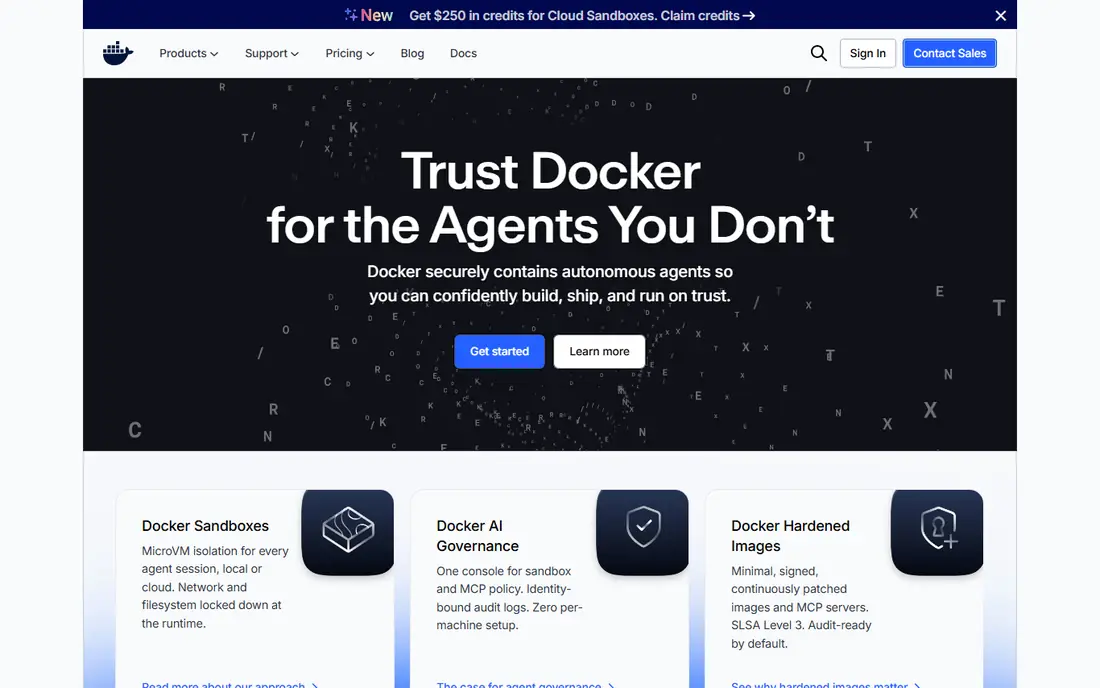
Docker Swarm is the simplest alternative on this list for teams already using Docker. Cluster mode is built into Docker Engine, so a small cluster can be running with a few commands. Resource use is low, which suits small apps, edge deployments and rapid prototypes. Built-in service discovery and load balancing cover the basics without extra tools.
Swarm's limits show at scale. Its scheduling, autoscaling and ecosystem are far narrower than Kubernetes, and its development pace has slowed as the industry moved to Kubernetes. Swarm suits small teams with simple apps that do not need advanced orchestration. Larger or growing systems should look at K3s or Nomad instead.
- Built into Docker with very simple setup
- Low resource use for small clusters
- Built-in load balancing
- Smaller ecosystem and slower development than Kubernetes
- Limited scheduling features at scale
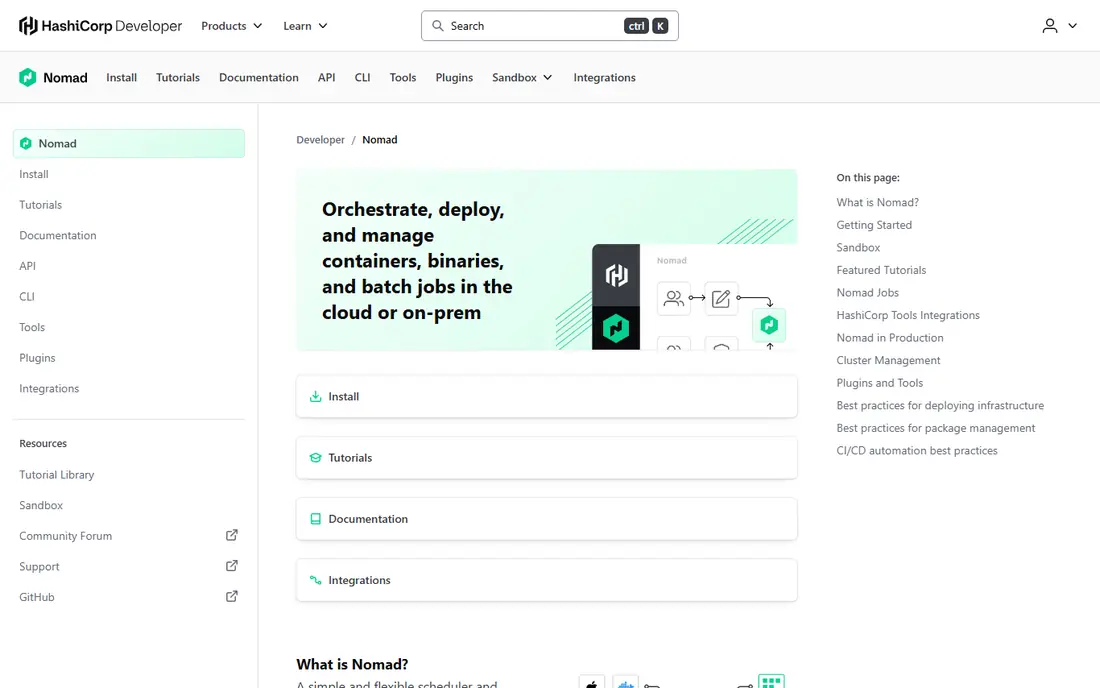
Nomad is the pick for teams that run more than containers. It can schedule Docker containers, binaries, Java apps and batch jobs from one scheduler, which suits firms with legacy services alongside new container apps. Installation is a single binary, and integration with HashiCorp Vault and Consul helps with secrets and service discovery.
Nomad is not a drop-in Kubernetes replacement. Its container ecosystem is smaller, and features such as ingress and load balancing often need extra components. Nomad suits teams that value simplicity and mixed workloads over the full Kubernetes feature set. HashiCorp enterprise pricing is by quote for managed and enterprise tiers.
- Single scheduler for containers and other workloads
- Single binary install
- Integrates with Vault and Consul
- Smaller container ecosystem than Kubernetes
- Load balancing needs extra tooling
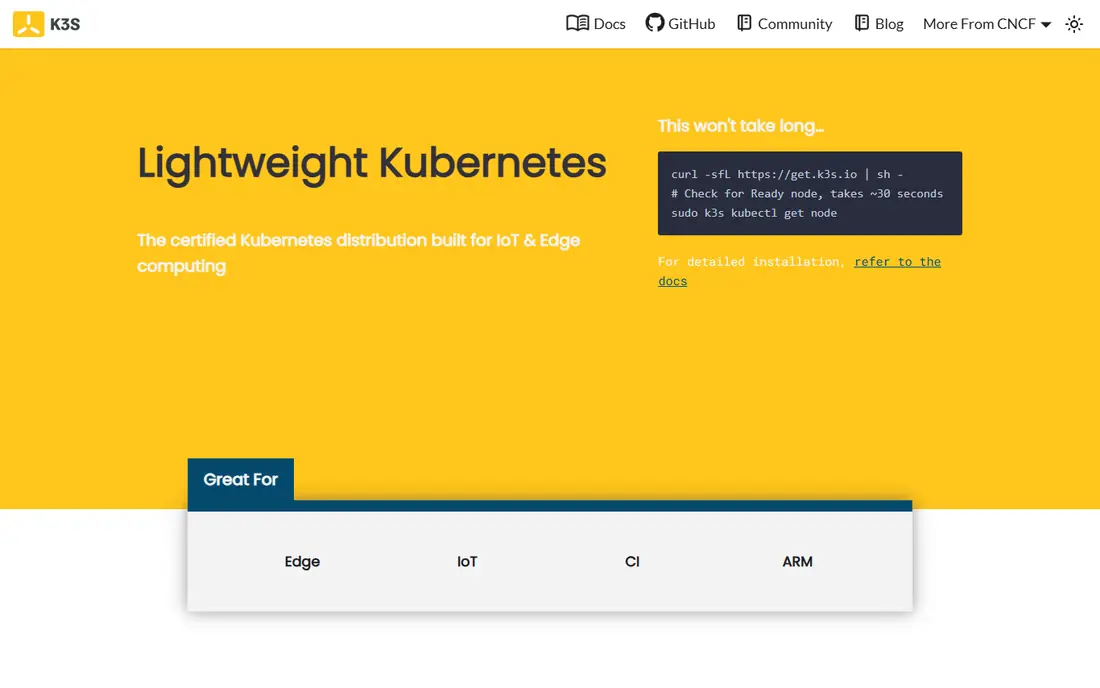
K3s is our pick for teams that want Kubernetes compatibility without full Kubernetes weight. It packages the Kubernetes API in a single binary under 100 MB, runs on hardware as small as a Raspberry Pi, and installs quickly. That makes it ideal for edge sites, IoT, labs and small production clusters. Because it tracks upstream Kubernetes, most Kubernetes tools and manifests still work.
K3s does not remove Kubernetes complexity entirely. You still handle upgrades, storage and networking decisions, and its bundled defaults need review for production. K3s suits teams that already know Kubernetes tools but want a lighter distribution. Teams that want no cluster work at all should look at managed services instead.
- Full Kubernetes API in a small package
- Runs on low-resource hardware
- Fast to install
- Still needs Kubernetes upgrades and care
- Bundled defaults may not suit every production setup
Amazon ECS suits teams already running on AWS. You define tasks, ECS schedules them, and AWS handles the control plane, so there is no Kubernetes cluster to upgrade. Fargate removes server management entirely, while EC2 launch types give more control over compute. Integration with IAM, load balancers and CloudWatch is a real advantage for AWS shops.
The trade-off is portability. ECS task definitions and AWS-specific tooling do not move cleanly to another cloud, and total cost depends on the compute and storage you choose. ECS is best for AWS-native teams that want less operational work and do not need Kubernetes compatibility.
- Deep AWS integration with IAM, load balancing and logging
- Serverless option with Fargate
- No control plane to manage
- AWS-specific deployment model
- Pricing depends on compute, storage and data transfer
Azure Container Apps suits Azure teams that want to run containerized microservices without managing a cluster. It offers autoscaling, revisions and managed ingress, so developers can focus on apps rather than nodes. Integration with Azure services and identity tools helps firms already on Microsoft's cloud.
Control is the limit. You do not get the full Kubernetes API or the same level of cluster customization, and pricing varies with replicas and usage. Azure Container Apps is best for app teams that want a simple, serverless container model on Azure. Teams that need Kubernetes APIs should consider Azure Kubernetes Service or K3s instead.
- Serverless container hosting with autoscaling
- Good Azure integration
- Simple app model for microservices
- Azure-specific
- Less control than a full cluster
- Pricing depends on usage and replicas
OpenShift is Kubernetes with enterprise hardening, developer tooling and support from Red Hat. It adds built-in pipelines, a developer console, security defaults and compliance alignment that many large firms need. For regulated industries and large enterprises, that packaged approach can save months of platform engineering.
Cost and complexity are the drawbacks. OpenShift pricing is by subscription and core, with figures around $150 per core per year reported in comparisons, so totals depend on cluster size. It also requires OpenShift-specific knowledge. OpenShift suits enterprises that want supported Kubernetes, not teams looking for a simpler scheduler.
- Hardened Kubernetes with built-in CI and CD tools
- Strong security and compliance features
- Broad enterprise support
- Higher cost than self-managed Kubernetes
- Needs OpenShift knowledge and planning
Rancher helps teams that already run Kubernetes but struggle to manage many clusters. It provides a central console for provisioning, access control, monitoring and policy across clusters on different clouds and on premise. The open-source Rancher platform itself is free, with paid Rancher Prime support for enterprises.
Rancher does not simplify Kubernetes itself. You still need Kubernetes skills, and Rancher adds another layer to operate and upgrade. Rancher suits platform teams with several clusters that need consistent management. Small teams with one cluster may not need it at all.
- Central management for many clusters
- Multi-cloud support
- Built-in security and monitoring options
- Still requires Kubernetes knowledge
- Adds its own management layer to maintain
Cycle is a container platform built to avoid Kubernetes complexity while still handling containers and virtual machines. It offers a unified control plane, environment-based deployments and hybrid cloud support, which suits teams that want a platform rather than a set of cluster tools. Pricing is listed from $500 per month in recent comparisons.
Cycle's ecosystem is smaller than AWS, Azure or Kubernetes, so fewer third-party tools and guides are available. The starting price also puts it out of reach for hobby projects. Cycle suits small and mid-sized product teams that want a managed-feeling platform without hiring a Kubernetes specialist.
- Unified container and VM orchestration
- Simpler developer experience than raw Kubernetes
- Hybrid cloud support
- Smaller ecosystem than major clouds
- Starting price is high for small teams
Civo Kubernetes suits cost-sensitive teams that still want real Kubernetes. Its control plane is free, nodes start at low monthly prices in recent comparisons, and it charges no egress fees, which helps media and data-heavy workloads. Clusters can be created quickly, and its pricing page is unusually clear for a cloud provider.
The trade-off is scale. Civo has fewer regions, integrations and enterprise compliance options than AWS, Azure or Google Cloud. Teams with global or heavily regulated workloads may need a larger provider. For startups and small teams that want affordable managed Kubernetes, Civo is a strong value pick.
- Free control plane
- Low-cost nodes
- No egress fees on its platform
- Fast cluster creation
- Fewer regions and integrations than major clouds
- Smaller support bench than hyperscalers
How we picked these
We compared official documentation, pricing pages and workload models for container platforms that replace Kubernetes or reduce its operational burden. We favored platforms that are actively maintained, clearly document their deployment model, and publish at least a starting price or a clear usage model. We did not claim hands-on testing, and we treated comparison prices as starting points to confirm on each vendor's own site.
How to choose a Kubernetes alternative
Start with what you run and who runs it. A small team with simple apps should try Docker Swarm, Nomad or K3s first, because they are free and fast to test. A team already on AWS or Azure should test ECS or Container Apps, because managed services remove the most operational work. Enterprises with compliance needs should evaluate OpenShift or Rancher.
Then test with a real workload, not a demo. Deploy your app, test upgrades, backups, scaling and failure recovery, and measure the time your team spends on platform work each week. The cheapest platform in license terms can become expensive if it needs constant care. Pick the option your team can operate safely for a year.
Sources
Frequently asked questions
What is the simplest alternative to Kubernetes?
Docker Swarm is simplest for small Docker clusters, while Nomad is simplest for mixed workloads. K3s is simplest if you want to keep Kubernetes compatibility, because it uses the same API in a much smaller package. The right simple choice depends on whether you need Kubernetes tools.
Is Docker Swarm still supported in 2026?
Yes, Docker Swarm still works and is supported through Mirantis, but its development pace and market share are far below Kubernetes. It suits existing Swarm users and small clusters, but new projects that expect growth usually choose K3s or a managed service instead.
Can Nomad replace Kubernetes?
Nomad can replace Kubernetes for many container and non-container workloads, especially when simplicity matters more than the Kubernetes ecosystem. It does not offer the same breadth of Kubernetes tools, operators and managed services. Teams that depend on Kubernetes-specific tooling should stay with Kubernetes or use K3s.
Should I use managed Kubernetes or a simpler scheduler?
Use a managed service such as ECS, Container Apps or Civo Kubernetes when you want to avoid cluster operations and can accept cloud-specific tooling. Use a simpler scheduler such as Nomad or Swarm when you want portability and low cost for small workloads. Use K3s when you want both Kubernetes compatibility and a light footprint.
How much does a Kubernetes alternative cost?
Self-hosted options such as Docker Swarm, Nomad and K3s are free in license terms, but you pay for servers and engineering time. Managed options charge for compute and usage, with Cycle listed from $500 per month and Civo nodes from low monthly prices. Always model total cost with compute, storage and support included.