Substack Alternatives in 2026: 8 Alternatives Compared
By ToolNimba Editorial Team November 9, 2026 8 min read

- Top pick
 Ghost
Writers who want an owned publication with memberships
Starting priceSee websiteCheck out GhostRead our review - Runner-up
 Beehiiv
Newsletter-first growth, ads, and referrals
Starting priceFreeCheck out BeehiivRead our review - Also great
 Kit
Creators who sell courses, products, and paid newsletters
Starting priceFreeCheck out KitRead our review
How we researched this
We compared official pricing and feature pages, app store listings, privacy policies and public user reviews. Prices change, so check the provider's site before you pay.
Key takeaways
- Ghost and WordPress suit writers who want to own their site, design, and member data.
- Beehiiv and Kit suit newsletter growth and creator sales, with different strengths on ads, referrals, and automation.
- Buttondown is the leanest choice for writers who want simple Markdown email and a low bill.
- Substack takes 10 percent of paid revenue, so a flat monthly plan often wins once paid income grows.
Quick comparison
| Name | Best for | Starting price | Free plan | |
|---|---|---|---|---|
| Ghost | Writers who want an owned publication with memberships | See website | No | Visit |
| Beehiiv | Newsletter-first growth, ads, and referrals | Free | Yes | Visit |
| Kit | Creators who sell courses, products, and paid newsletters | Free | Yes | Visit |
 WordPress | Full ownership with plugins for newsletters and memberships | Free | Yes | Visit |
 Medium | Writers who want readers without running a site | Free | Yes | Visit |
 Buttondown | Writers who want a simple, low-cost newsletter | Free | Yes | Visit |
 Mailchimp | Email marketing with landing pages and automation | Free | Yes | Visit |
 Patreon | Memberships that mix newsletters, posts, and perks | Free | Yes | Visit |
The best Substack alternatives
Substack is free to publish and takes 10 percent of paid subscription revenue, plus payment fees. That model is simple at first, but the fee grows with your income, and your publication lives inside Substack design and discovery rules. The alternatives below trade that simplicity for more ownership, lower fees, or stronger growth tools.
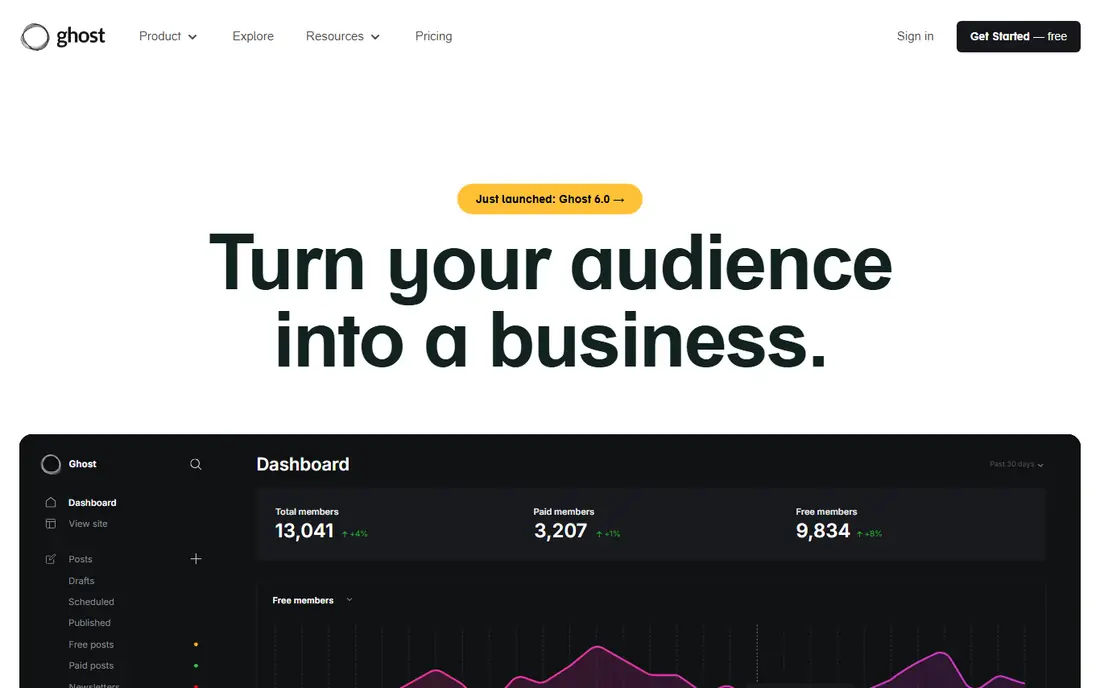
Ghost is the closest owned alternative to Substack. It combines a website, a newsletter, and paid memberships, and you keep your subscriber list and design choices. Hosted Ghost plans have been listed from $15 per month on annual billing for Starter at smaller member counts, with paid subscriptions available on higher tiers, so check the current member band before you choose.
The trade-off is effort. Ghost gives you more control, but you must set up themes, payment settings, and email delivery in a way Substack handles for you. It fits writers whose publication is a business, not just a side project.
- Open-source option plus hosted plans
- Full site, membership, and newsletter control
- No revenue share on hosted paid plans
- Hosted pricing scales with members
- Setup is heavier than Substack
- Self-hosting needs technical care
Beehiiv is built for newsletters that want to grow fast. Its free plan covers up to 2,500 subscribers with unlimited sends, and paid plans add growth tools, an ad network, and referral programs. Lite has been listed at $49 per month on annual billing at 1,000 subscribers, so price your actual list size, not the headline tier.
If your main goal is audience growth and monetization through ads and referrals, Beehiiv is a strong pick. If you want a full magazine site with many page types, Ghost or WordPress may fit better.
- Free plan up to 2,500 subscribers
- Strong referral and ad network tools
- Clean newsletter editor
- Paid plans rise with list size
- Less of a full website than Ghost or WordPress
- 0 percent revenue share applies to paid plans
Kit, formerly ConvertKit, suits creators whose newsletter is one part of a sales system. The free plan covers up to 10,000 subscribers with unlimited broadcasts, and Creator has been listed at $33 per month on annual billing at 1,000 subscribers. Automations, sequences, and product pages help turn readers into buyers.
The catch is that Kit is less of a publication site than Ghost. Readers get email first, and the public archive is simpler. Choose Kit when selling and automation matter more than magazine-style design.
- Free plan up to 10,000 subscribers
- Strong automation and product sales
- Good landing pages
- Paid plan pricing rises with subscribers
- Revenue fee applies to commerce payments
- Newsletter design is plainer than Ghost
WordPress gives the most control of any option here. The software itself is free, and you add hosting plus newsletter or membership plugins to match Substack features. Jetpack Newsletter and other plugins can handle subscriptions, while membership plugins can handle paid tiers.
That freedom comes with maintenance. You handle updates, backups, spam, and deliverability, or you pay a managed host to handle part of it. WordPress fits writers who already run a site or who want a publication that is not tied to one newsletter company.
- Open-source and highly flexible
- Huge plugin and theme choice
- You own hosting and data
- Hosting, security, and updates are your job
- Newsletter plugins vary in quality
- Setup takes time
Medium is a good alternative if discovery matters more than ownership. You publish, Medium handles design and distribution, and readers can find your work through topics and recommendations. Publishing is free, and the Partner Program can pay based on member reading time, subject to its current rules.
The limit is control. You do not own the email list in the same way, design options are narrow, and monetization rules sit with Medium. Use Medium to reach readers, and keep your own list elsewhere if ownership matters.
- Built-in audience and clean reading experience
- Free to publish
- No site maintenance
- Limited control over design, email list, and monetization
- Paywall and Partner Program rules change
- Less ownership than Ghost
Buttondown is the lean choice on this list. It focuses on writing and sending email well, with Markdown support, a hosted archive, custom domains, and an API. The free plan covers the first 100 subscribers, and Basic has been listed at $9 per month for up to 1,000 subscribers, with paid subscriptions as an add-on.
If you write for a technical or niche audience and want a low bill, Buttondown is hard to beat. If you need referral programs, ad networks, or a full membership site, Beehiiv or Ghost will serve you better.
- Free plan for first 100 subscribers
- Markdown writing
- Custom domains and API on paid plans
- Fewer growth and design tools than Beehiiv
- Smaller team and feature set
- Paid subscriptions need an add-on
Mailchimp is a general email platform rather than a Substack clone, and that breadth helps larger operations. You get campaigns, automations, landing pages, audience segments, and reporting in one place, with a free plan for smaller lists. It suits a business that sends newsletters alongside product emails.
The trade-off is feel. Mailchimp does not give the same publication home, paid membership flow, or reader discovery as Substack, Ghost, or Beehiiv. Choose it when email marketing scale matters more than a magazine-style publication.
- Large template and automation set
- Landing pages and signup forms
- Useful for larger lists
- Pricing rises with contacts
- Publication and membership feel is weaker than Ghost
- Free plan has limits
Patreon suits creators whose income comes from membership tiers, not just a newsletter. You can offer posts, early access, community perks, and paid tiers, and readers pay for membership rather than a single subscription. Starting is free, with Patreon taking a share of earnings depending on the plan you choose.
For a pure newsletter, Patreon is less direct than Ghost or Beehiiv, since email delivery and archive design are not its main focus. It works best when you already offer video, audio, art, or community perks alongside writing.
- Free to start with platform fees on earnings
- Membership tiers and perks
- Strong creator community tools
- Platform fees apply to earnings
- Less of a newsletter-first archive
- Discovery depends on your own promotion
How we picked these
We compared official pricing pages, free tiers, revenue shares, and feature sets for platforms that can replace Substack publishing, email delivery, or paid memberships. We favored platforms that are still actively sold, clearly state fees, and let writers export or own their subscriber lists where possible. We did not claim hands-on testing, and we used See website where hosted pricing depends on member counts.
Choose by how you earn
If paid subscriptions are your main income, compare Substack 10 percent share with a flat monthly plan at your income level. A writer earning a few hundred dollars a month may save little by moving, while a writer earning several thousand a month can save a lot on Ghost, Beehiiv, or Buttondown. Do the math at your current paid income, not at a future goal.
Check migration before you move
Export your subscriber list, check whether paid subscribers can move without re-subscribing, and test email delivery from the new platform before you announce a move. Some platforms offer guided migration tools, while others require readers to re-subscribe. A test issue to a small group can catch domain, formatting, and payment problems early.
Keep discovery in perspective
Substack discovery, recommendations, and its app help new readers find you, and leaving means giving up some of that built-in traffic. Alternatives win on ownership and fees, but you will need your own promotion through social posts, search, and cross-promotion. Plan that promotion before you move, not after.
Sources
Frequently asked questions
What are the best Substack alternatives?
Ghost, Beehiiv, and Kit lead this list for most writers. Ghost suits owned publications, Beehiiv suits newsletter growth, and Kit suits creators who sell products. Buttondown is the best low-cost option, and WordPress suits writers who want full control.
Is Ghost better than Substack?
Ghost is better for ownership, design control, and avoiding a revenue share on paid plans, while Substack is simpler to start and offers built-in discovery. Choose Ghost if your publication is a business and you are willing to handle more setup. Stay on Substack if simplicity and discovery matter most.
What is the best free Substack alternative?
Beehiiv offers a free plan up to 2,500 subscribers, Kit offers a free plan up to 10,000 subscribers, and Buttondown offers a free plan for the first 100 subscribers. The best free option depends on list size and whether you need growth tools, automation, or just simple sending.
Can I move my subscribers from Substack?
In most cases, yes, you can export your subscriber list and import it elsewhere. Paid subscriber migration varies by platform, and some moves require readers to set up billing again. Check the migration guide for your chosen platform and test with a small group first.
What are alternatives to Substack for paid newsletters?
Ghost, Beehiiv, Kit, and Buttondown all support paid newsletters, with different fee models. Ghost and Beehiiv paid plans generally avoid a revenue share, Kit charges commerce fees on payments, and Buttondown adds paid subscriptions as an add-on. Compare total cost at your paid income level.