Best Twilio Alternatives in 2026: 8 Alternatives Compared
By ToolNimba Editorial Team November 8, 2026 9 min read

- Top pick
 Plivo
Cost-sensitive developer teams
Starting price$0.005 per SMSCheck out PlivoRead our review - Runner-up
 Telnyx
Lowest published US SMS rates
Starting price$0.004 per SMSCheck out TelnyxRead our review - Also great
 Vonage
Closest like-for-like replacement
Starting priceSee websiteCheck out VonageRead our review
How we researched this
We compared official pricing and feature pages, app store listings, privacy policies and public user reviews. Prices change, so check the provider's site before you pay.
Key takeaways
- Plivo and Telnyx offer the lowest published US SMS rates, making them strong picks for cost-sensitive teams.
- Vonage and Sinch are the closest like-for-like Twilio replacements, with broad voice, SMS, and verification coverage.
- Bird suits omnichannel teams that need WhatsApp, SMS, and email in one platform, though setup takes longer.
- Infobip and Bandwidth suit enterprises with complex compliance or US voice needs, at enterprise pricing.
- Verify your sender registration early, since US 10DLC rules affect delivery on every provider here.
Quick comparison
| Name | Best for | Starting price | Free plan | |
|---|---|---|---|---|
| Plivo | Cost-sensitive developer teams | $0.005 per SMS | No | Visit |
| Telnyx | Lowest published US SMS rates | $0.004 per SMS | No | Visit |
| Vonage | Closest like-for-like replacement | See website | No | Visit |
 Sinch | Global carrier-direct messaging | See website | No | Visit |
 Bird | Omnichannel messaging and marketing | See website | No | Visit |
 Infobip | Global enterprise compliance | See website | No | Visit |
 Bandwidth | US enterprise voice | See website | No | Visit |
 AWS End User Messaging | AWS-native teams | See website | No | Visit |
The best Twilio alternatives
Twilio is the default communications API for many teams, but it is not always the cheapest or the simplest fit. The alternatives below cover SMS, voice, verification, and WhatsApp, with different strengths on price, coverage, and ecosystem. Pick by your main channel and volume, not by brand familiarity alone.
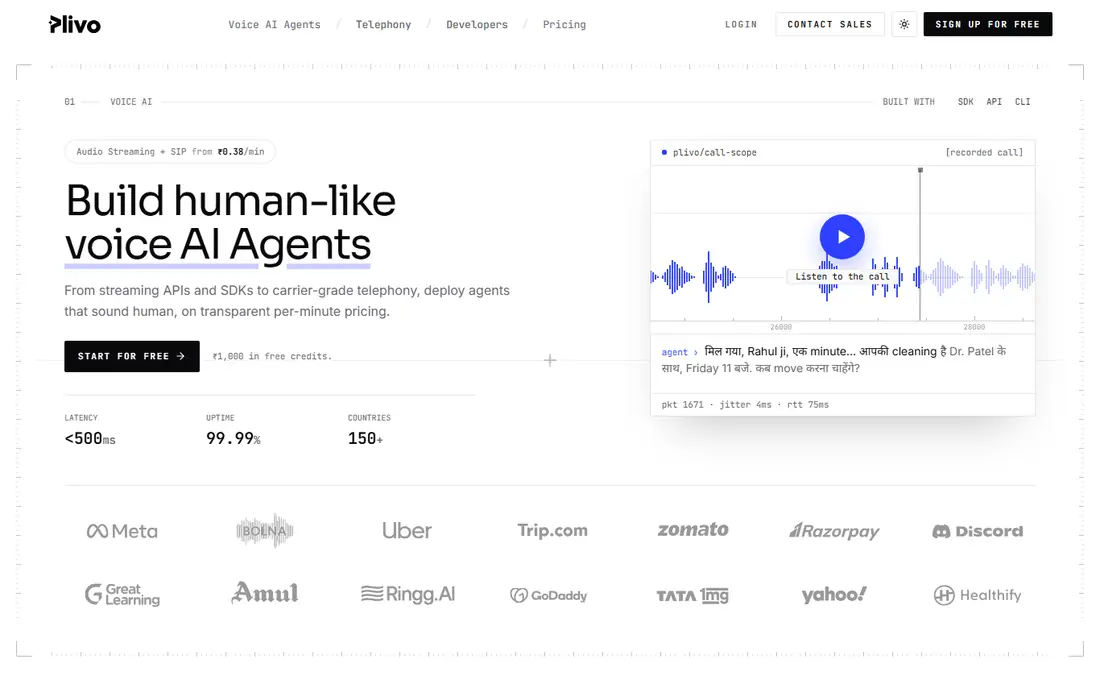
Plivo is the value pick for teams whose main job is SMS and voice. Its published US SMS rates sit below Twilio's, its APIs are clean and well documented, and features such as number pooling help high-volume senders manage throughput. Plivo Verify covers OTP flows without a separate per-verification charge, which keeps authentication costs predictable.
The trade-off is breadth. Plivo does not offer email, and its channel list is narrower than Twilio's or Bird's, so teams that need many channels in one API will need a second provider. For OTP, notifications, and two-way SMS at scale, Plivo's price and simplicity are hard to beat. Confirm current per-message rates on the Plivo pricing page, since carrier fees vary by destination.
- Low US SMS rates
- Clean, developer-friendly APIs
- Plivo Verify for OTP without per-verification fees
- Fewer channels than Twilio, with no email
- Smaller ecosystem of add-ons

Telnyx appeals to developers who want carrier-grade infrastructure at a low published price. Its US SMS rate starts around $0.004 per message plus carrier fees, and its elastic SIP trunking suits voice-heavy teams that want control over routing. Because Telnyx owns much of its network, it can offer pricing and delivery control that resellers cannot match.
The catch is that Telnyx is a pipe, not a full platform. There is no managed Verify-style product, so OTP flows, fraud checks, and fallback logic are yours to build on the messaging API. Teams with the engineering capacity to own that logic save money; teams that want verification handled for them should look at Vonage or Sinch instead.
- Carrier-owned network with strong SMS pricing
- Elastic SIP trunking
- Clear published rates
- No managed verification product, so OTP logic is yours to build
- Smaller ecosystem than Twilio
Vonage, formerly Nexmo, is the closest like-for-like Twilio replacement on this list. It covers SMS, voice, and video through developer-friendly APIs, with global reach and a long track record in production systems. Vonage Verify handles OTP with channel failover, so a code that fails over SMS can fall back to voice, which improves completion rates.
Pricing is published by country and channel, so check the Vonage pricing page for your main destinations rather than assuming a single rate. Verify costs more per success than some rivals, though failover can make the effective cost competitive. If you want to migrate from Twilio with minimal redesign, Vonage is the lowest-friction choice.
- Broad SMS, voice, and video APIs
- Vonage Verify with failover
- Strong global reach
- Verify pricing is higher than some rivals on paper
- Dashboard and docs feel enterprise-first
Sinch suits multinational teams that care about delivery in many countries. Its direct carrier connections, numbering in the hundreds, give it stable international routing that aggregator-only providers struggle to match. Sinch Verification covers SMS, flash-call, and app-based verification, which helps in markets where SMS delivery is unreliable or expensive.
The trade-off is weight. Sinch is built for operators and large enterprises, so onboarding and pricing conversations feel heavier than Plivo's self-serve flow, and some verification rates appear only in the dashboard. For a US-only startup, that weight is unnecessary. For a global product with users across regions, Sinch's reach justifies it.
- Hundreds of direct carrier connections
- Strong international delivery
- Sinch Verification with flash-call options
- Enterprise onboarding can feel heavy
- Verification rates are dashboard-only for some routes
Bird, formerly MessageBird, is the omnichannel pick. It brings SMS, WhatsApp, email, and voice into one platform with marketing automation and CRM features, so a team can run support, notifications, and campaigns without stitching several vendors together. Enterprise rates are often competitive with Twilio, especially at volume.
Simplicity is the cost. Setting up Bird for a basic SMS job can feel heavier than Plivo or Telnyx, and published pricing is limited, so budgeting needs a conversation with sales. If your roadmap includes WhatsApp and email alongside SMS, Bird's breadth pays off. If you only send OTP codes, a narrower tool is cheaper and faster.
- SMS, WhatsApp, email, and voice in one platform
- Marketing automation and CRM features
- Competitive enterprise rates
- Configuration can feel complex for simple SMS use
- Published pricing is limited
Infobip is the enterprise-grade global option. It covers SMS, voice, WhatsApp, RCS, Viber, and email across more than 190 countries, with compliance tooling for regulated industries and complex routing needs. Large brands with users on many channels and in many jurisdictions get one vendor, one contract, and consistent reporting.
Small teams should look elsewhere. Pricing is quote-based, onboarding is enterprise-shaped, and the platform's breadth is overkill for a single-country SMS job. If you operate globally, handle regulated traffic, or need RCS and Viber alongside SMS, Infobip's scale and compliance features justify the sales process.
- Coverage in 190-plus countries
- RCS, Viber, and WhatsApp alongside SMS
- Strong compliance tooling
- Quote-based pricing with little transparency below enterprise volume
- Heavyweight for small teams
Bandwidth is the voice-first pick for US enterprises. Because it owns its network, it offers control over voice quality, routing, and emergency services compliance that resellers cannot match. Its SIP trunking and messaging APIs suit contact centers, healthcare, and other voice-heavy operations where 911 compliance is not optional.
International coverage is thinner than Sinch or Infobip, and pricing is enterprise-oriented, so small teams will find better value elsewhere. If your product is US voice with strict compliance needs, Bandwidth's network ownership is a genuine advantage. If your traffic is mostly international SMS, pick a global messaging provider instead.
- Owns its US network for voice quality and control
- Strong 911 and E911 compliance
- SIP trunking
- US-focused, so international messaging is thinner
- Enterprise pricing and onboarding
AWS End User Messaging, formerly Pinpoint SMS, suits teams already running on AWS. It sends SMS and push notifications with AWS billing, IAM controls, and integration into the wider AWS stack, which keeps procurement and security reviews simple. Pricing is usage-based, and it scales alongside your other AWS services without a separate vendor contract.
The limit is scope. There is no managed verification product, so OTP generation, fraud protection, and channel fallback are yours to build and maintain. Teams with AWS expertise and simple notification needs will like the fit. Teams that want verification handled end to end should pair AWS messaging with a dedicated verification provider, or choose Vonage or Sinch.
- Sits inside AWS with familiar billing and IAM
- SMS and push in one service
- Scales with your AWS usage
- You build OTP logic, fraud defense, and failover yourself
- No managed verification product
How we picked these
We compared official pricing pages and recent independent comparisons of SMS and voice APIs, and kept only providers that offer production SMS or voice APIs today. We favored providers with published or quotable rates, real global or US coverage, and distinct strengths on price, channels, or compliance, and we left out consumer messaging apps and phone-based gateway hacks. Prices change often, so confirm the current figure on each vendor site before you buy.
How to switch without breaking delivery
Start with sender registration, not code. In the US, 10DLC registration affects deliverability on every provider here, and a new provider means a new registration path, so budget days, not hours, for approval. Port or provision numbers early, and run the new provider in parallel with Twilio for a subset of traffic before cutting over.
Then compare on your real traffic mix, not headline rates. A low per-SMS price means little if delivery rates are poor in your main countries, or if carrier fees and verification charges erase the saving. Measure delivery, latency, and OTP completion for two to four weeks, and keep Twilio as a fallback during the transition. The cheapest provider that delivers reliably in your markets is the right one, even if its headline rate is not the lowest.
What to check before you sign
Confirm per-message rates for your top five destinations, including carrier fees, and ask how verification is priced: per attempt, per success, or bundled. Check channel coverage for WhatsApp, RCS, and voice if your roadmap needs them, and confirm support hours and SLAs for production incidents. A provider that answers quickly at 2 a.m. is worth more than a small per-message saving.
Sources
Frequently asked questions
Which Twilio alternative is cheapest for SMS?
Telnyx and Plivo publish the lowest US SMS rates on this list, around $0.004 and $0.005 per message before carrier fees. Your effective cost depends on destination mix, volume discounts, and delivery rates, so test with real traffic before committing.
Can I replace Twilio Verify with an alternative?
Yes. Vonage Verify, Sinch Verification, and Plivo Verify all handle OTP flows, with different pricing models. Vonage and Sinch offer channel failover, while Plivo Verify avoids a per-verification fee. Compare per-success costs, not just headline rates.
Do I need 10DLC registration with every provider?
Yes for US application-to-person SMS. Registration rules apply across providers, though each provider manages the process differently. Start registration early, since approval delays affect delivery regardless of which API you use.
Is Bird the same as MessageBird?
Yes. MessageBird rebranded as Bird, and its platform now covers SMS, WhatsApp, email, and voice. Existing MessageBird accounts and APIs carried over under the Bird name.
Which alternative is best for WhatsApp messaging?
Bird and Infobip offer the broadest WhatsApp coverage alongside SMS and other channels, with marketing and support workflows built in. If WhatsApp is your main channel, compare their WhatsApp template and session pricing directly.
Should a small startup switch from Twilio at all?
Only if price, a missing channel, or support is a real problem. Twilio's ecosystem and docs are a genuine advantage, and migration costs time. Switch when a rival clearly beats Twilio on your main channel and volume, and keep Twilio as a fallback during the move.