Best WhatsApp Alternatives in 2026: 9 Apps Compared
By ToolNimba Editorial Team November 9, 2026 10 min read

- Top pick
 Signal
Private everyday messaging
Starting priceFreeCheck out SignalRead our review - Runner-up
 Telegram
Large groups and channels
Starting priceFreeCheck out TelegramRead our review - Also great
 Viber
Calls and international contacts
Starting priceFreeCheck out ViberRead our review
How we researched this
We compared official pricing and feature pages, app store listings, privacy policies and public user reviews. Prices change, so check the provider's site before you pay.
Key takeaways
- Signal is our pick for most people, because it pairs default end-to-end encryption with a free, nonprofit model and no ads.
- Telegram wins on reach and large groups, but its default chats are not end-to-end encrypted, so you must start a secret chat for that protection.
- Threema and Session suit people who do not want to hand over a phone number, while Discord fits communities and gaming groups better than one-to-one chats.
- Moving is only useful if your contacts move too, so pick an app your closest circle will actually install and keep using.
Quick comparison
| Name | Best for | Starting price | Free plan | |
|---|---|---|---|---|
| Signal | Private everyday messaging | Free | Yes | Visit |
| Telegram | Large groups and channels | Free | Yes | Visit |
| Viber | Calls and international contacts | Free | Yes | Visit |
 Threema | Messaging without a phone number | See website | No | Visit |
 Wire | Privacy-minded teams | Free | Yes | Visit |
 Element | Decentralized chat | Free | Yes | Visit |
 Session | Anonymous messaging | Free | Yes | Visit |
 Discord | Communities and gaming groups | Free | Yes | Visit |
 SimpleX Chat | Maximum identifier privacy | Free | Yes | Visit |
The best WhatsApp alternatives
If you are leaving WhatsApp, the hardest part is rarely the app itself. It is getting your family, friends, or team to follow you. The nine apps below cover private chats, huge groups, and community servers, so you can match the tool to the people you talk to most.
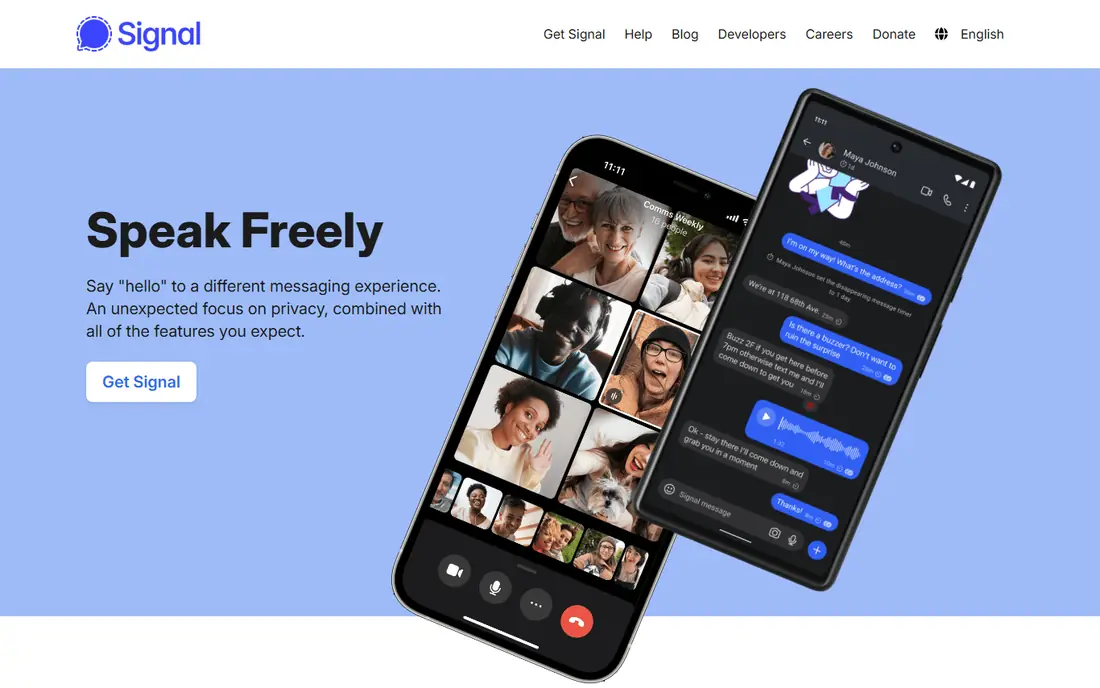
Signal feels closest to WhatsApp in daily use, which is a large part of its appeal. You get one-to-one and group chats, voice and video calls, and disappearing messages, all with end-to-end encryption turned on by default. The nonprofit behind Signal says it cannot read your messages, and it does not sell ads against your conversations.
The trade-off is reach. Many contacts may not have Signal yet, and you still need a phone number to sign up, although usernames let you share contact details without giving out that number. If privacy is your main reason for switching, we think Signal is the easiest first move, and it costs nothing to try alongside WhatsApp while your circle catches up.
- End-to-end encryption by default
- Nonprofit with no ads
- Disappearing messages and usernames
- Needs a phone number to register
- Smaller network than WhatsApp
- Fewer fun extras than Telegram
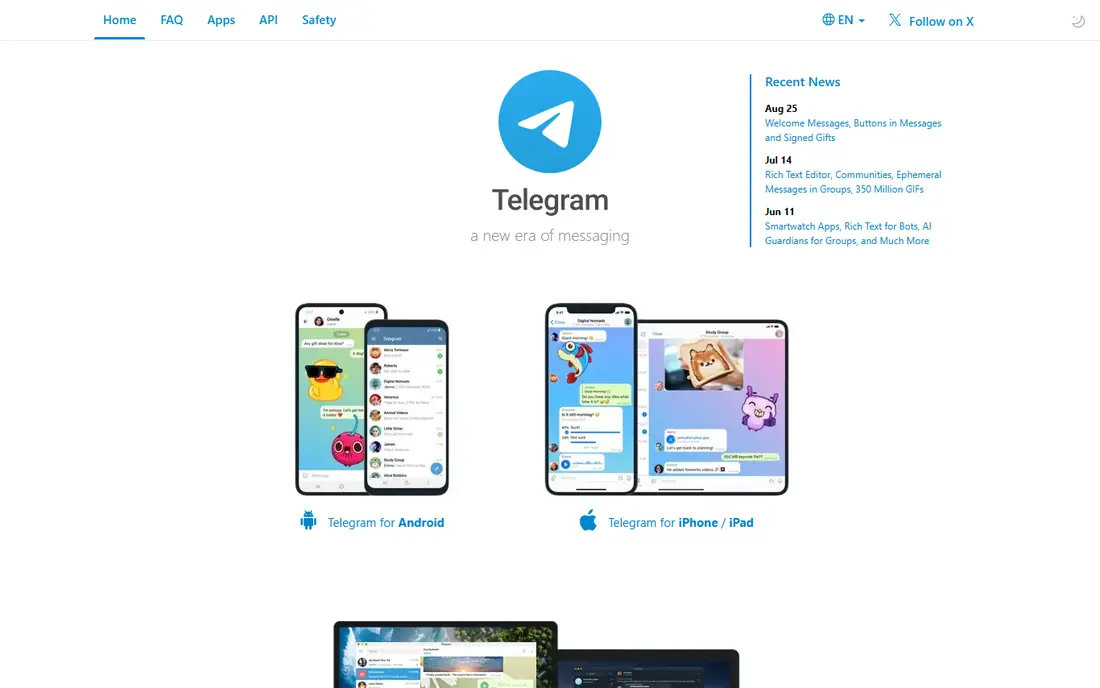
Telegram is the alternative most people already know, and that familiarity matters. Groups can hold far more members than WhatsApp groups, channels work well for broadcasts, and your chats sync across phones, tablets, and desktops without fuss. File sharing limits are generous, and the app is quick even on older phones.
The catch deserves plain language. Regular Telegram chats use cloud storage and are not end-to-end encrypted by default. Only secret chats add that layer, and they do not sync across devices in the same way. If you choose Telegram, use secret chats for sensitive talks, and treat public channels as public, because anyone who joins can read them.
- Huge groups and channels
- Fast cloud sync across devices
- Large file sharing
- Default chats are not end-to-end encrypted
- Very large groups can be noisy
- Premium features cost extra

Viber has been around for years, and it remains strong for people with contacts abroad. Chats and calls are end-to-end encrypted, and Viber Out lets you call ordinary phone numbers at paid rates when the other person has no app installed. That combination helps when part of your family uses a messaging app and part still answers a regular phone call.
In the United States, Viber is not as common as WhatsApp, so you may need to invite people. Its interface also packs in stickers, channels, and communities, which some users love and others find cluttered. For international families, though, the calling options alone can justify keeping it installed.
- End-to-end encryption for chats and calls
- Viber Out for calling real phone numbers
- Stickers and communities
- Less popular in the United States
- Some features vary by country
- Group tools feel dated
Threema takes a different route to privacy. Instead of a phone number, you get a random Threema ID, so you can message people without linking your chats to your mobile number. The company is based in Switzerland, and its apps are open source, which lets independent reviewers inspect the code behind the claims.
You pay once for the app rather than using a free tier, and that price can put casual users off. The network is also much smaller than WhatsApp, so Threema works best as a second app for a close circle that agrees to use it, rather than a direct replacement for every contact you have.
- No phone number or email needed
- Swiss-based with a privacy-first design
- One-time purchase for the app
- Paid app with no free plan
- Smaller user base
- Fewer integrations than larger apps
Wire started with a focus on secure communication for businesses, and that background still shows. Personal accounts are free, messages and calls are end-to-end encrypted, and the clients are open source. For a small team that wants an alternative to both WhatsApp and a heavier workplace tool, Wire sits in a useful middle ground.
The downside is that Wire is not where your friends already are. Consumer adoption is modest, and teams that grow will likely need a paid plan for guest access, administration, and support. We would shortlist Wire for work groups and volunteer teams, and keep a more popular app for family chats.
- End-to-end encryption for messages and calls
- Open source clients
- Team and business plans
- Free personal use has limits for teams
- Smaller consumer network
- Some business features need a paid plan
Element is the main app for Matrix, an open and decentralized chat network. That means no single company controls every server, and technically minded users can run their own. Private rooms support end-to-end encryption, and bridges can connect Matrix rooms to other chat networks in some setups.
For ordinary users, that flexibility comes with friction. Choosing a homeserver, understanding which rooms are encrypted, and dealing with a server that runs slowly are real hurdles. Element rewards people who value independence and control, but it is not the smoothest first step for someone who just wants to replace WhatsApp quickly.
- Built on the open Matrix network
- You can pick or host a server
- End-to-end encryption in private rooms
- Setup can confuse newcomers
- Encryption and server choice need attention
- Performance varies by server
Session pushes anonymity further than most apps on this list. You sign up with no phone number and no email address, and messages travel through a decentralized network designed to hide who is talking to whom, not just what they say. For journalists, activists, and anyone with a strong reason to separate identity from messaging, that design is the point.
Everyday users may notice the cost of that design. Message delivery can feel slower, and the contact list will be thin unless your circle commits to it. Session is a strong specialist choice, and we would pair it with a mainstream app for daily chats rather than expecting it to replace everything at once.
- No phone number or email required
- Messages route through a decentralized network
- Open source
- Can feel slower than mainstream apps
- Fewer contacts use it
- Voice calls are limited compared with rivals
Discord is not a like-for-like WhatsApp clone, and that is why it earns a place here. It excels at servers where a group shares text channels, voice rooms, events, and media in one place. Gamers, hobby clubs, study groups, and fan communities often find it far more organized than a long group chat thread.
Privacy is the honest limit. Discord messages are not end-to-end encrypted, so it is a poor choice for sensitive one-to-one conversations. The free tier covers most community needs, while Nitro adds larger uploads and streaming quality for $9.99 per month. Use Discord for groups that want a shared home, and keep private talks in Signal or Threema.
- Excellent servers, voice channels, and screen sharing
- Huge community ecosystem
- Free core features
- Direct messages are not end-to-end encrypted
- Can feel busy and public
- Nitro costs $9.99 per month for extras
SimpleX Chat goes further than Session in one respect: it has no user identifiers, not even a random ID tied to your account in the usual sense. You connect through one-time invitation links and separate addresses for each contact, which makes it hard to link your conversations together from the outside. The code is open source, and chats are end-to-end encrypted.
That design is powerful, but it is also unfamiliar. Contacts connect through links rather than searching for a name, and the network is small. We see SimpleX Chat as a promising option for privacy-focused users who are willing to learn a new way of adding contacts, rather than a first pick for a whole family.
- No user identifiers at all
- Open source
- Messages are end-to-end encrypted
- Very small network
- Interface assumes some technical comfort
- Group features are still maturing
How we picked these
We compared official feature pages, pricing pages, privacy policies, and app store listings for messaging apps that work in October 2026, and we kept only apps that offer real messaging, calls, or group chat as a core function. We favored default encryption, clear pricing, and a working network of users, and we noted where an app asks for a phone number or limits encryption to certain chat types. We did not claim hands-on testing we did not do, and we checked that each homepage below belongs to the product named.
What to check before you switch
Start by listing the five people you message most, then pick the app they are most willing to install. A technically perfect app that none of your contacts use will sit idle on your phone, while a good-enough app your whole group adopts will actually replace WhatsApp. Test group chats, calls, and media sharing for a week before you delete anything, and keep WhatsApp installed during the move so no one loses touch.
Pay attention to how each app handles backups and device changes. Cloud-synced apps make switching phones easy, but they may store more data on servers. Apps with local backups or no phone number may need extra steps to restore chats, so export anything important before you change devices. Finally, review disappearing message settings and group privacy controls, since those small choices matter more in practice than a long feature list.
Sources
Frequently asked questions
Is there a free alternative to WhatsApp?
Yes. Signal, Telegram, Viber, Wire, Element, Session, Discord, and SimpleX Chat all offer free core messaging, and Threema is the main paid option on this list. Free does not always mean the same thing, though, since some apps charge for premium limits, larger uploads, or team features.
Which WhatsApp alternative is the most private?
Signal is the strongest all-round answer for most people, because encryption is on by default and the nonprofit model avoids advertising. Threema, Session, and SimpleX Chat go further on identity privacy by reducing or removing phone number requirements, but they have smaller networks.
Do I need a phone number for these apps?
It depends on the app. Signal, Telegram, and Viber ask for a phone number, while Threema uses a random ID and Session and SimpleX Chat avoid phone numbers and email addresses. Element lets you register with an email address on many servers instead of a phone number.
Can I use a WhatsApp alternative on desktop?
Yes, most of these apps offer desktop or web versions, including Signal, Telegram, Viber, Wire, Element, and Discord. Session and SimpleX Chat also offer desktop apps, though features and sync behavior vary, so check the desktop version before you rely on it for work.
Why do Telegram chats need secret chats for full privacy?
Telegram stores regular chats in its cloud so they sync across devices, and those chats are not end-to-end encrypted by default. Secret chats add end-to-end encryption, but they are tied to one device and do not sync in the same way. That trade-off explains why Telegram is great for groups and less ideal for sensitive private talks.