ZoomInfo Alternatives in 2026: 8 Tools Compared
By ToolNimba Editorial Team November 1, 2026 8 min read

- Top pick
 Apollo.io
All-in-one alternative
Starting price$49 per user per monthCheck out Apollo.ioRead our review - Runner-up
 Lusha
Quick LinkedIn lookups
Starting price$37.45 per user per monthCheck out LushaRead our review - Also great
 Cognism
EMEA compliant data
Starting priceSee websiteCheck out CognismRead our review
How we researched this
We compared official pricing and feature pages, app store listings, privacy policies and public user reviews. Prices change, so check the provider's site before you pay.
Key takeaways
- Apollo is the best ZoomInfo alternative for most teams, with data, sequences, and a free tier at a public price.
- Lusha and RocketReach suit quick lookups, while Cognism suits European teams that need compliant mobile data.
- Clay is not a direct database replacement, it is a workflow layer that enriches across many providers.
- Test data in your own market before switching, since coverage and accuracy vary by region and industry.
Quick comparison
| Name | Best for | Starting price | Free plan | |
|---|---|---|---|---|
| Apollo.io | All-in-one alternative | $49 per user per month | Yes | Visit |
| Lusha | Quick LinkedIn lookups | $37.45 per user per month | Yes | Visit |
| Cognism | EMEA compliant data | See website | No | Visit |
 Clay | Waterfall enrichment | $185 per month | Yes | Visit |
 RocketReach | Broad email finding | $27 per month | Yes | Visit |
 UpLead | Verified data | $74 per month | Free trial | Visit |
 Hunter | Email finding and verification | $34 per month | Yes | Visit |
 LeadIQ | LinkedIn prospecting workflow | $20 per month | Yes | Visit |
The best ZoomInfo alternatives
ZoomInfo is powerful, but its annual cost and contract terms push many teams to look elsewhere. The alternatives below cover different needs: all-in-one prospecting, quick lookups, European compliance, and enrichment workflows. We compared official pricing pages and independent 2026 roundups, and we kept only tools that offer real B2B contact data today.
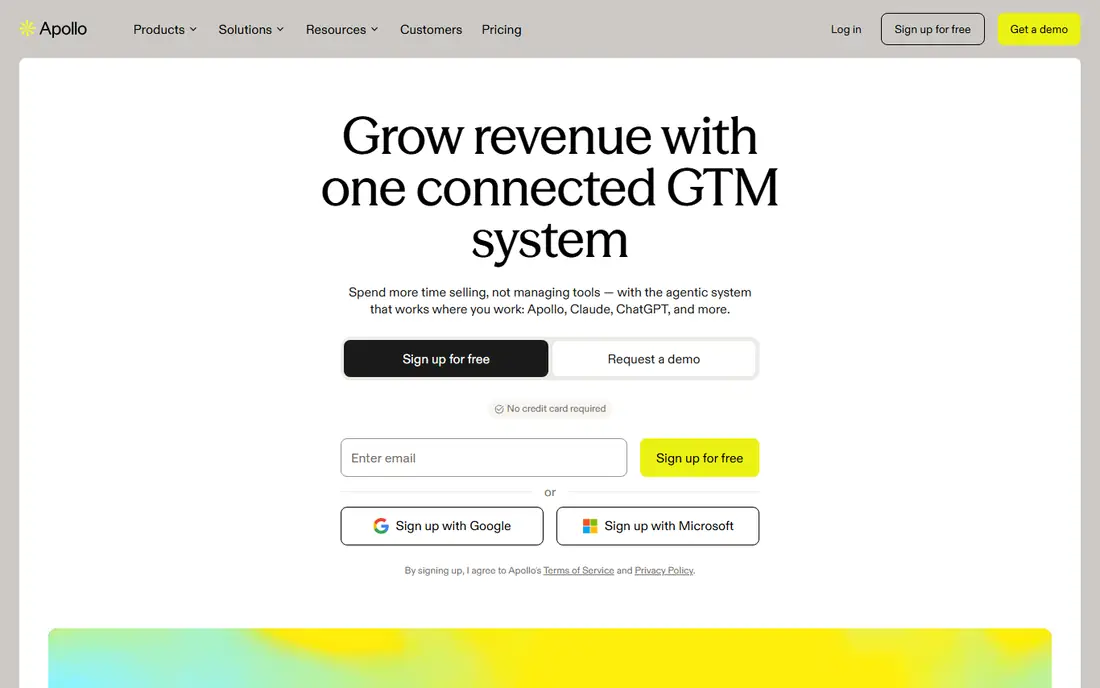
Apollo is the closest like-for-like ZoomInfo alternative for small and mid-size teams. It combines a large contact database with outreach tools, so teams can prospect and follow up in one place instead of buying data and a sequencer separately. The free tier lets teams test data quality before paying, which is essential when switching vendors.
It does not match ZoomInfo depth in every enterprise segment, especially for org charts and intent at scale. For teams that mainly need contacts and outreach, Apollo delivers most of the value at a fraction of the annual cost.
- Data plus sequences and dialer
- Free tier
- Public pricing
- Accuracy varies by market
- Credit limits on heavy use
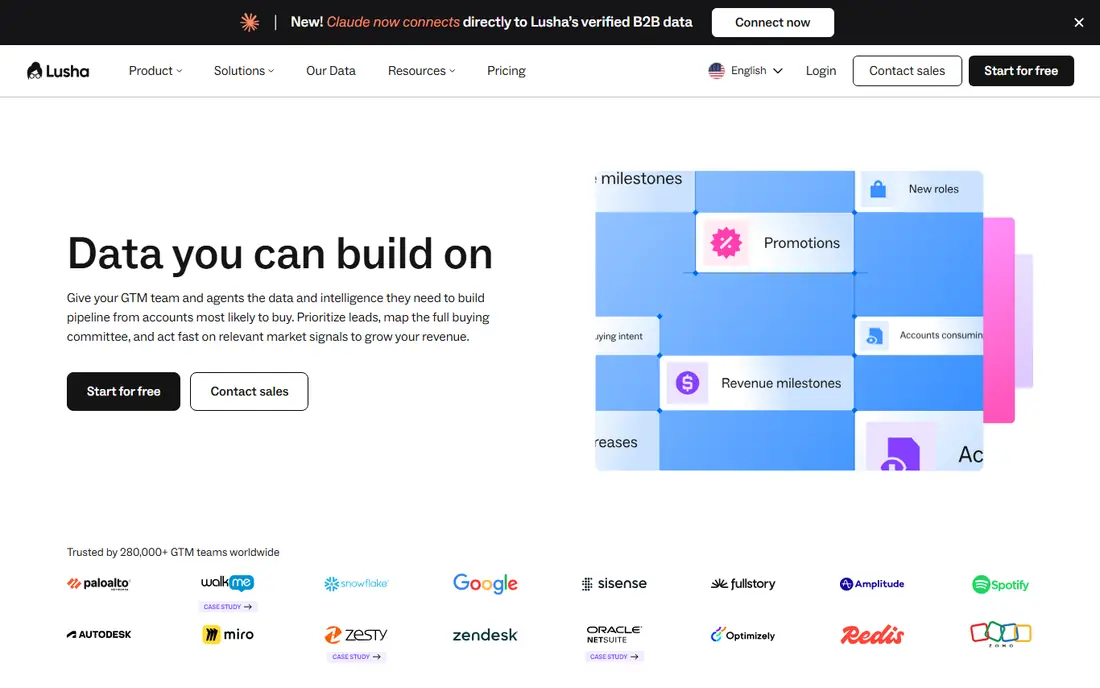
Lusha is the best alternative for reps who work on LinkedIn all day. The extension reveals emails and direct dials while browsing profiles, without leaving LinkedIn. Pricing is public, and a free tier with limited credits makes testing easy.
It is a lookup tool, not a full go-to-market platform. Teams that need intent, account scoring, and workflow automation will need another tool alongside Lusha, or a broader pick such as Apollo.
- Fast browser extension
- Transparent pricing
- Free credits to start
- Phone credits cost extra
- Less depth than ZoomInfo for account research
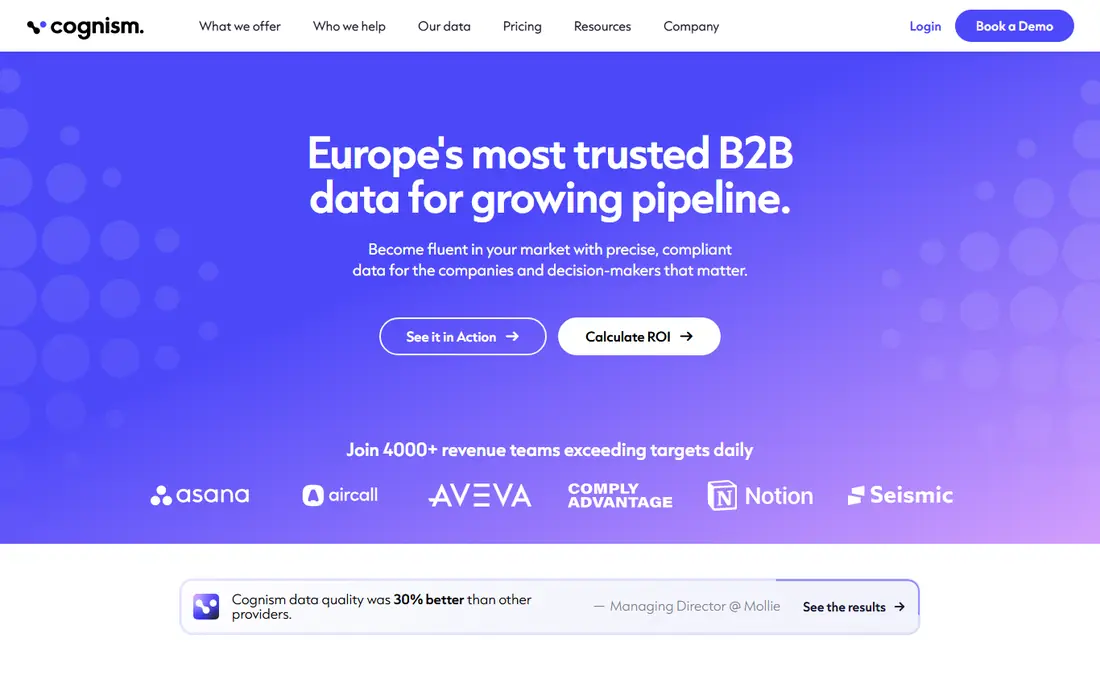
Cognism is the best ZoomInfo alternative for European sales. Its Diamond Data mobiles are phone-verified, and its compliance processes, including do-not-call screening, reduce risk for teams calling into Europe. That focus makes it stronger than US-first tools in EMEA markets.
Pricing is quote-based and annual, so it is not a cheap switch. US-only teams will find better value in Apollo or Lusha, while EMEA teams may find Cognism worth the premium for deliverability and compliance alone.
- Phone-verified mobiles
- GDPR-aligned
- Do-not-call screening
- Quote-based pricing
- No free tier
- Less value for US-only teams
Clay replaces ZoomInfo in a different way: instead of one database, it queries many providers in sequence to fill contact and company fields. That waterfall approach raises match rates and lets RevOps teams build lists from job changes, funding, tech stack, and other signals in one workflow.
Budget it as a workflow layer, not as a complete prospecting replacement. Teams still need outreach tools and often a base data source. For technical teams that build lists programmatically, Clay can outperform a single database. For reps who just need quick lookups, it is overkill.
- Enrichment across many providers
- Flexible workflows
- Strong for RevOps
- Not a standalone database
- Needs a sending tool
- Learning curve
RocketReach offers a large database of profiles with public pricing, starting around $27 per month on annual billing for its Essentials tier. It suits individual reps and small teams who need broad email finding without an enterprise contract. Lookups are fast, and a free tier lets users test coverage.
Workflow features are thinner than Apollo, and data freshness can vary by market. For pure contact finding at a low price, it is a strong alternative. For full outreach, pair it with a sequencer or choose Apollo instead.
- Large profile database
- Clear public pricing
- Fast lookups
- Data freshness varies
- Fewer workflow features than Apollo
UpLead is the accuracy-led alternative. It verifies emails in real time and refunds credits for inaccurate contacts, which makes cost per good contact easier to control. Pricing is public, and a 7-day trial lets teams test before committing.
Coverage is thinner than ZoomInfo in some markets, and intent features are limited. For North American teams that prioritize verified emails over the largest possible database, UpLead is a low-risk switch.
- Real-time verification
- Credit refunds for bad data
- Public pricing
- Smaller database than ZoomInfo
- Fewer intent features
Hunter is the focused alternative for teams that mainly need emails. It finds and verifies professional email addresses from domains and names, with a free tier offering limited credits. That narrow focus makes it fast to learn and easy to price, since there are no phone credits or intent add-ons to model.
It will not replace ZoomInfo for account research, phones, or outreach. Teams that need only reliable emails, however, can pair Hunter with LinkedIn Sales Navigator or a sequencer and spend far less than a full platform. Check verification rates on your own domains before committing, since accuracy varies by company size and region.
- Fast email finding and verification
- Free credits to start
- Simple pricing
- Email only, no phone data
- Fewer workflow features than Apollo
LeadIQ fits sales development teams that live on LinkedIn. It captures prospects from LinkedIn into a CRM with one click, tracks job changes, and offers a free tier with limited credits. Pro pricing starts around $20 per month, which makes it one of the cheapest alternatives here.
It is a workflow tool with data, not a full ZoomInfo replacement for account research and intent. For SDR teams that need fast LinkedIn capture and champion tracking, it is excellent value. For enterprise account planning, look at Apollo or Cognism instead.
- One-click LinkedIn to CRM capture
- Job change tracking
- Low Pro price
- Smaller database than ZoomInfo
- Features focus on LinkedIn workflow
How we picked these
We compared official pricing and feature pages, plus independent 2026 roundups of ZoomInfo alternatives. We kept tools that offer B2B contact data or enrichment, work with common CRMs, and are available in October 2026. We left out pure email senders with no data layer, and tools that only serve a single niche.
What to check before you switch
Do not switch on price alone. Export a sample list from ZoomInfo, run the same list through each alternative, and compare match rate, email validity, and mobile coverage in your market. That test reveals more than any vendor demo.
Compare total cost, not headline price
Credit models differ. A $27 plan with expensive phone credits can cost more than a $49 plan with generous credits. Model a real month of prospecting, including phones, and check whether unused credits roll over.
Check compliance for your markets
If you sell into Europe, confirm GDPR handling, data sourcing, and do-not-call screening. If you sell in the US, confirm CCPA handling and opt-out processes. A cheaper tool that creates compliance risk is not a saving.
Pilot with one team
Give one team a month on the alternative, with the same target list and success measures as ZoomInfo. Compare meetings booked, bounce rate, and rep time spent. A pilot beats a feature table, because data quality shows up in replies.
When testing an alternative, check data for companies outside the vendor demo set. Include small firms, firms in your secondary markets, and firms with recent leadership changes. Those edge cases reveal coverage gaps that a demo list of large, well-known companies will never show.
Also check how each alternative handles data updates and removals. People change jobs often, and a database that is not refreshed will return stale contacts and bounced emails. Ask how often records are verified, whether users can report bad data, and whether credits are refunded for contacts that bounce. Those policies matter as much as the size of the database, because a large list of outdated contacts is worse than a smaller list that is kept current.