Best AI Software Builder in 2026: 9 Builders Compared
By ToolNimba Editorial Team October 28, 2026 10 min read

- Top pick
 Lovable
Polished full-stack MVPs
Starting price$25 per monthCheck out LovableRead our review - Runner-up
 Bolt
Fast browser prototypes
Starting price$25 per monthCheck out BoltRead our review - Also great
 Replit
Build and host in one place
Starting price$20 per monthCheck out ReplitRead our review
How we researched this
We compared official pricing and feature pages, app store listings, privacy policies and public user reviews. Prices change, so check the provider's site before you pay.
Key takeaways
- Lovable is the best pick for non-technical founders who want a polished full-stack web app from a prompt.
- Bolt is the fastest route to a working prototype in the browser, with a free plan and paid plans from $25 per month in recent comparisons.
- Cursor is the best tool for developers with an existing codebase, since it works inside a real editor and you own the code.
- Bubble and Glide suit builders who need complex logic or mobile apps without writing code, but lock-in is higher than with code-export tools.
- Credit systems decide the real cost, so test how many credits a real feature costs before you commit to a monthly plan.
Quick comparison
| Name | Best for | Starting price | Free plan | |
|---|---|---|---|---|
| Lovable | Polished full-stack MVPs | $25 per month | Yes | Visit |
| Bolt | Fast browser prototypes | $25 per month | Yes | Visit |
| Replit | Build and host in one place | $20 per month | Yes | Visit |
 v0 | UI and frontend generation | $30 per month | Yes | Visit |
 Cursor | Developers and existing code | $20 per month | Yes | Visit |
 Bubble | Complex no-code apps | $32 per month | Yes | Visit |
 Base44 | Backend from a prompt | $20 per month | Yes | Visit |
 Softr | Portals on your data | $25 per month | Yes | Visit |
 Glide | Mobile apps from data | $25 per month | Yes | Visit |
The best ai software builders
The best ai app builder depends on your skill and your goal. A founder validating an idea needs a different tool than a developer shipping production code or an ops team building an internal portal. We compared official pricing pages, feature lists and recent independent comparisons for builders that work in October 2026.
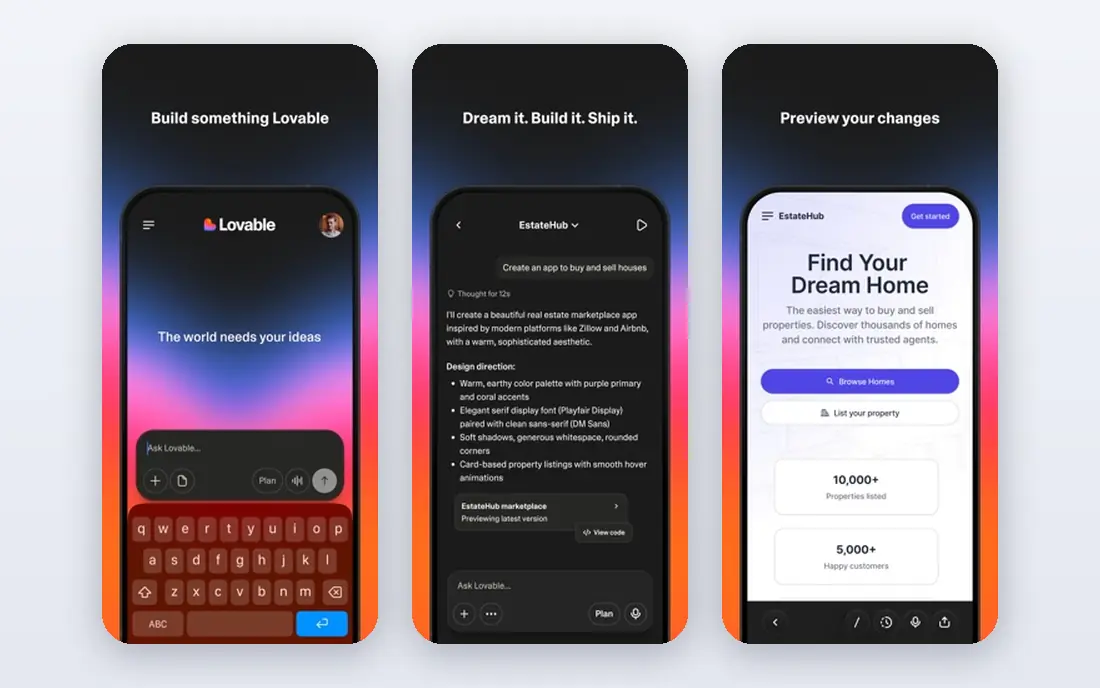
Lovable is our pick for founders who want an app that looks ready to show investors. Describe the app in chat, and it generates frontend, backend and database pieces, with Supabase handling data and accounts. The output tends to look more finished than rival prompt-to-app tools.
The catch is depth. Complex logic, edge cases and scaling still need review, and credit use grows as you iterate. Treat Lovable as a fast MVP builder with a real export path, not as a replacement for engineering on a complex product.
- Polished design on first output
- Full-stack generation with auth and database
- GitHub sync for code
- Credit costs can rise on complex apps
- Backend depends on Supabase
- Design polish can hide weak logic
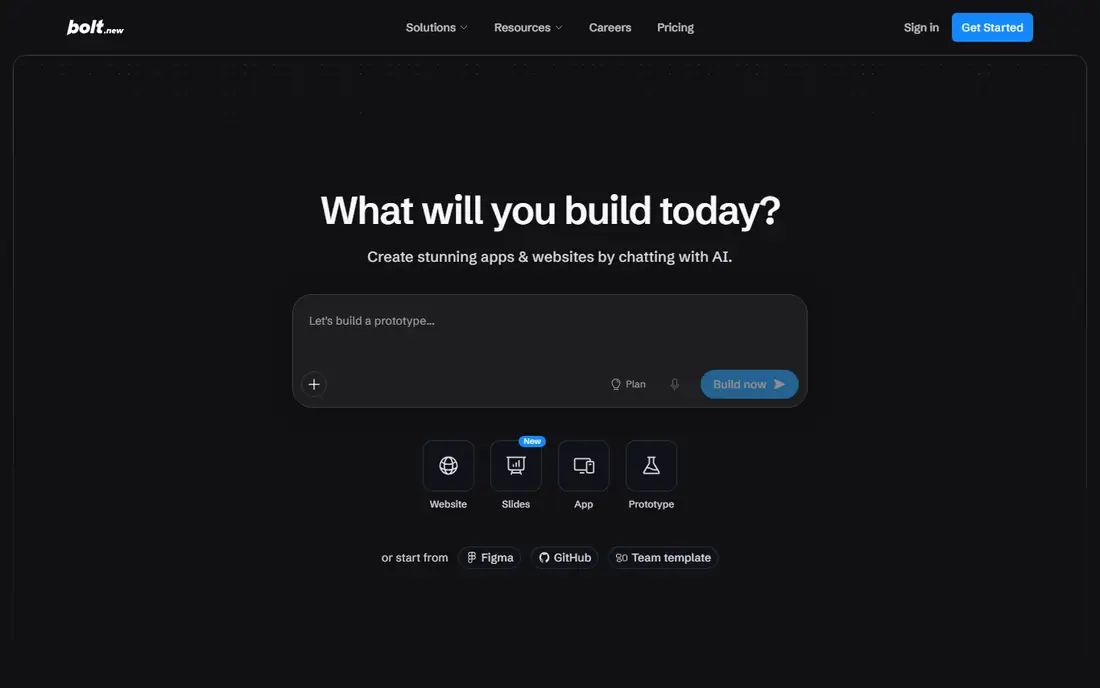
Bolt, from StackBlitz, is the quickest way to turn an idea into a clickable app. Everything runs in the browser, so there is no setup, and you can deploy and share a prototype in minutes. For hackathons, demos and idea validation, that speed is hard to beat.
Larger apps expose limits. Complex backends, heavy data work and long projects can burn credits and need manual fixes. Use Bolt to prove an idea fast, then move to a more structured stack if the prototype gains real users.
- Instant in-browser building
- Fast iteration
- GitHub push for export
- Best for simpler apps
- Credit costs on large projects
- JavaScript and TypeScript focus
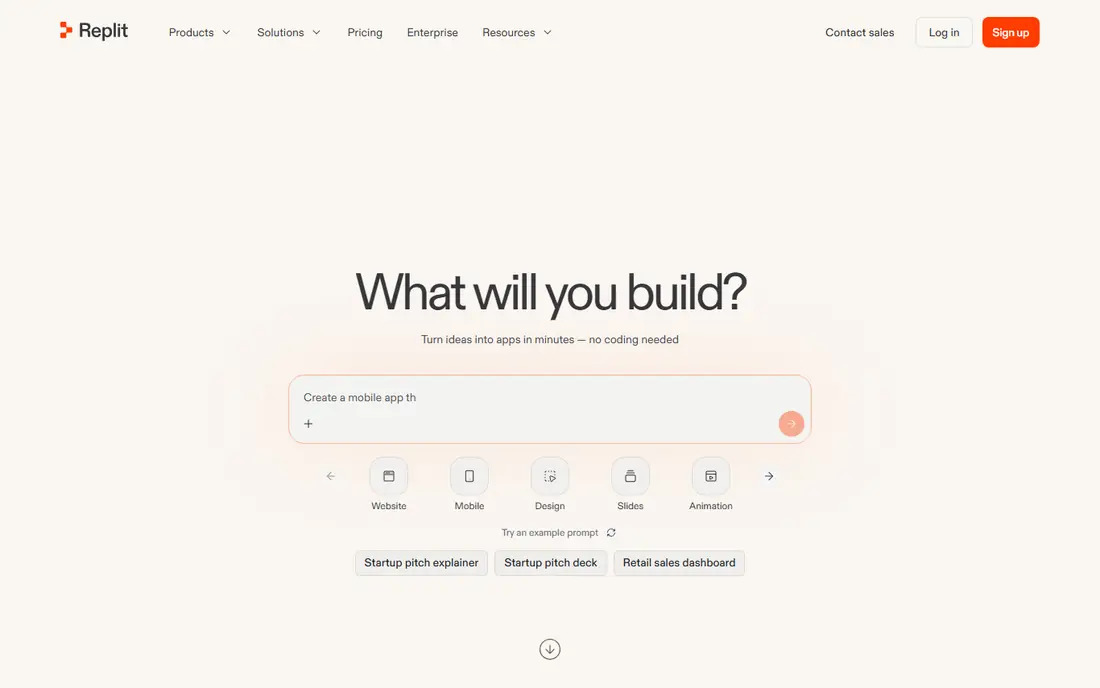
Replit suits solo builders who want one place to write, run and publish an app. Its AI agent builds from prompts, and hosting sits in the same workspace, so you avoid stitching together separate services. It is also a friendly place to learn coding with AI help.
Pricing is the watch item. Credit use depends on effort and model calls, which can make monthly costs harder to forecast than a flat plan. For experiments, demos and small tools, Replit is excellent. For a polished customer product, compare its output with Lovable first.
- Build, run and host together
- Good for learning and solo projects
- GitHub connect and download
- Credit billing can be hard to predict
- Less polished output than Lovable
- Scaling needs care
v0, by Vercel, is the best choice when the interface is the product. It generates clean React and Next.js components from prompts and designs, with deployment on Vercel in a few clicks. Designers and frontend teams use it to move from idea to a working screen fast.
It is not a full app builder on its own. Auth, database and business logic need separate services, and pricing is per user on paid plans. Pair v0 with a backend tool if you need a complete app, or use it alone for landing pages, dashboards and prototypes.
- Best-looking React UI output
- Vercel deployment
- GitHub sync
- Frontend only, not full-stack
- Team pricing per user
- Backend needs a separate service
Cursor is not a prompt-to-app toy. It is an AI editor for developers who already have a codebase or want to build one properly. Agent mode can plan, edit and test across files, while you keep full control of the code, stack and deployment. For professional work, that ownership matters.
Beginners should not start here unless they want to learn code. Cursor gives you power, not a finished hosted app, and you must review AI changes for bugs and security issues. For developers, it is the most durable pick on this list, since nothing locks you into a platform.
- Full codebase context in a real editor
- Agent mode for larger tasks
- You own all code
- Needs coding skill
- No hosting or backend by itself
- AI output still needs review
Bubble suits builders who need real app logic without code. Its visual editor handles databases, workflows, user accounts and payments, and many startups have shipped customer products on it. AI features now help generate pages and workflows, but the visual builder remains the core.
Lock-in is the main risk. Apps run on Bubble hosting with no code export, so moving away later means rebuilding. Performance and pricing also need planning as users grow. If you need complex logic and accept the platform, Bubble is the most capable no-code builder here.
- Deep visual logic and data
- Large plugin ecosystem
- Proven for customer-facing apps
- Hosted only, no code export
- Learning curve for complex logic
- Performance needs care at scale
Base44, now part of Wix in recent reports, appeals to non-technical builders who want a working app with real backend behaviour, not just a pretty screen. Describe the app, and it builds data, logic and interface together, with a free plan to test the workflow.
It is newer than Bubble and Lovable, so community resources and templates are thinner. Design output is solid but less polished than Lovable on first try. For an internal tool or simple customer app built by a non-developer, Base44 offers good value at $20 per month.
- Generates backend logic from prompts
- Friendly for non-technical builders
- GitHub export on higher plans
- Newer platform with smaller community
- Design polish trails Lovable
- Complex apps need review
Softr is the best pick for ops teams that already live in Airtable or Google Sheets. It turns a spreadsheet or base into a client portal, internal tool or membership site, with logins and permissions, in hours rather than weeks. That focus makes it far faster than a general app builder for data-driven tools.
Custom logic and unique designs are limited, and apps stay hosted on Softr. If your app is mainly a polished front end for existing data, Softr is ideal. If you need novel workflows or a public consumer app, Lovable or Bubble will stretch further.
- Turns Airtable or Google Sheets into portals
- Fast for client and team tools
- Good permissions
- Hosted apps, no code export
- Limited for custom logic
- Design is template driven
Glide turns data into a mobile app quickly, which suits field teams, small businesses and internal tools that staff use on phones. You can build lists, forms, maps and dashboards from a sheet, publish to mobile, and update data without app store delays in many cases.
It is not a general web app builder, and apps stay on Glide. Complex logic, custom design and public scale are better served elsewhere. For a team that needs a working mobile tool this week, Glide is the fastest practical route on this list.
- Fast mobile apps from sheets and data
- Good for field and team apps
- Easy publishing
- Lock-in to Glide hosting
- Limited for complex web apps
- Custom code options are narrow
How we picked these
We compared official pricing pages, feature lists and recent independent comparisons from October 2026. We kept only builders that generate or assist real working apps today, with a free plan or trial and a clear export or hosting story. We mixed prompt-to-app tools, developer editors and no-code platforms so founders, developers and ops teams can each find a fit.
We did not claim hands-on testing that did not happen. Prices are entry paid plans most widely reported in recent comparisons, and credit systems vary by model and task, so test credit use on a real feature before committing to a large project.
How to choose an ai app builder
Start with who will maintain the app in six months. If the answer is a non-technical founder, pick Lovable, Bolt or Base44 for speed and simplicity. If the answer is a developer, pick Cursor and own the code. If the answer is an ops team with data in sheets, pick Softr or Glide.
Next, check the exit path before you build. Can you export code to GitHub, download the project, or only host on the platform? A fast start on a locked platform can become expensive if you later need custom features, scale or a different host. Lovable, Bolt, v0 and Cursor offer clearer code paths than Bubble, Softr or Glide.
Finally, budget for iteration, not just the first build. The first version is cheap. The second, third and tenth versions, with bug fixes and new features, consume credits and time. Run a small real feature through your shortlist, count the credits and fixes it took, and choose the tool with the lowest total effort for that feature.
Test security before launch
AI-generated code can contain security gaps, especially around auth, permissions and data access. Review access rules, test with a non-admin user, and keep production data out of early prototypes. For apps handling payments or personal data, add a human code review before public launch.
Plan for scale early
A prototype that works for ten users may slow down for a thousand. Ask how the builder handles database size, concurrent users and API limits, and what the next pricing tier costs. If growth is likely, favour tools with code export and standard hosting over closed platforms.
Sources
- https://www.lovable.dev
- https://www.bolt.new
- https://www.replit.com
- https://www.v0.dev
- https://www.cursor.com
- https://www.bubble.io
- https://www.base44.com
- https://www.softr.io
- https://www.glideapps.com
- https://www.superblocks.com/blog/ai-app-generation
- https://www.superblocks.com/blog/best-enterprise-vibe-coding-tools