Best AI Tools for Marketing in 2026: 10 Tools Compared
By ToolNimba Editorial Team October 28, 2026 11 min read

- Top pick
 Jasper
Brand-consistent marketing copy
Starting price$39 per monthCheck out JasperRead our review - Runner-up
 Copy.ai
Marketing workflows and short copy
Starting priceFreeCheck out Copy.aiRead our review - Also great
 HubSpot AI
Marketing automation inside HubSpot
Starting priceFreeCheck out HubSpot AIRead our review
How we researched this
We compared official pricing and feature pages, app store listings, privacy policies and public user reviews. Prices change, so check the provider's site before you pay.
Key takeaways
- No single AI tool covers all of marketing well, so most teams pair a writing tool with an SEO tool and a design or automation tool.
- Jasper and Copy.ai lead for marketing copy, while Semrush and Surfer SEO lead for search and content planning.
- Canva AI is the best free starting point for visuals, and ChatGPT and Claude are the best general assistants for drafting and ideas.
- HubSpot AI works best inside HubSpot, and Zapier ties tools together when a job spans several apps.
- Check output carefully before publishing, since AI drafts can invent facts, prices, and claims that damage trust.
Quick comparison
| Name | Best for | Starting price | Free plan | |
|---|---|---|---|---|
| Jasper | Brand-consistent marketing copy | $39 per month | Free trial | Visit |
| Copy.ai | Marketing workflows and short copy | Free | Yes | Visit |
| HubSpot AI | Marketing automation inside HubSpot | Free | Yes | Visit |
 Semrush | SEO and competitor research | $139.95 per month | Free trial | Visit |
 Surfer SEO | On-page content optimization | $99 per month | Free trial | Visit |
 Canva AI | Social graphics and design | Free | Yes | Visit |
 ChatGPT | General drafting and brainstorming | Free | Yes | Visit |
 Claude | Long-form writing and analysis | Free | Yes | Visit |
 AdCreative.ai | AI ad visuals and copy | See website | Free trial | Visit |
 Zapier | Marketing automation workflows | Free | Yes | Visit |
The best AI tools for marketing
These tools cover writing, search, design, ads, and automation, so start with the bottleneck in your marketing, not with the most talked-about tool.
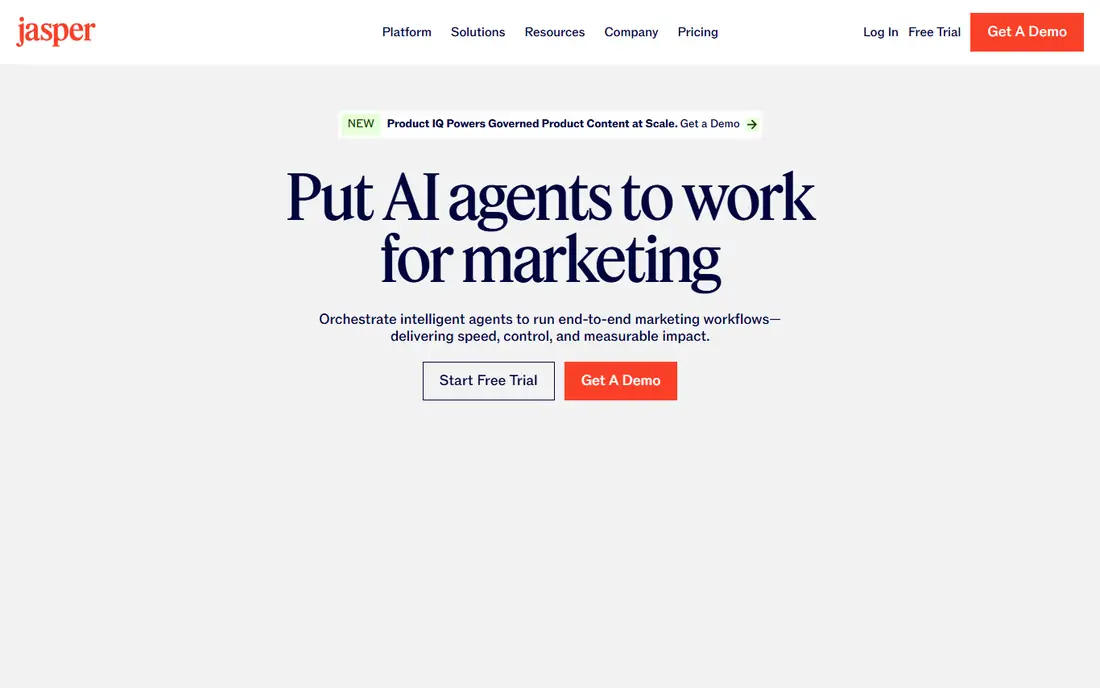
Jasper is built for marketing teams that produce a lot of copy and need it to sound like one brand. You can train a brand voice, set style rules, and generate blog drafts, email sequences, ad variants, and social posts from the same voice. That consistency is the main reason teams pay more for Jasper than for a general chatbot.
The price starts at $39 per month in recent guides, with higher plans for larger teams, and a free trial lets you test the voice features before committing. Jasper does not replace a strategist or editor. It speeds up first drafts and variations, but facts, claims, and tone still need a human check before anything goes live.
- Brand voice training for consistent copy
- Templates for blogs, emails, and ads
- Team workflows for campaigns
- Costs more than general chatbots
- Best features sit on higher plans
- Output still needs human editing
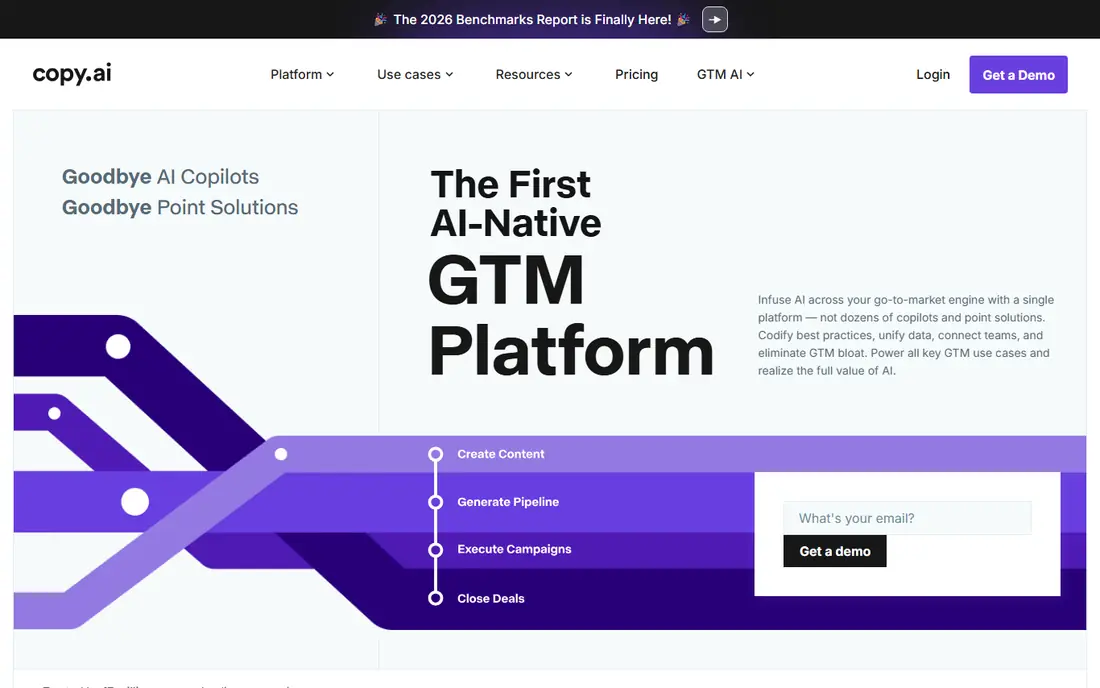
Copy.ai is the best free-tier pick for marketing copy. The free plan covers basic generation, and the workflow builder lets teams chain steps, such as turning a product brief into social posts, emails, and ad variants. That workflow view is useful for go-to-market teams that repeat the same content tasks each launch.
Short-form copy is where Copy.ai shines. Product descriptions, ad headlines, email subject lines, and social captions come out quickly and in bulk. Longer articles need more editing and a clearer brief, and the paid plan at $49 per month opens the fuller workflow features. For a small business that needs lots of short copy fast, Copy.ai is a strong start.
- Free plan for basic copy
- Workflow builder chains tasks together
- Strong for short-form and sales copy
- Long-form quality varies by template
- Deeper features need a paid plan at $49 per month
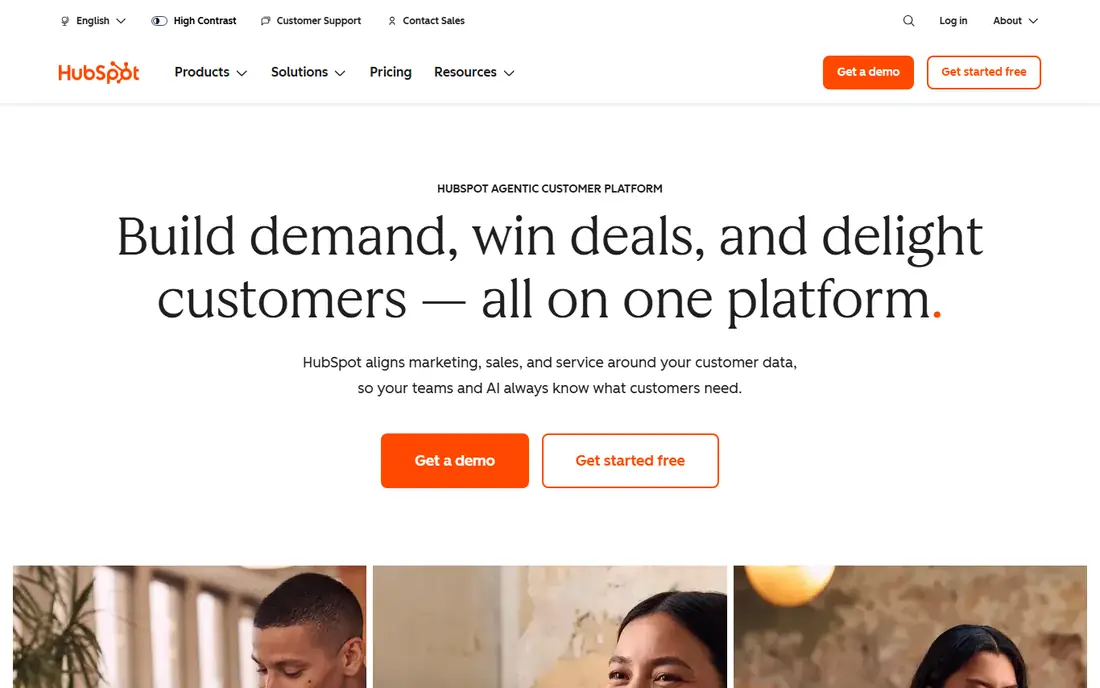
HubSpot AI, branded as Breeze in HubSpot, adds AI to a platform many marketers already use for email, landing pages, and CRM. It can help draft content, summarize records, score leads, and automate follow-up, and because it sits on contact data, the output can reflect lifecycle stage and past activity rather than a generic prompt.
The catch is the ecosystem. Free HubSpot tools include basic AI features, but the deeper marketing automation sits on paid HubSpot plans that can run into hundreds of dollars per month for larger teams. If you already use HubSpot, turn its AI features on first. If you do not, a standalone writing tool plus a cheaper CRM will usually cost less.
- AI features inside the CRM and marketing tools
- Lead scoring and content help tied to real contact data
- Free tools to start
- Full value needs HubSpot
- Higher marketing plans are expensive
- AI features vary by plan
Semrush is the research engine behind many content plans. It shows what people search for, which pages rank, where competitors get traffic, and what your own site needs to fix. Its AI features help turn that data into briefs and drafts, but the real value is the data itself: search volume, difficulty, and gaps you would miss by guessing.
At $139.95 per month for the entry Pro plan, Semrush is a serious purchase, and small teams should share one seat or use the trial to confirm the data covers their niche. Pair Semrush with Jasper or Surfer for production, and you have research, drafting, and optimization covered. On its own, Semrush will not write your marketing for you.
- Keyword research, site audits, and competitor data in one suite
- Content briefs with search data
- Rank tracking
- Expensive for a small business
- Learning curve for the full suite
- AI writing is secondary to its SEO data
Surfer SEO answers a narrow question well: given a keyword, what do the pages that already rank have in common, and how does your draft compare. It gives a content score, suggested terms, heading structure, and length guidance, so an editor can improve a draft with specific changes rather than vague advice.
That focus is also its limit. Surfer does not replace keyword research, and a high score does not guarantee a ranking. Use it after Semrush or another research tool picks the keyword, then use Surfer to shape the draft. For content teams that publish search-driven articles every week, the $99 per month entry plan can pay for itself in saved revision rounds.
- Content scores based on top-ranking pages
- Clear guidance on headings, terms, and length
- Integrates with writing tools
- Starts at $99 per month
- Scores are guidance, not a ranking guarantee
- Needs a keyword plan to be useful
Canva AI, through Magic Studio, is the most useful free AI marketing tool for visuals. You can generate images, write short copy, remove backgrounds, and resize a design for each social platform without leaving the editor. Brand templates keep colors, fonts, and logos consistent, which helps a small team look polished across channels.
Pro, listed around $15 per month in recent guides, adds more AI credits and premium assets. The free plan is enough to test whether Canva fits your social workflow. Canva will not replace a designer for a full brand identity or complex campaign art, but for daily social graphics, presentations, and ads, it is the fastest option here.
- Free plan covers design and basic AI features
- Magic Studio generates images, copy, and resized formats
- Brand templates keep visuals consistent
- Writing features are secondary
- Advanced design still needs a dedicated design tool
- Pro costs extra
ChatGPT is the general assistant most marketers reach for first, and for good reason. It drafts outlines, ad variants, email subject lines, and social posts, brainstorms angles, and rewrites copy in a different tone in seconds. The free tier handles a lot of daily drafting, and Plus at $20 per month gives access to more capable models and higher limits.
The risk is accuracy. ChatGPT can state a price, statistic, or product claim with confidence even when it is wrong, so every factual claim in marketing copy needs a source check. Use it for speed and ideas, keep a human editor for facts and brand decisions, and it becomes a strong, cheap layer under more specialized tools.
- Free tier for drafting and ideas
- Plus at $20 per month adds faster models and more capacity
- Huge template and prompt community
- Can invent facts and citations
- Output needs fact-checking
- Not built for brand voice control like Jasper
Claude, from Anthropic, is a strong choice when marketing work is longer than a caption. It handles long articles, reports, and research summaries well, keeps context across a long document, and edits for clarity without flattening the voice as much as some rivals. Marketers who write thought leadership, guides, and email series often prefer it for first drafts.
Claude is not a marketing suite. It has no keyword database, no ad platform connection, and no brand voice system like Jasper. Pair it with Semrush for research and Canva for visuals, and you have a capable small-team stack for $20 per month plus the free tiers around it. As with any AI writer, check facts before publishing.
- Strong long-form drafting and editing
- Good at analysis and summarizing research
- Pro at $20 per month for higher use
- Fewer marketing templates than Jasper
- No built-in SEO suite
- Output still needs editing
AdCreative.ai focuses on paid ads, where volume matters. You feed it a product, brand assets, and a goal, and it generates many ad visuals and copy variants, with scores that suggest which ones may perform better. That lets a small advertiser test more variants than a designer could produce by hand in the same week.
Scores are predictions, not results, and the best-looking variant is not always the best-converting one. Run real tests, keep brand review in the loop, and watch credit limits, since pricing depends on the plan and credits you buy. If paid social is a major channel, AdCreative.ai can speed up testing. If you rarely run ads, skip it.
- Generates ad creatives and copy variants at scale
- Performance scores help prioritize variants
- Supports major ad platforms
- Pricing varies by plan and credits
- Creative quality still needs human review
- Best for paid social, less for organic content
Zapier is the glue in a marketing stack. It moves a new lead from a form to the CRM, posts a notification to the team, adds a row to a report, and triggers a follow-up email, without custom code. Its AI features help build and describe workflows, but the core value is automation: fewer copy-and-paste jobs between tools.
The free plan covers simple, low-volume workflows, and paid plans from $29.99 per month add multi-step flows and higher task limits. Keep workflows simple and documented, since a chain of ten steps that no one understands will break at the worst time. For small businesses, Zapier plus one writing tool often beats buying an all-in-one suite.
- Connects thousands of apps without code
- Automates lead routing, notifications, and reporting
- Free plan for simple workflows
- Paid plans start at $29.99 per month for heavier use
- Complex workflows can become hard to maintain
- AI features are add-ons, not the core
How we picked these
We compared official pricing pages, feature pages, and recent marketing tool guides, and we checked that each homepage loads and belongs to the product named. We favored tools with a free plan or trial, a clear marketing use, and ongoing availability in 2026. We left out tools that only claim AI features without a working product, and tools priced only for large enterprises with no small-team plan. Prices can change, so check the vendor pricing page before you buy, and treat AI performance claims as marketing until your own tests confirm them.
Building a small AI marketing stack
Start with one writing tool, one research tool, and one design tool, and add automation only when a manual task repeats weekly. A common small-team stack is Copy.ai or ChatGPT for copy, Semrush or Surfer for search, and Canva for visuals, with Zapier moving leads between them. That stack costs less than an all-in-one suite and is easier to change when a better tool appears.
Guardrails for AI marketing copy
Set three rules before the team publishes AI output. First, every fact, price, and statistic needs a source outside the AI tool. Second, brand claims, health claims, and financial claims need a human owner who signs off. Third, keep a short style note with tone, banned claims, and disclosure rules, and paste it into prompts so output stays consistent.
Measuring whether an AI tool pays
Track time saved and output quality, not just subscription cost. Note how long a blog post, ad set, or email took before and after the tool, and whether conversion or engagement moved. If a tool saves two hours a week but needs an hour of fixing, its net gain is one hour, and a cheaper tool may win.
Sources
- https://www.jasper.ai
- https://www.copy.ai
- https://www.hubspot.com
- https://www.semrush.com
- https://surferseo.com
- https://www.canva.com
- https://chatgpt.com
- https://claude.com
- https://www.adcreative.ai
- https://zapier.com
- https://techsy.io/en/blog/ai-tools-for-marketing
- https://hakia.com/news/best-ai-tools-for-marketing/