Best App to Learn Japanese in 2026: 9 Apps Compared
By ToolNimba Editorial Team October 28, 2026 10 min read

- Top pick
 Duolingo
Building a daily habit
Starting priceFreeCheck out DuolingoRead our review - Runner-up
 Bunpro
Structured grammar study
Starting price$5 per monthCheck out BunproRead our review - Also great
 WaniKani
Learning kanji in order
Starting price$9 per monthCheck out WaniKaniRead our review
How we researched this
We compared official pricing and feature pages, app store listings, privacy policies and public user reviews. Prices change, so check the provider's site before you pay.
Key takeaways
- No single app covers speaking, grammar, kanji, and reading well, so most learners do best with two or three complementary apps.
- Duolingo and HelloTalk are the lowest cost ways to start, while Bunpro and WaniKani add structure for grammar and kanji.
- If speaking is the goal, a tutor app such as italki matters more than another set of drills.
- Free plans are useful for testing a method, but the paid tiers usually remove limits on lessons, reviews, and practice.
Quick comparison
| Name | Best for | Starting price | Free plan | |
|---|---|---|---|---|
| Duolingo | Building a daily habit | Free | Yes | Visit |
| Bunpro | Structured grammar study | $5 per month | Free trial (30 days) | Visit |
| WaniKani | Learning kanji in order | $9 per month | Free trial | Visit |
 Anki | Custom vocabulary review | Free | Yes | Visit |
 LingoDeer | Guided lessons for beginners | See website | Yes | Visit |
 italki | Live lessons with tutors | See website | No | Visit |
 HelloTalk | Chatting with native speakers | Free | Yes | Visit |
 JapanesePod101 | Audio lessons and listening | See website | Free trial | Visit |
 Pimsleur | Hands free audio practice | See website | Free trial | Visit |
The best app to learn japanese apps
Japanese rewards steady, small study sessions more than occasional long ones. The apps below cover different parts of the language, from kana and basic phrases to grammar patterns and kanji, and we grouped them so you can see where each one fits in a study routine.
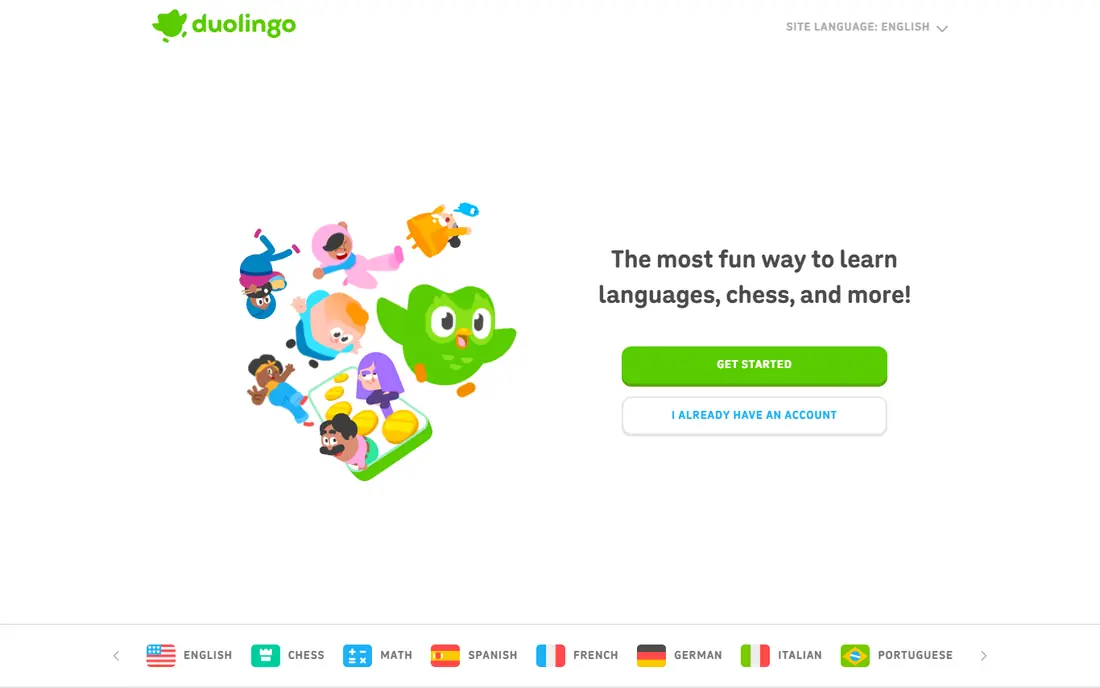
Duolingo works best as a starting point. The lessons are short, the exercises mix reading, listening, and typing, and the app makes it easy to study for ten minutes a day. For a complete beginner, that low friction matters, because the first month is often when people stop.
The honest catch is the ceiling. Once you know basic vocabulary and sentence patterns, you will need a grammar resource and a kanji system to keep progressing. Treat Duolingo as the habit builder in your stack, not the whole plan, and pair it with Bunpro or WaniKani when you are ready for more depth.
- Short lessons that fit a busy day
- Clear path from kana to basic sentences
- Streaks and reminders that help beginners stay consistent
- Grammar explanations are thin
- Speaking and kanji practice stay limited at higher levels
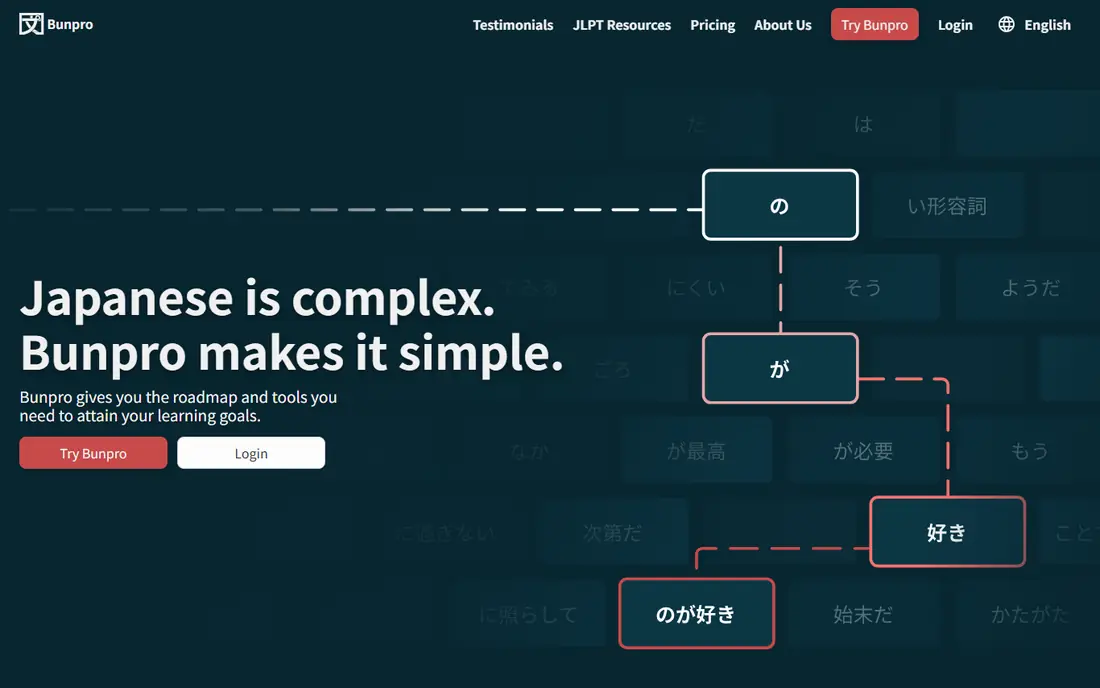
Bunpro turns grammar into a reviewable skill. Each point comes with explanations and example sentences, and the spaced repetition system schedules reviews based on how well you answer. That structure helps learners who know a lot of words but still struggle to build correct sentences.
It fits best after you have a basic foundation, or alongside a textbook such as Genki. If you follow a textbook path, Bunpro can reinforce the same points in a different format. Just be careful not to add too many new grammar points at once, because the review load is what keeps the system working.
- Grammar points organized by JLPT level from N5 to N1
- Spaced repetition reviews that revisit points you miss
- Example sentences and links to textbook pages
- Focus is narrow, so speaking and listening need separate practice
- The review queue can grow if you skip days
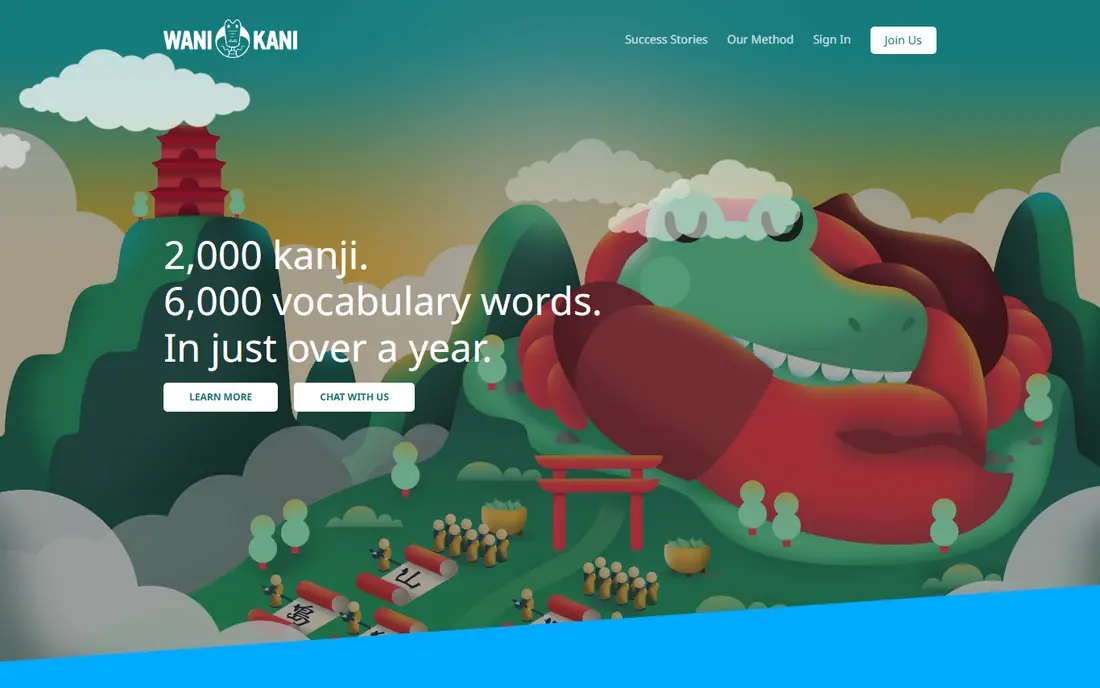
WaniKani is built for one job, and it does that job in a clear order. You learn radicals first, then kanji built from those radicals, then vocabulary that uses those kanji. The mnemonics give each character a story, which helps when similar looking characters start to blur together.
The trade off is scope. WaniKani will not teach you to hold a conversation, and it will not explain grammar. It is a strong companion to a grammar app and a speaking app, and it is most useful for learners who want to read Japanese rather than only speak it.
- Level based progression through radicals, kanji, and vocabulary
- Mnemonics that make new characters easier to recall
- First levels free to test the pace
- Reading only, with little speaking or grammar teaching
- Progress is locked until reviews are passed, which can feel slow
Anki is the most flexible tool on this list. You can build your own decks from words you meet in books, shows, or lessons, and you can change card layouts, review steps, and scheduling to match how you study. That control is why serious learners keep returning to it.
The price of that control is setup time. New users should start with one well reviewed shared deck and a small daily review target, then add personal cards as they find words they actually want to remember. Used that way, Anki becomes a quiet daily habit rather than a project.
- Free on desktop and Android, with full control over decks and card design
- Spaced repetition backed by a long track record
- Large library of shared Japanese decks
- Setup takes time and can confuse new users
- The iOS app is a paid purchase
- Quality of shared decks varies
LingoDeer sits between a game style app and a textbook. Lessons introduce a grammar point, show it in sentences, and then test it, so beginners get explanations without opening a separate book. The audio helps with listening and with hearing how particles and verb endings sound in natural speech.
It is a good choice if Duolingo feels too light but a full textbook feels too heavy. When you reach intermediate material, you will still benefit from adding Bunpro for grammar review and a reading or listening source for real Japanese.
- Lessons explain grammar as you go, rather than leaving you to guess
- Native audio for pronunciation
- Structured path that suits beginners who want order
- Depth at advanced levels is thinner than specialist tools
- Some content sits behind a paid plan
italki is the closest option here to real conversation. A tutor can correct pronunciation, explain why a sentence sounds unnatural, and adjust the lesson to your level in a way a fixed app cannot. That feedback is hard to replace, especially for speaking.
It works best once you know some basics, so lessons are not spent only on kana and greetings. Even one lesson a week, paired with daily app study, can change how confident you feel speaking. Check tutor profiles, trial lesson options, and reviews before booking a longer set of lessons.
- One to one lessons with native speakers and qualified teachers
- You choose the tutor, price range, and lesson focus
- Useful for speaking, JLPT prep, and conversation
- Prices vary by tutor, so costs are less predictable
- You need to book and show up, which takes more planning than an app drill
HelloTalk is a language exchange app, not a course. You chat with native Japanese speakers who are learning your language, and you correct each other. That setup gives you real sentences, slang, and everyday phrasing that textbooks often miss.
It fits learners who already know enough Japanese to hold a simple exchange and who want regular, low cost speaking and writing practice. Set clear expectations with partners, use the correction tools, and keep a notebook of phrases you want to reuse.
- Text, voice, and call exchange with native speakers
- Built in correction and translation tools
- Free core features for language exchange
- Quality of exchanges depends on the partners you find
- Not a structured course, so progress needs self direction
JapanesePod101 suits commuters and listeners. Lessons are built around dialogues, with hosts explaining vocabulary and grammar in plain terms. The transcripts let you read along, and the level paths give some order to a very large library.
Pick one path and follow it lesson by lesson, rather than jumping between topics. Listening practice pairs well with a reading tool such as WaniKani, because hearing a word and reading its kanji reinforce each other.
- Large library of audio and video lessons by level
- Dialogues with transcripts and vocabulary lists
- Lesson paths for beginners through advanced learners
- Library size can feel overwhelming without a path
- Full features sit behind paid tiers
Pimsleur is the most screen free option here. Each lesson asks you to listen, repeat, and answer prompts, which builds spoken recall without reading ahead. That format helps learners who struggle to remember phrases when they need them in conversation.
It is best as a supplement, not a complete course. Use it for speaking confidence and pronunciation, and keep a separate tool for reading, writing, and grammar. If you learn best by seeing words written down, you may prefer a visual app instead.
- Audio first lessons that work while walking or driving
- Listen and repeat format that builds pronunciation and recall
- Structured progression through levels
- No reading or kanji teaching in the core audio course
- Lessons can feel repetitive if you prefer visual study
How we picked these
We compared official feature pages, pricing pages, and app store listings, along with public reviews and JLPT level coverage. We looked for apps that are still maintained, that clearly state what they teach, and that fit a distinct part of learning Japanese, from grammar and kanji to speaking and listening. We left out tools that only cover one narrow trick, or that had unclear pricing and availability, so the list stays useful for a full study plan.
How to choose the right Japanese app for your level
Start with your weakest skill, not the app with the longest feature list. Beginners should pick one habit app and one guided course, then add a grammar or kanji tool after a few weeks. Intermediate learners usually get more value from a tutor, a reading source, and spaced repetition than from another beginner course.
Match the app to your daily time
If you have ten minutes a day, a short lesson app plus Anki reviews will beat a long course you keep skipping. If you have thirty minutes, add a grammar review or an audio lesson on top of that base. Consistency matters more than the number of apps you install.
Watch for the plateau
Many learners stall when they can read easy sentences but cannot speak or understand fast speech. That is a sign to add conversation practice, not more vocabulary drills. A tutor lesson, a language exchange chat, or an audio course can break that pattern.