Best App to Learn Tagalog in 2026: 8 Apps Compared
By ToolNimba Editorial Team November 12, 2026 9 min read

- Top pick
 Ling
Dedicated Tagalog course
Starting price$16.99 per monthCheck out LingRead our review - Runner-up
 Pimsleur
Audio-first speaking practice
Starting price$19.95 per monthCheck out PimsleurRead our review - Also great
 Drops
Daily vocabulary drills
Starting price$13 per monthCheck out DropsRead our review
How we researched this
We compared official pricing and feature pages, app store listings, privacy policies and public user reviews. Prices change, so check the provider's site before you pay.
Key takeaways
- Ling is the strongest dedicated Tagalog app, with a full course, native-speaker audio, and grammar notes for less than Pimsleur.
- Pimsleur is the best audio-first option for commuters, with 30-minute spoken lessons built on spaced repetition.
- Drops and Mondly suit short daily practice, with vocabulary drills and gamified lessons at lower prices.
- Duolingo and Babbel do not offer a Tagalog course, so learners who pick them by habit will find no Tagalog path at all.
Quick comparison
| Name | Best for | Starting price | Free plan | |
|---|---|---|---|---|
| Ling | Dedicated Tagalog course | $16.99 per month | Free trial | Visit |
| Pimsleur | Audio-first speaking practice | $19.95 per month | Free trial | Visit |
| Drops | Daily vocabulary drills | $13 per month | Yes | Visit |
 Mondly | Gamified daily lessons | $12.90 per month | Yes | Visit |
 Preply | One-to-one live tutoring | $4 per hour | No | Visit |
 italki | Flexible tutor choice | See website | No | Visit |
 FilipinoPod101 | Audio lessons for all levels | See website | Yes | Visit |
 Rosetta Stone | Picture-based immersion | $19.99 per month | Free trial | Visit |
The best apps to learn Tagalog
Tagalog, also called Filipino, is missing from several big language apps, so the shortlist matters more than usual. These eight all offer a real Tagalog path, from a dedicated app course to live tutors.
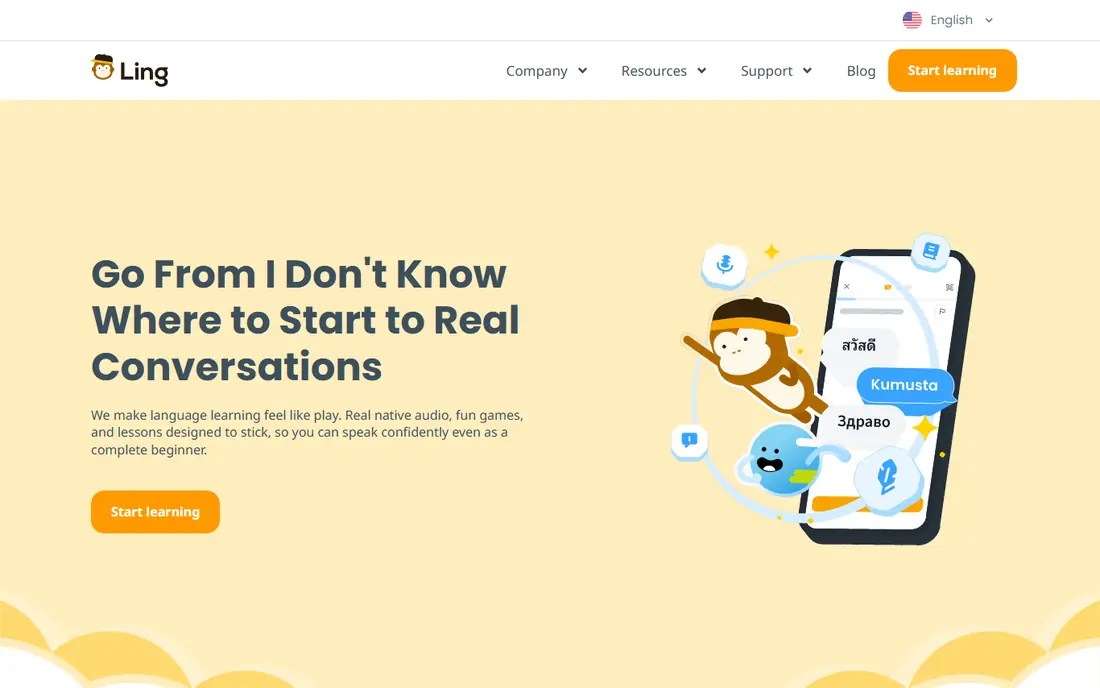
Ling is our pick for most Tagalog learners because it actually teaches the language as a full course, not as a side list of words. Lessons use real-life conversations, native-speaker audio, speaking practice, and grammar explanations, with gamified streaks and rewards to keep a daily habit going. Pricing lists at $16.99 per month, $64.99 for six months, or $89.99 per year, with a 7-day free trial on the annual plan.
The price is higher than vocabulary apps, but one plan covers all Ling languages, which helps a learner who also wants Cebuano or another Philippine language. If you want a structured Tagalog course on your phone, Ling is the first app to try.
- Full Tagalog course with native-speaker audio
- Grammar notes
- Access to all Ling languages on one plan
- Higher monthly price than Drops or Mondly
- Some grammar notes are thinner than a textbook course
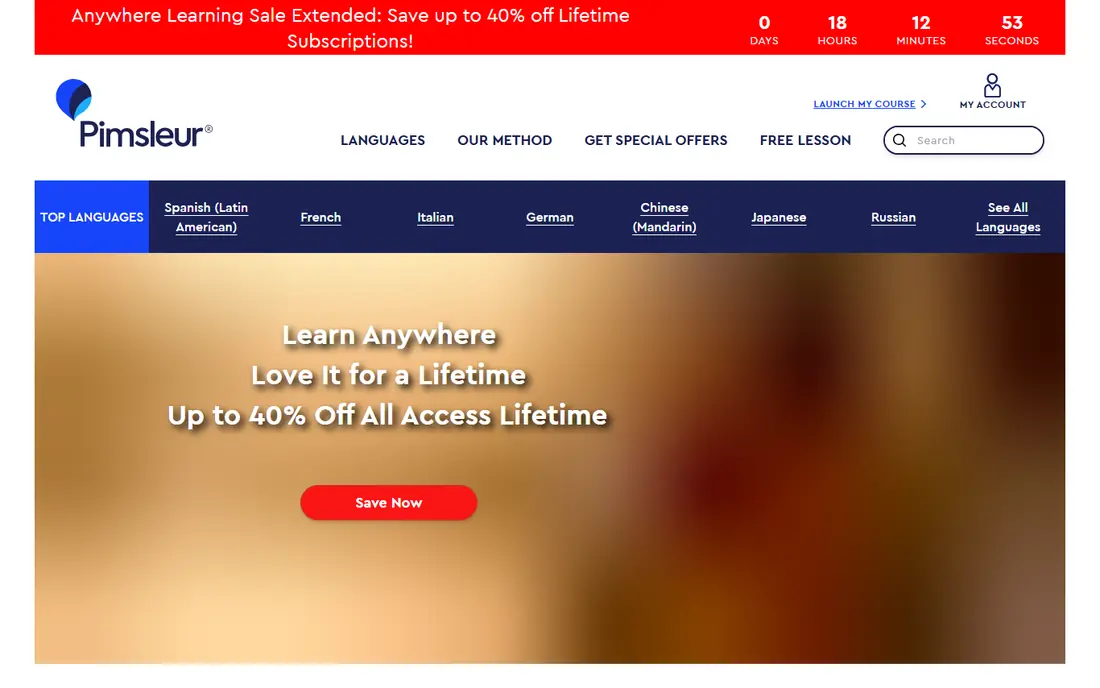
Pimsleur is the pick for learners who want to speak first and read later. Its method builds conversation through audio lessons of about 30 minutes, using spaced repetition to bring back words just as you start to forget them. Premium costs $19.95 per month for one language, All Access costs $20.95 per month or $164.95 per year for all languages, and a 7-day free trial is included.
The limits are real. Core lessons have little reading or writing, the format repeats daily, and the price is the highest on this list. But for a commuter who wants to hold a basic Tagalog conversation, Pimsleur delivers speaking confidence faster than a screen-based app. Pair it with Ling or Drops for vocabulary and reading.
- Proven spaced-repetition audio method
- 30-minute lessons fit a commute
- Offline listening included
- Most expensive app here
- Little reading or writing in core lessons
- Lessons follow a fixed daily pace
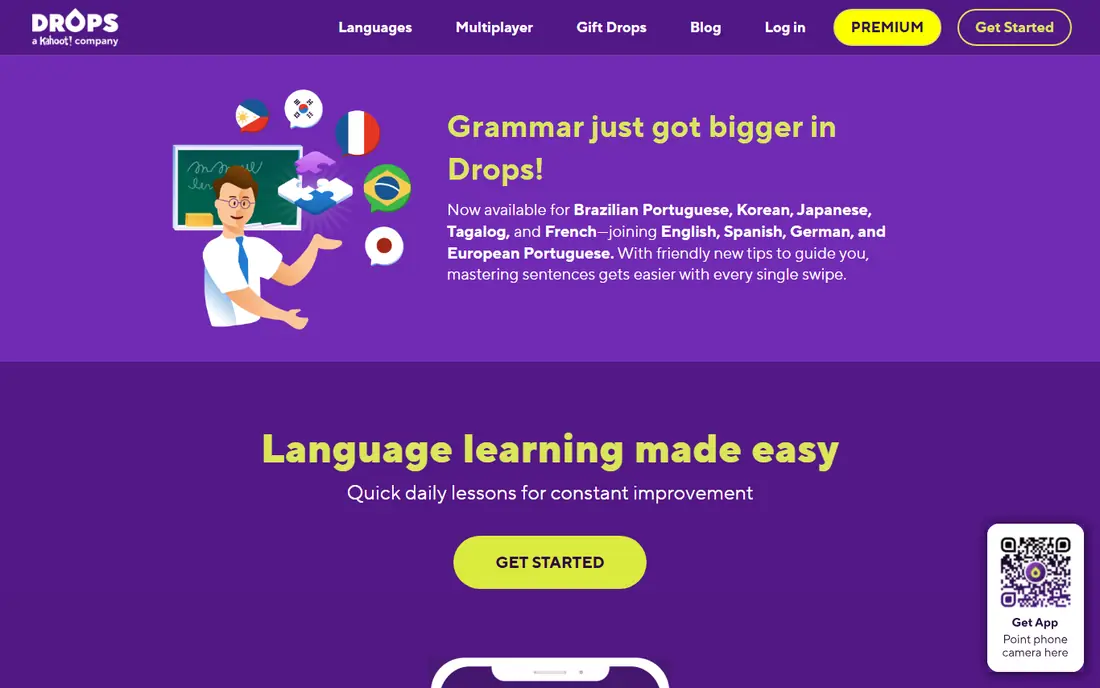
Drops suits a learner who wants five minutes of Tagalog a day without a heavy course. Sessions teach words and phrases with pictures and native-speaker audio, across topics you choose and at a level you set. Pricing lists near $13 per month, $72 for 12 months, or $164 for unlimited access in recent comparisons.
The catch is depth. Drops teaches vocabulary, not grammar or conversation, so you will know words without knowing how to build sentences. Use it as a daily supplement to Ling or Pimsleur, not as your only course. For a traveler who needs polite phrases and food words fast, it is a good fit.
- Fast five-minute sessions
- Native-speaker audio
- About 3,000 Tagalog words and phrases
- Little grammar or sentence building
- Yearly price near $72
- Free trial needs payment details in some flows
Mondly offers Tagalog through short, game-like lessons with translations, spaced repetition, and speech recognition, plus a chatbot for conversation practice. Pricing on its sale page lists $12.90 for one month, $30.96 for three months, and $61.92 for 12 months, against higher list prices, so check the live price before you pay. A free daily lesson lets you test the method.
Mondly is less Tagalog-focused than Ling, and its grammar help, while present in Premium, is thinner than a dedicated course. But for a casual learner who wants a daily habit with game elements, it is a solid and cheaper alternative. Serious learners will likely outgrow it and move to Ling or a tutor.
- Short topic lessons with speech recognition
- Grammar guides and conjugation tables in Premium
- Free daily lesson
- Sale prices change often
- Depth is thinner than Ling for Tagalog
- No live tutoring
Preply is the pick when you want to actually speak Tagalog with a person. It lists over 470 Tagalog tutors, with lessons from as little as $4 per hour and typical rates near $8 to $25 per hour depending on the tutor. Each lesson is one-to-one, built around your goals, with real-time correction on pronunciation, verb focus, and Taglish, the mix of Tagalog and English used daily in the Philippines.
The trade-offs are choice and cost. Tutor quality varies, so read reviews and book a trial lesson first, and platform fees raise the total above the tutor rate. For a heritage learner reconnecting with family, or a traveler preparing for a trip, a few live lessons will do more for speaking than weeks of app drills alone.
- Over 470 Tagalog tutors listed
- Lessons from $4 per hour
- Personalized plans and real-time correction
- Tutor quality varies
- Platform fees add to tutor rates
- Popular tutors need advance booking
italki suits a learner who wants tutor choice without a subscription. You pick from community tutors and professional teachers, pay per lesson, and schedule around your week. Lesson prices vary by tutor, experience, and length, so a budget learner can start cheap and move to a more experienced teacher later.
The lack of a set curriculum is both a plus and a minus. A good teacher will build a plan for you, but a casual tutor may just chat, which helps speaking without teaching grammar in order. Ask a new tutor for a plan in the first lesson, and book a trial before committing to a package. For flexible, pay-as-you-go tutoring, italki is the most open marketplace here.
- Large tutor marketplace with community and professional teachers
- Pay per lesson with no subscription
- Flexible scheduling
- Prices vary by tutor
- No set curriculum unless your teacher provides one
- Quality varies
FilipinoPod101 is the pick for learners who like podcast-style study. Audio lessons walk through conversations at every level, with lesson notes, vocabulary lists, and cultural context, and you can study at your own pace on a phone or computer. A free tier lets you sample lessons, while paid plans open the full library and study tools.
It is less interactive than Ling or Mondly, with no gamified streak system and less speaking feedback. That suits a self-directed learner who already listens to podcasts and wants Tagalog content in that format. Pair it with a tutor or a speaking app if you want correction on your pronunciation.
- Podcast-style audio lessons for beginners to advanced learners
- Lesson notes and vocabulary lists
- Learn at your own pace
- Less interactive than an app course
- Speaking practice needs self-discipline
- Full features need a paid plan
Rosetta Stone teaches through Dynamic Immersion: pictures and sound with no translations, so you infer meaning the way a child might. That method suits visual learners who dislike grammar drills. Pricing lists at $19.99 per month or $159 per year, with sample lessons available to try, and live tutoring sold separately in packs.
The method is also its limit. Rosetta Stone explains no grammar by design, which frustrates learners who want to know why a sentence works. Its Tagalog course is also less deep than Ling for everyday conversation. If immersion clicks for you, it is a polished option. If you want grammar explained, Ling or a tutor will fit better.
- Immersion method with pictures and sound, no translations
- TruAccent pronunciation scoring
- All 25 languages on one plan
- No grammar explanations by design
- $19.99 per month or $159 per year
- Live tutoring costs extra
How we picked these
We compared official pricing pages, app store listings, and current 2026 Tagalog course comparisons, and kept only apps and platforms that offer a real Tagalog or Filipino course and are live today. We favored a mix of dedicated courses, audio methods, vocabulary apps, and live tutoring, and we noted where prices are sale-based or tutor-set. We did not claim hands-on testing, and we left out Duolingo and Babbel, since neither offers a Tagalog course.
What to check before you choose
Start with your goal. A traveler needs phrases and listening, so Drops plus Pimsleur works. A heritage learner needs conversation and grammar, so Ling plus a Preply or italki tutor works better. A student needs reading and structure, so a course with grammar notes matters more than a game.
Next, test the free option. Ling, Pimsleur, Mondly, and FilipinoPod101 all offer a trial or free lessons, and tutors offer trial lessons. Use those to check the voice quality, the lesson pace, and whether the app holds your attention for two weeks. Finally, plan for speaking. Apps teach input well, but only a tutor or a real conversation tests whether you can answer back.
Sources
- https://www.ling-app.com
- https://www.pimsleur.com
- https://www.languagedrops.com
- https://www.mondly.com
- https://www.preply.com
- https://www.italki.com
- https://www.filipinopod101.com
- https://www.rosettastone.com
- https://ling-app.com/blog/ling-vs-duolingo-for-tagalog/
- https://ling-app.com/blog/ling-vs-pimsleur/
- https://preply.com/en/blog/best-online-tagalog-course/
Frequently asked questions
Does Duolingo teach Tagalog?
No. Duolingo does not currently offer a Tagalog course, and neither does Babbel. Learners who want Tagalog should pick Ling, Pimsleur, Drops, Mondly, or a tutor platform instead. Checking the language list before you subscribe saves a wasted payment.
What is the best app to learn Tagalog for beginners?
Ling is the best dedicated app for most beginners, with a full Tagalog course, native audio, and grammar notes. Pimsleur is better if you want to speak first and study by listening. Drops is a good low-cost supplement for vocabulary, but it does not teach grammar or conversation alone.
How long does it take to learn basic Tagalog?
A learner studying 20 to 30 minutes a day can usually handle greetings, introductions, directions, and simple shopping conversations within a few months. Reaching comfortable everyday conversation takes longer, often a year or more of steady study plus speaking practice. A tutor speeds up speaking, since it forces you to answer in real time.
Is Tagalog hard to learn for English speakers?
Tagalog has some features that feel unfamiliar, including verb focus and a different sentence order, but its spelling is phonetic and it borrows many words from English and Spanish. The hardest part for most learners is verb forms, which is why a course with grammar notes or a tutor helps more than vocabulary drills alone.
Can I learn Tagalog for free?
Yes, up to a point. Drops and Mondly offer free lessons, FilipinoPod101 has free sample lessons, and free web resources cover basic phrases. A free plan will teach vocabulary and greetings, but a full course or a tutor is usually needed for grammar and conversation. Start free, then pay for the method that keeps you studying.