Best Apps for Anxiety in 2026: 8 Apps Compared
By ToolNimba Editorial Team November 12, 2026 10 min read

- Top pick
 Calm
Sleep and relaxation
Starting price$14.99 per monthCheck out CalmRead our review - Runner-up
 Headspace
Beginner meditation courses
Starting price$12.99 per monthCheck out HeadspaceRead our review - Also great
 Insight Timer
Free meditation library
Starting priceFreeCheck out Insight TimerRead our review
How we researched this
We compared official pricing and feature pages, app store listings, privacy policies and public user reviews. Prices change, so check the provider's site before you pay.
Key takeaways
- This is not medical advice. These apps support wellbeing, they are not therapy, and they are not a substitute for professional help.
- Calm and Headspace suit beginners who want guided meditation and sleep support in a polished app.
- MindShift CBT and Moodfit suit users who want practical coping skills and mood tracking rather than only meditation.
- Insight Timer and Smiling Mind offer strong free options, which matter when cost is a barrier to regular use.
Quick comparison
| Name | Best for | Starting price | Free plan | |
|---|---|---|---|---|
| Calm | Sleep and relaxation | $14.99 per month | Yes | Visit |
| Headspace | Beginner meditation courses | $12.99 per month | Free trial | Visit |
| Insight Timer | Free meditation library | Free | Yes | Visit |
 MindShift CBT | Free CBT coping skills | Free | Yes | Visit |
 Moodfit | Mood and habit tracking | Free | Yes | Visit |
 Finch | Gentle daily self-care | Free | Yes | Visit |
 Wysa | Private AI chat support | Free | Yes | Visit |
 Balance | Personalized meditation plans | $11.99 per month | Free trial | Visit |
The best apps for anxiety
Anxiety apps work in different ways. Some teach meditation, some teach cognitive behavioral skills, some track mood, and some offer a private chat for difficult moments. No single approach fits everyone, so this list keeps a mix. We compared official app pages, feature pages, and app store listings, and we kept only apps that are still available in 2026. If anxiety is severe, persistent, or affects daily life, speak with a healthcare professional.
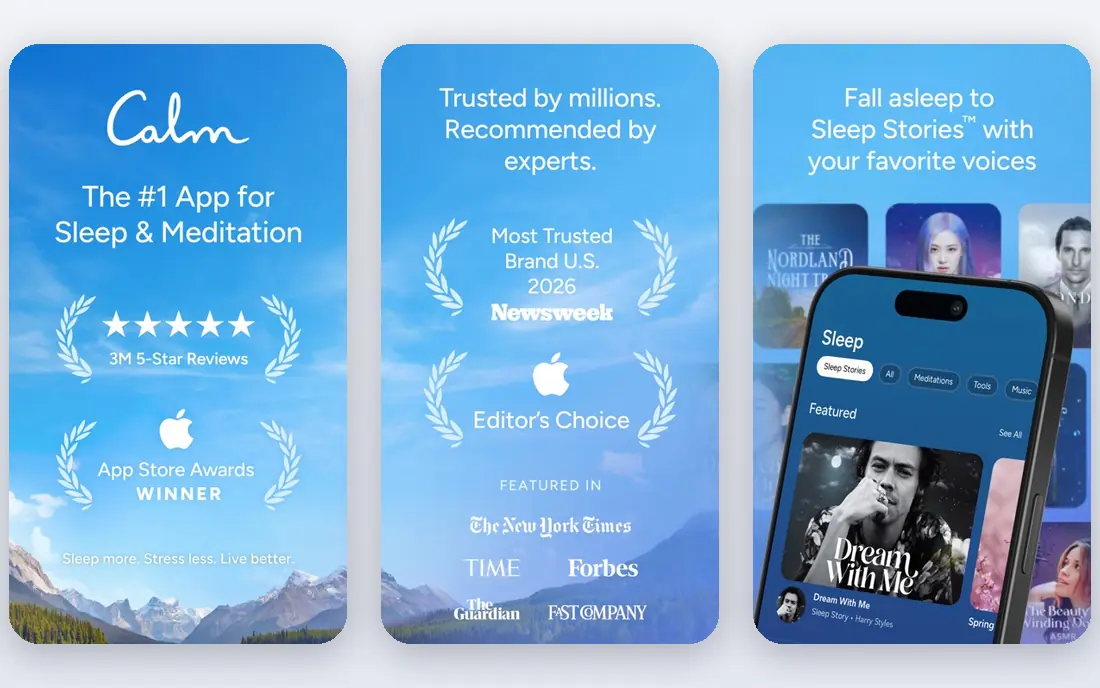
Calm is the best-known app in this list, and its strength is relaxation and sleep. Sleep Stories, soundscapes, and breathing exercises help many users wind down, and short guided meditations fit a busy day. The Daily Calm gives a simple ten-minute habit to start with.
For anxiety, Calm offers series on anxiety, panic, and overthinking, plus a breathing tool that is useful in a tense moment. That mix of short tools and longer programs suits users who want calm first, skills second. The app design itself is part of the appeal, because it feels quiet rather than busy.
The catch is cost and depth. Free content is limited, and full access is usually bought yearly, although a monthly price is also listed. CBT-based skills are thinner than in MindShift CBT or Moodfit, so Calm works best as a relaxation and sleep companion, not as a sole coping-skills tool.
- Large sleep story library
- Guided meditation and breathing tools
- Polished, calm design
- Free content is limited
- Full access is a yearly cost for many users
- Less structured CBT content
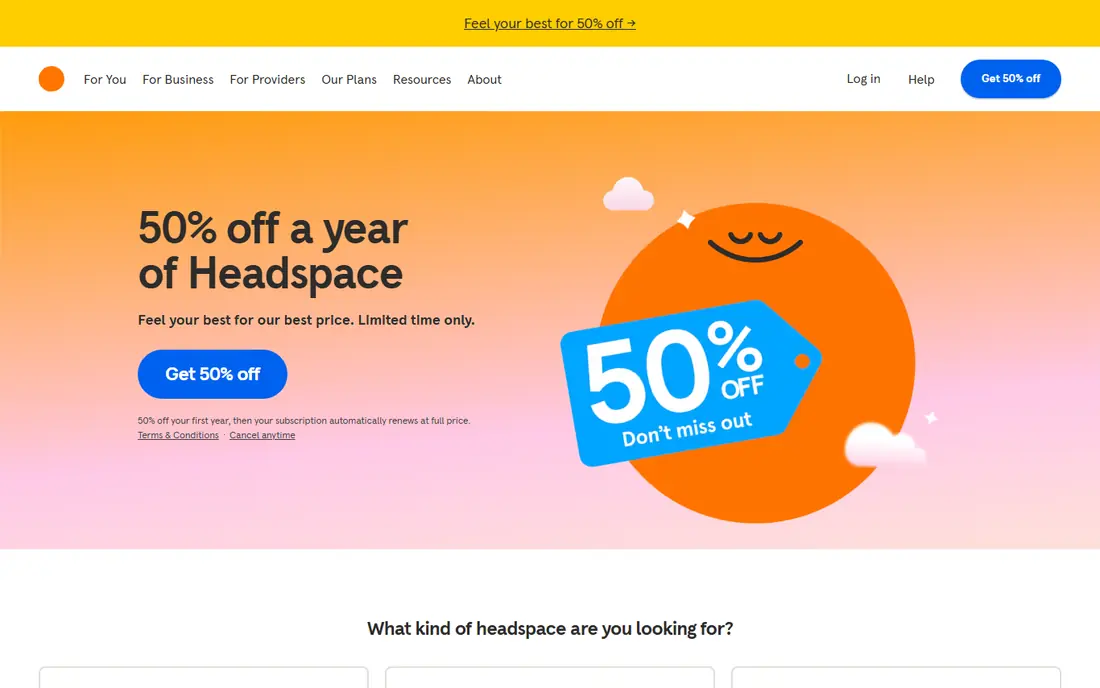
Headspace is built for beginners. Short courses explain meditation in plain language, with animations and simple steps that make a first session less awkward. That structure helps users who have tried meditation before and given up because they did not know where to start.
SOS sessions are a useful extra for anxiety. These short exercises are made for moments when stress spikes, and they give a clear action to take rather than a long program. Sleepcasts and focus music add value for users whose anxiety affects sleep or work.
The limits are scope and price. Headspace is a meditation app first, so mood tracking and CBT tools are thinner than in Moodfit or MindShift CBT. Full access needs a subscription, although a trial lets you test the basics course first. For a steady meditation habit, it remains a strong pick.
- Structured beginner courses
- Clear SOS sessions for tense moments
- Sleep and focus content
- Meditation-first approach
- Full access needs a subscription
- Less mood tracking than rivals
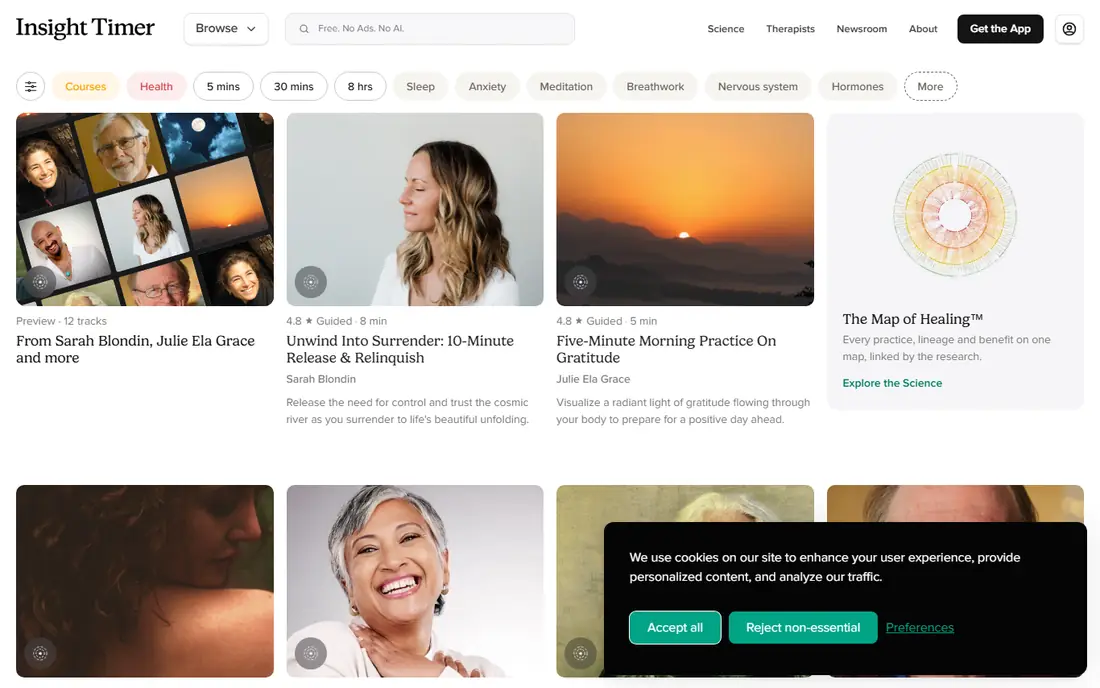
Insight Timer stands out for free content. Thousands of guided meditations, talks, and music tracks are available without a subscription, which makes it the best low-cost option for daily practice. You can follow teachers you like and build a routine around their sessions.
Variety is both the strength and the weakness. A user who knows what they want will find plenty, while a beginner may feel lost in the choice. Paid Member Plus adds courses, offline listening, and extra features, but the free library alone is already substantial.
For anxiety, Insight Timer works best when you use it regularly for short sessions, rather than searching for a perfect session each day. Pick a few teachers, save favorite tracks, and keep the habit simple. That routine matters more than the size of the library.
- Very large free library
- Many teachers and styles
- Low cost for regular use
- Choice can feel overwhelming
- Paid plan needed for courses and offline use
- Less structured programs
MindShift CBT, from Anxiety Canada, is the most focused anxiety tool in this list. It is built around cognitive behavioral therapy ideas, with tools for challenging anxious thoughts, facing fears step by step, and building coping cards for difficult situations. That practical focus suits users who want skills, not only calm.
The app is free, which removes cost as a barrier. You can work through anxiety types, such as social anxiety, worry, and panic, and use tools in the moment when anxiety rises. That in-the-moment use is where MindShift CBT differs from a meditation app.
The design is simpler than Calm or Headspace, and there is no large meditation library. That is fine if you want CBT skills, but less appealing if you want sleep stories and soundscapes. For free, practical anxiety tools, MindShift CBT is an excellent start.
- Free CBT-based tools
- Practical coping cards and thought tools
- Made for anxiety specifically
- Design is simpler than paid apps
- No meditation library
- Less personalization
Moodfit helps you see patterns in mood, sleep, exercise, and habits, then link those patterns to coping tools. You log mood each day, track habits and goals, and use CBT-based exercises, gratitude work, and breathing tools when needed. That tracking-first approach suits users who like data.
The link between tracking and tools is the strength. If low mood lines up with poor sleep, for example, you can see that pattern and adjust the habit, rather than guessing. That feedback loop helps some users stick with the app longer than a meditation-only app.
The free version covers core tracking, while a paid plan adds more tools and insights. The interface has many options, so it can feel busy at first. For users who want to understand their anxiety patterns, Moodfit offers more insight than a simple meditation app.
- Detailed mood tracking
- CBT and gratitude tools
- Habit and goal tracking
- Paid plan needed for full features
- Interface has many options
- Less guided meditation
Finch turns self-care into a gentle daily routine with a virtual pet that grows as you complete check-ins, breathing exercises, journaling, and goals. That low-pressure design helps users who find formal meditation apps too serious or hard to stick with. Small wins each day build a habit.
Daily check-ins ask about mood and energy, and the app suggests short activities based on your answers. That guidance is light, but it helps on days when choosing an activity feels hard. Journaling and goal tools add a reflective layer without making the app feel clinical.
The limits are depth and style. Finch is not a CBT program or a therapy replacement, and the pet theme will not suit every adult user. Paid plans add more features, while the free version covers the core routine. For gentle, daily self-care, Finch is a kind and effective pick.
- Gentle, game-like self-care
- Daily check-ins and goals
- Low-pressure design
- Less clinical depth
- Paid plan for full features
- Pet theme may not suit everyone
Wysa offers a private AI chat that listens, reflects, and suggests CBT and DBT-based exercises for anxiety, stress, and low mood. That private, text-based format suits users who find it hard to talk about anxiety face to face, or who want support late at night when other help is not available.
Exercises are short and practical, covering thought reframing, breathing, grounding, and sleep. You can also track mood over time and see which exercises help most. Optional human coaching is available on some plans, although availability and cost vary by region.
The key limit is scope. Wysa states that its AI chat is not therapy, and it is not a substitute for professional help. For everyday coping and a private place to work through thoughts, it is useful. For severe or persistent anxiety, professional support is the right next step.
- Private AI chat for difficult moments
- CBT and DBT-based exercises
- Optional human coaching
- AI chat is not therapy
- Full features need a paid plan
- Coaching availability varies
Balance builds a personal meditation plan from your experience, goals, and available time, then adapts it as you progress. That personal touch helps users who find generic meditation libraries hard to navigate. Daily plans feel more like a course than a random session.
Anxiety and sleep content is included, with sessions that build skills over weeks rather than offering only single tracks. That progression suits users who want a structured path, similar to Headspace, but with more personalization.
Pricing needs care. Balance has offered a free first year in many promotions, with paid plans after that period, so check the current offer before you rely on free access. For personalized meditation, Balance is a strong choice, especially for users who want a plan that adapts to them.
- Personalized daily plans
- Adapts to experience and goals
- Sleep and anxiety content
- Paid after the first-year offer in many cases
- Less CBT depth
- Smaller library than Insight Timer
How we picked these
We compared official app pages, feature pages, and app store listings for apps that are still available in 2026. We favored apps with clear anxiety-related content, a free plan or trial, and honest limits about what an app can do. We did not claim hands-on testing, and we did not list apps that promise to cure anxiety.
We also kept a mix by approach, because anxiety is not one problem. Meditation, CBT skills, mood tracking, and private chat each help different users, so the list covers all four. A reader can start with the approach that feels most doable, then add another app if needed.
What to check before you choose
Start with the approach you will actually use. A meditation app you open daily helps more than a CBT app you open twice and abandon. Try the free plan or trial for a week, and notice whether the habit feels easy or like a chore.
Next, check cost and privacy. Some apps are free, some need a yearly plan, and some collect mood data that you should understand before you log personal details. Read the privacy policy for data sharing, and choose an app whose terms you are comfortable with.
Finally, know when to seek more help. If anxiety is severe, persistent, or stops you from working, sleeping, or caring for yourself, speak with a healthcare professional or a trusted support service. Apps can support that care, but they do not replace it. In the US, you can call or text 988 for crisis support.
Sources
Frequently asked questions
Can an app cure anxiety?
No, apps support coping skills and daily habits, but they do not cure anxiety and they are not therapy. They can help with mild to moderate symptoms, and they work best alongside healthy routines and, when needed, professional care.
Which app is best for beginners?
Headspace and Calm are both strong for beginners, with guided courses and short sessions. MindShift CBT is also beginner-friendly for practical skills, and it is free, so cost is not a barrier to trying it.
Are there good free apps for anxiety?
Yes, MindShift CBT, Insight Timer, and Smiling Mind offer strong free content. Moodfit, Finch, and Wysa also offer useful free tiers, although full features may need a paid plan.
How often should I use an anxiety app?
Short, regular use works better than long, rare sessions for most people. Ten minutes a day, or a short exercise in a tense moment, is a realistic start. Build the habit around a fixed time, such as morning or bedtime.
When should I seek professional help?
Seek professional help if anxiety is severe, persistent, or affects work, sleep, relationships, or daily care. A doctor, therapist, or crisis service can assess your situation and discuss treatment options that an app cannot provide.