Best Apps for Mental Health in 2026: 10 Apps Compared
By ToolNimba Editorial Team October 28, 2026 11 min read

- Top pick
 Calm
Sleep and stress relief
Starting price$14.99 per monthCheck out CalmRead our review - Runner-up
 Headspace
Structured meditation courses
Starting price$12.99 per monthCheck out HeadspaceRead our review - Also great
 Insight Timer
Free meditation library
Starting priceFreeCheck out Insight TimerRead our review
How we researched this
We compared official pricing and feature pages, app store listings, privacy policies and public user reviews. Prices change, so check the provider's site before you pay.
Key takeaways
- Calm and Headspace suit most beginners, but Insight Timer gives the largest free meditation library.
- Therapy apps such as BetterHelp and Talkspace cost far more than meditation apps, and insurance can change the price a lot.
- Sobriety tools such as I Am Sober and Reframe focus on streaks, cravings, and daily support rather than general meditation.
- Mood tracking apps work best when you use them for a few minutes each day and look back at patterns over weeks.
- None of these apps replace professional care, so use them as support alongside a clinician when symptoms are serious.
Quick comparison
| Name | Best for | Starting price | Free plan | |
|---|---|---|---|---|
| Calm | Sleep and stress relief | $14.99 per month | Free trial | Visit |
| Headspace | Structured meditation courses | $12.99 per month | Free trial | Visit |
| Insight Timer | Free meditation library | Free | Yes | Visit |
 BetterHelp | Online therapy with a licensed therapist | $70 per week | No | Visit |
 Talkspace | Therapy and psychiatry with insurance options | $69 per week | No | Visit |
 Moodfit | Mood tracking and CBT-based tools | See website | Yes | Visit |
 Finch | Gentle daily self-care | See website | Yes | Visit |
 Wysa | AI-guided CBT-style support | See website | Yes | Visit |
 I Am Sober | Sobriety tracking and community | See website | Yes | Visit |
 Reframe | Quitting or cutting back on drinking | See website | Free trial | Visit |
The best apps for mental health
We compared official feature pages, pricing pages, app store listings, privacy policies, and public reviews to build this list. It covers meditation, sleep, therapy, mood tracking, and sobriety, because mental health support is not one single need.
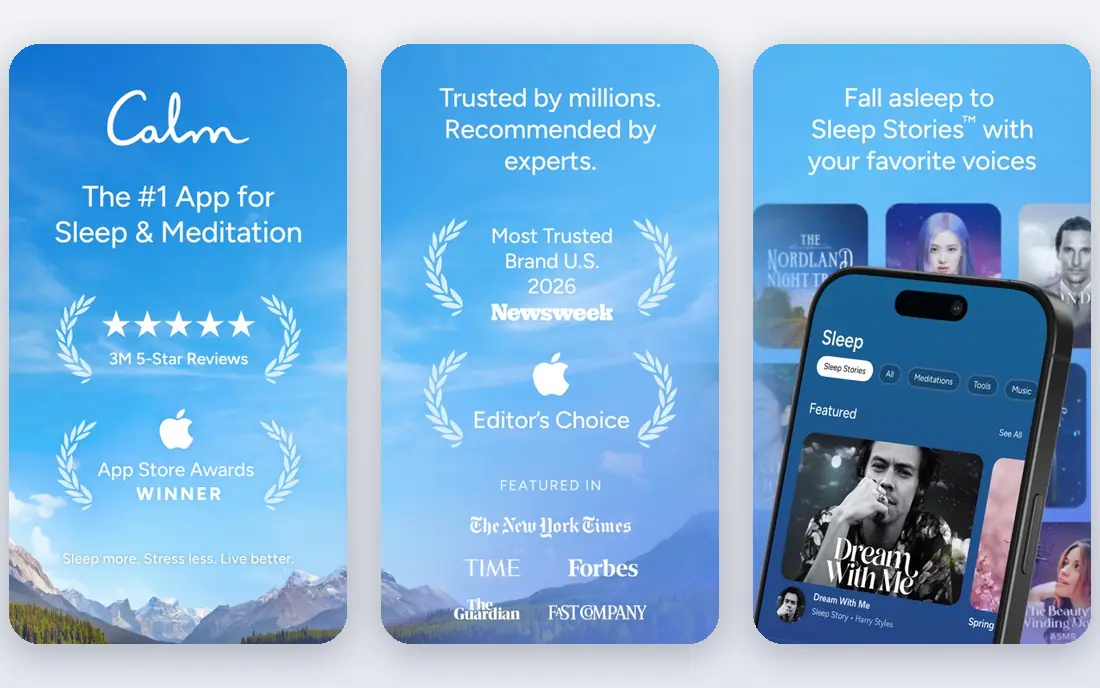
Calm is our pick for people whose main problem is winding down at night. Its Sleep Stories, soundscapes, and sleep meditations give you a clear bedtime routine, and the short breathing tools help when stress spikes during the day. The app is easy to open, choose a session, and follow without much setup.
The catch is the paywall. You can sample some content for free, but the full library needs a paid plan, listed at $14.99 per month or $69.99 per year in recent pricing summaries. If sleep is not your priority, you may get less value from Calm than from a broader or cheaper meditation app.
- Large Sleep Stories library
- Guided meditations for anxiety and stress
- Soundscapes and music for focus and sleep
- Free tier is limited
- Most useful content sits behind the subscription
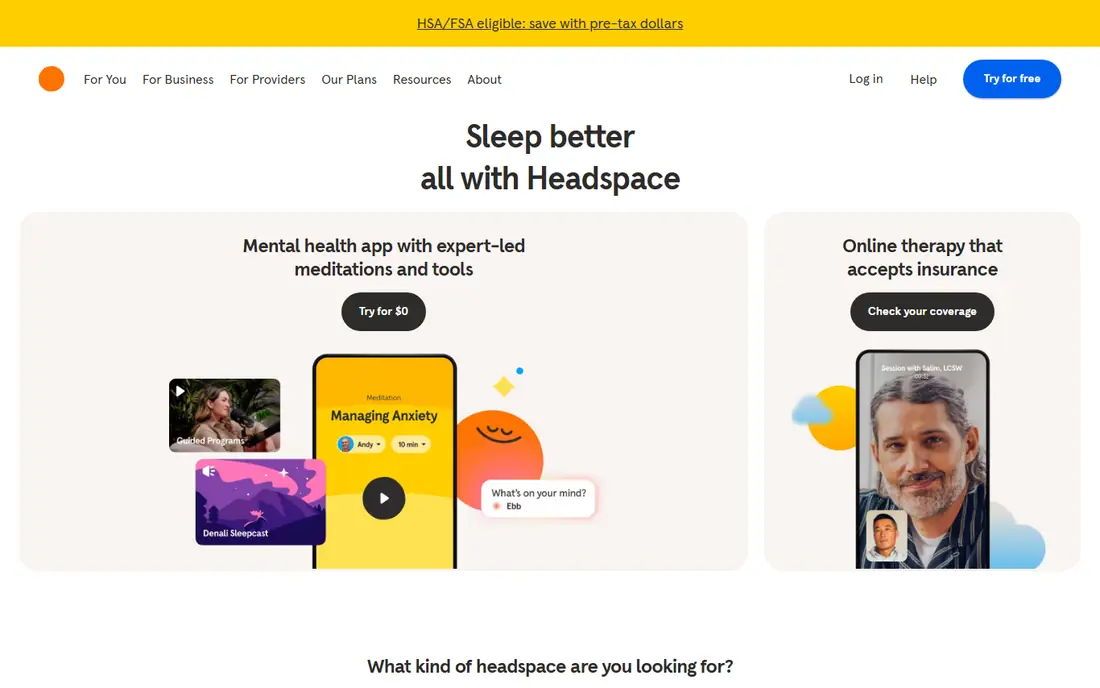
Headspace works best if you want to be taught, not just handed a library. Its courses build from simple basics to longer practices, and the short animations explain ideas in plain language. That structure helps beginners who open a meditation app, feel lost, and close it again.
Headspace also offers coaching and, in some plans and regions, access to therapy services through its wider platform. Pricing in recent summaries is $12.99 per month or $69.99 per year. The downside is similar to Calm: the free trial is a taste, not a long-term free plan.
- Step-by-step courses for beginners
- Short SOS sessions for stressful moments
- Sleepcasts and wind-down content
- Full value needs a subscription
- Therapy and coaching options vary by region and plan
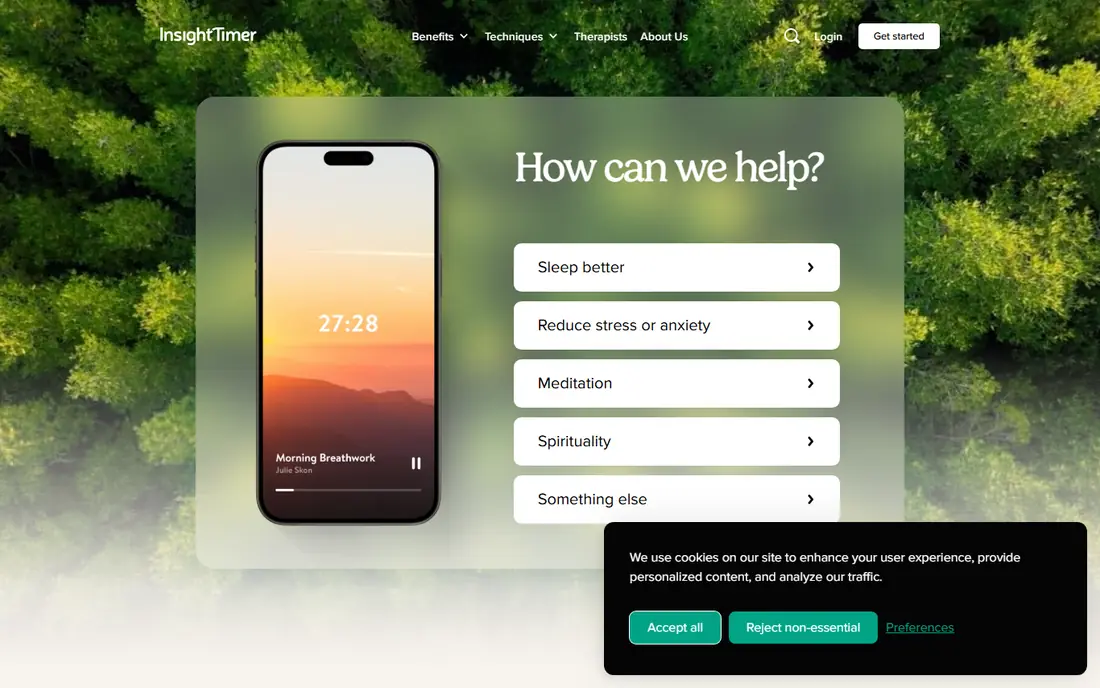
Insight Timer is the strongest free option on this list. Its homepage describes hundreds of thousands of tracks from teachers, psychologists, and mindfulness experts, plus live yoga and breathwork sessions. If cost is the barrier, start here before you pay for anything else.
Choice is also the weakness. With so many teachers and styles, you may need to try several sessions before you find voices you like. The paid Plus plan, listed at $59.99 per year in recent summaries, adds offline listening, courses, and extra tools, but most people can use the free tier for a long time.
- Very large free library of guided meditations
- Timer for silent practice
- Sleep, breathwork, and yoga content
- Quality varies because many teachers publish here
- Premium features need a paid plan
BetterHelp is different from the meditation apps above because it connects you with a licensed therapist. You answer questions about your goals and preferences, get matched, and can message your therapist between live sessions. That ongoing contact suits people who want regular support rather than a daily audio session.
Its own site lists copays as low as $15 for eligible insured members, and $70 to $100 per week for self-pay members, with price varying by location and therapist availability. BetterHelp states it is not right for minors, people in urgent crisis, or court-ordered therapy. Check insurance eligibility early, because that changes the cost more than any discount.
- Large network of licensed therapists
- Messaging plus live video, phone, or chat sessions
- Easy therapist switching
- Weekly price is high without insurance
- Exact price varies by location and availability
Talkspace combines therapy with psychiatry, which matters if medication management is part of your care. Its site says most insured members have a $0 copay, while out-of-pocket therapy plans begin at $69 per week. You can choose video, voice, or live chat sessions and switch providers at no extra cost if the fit is wrong.
The main trade-off is complexity. Insurance coverage, copays, and psychiatry access depend on your plan and state, so the headline price may not be your price. Still, for people who already have coverage, Talkspace can be cheaper than paying weekly out of pocket elsewhere.
- Licensed therapists and psychiatric providers
- Unlimited messaging on many plans
- In-network with many major plans
- Out-of-pocket weekly pricing is high
- Psychiatry availability and coverage vary
Moodfit suits people who like data and structure. You log your mood and related habits, then look for patterns, such as worse mood after poor sleep or on days with little movement. That record can also be useful to share with a clinician, because it shows trends instead of a single bad day.
The app includes CBT-style tools, breathing exercises, and gratitude prompts, but it does not diagnose or treat conditions. Use the free tier to test whether daily logging fits your routine, and check the current premium price on its site before you upgrade.
- Tracks mood, sleep, exercise, and habits in one place
- CBT-based exercises and gratitude tools
- Clear charts over time
- Self-guided tools are not therapy
- Some features need a paid upgrade
Finch takes a softer approach than a clinical tracker. You care for a virtual pet by completing small self-care tasks, checking in on your mood, and setting simple goals. That gentle loop helps people who avoid mental health apps because they feel like homework.
The risk is that it can feel too light if you need structured CBT work or therapy. Finch is best as a daily habit builder and mood check-in, not as a replacement for professional support. The free tier is a good starting point, with paid Plus features listed on its site.
- Friendly, low-pressure daily check-ins
- Goal setting and journaling
- Supportive tone for building small habits
- Light touch may not suit people who want deep clinical tools
- Some content needs a paid plan
Wysa offers an AI chatbot trained around CBT-style conversations, plus mindfulness and sleep exercises. It is useful at odd hours, when you want to reframe a thought or calm down but cannot reach a person. The app also describes human coaching options in some regions and plans.
Be clear about the limit. An AI companion can support coping skills, but it cannot diagnose, prescribe, or replace a clinician. Wysa is best for low-level stress and thought exercises, with human care added when symptoms are persistent or severe.
- Available any time for chat-based exercises
- CBT and mindfulness techniques
- Option to connect with a human coach or therapist in some plans
- AI chat is not a human therapist
- Crisis support is limited to guidance and referrals
I Am Sober is built around one clear job: staying sober one day at a time. You set your quit date, track days sober, see money saved, and make a daily pledge. Milestones and community comments add accountability without turning the app into a general wellness feed.
It is not a treatment program on its own. People with alcohol dependence or withdrawal risk should seek medical advice first, because stopping suddenly can be unsafe for some people. As a tracker and peer support tool, though, it is simple, focused, and easy to keep using.
- Day counter and savings tracker for sobriety
- Daily pledges and milestone celebrations
- Peer community support
- Community posts vary in quality
- Extra features need a paid plan
Reframe is aimed at people who want to change their relationship with alcohol, whether that means quitting or cutting back. It offers daily lessons, tools for cravings, and tracking that shows progress over time. That structure helps people who want more guidance than a simple day counter.
The trial helps you test the tone and lesson style before paying. Like other sobriety apps, Reframe is not a substitute for medical care, counselling, or a recovery program when alcohol use is severe. Pair it with professional support if drinking is affecting your health, work, or relationships.
- Structured program for reducing or quitting alcohol
- Daily lessons and craving tools
- Progress tracking
- Subscription needed after the trial
- Program style may not suit everyone
How we picked these
We compared official feature pages, pricing pages, app store listings, privacy policies, and public reviews for each app. We looked for a clear purpose, a current free or paid plan, and honest limits, such as whether an app offers therapy, self-guided tools, or peer support. We left out apps that no longer work, that did not fit mental health or sobriety, or that hid their pricing and purpose.
We did not claim hands-on testing. Our comparisons rest on what vendors publish, what app stores list, and what reviewers report about features and costs. Prices change often, so check the vendor site before you subscribe, especially for therapy apps where insurance and location affect the final price.
How to choose the right app for your needs
Start with the problem you want to solve first. If sleep is the main issue, a sleep-focused app such as Calm makes sense. If you want to learn meditation from scratch, Headspace or Insight Timer fits better. If you need to talk to a person, skip the meditation apps and compare BetterHelp and Talkspace on insurance and session style.
Match the format to your habits
A five-minute daily practice beats a long program you never open. Try the free tier or trial for a week and note whether you return without forcing it. If logging feels like a chore, a lighter app such as Finch may last longer than a detailed tracker.
Check privacy before you share sensitive notes
Mental health apps collect sensitive data, so read the privacy policy before you journal or message in detail. Look for clear statements about data sharing, advertising, and whether your notes are used for marketing. Prefer apps that let you delete data and that explain third-party sharing in plain language.
Know when to get human help
Apps can support daily coping, but they are not a substitute for professional care. If symptoms last more than a couple of weeks, affect work or relationships, or involve thoughts of harming yourself, contact a clinician or a local crisis service right away. In the United States, you can call or text 988 for the Suicide and Crisis Lifeline. Sobriety apps also work best alongside medical advice when alcohol use is heavy or withdrawal is a risk.