Best Apps for Self Improvement in 2026: 9 Apps Compared
By ToolNimba Editorial Team October 28, 2026 9 min read

- Top pick
 Headspace
Structured meditation courses
Starting price$12.99 per monthCheck out HeadspaceRead our review - Runner-up
 Calm
Sleep stories and stress relief
Starting price$14.99 per monthCheck out CalmRead our review - Also great
 Fabulous
Guided routines and coaching
Starting priceSee websiteCheck out FabulousRead our review
How we researched this
We compared official pricing and feature pages, app store listings, privacy policies and public user reviews. Prices change, so check the provider's site before you pay.
Key takeaways
- The best self improvement apps work because they fit a small daily habit, not because they promise a new life in a week.
- Headspace and Calm suit meditation and sleep, while Habitica, Finch, and Daylio suit habits and mood tracking.
- Blinkist and Duolingo suit learning in short daily sessions, and both have useful free tiers.
- Apps can support change, but they are not medical care. Seek professional help for anxiety, depression, or other health concerns.
Quick comparison
| Name | Best for | Starting price | Free plan | |
|---|---|---|---|---|
| Headspace | Structured meditation courses | $12.99 per month | Free trial | Visit |
| Calm | Sleep stories and stress relief | $14.99 per month | Free trial | Visit |
| Fabulous | Guided routines and coaching | See website | Free trial | Visit |
 Habitica | Gamified habits and tasks | $4.99 per month | Yes | Visit |
 Finch | Gentle self-care and mood check-ins | $9.99 per month | Yes | Visit |
 Daylio | Mood and habit patterns | $4.99 per month | Yes | Visit |
 Blinkist | Short book summaries | $15.99 per month | Yes | Visit |
 Duolingo | Daily language learning | $12.99 per month | Yes | Visit |
 Insight Timer | Large free meditation library | $9.99 per month | Yes | Visit |
The best apps for self improvement
We compared official feature pages, pricing pages, and app store listings, with a focus on daily use, free tiers, and honest limits. The best apps for personal growth are the ones you still open after the first month, so we favored apps with a clear daily loop.
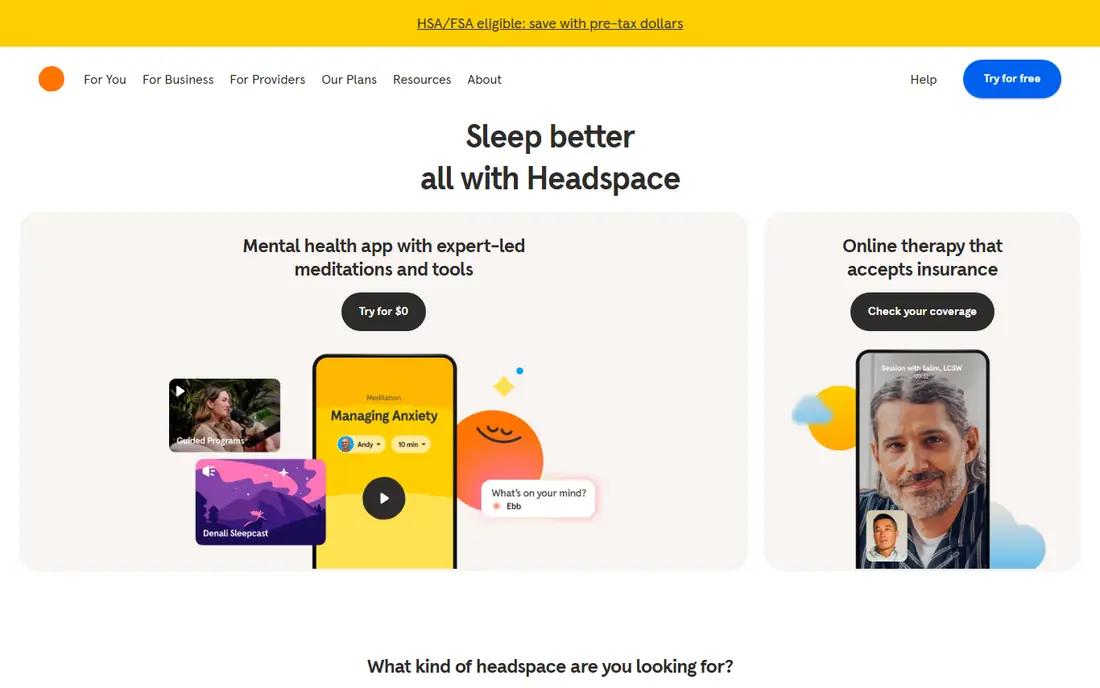
Headspace is the best starting point for meditation beginners. Its Basics course teaches technique step by step, rather than dropping you into a huge library with no path. Courses for anxiety, sleep, and focus build on that base, and short SOS sessions help during a stressful moment.
The free content is limited, so most users will need a paid plan. Headspace costs $12.99 per month, or $69.99 per year, with a family plan at $99.99 per year for six accounts and a student plan at $9.99 per year. If structure matters more than variety, Headspace is our pick.
- Clear beginner courses
- Short SOS sessions
- Family and student plans
- Limited free content
- Sessions are capped in length on some plans
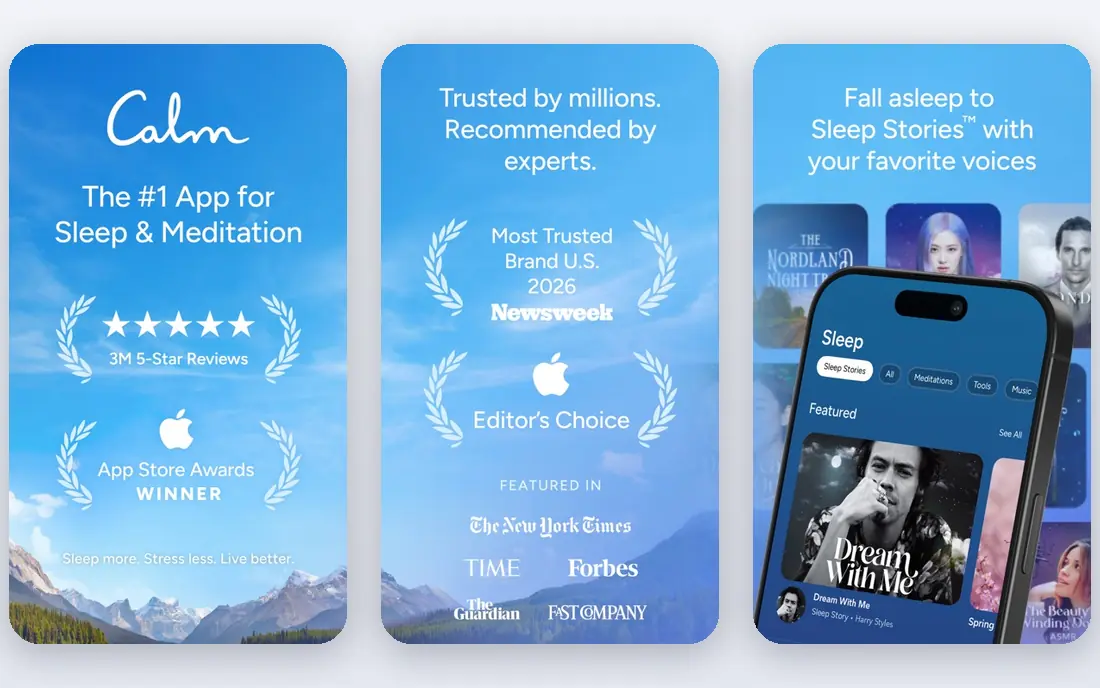
Calm is the sleep-first pick in this list. Its Sleep Stories, narrated by familiar voices, and its soundscapes help many people wind down at night. The Daily Calm offers a short daily ritual, and themed series cover stress, anxiety, and focus in a browse-and-pick style.
Structure is where Calm trails Headspace. If you want a course that builds skill over weeks, Headspace guides you more clearly. Calm costs $14.99 per month, or $69.99 per year, with a family plan at $99.99 per year and a lifetime option at $399.99. Pick Calm if sleep is your main goal.
- Large sleep story library
- Soundscapes
- Daily Calm ritual
- Less structured than Headspace
- Free tier is very limited
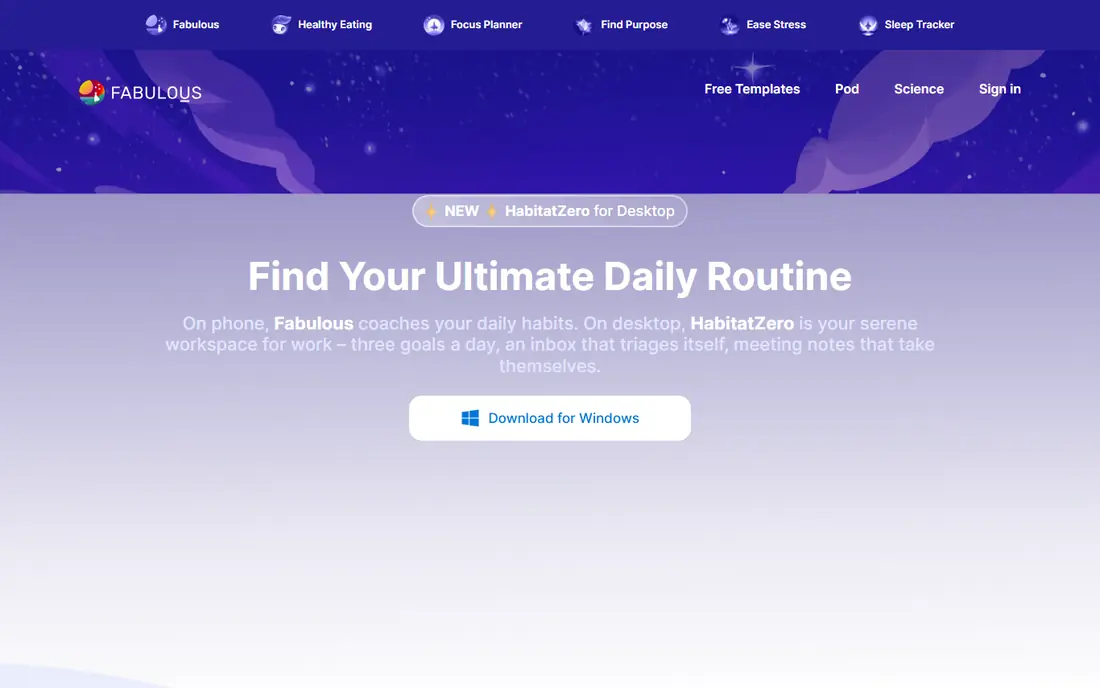
Fabulous takes a coaching approach to routines. Instead of a plain habit checklist, it guides you through journeys for morning routines, focus, sleep, and fitness, with small steps that build over days. That guidance suits people who know what to do but struggle to start.
Pricing is the weak point. App store listings show a wide range of prices by plan and region, so check the price inside the app before you commit. The tone can also feel like a lecture on some days. If you want a coach in your pocket rather than a tracker, Fabulous is worth a trial.
- Coaching-style journeys
- Morning and evening routines
- Habit science framing
- App store prices vary widely
- Coaching tone can feel prescriptive
Habitica turns daily habits, to-dos, and tasks into a role-playing game. Completing a habit earns gold and experience, while missed dailies cost health, and party quests let friends work toward a shared goal. That game loop helps people who respond to streaks and rewards more than to plain reminders.
The free plan covers the core game, while a subscription at $4.99 per month, or $47.99 per year, adds gems and extra features. The game layer can distract some users, and the interface is busier than a simple tracker. If plain checklists bore you, Habitica may be the best self improvement app for you.
- Turns habits into a game with rewards
- Party quests for friends
- Free core features
- Game systems can distract from the habit itself
- Design feels busy
Finch is the gentlest app here. You care for a virtual pet by completing small self-care goals, checking in on your mood, and reflecting on your day. The tone is encouraging rather than strict, which suits people who feel guilty after missing a day in a harder tracker.
The free plan covers the core experience, while Finch Plus adds more customization and content. Store listings show prices around $9.99 per month, with yearly options that vary, so confirm the in-app price. Finch suits self-care and mood work more than work productivity.
- Warm, low-pressure design
- Virtual pet companion
- Mood and goal check-ins
- Paid price varies by store listing
- Less suited to strict productivity tracking
Daylio answers a question other trackers miss: what actually affects your mood. You log a mood in seconds, add activities, and over weeks the charts show patterns, such as better moods on days you walk or read. That feedback helps you choose habits based on evidence from your own life.
The free plan is solid for daily logging, while Premium at $4.99 per month, or about $35.99 per year, adds deeper stats, more moods, and cloud backup. Daylio is not a full journal, but for mood and habit insight it is one of the best personal development apps here.
- Fast mood logging without writing
- Charts link mood to activities
- Solid free plan
- Journaling features are basic
- Premium is needed for full stats and backups
Blinkist condenses nonfiction books into short text and audio summaries, called Blinks, that take about 15 minutes each. That format suits commutes, workouts, and short breaks, and it helps you decide which full books deserve a deeper read. The library covers business, psychology, health, and personal growth.
Summaries are a starting point, not a substitute for a book that matters to you. Premium costs $15.99 per month, or $99.99 per year, while the free plan offers one daily summary chosen by Blinkist. Use it for discovery and review, and read the full book when an idea needs depth.
- Nonfiction summaries in about 15 minutes
- Audio versions
- Large library
- Summaries cannot replace full books
- Annual plan is the better value
Duolingo makes language learning a daily habit through short, game-like lessons. The free version covers full courses in many languages, with streaks, leagues, and short lessons that fit into a few minutes. That low barrier is why so many people stick with it for months.
Super Duolingo costs $12.99 per month, or $59.99 per year, and removes ads, adds unlimited hearts, and adds offline access and review tools. Paid access does not add new course content, so free users still get the core lessons. For personal growth through a new language, Duolingo is the easiest start.
- Free core lessons
- Streaks and gamification
- Many languages
- Free version has ads and limits
- Speaking practice is limited
Insight Timer offers the largest free meditation library in this list, with sessions from many teachers around the world. Topics cover sleep, anxiety, grief, focus, and self-compassion, and live events add a community feel. A customizable timer with ambient sounds also suits unguided practice.
Choice is the downside. With so much content, beginners may spend more time browsing than meditating. Member Plus, at $9.99 per month or $59.99 per year, adds offline listening, advanced courses, and an ad-free experience. If budget is tight, Insight Timer is the best free self improvement app for meditation.
- Very large free library
- Many teachers and languages
- Live events and community
- Quality varies by teacher
- Library size can feel overwhelming
How we picked these
We compared official feature pages, pricing pages, and app store listings for apps that support habits, meditation, mood, learning, or routines in 2026. We kept apps with a clear daily use case and a free plan or trial, and we avoided apps that promise medical outcomes. We did not claim hands-on testing. Prices are monthly-billed entry prices unless an annual price is stated, and app store prices can vary by region and promotion.
How to build a habit that lasts
Pick one change, not five. A single daily habit, such as a ten-minute meditation or one language lesson, is easier to keep than a full routine overhaul. Attach it to an existing moment, such as after breakfast, and track it in one app for a month before adding another goal.
Use data, not guilt
Daylio and Habitica both show patterns over time, which beats a single missed day. If a habit keeps failing, change the time, size, or trigger instead of blaming willpower. A five-minute version you actually do beats a thirty-minute version you skip.
Know when an app is not enough
Apps can support sleep, focus, and habit building, but they are not a substitute for professional care. If low mood, anxiety, or sleep problems persist, talk to a clinician or a trusted health professional. The best app for self improvement is one that supports real life, not one that replaces help you need.