Best Competitor Ad Tracking Platforms in 2026: 9 Platforms Compared
By ToolNimba Editorial Team November 12, 2026 10 min read

- Top pick
 SpyFu
Affordable Google Ads tracking
Starting price$39 per monthCheck out SpyFuRead our review - Runner-up
 Semrush
Search plus cross-channel ads
Starting price$139.95 per monthCheck out SemrushRead our review - Also great
 Similarweb
Traffic plus ad intelligence
Starting price$125 per monthCheck out SimilarwebRead our review
How we researched this
We compared official pricing and feature pages, app store listings, privacy policies and public user reviews. Prices change, so check the provider's site before you pay.
Key takeaways
- SpyFu is our pick for affordable Google Ads tracking, thanks to deep history and a low starting price.
- Semrush and Similarweb suit teams that need search, social, display and traffic data together, but ad intelligence often sits on higher tiers.
- Adbeat and Adplexity are stronger for display and native ads, while BigSpy and PowerAdSpy cover social creatives.
- Ad data is estimated, not exact, so use these tools to spot patterns and creative ideas, not to copy a rival budget figure as fact.
Quick comparison
| Name | Best for | Starting price | Free plan | |
|---|---|---|---|---|
| SpyFu | Affordable Google Ads tracking | $39 per month | Free trial | Visit |
| Semrush | Search plus cross-channel ads | $139.95 per month | Free trial | Visit |
| Similarweb | Traffic plus ad intelligence | $125 per month | Free trial | Visit |
 Adbeat | Display and native ads | $249 per month | Yes | Visit |
 BigSpy | Broad social creative research | $69 per month | Yes | Visit |
 PowerAdSpy | Detailed social ad research | $69 per month | Free trial | Visit |
 Adplexity | Native and mobile ad tracking | $249 per month | No | Visit |
 Sensor Tower | App and mobile ad tracking | See website | Free trial | Visit |
 Brandwatch | Social and brand ad context | See website | Free trial | Visit |
The best competitor ad tracking platforms
Competitor ad tracking platforms show which ads rivals run, where they run them, how long they last and which landing pages they use. No tool sees a rival ad account directly, so all figures are estimates based on observed ads and modelled traffic. The nine below cover search, social, display, native and app ads.
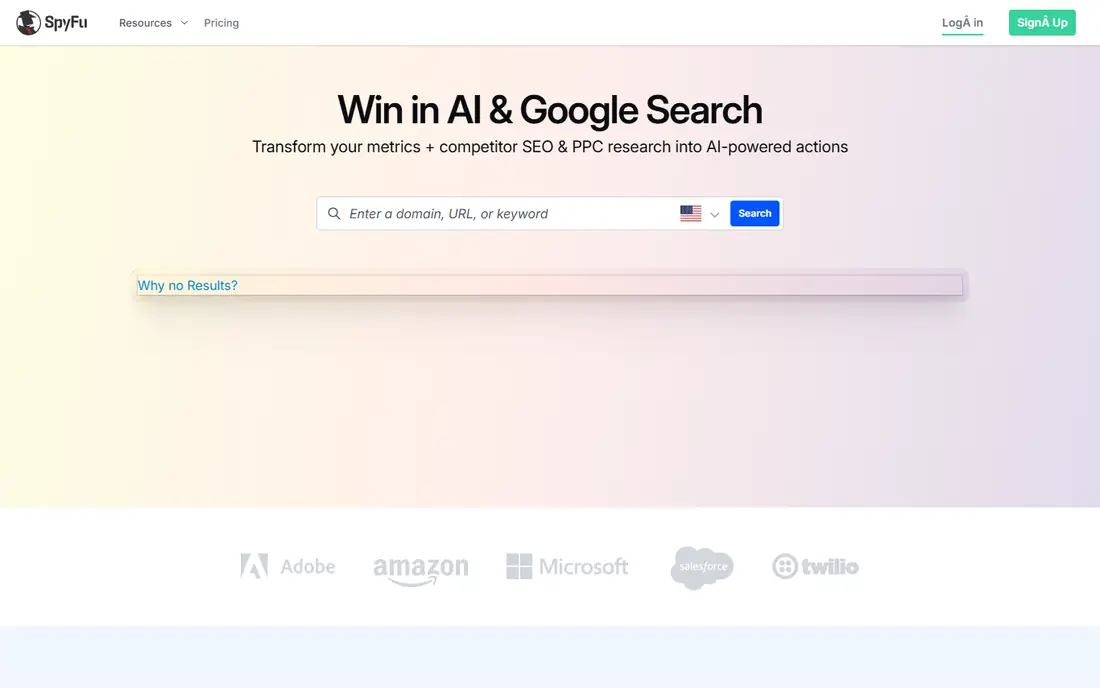
SpyFu is the most affordable way to research Google Ads competitors in depth. It shows rival keywords, ad copy, estimated spend patterns and history, which helps a small advertiser see which ads a competitor has kept running and which it dropped. That history is useful, because long-running ads usually signal messages that work, while short-lived ads often did not.
Social and display coverage is thinner than BigSpy or Adbeat, so SpyFu is not the best single tool for a social-first advertiser. The interface also feels older than Semrush. For a team that mainly competes on Google Search and wants history without a large bill, SpyFu is our pick.
- Deep Google Ads history
- Low starting price
- Keyword and ad copy data
- Social ad coverage is thinner
- Interface feels dated

Semrush is best known for SEO, but its Advertising Toolkit adds competitor ad research across Google, Meta and other channels, including display and video on higher plans. Teams that already use Semrush for keyword research can add ad tracking without learning a new platform, and they can compare ad copy, landing pages and estimated budgets in one place.
The catch is plan structure. The SEO toolkit starts at $139.95 a month, and full ad and traffic tools may need extra toolkits or higher plans, so the total can rise quickly. Small teams should confirm which ad features sit in the plan they are buying. For a team that needs SEO and ads together, Semrush is a strong all-in-one choice.
- Broad SEO and ad data
- Advertising Toolkit
- Large keyword database
- Ad intelligence varies by plan
- Price rises with add-ons
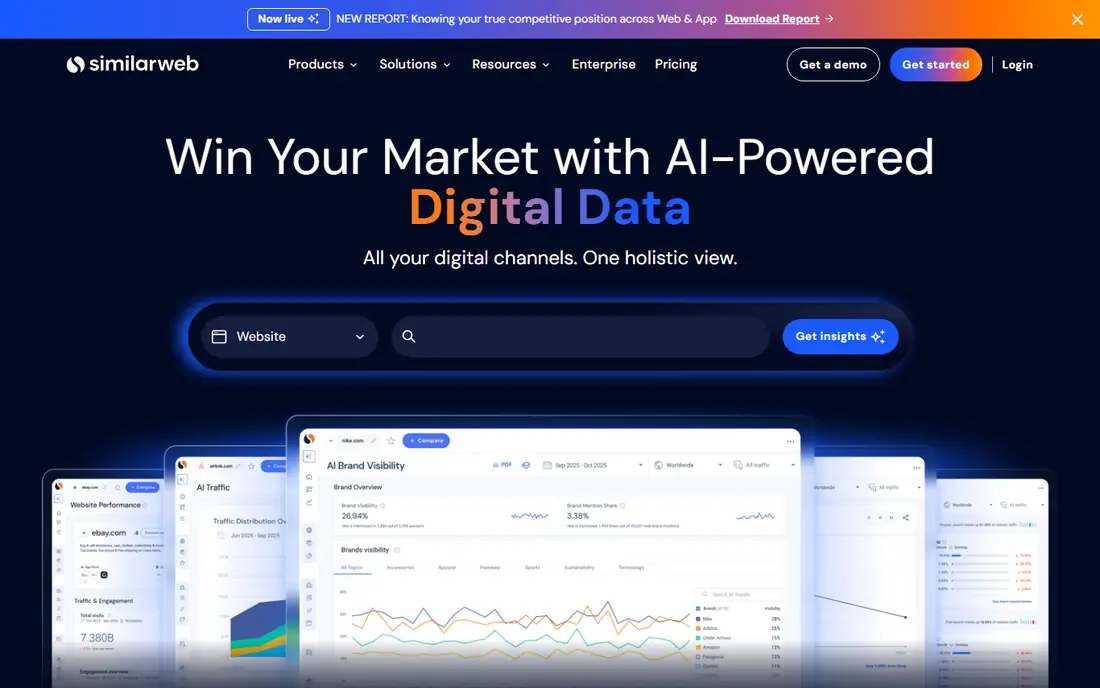
Similarweb puts competitor ads in a wider market context, with traffic, channels, audience and engagement data alongside ad creatives. That context helps a strategist see whether a rival ad push lines up with a traffic spike, rather than viewing ads in isolation. Entry plans start at $125 a month on annual billing for competitive intelligence.
Ad spend estimates and display intelligence sit on the higher Ads tier, starting at $542 a month on annual billing, which puts full ad tracking out of reach for small teams. Entry plans also offer only a few months of history. For a larger team that already values traffic data, Similarweb adds useful ad context, but small advertisers should check the tier carefully.
- Traffic and channel data
- Ad creatives on higher plans
- Market context
- Ad tools need the higher Ads tier
- Short history on entry plans
Adbeat focuses on display, programmatic and native ads across desktop and mobile, with coverage in many countries. It shows ad creatives, publishers, landing pages and how long ads ran, which helps media buyers spot angles and offers that rivals repeat. That landing page view is especially useful, because it shows where traffic goes after the click.
The starting price of $249 a month is high for a small team, and Pro plans do not offer a free trial, though a limited Basic plan is free. Social ad research is also not its main strength. For a display or native advertiser that needs depth, Adbeat is a specialist tool worth the cost.
- Strong display coverage
- Landing page tracking
- Long ad history
- High starting price
- No full free trial for Pro plans
BigSpy covers Facebook, Instagram, TikTok, YouTube and several other networks, making it a good tool for finding social ad creatives by keyword, advertiser or engagement. Teams can save winning creatives, track how long they run and compare angles across rivals. Limited free access lets a new user test the search before paying, with paid plans starting at $69 a month.
Data depth varies by network and plan, and advanced filters sit on higher tiers, so a team that needs precise targeting data should test its own niche first. BigSpy is also better for creative ideas than for exact spend figures. For social creative research on a moderate budget, it is a practical choice.
- Wide social network coverage
- Creative search
- Limited free access
- Data depth varies by network
- Higher plans needed for full filters
PowerAdSpy covers social, search, native and display ads, with detailed filters for advertiser, keyword, engagement and landing page. That breadth helps an agency that tracks rivals across several channels from one account, and it can reveal which creatives a competitor repeats across networks. Paid plans start at $69 a month.
The interface can feel busy, because it packs many filters and data views into one screen, and trial terms have varied over time, so check the current offer. Data quality also varies by network, as with all ad spy tools. For an agency that needs detailed social research, PowerAdSpy offers strong coverage for the price.
- Wide network coverage
- Detailed filters
- Landing page data
- Interface can feel busy
- Trial terms vary
Adplexity offers separate tools for native, mobile, desktop, e-commerce and other ad types, with deep coverage of native networks and mobile carriers. Affiliate marketers and media buyers use it to find offers, landing pages and traffic sources that rivals run in specific countries. That specialisation is its main advantage over general tools.
The price starts at $249 a month per tool, so tracking several ad types quickly becomes expensive, and there is no free plan. New users should also expect a learning curve, because native and mobile data needs context to interpret. For a specialist media buyer, Adplexity depth justifies the cost. For a general marketer, a broader tool is better value.
- Deep native ad data
- Mobile and carrier tracking
- Many countries
- High price
- Separate tools for different ad types
Sensor Tower, which includes Pathmatics ad intelligence, is the pick for app marketers who need mobile ad tracking alongside app store data. It shows app ad creatives, networks, spend estimates and app performance in one place, which helps a team link ad pushes to downloads and rankings. That combination is hard to get from a desktop-focused tool.
Full access is quote-based, so small app teams cannot budget from a simple starting price, and desktop ad coverage is not its main strength. Ask for the tier that includes ad intelligence, not just app store data. For a mobile-first team, Sensor Tower offers context that general ad tools do not.
- App store and ad data together
- Mobile creative tracking
- Market estimates
- Quote-based pricing for full access
- Desktop ad coverage is limited
Brandwatch is primarily a social listening and consumer intelligence platform, but it adds useful context for competitor ad tracking, especially for social campaigns and brand mentions. Teams can track how audiences react to rival campaigns, which messages spread, and which topics gain attention, alongside ad creative research. That audience view complements a dedicated ad spy tool.
It is not a direct replacement for Adbeat or BigSpy, because its ad creative database is not its core product, and pricing is quote-based. Teams that already use Brandwatch for listening can add ad context without a new vendor. If ad creatives are your main need, pair Brandwatch with a dedicated spy tool rather than relying on it alone.
- Social listening plus ad context
- Brand and audience insight
- Reporting tools
- Quote-based pricing
- Not a dedicated ad spy tool
How we picked these
We compared official pricing pages, feature pages and public ad intelligence comparisons for platforms available in October 2026. We kept only platforms that track rival ads as a core job, across search, social, display, native or app channels. Where pricing is quoted or varies by tool, we used See website. We did not claim hands-on testing, and we did not present estimated spend as exact spend.
What to check before you choose
Start with channel. A Google Ads team needs SpyFu or Semrush, a social team needs BigSpy or PowerAdSpy, and a display team needs Adbeat. Buying a broad platform that covers your channel weakly is worse than buying a specialist that covers it well. List the networks where your rivals actually advertise before you shortlist.
Next, test data in your niche. Search for five known rivals, check whether their ads appear, how long the history runs, and whether landing pages load correctly. Small or local advertisers may appear thinly in every tool, so a trial with your own market matters more than a general feature list. Also check country coverage, since some tools are stronger in the United States than elsewhere.
Finally, set rules for using the data. Use ad tracking for creative ideas, offer angles and landing page structure, not to copy text or images directly, and respect platform ad policies and intellectual property rules. Track a small set of rivals weekly, note which ads persist, and test ideas in your own campaigns. Patterns over time are more useful than a single snapshot.
Sources
Frequently asked questions
What is the best competitor ad tracking platform for Google Ads?
SpyFu is our pick for affordable Google Ads tracking, thanks to deep history and a $39 starting price. Semrush adds broader SEO and cross-channel data at a higher price. For search-only research, SpyFu usually gives the best value.
What is the best platform for social ad tracking?
BigSpy and PowerAdSpy are strong for social ad creatives, covering Facebook, Instagram, TikTok and other networks from $69 a month. Semrush also covers social ads on higher plans. Test creative coverage in your niche, since depth varies by network.
Are competitor ad spend figures accurate?
No, spend figures from ad tracking tools are estimates based on observed ads and modelled data, not figures from a rival ad account. Use them to compare relative scale and spot trends, not as exact budgets. Creative longevity and landing page patterns are often more reliable signals.
Can I track display ads with these tools?
Yes, Adbeat and Adplexity specialise in display and native ads, while Similarweb and Semrush include display data on higher plans. Check publisher coverage and country support for your market, since display data varies by region. A trial with known rivals is the best test.
Is it legal to track competitor ads?
Tracking publicly shown ads through a commercial intelligence tool is a common marketing practice, but you should not copy ad text, images or landing pages directly, and you should respect platform rules. Use the data for ideas and benchmarking, and create your own creatives. If in doubt, get legal advice for your market.