Best Crypto Trading Platform in 2026: 9 Platforms Compared
By ToolNimba Editorial Team October 28, 2026 10 min read

- Top pick
 Coinbase
US beginners
Starting priceFreeCheck out CoinbaseRead our review - Runner-up
 Kraken
Security-minded traders
Starting priceFreeCheck out KrakenRead our review - Also great
 Binance.US
Low-fee US spot trading
Starting priceFreeCheck out Binance.USRead our review
How we researched this
We compared official pricing and feature pages, app store listings, privacy policies and public user reviews. Prices change, so check the provider's site before you pay.
Key takeaways
- Coinbase is our pick for most US beginners because it pairs a simple app with strong regulation and clear fiat on-ramps.
- Kraken is the best choice for security-minded traders who want a wide range of fiat pairs and a pro trading view.
- Binance.US and Crypto.com offer lower headline spot fees for active traders, but simple buy buttons usually cost more than exchange orders.
- Robinhood Crypto suits dabblers who want zero-commission trades in a simple app, while Gemini suits users who prize regulation and custody.
- This is not financial advice. Crypto prices can fall sharply, and you should never trade with money you cannot afford to lose.
Quick comparison
| Name | Best for | Starting price | Free plan | |
|---|---|---|---|---|
| Coinbase | US beginners | Free | Yes | Visit |
| Kraken | Security-minded traders | Free | Yes | Visit |
| Binance.US | Low-fee US spot trading | Free | Yes | Visit |
 Crypto.com | Mobile trading and card rewards | Free | Yes | Visit |
 Gemini | Regulated US custody | Free | Yes | Visit |
 Bybit | Derivatives outside the US | Free | Yes | Visit |
 OKX | Derivatives and Web3 tools | Free | Yes | Visit |
 KuCoin | Altcoin breadth | Free | Yes | Visit |
 Robinhood Crypto | Simple zero-commission trading | Free | Yes | Visit |
The best crypto trading platforms
A crypto trading platform is only as good as its fees, security, coin list, and fiat access taken together. A low headline fee means little if spreads are wide, withdrawals are slow, or the platform is not available in your state. The platforms below cover beginners, active traders, and users who care most about regulation, and we flag US availability where it matters.
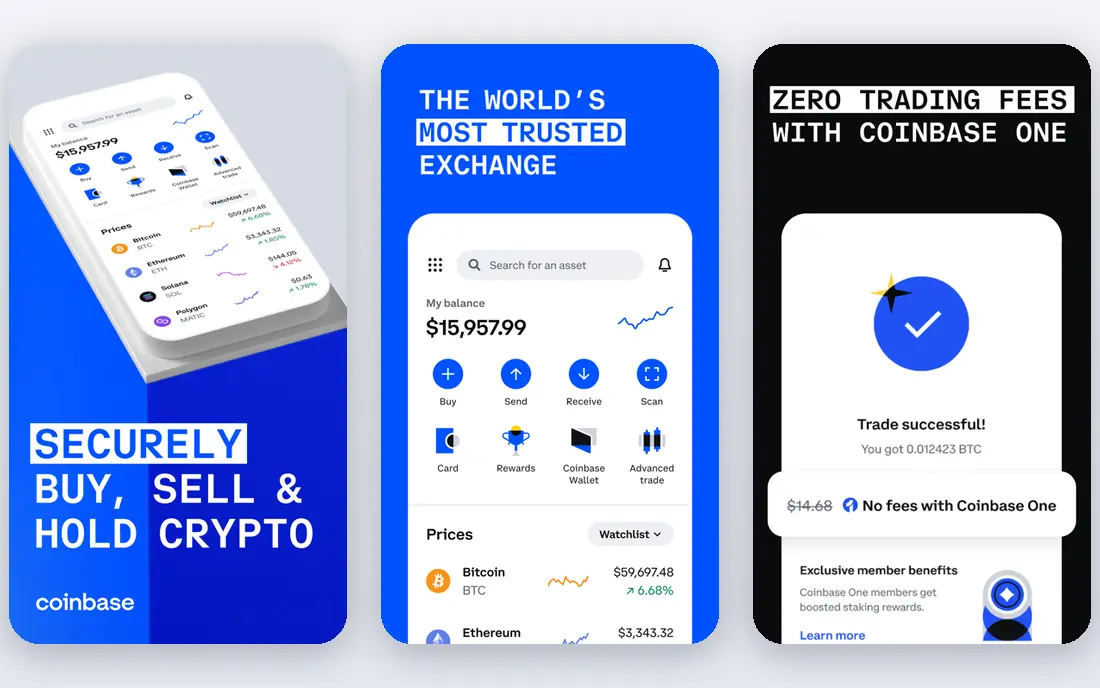
Coinbase is the easiest place for a US beginner to start. You can fund an account from a bank, buy a major coin in a few taps, and move to Advanced Trade when you want limit orders and lower fees. As a US public company, it also publishes more about its custody and compliance than most rivals, which helps if trust is your main concern.
The catch is cost on the simple buy screen, where spreads and fees can make a small purchase notably more expensive than the same trade on Advanced Trade. Coinbase also lists fewer small altcoins than global exchanges. If you want a calm first experience and you plan to hold major coins, that trade-off is worth it.
- Simple app and onboarding
- Strong US regulation
- Advanced Trade lowers fees for active users
- Simple buys carry spreads and fees
- Advanced fees still higher than some rivals
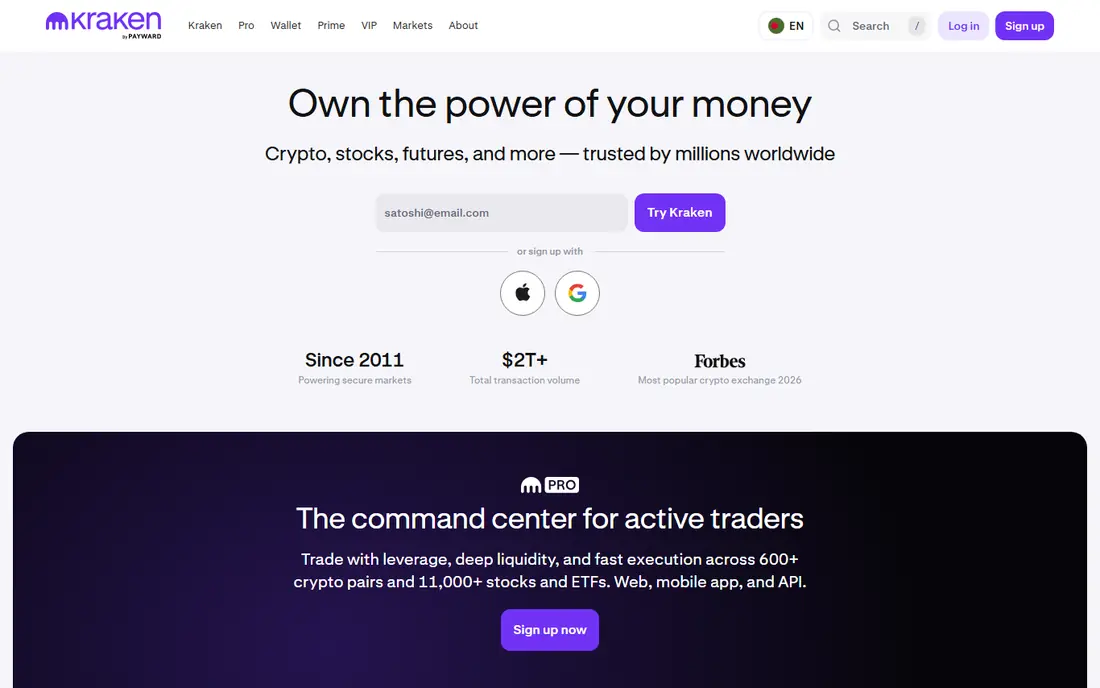
Kraken has built its name on security, cold storage, and proof-of-reserves reporting, and it supports a broad set of fiat currencies alongside hundreds of coins. The standard app is fine for simple buys, while Kraken Pro gives lower maker and taker fees, deeper charts, and more order types for traders who want control.
New users sometimes find the two-app setup confusing, and the instant-buy route is pricier than Pro. That is a common pattern in this list, and it rewards users who learn the pro view. If security and fiat flexibility matter more than the lowest possible fee, Kraken is our pick over Coinbase for growing traders.
- Long security record
- Wide fiat support
- Kraken Pro for lower fees and charting
- Beginner interface can feel busy
- Simple buys cost more than Pro orders
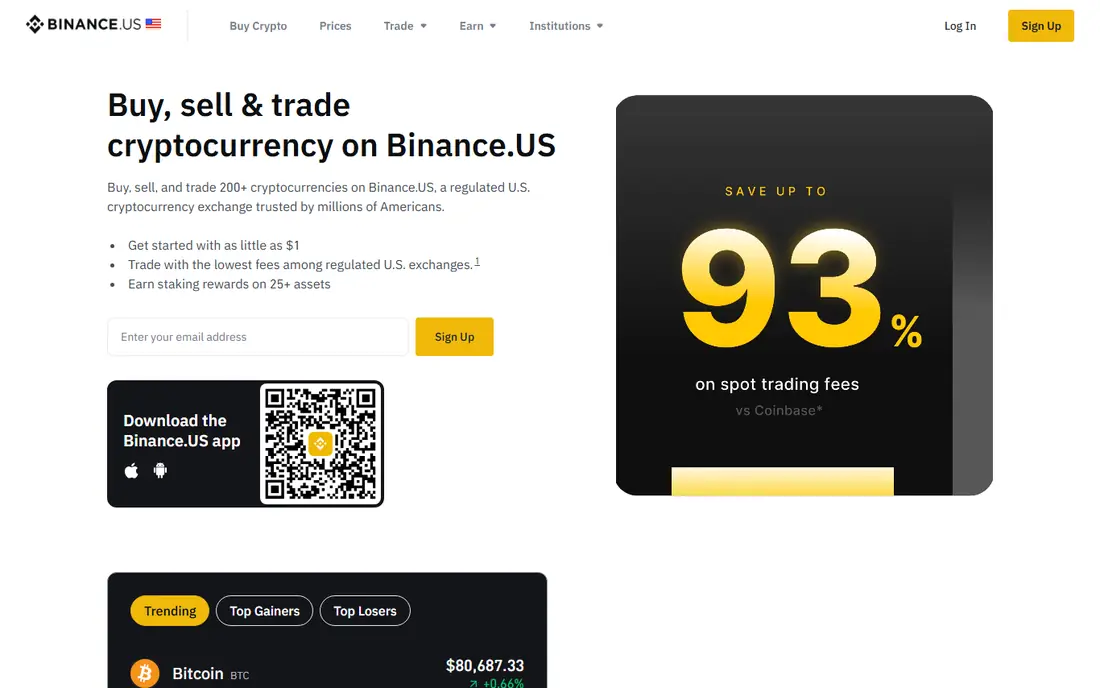
Binance.US is the US arm of the global Binance group, built for US users who want lower spot fees than Coinbase or Kraken charge on simple trades. Its base spot fee sits near 0.10 percent, and it offers a wide set of trading pairs for an American platform. Active traders get an order-book view that feels familiar from other exchanges.
It is not the same as global Binance, which is not open to US users, so do not expect the full global coin list or derivatives range. Some coins and features also vary by state. If you live in a supported state and you trade spot often, Binance.US is a strong low-fee option.
- Low base spot fees
- Broad US-available coin list
- Simple and advanced views
- Smaller coin list than global Binance
- Availability and features vary by state
Crypto.com suits mobile-first traders who want one app for trading, earning features, and a linked card. The exchange side offers tiered maker and taker fees, and the app covers a large coin list with recurring buy options. Its card rewards appeal to users who already spend through the platform, though rewards depend on staking levels and terms.
The fee structure takes time to learn, and the simple buy screen is again more expensive than exchange trading. Support quality also draws mixed public reviews. If you want a full mobile ecosystem and you are willing to learn the tiers, Crypto.com gives you breadth that simpler apps do not.
- Strong mobile app
- Large coin list
- Card and rewards ecosystem for active users
- Fee tiers can be complex
- Simple app buys cost more than exchange orders
Gemini is built for users who rank regulation and custody above coin count. It is regulated in New York, holds customer assets with a custody-focused approach, and offers a clear app for simple buys alongside ActiveTrader for lower fees. That combination suits cautious US investors and institutions as well as individuals.
The trade-off is choice and cost. Gemini lists fewer coins than Kraken or Crypto.com, and its fees are not the lowest in this list. If you hold major coins and you want a regulated US venue with a careful security story, Gemini is a calm, credible pick.
- New York-regulated exchange
- Insured custody approach
- Clean interface for beginners
- Higher ActiveTrader fees than some rivals
- Smaller coin list
Bybit is one of the largest derivatives venues outside the US, with deep spot markets, futures, and copy trading for users who follow other traders. Its spot fees sit near 0.10 percent, and the trading interface is fast and well laid out for active users. It also offers a Web3 wallet and earning products.
US users should not count on Bybit, since it is not open to most American customers. Derivatives also use borrowed funds, which can multiply losses as fast as gains. Bybit belongs on this list for global readers and for context, but US readers should pick a US-available platform above.
- Deep derivatives liquidity
- Copy trading features
- Low spot fees
- Not available to most US users
- Derivatives carry high risk of loss
OKX pairs low spot fees, near 0.08 percent maker and 0.10 percent taker at base tier, with a broad derivatives market and a built-in Web3 wallet for decentralized apps. That mix suits traders who move between centralized trading and on-chain tools and who want one account for both.
Beginners may find the app crowded, since it packs trading, earning, wallet, and NFT features into one place. Availability also varies by country and, in the US, by state and product. Check which OKX entity serves you before you deposit, and start with spot trading before touching borrowed-funds products.
- Low spot fees
- Strong derivatives range
- Built-in Web3 wallet
- Availability varies by region
- Interface can overwhelm beginners
KuCoin is known for listing many smaller tokens early, which draws traders hunting for altcoins that larger US platforms do not carry. Its spot fees sit near 0.10 percent, and it offers earning products, trading bots, and futures for experienced users. For global altcoin hunters, breadth is the main draw.
The limits are clear. KuCoin is not open to most US users, and its regulatory standing is less clear than Coinbase, Kraken, or Gemini. That makes it a poor first choice for a US beginner, even if its coin list looks tempting. Use it only if it legally serves your region and you understand the custody risk.
- Very wide altcoin list
- Low spot fees
- Earning and bot features
- No US access for most users
- Regulatory standing is weaker than US-regulated rivals
Robinhood Crypto fits people who want to dabble without learning an order book. Trades carry no commission, the app is among the simplest here, and you can hold stocks, ETFs, and crypto in one account. That simplicity is a real advantage for a first small position.
The cost sits in spreads, so a trade is not truly free in economic terms, and the crypto list is smaller than Kraken or Crypto.com. Advanced traders will also miss order types and charting depth. If you want a low-friction start and you accept spread costs, Robinhood is a fine entry point, but move to an exchange view if you trade often.
- Zero-commission crypto trades
- Very simple app
- Stocks and crypto in one place
- Spreads apply
- Smaller crypto list
- Fewer advanced trading tools
How we picked these
We compared official fee pages, product pages, and app listings, plus recent independent fee comparisons, for platforms that are live in 2026 and truly fit crypto spot trading. We favored US-available platforms for US readers and flagged global platforms where US access is limited, since availability changes the value of a low fee. We did not claim hands-on trading we did not do, and we treated fee figures as base-tier published rates that fall with volume or token discounts. Always confirm the fee page for your region before you trade, since schedules changed several times in 2026.
What to check before you deposit
Start with security basics: strong password, two-factor authentication with an app rather than SMS where possible, and withdrawal address controls if the platform offers them. Keep only trading funds on an exchange, and move long-term holdings to a self-custody wallet you control, since exchanges hold your keys and can freeze withdrawals in a crisis. Check deposit methods, withdrawal fees, and minimums, since those costs matter as much as the trading fee.
Fees need a close read too. Compare the simple buy cost with the exchange order cost, and watch for spreads, card fees, and conversion fees when you pay in a different currency. A platform that looks cheap at 0.10 percent can cost far more if you always use the instant buy button. Use limit orders on the pro view when you can, and keep a record of trades for tax reporting.
A plain risk note
This article is not financial advice, and crypto trading carries risk. Prices can move sharply in a day, borrowed-funds products can liquidate a position, and smaller tokens can lose most of their value or become hard to sell. Never borrow to trade, never invest money needed for rent or bills, and consider speaking to a qualified adviser before making a large commitment.
Sources
- https://www.coinbase.com
- https://www.kraken.com
- https://www.binance.us
- https://www.crypto.com
- https://www.gemini.com
- https://www.bybit.com
- https://www.okx.com
- https://www.kucoin.com
- https://www.robinhood.com
- https://www.pixelwebsolutions.com/best-crypto-exchanges/
- https://mytoken.io/en/news/602489.html
- https://en.coinotag.com/guide/best-crypto-exchanges