Best Day Trading Platforms in 2026: 9 Platforms Compared
By ToolNimba Editorial Team October 28, 2026 12 min read

- Top pick
 Charles Schwab
All-round active traders
Starting price$0 for stocks and ETFs, $0.65 per options contractCheck out Charles SchwabRead our review - Runner-up
 Fidelity
Research and long-term accounts plus active trading
Starting price$0 for stocks and ETFs, $0.65 per options contractCheck out FidelityRead our review - Also great
 Webull
Mobile-first active traders
Starting price$0 for stocks and ETFsCheck out WebullRead our review
How we researched this
We compared official pricing and feature pages, app store listings, privacy policies and public user reviews. Prices change, so check the provider's site before you pay.
Key takeaways
- Stock and ETF commissions are $0 at most major US brokers, so options fees, futures fees, charting, and execution matter more than the headline stock price.
- Charles Schwab with thinkorswim is our pick for most active traders, because it pairs a deep desktop platform with $0 stock trades and paper trading.
- tastytrade stands out for options traders who trade in size, with $1 per contract to open, capped at $10 per leg, and $0 to close.
- NinjaTrader is the clearest futures-only choice, while Interactive Brokers suits traders who want global markets and tiered, volume-based pricing.
- This is not financial advice; trading carries risk, and day trading can produce losses quickly, especially with margin or futures borrowing.
Quick comparison
| Name | Best for | Starting price | Free plan | |
|---|---|---|---|---|
| Charles Schwab | All-round active traders | $0 for stocks and ETFs, $0.65 per options contract | No | Visit |
| Fidelity | Research and long-term accounts plus active trading | $0 for stocks and ETFs, $0.65 per options contract | No | Visit |
| Webull | Mobile-first active traders | $0 for stocks and ETFs | No | Visit |
 Interactive Brokers | Global and high-volume traders | $0 on IBKR Lite for US stocks and ETFs | No | Visit |
 tastytrade | Options traders | $0 for stocks and ETFs, $1 per options contract to open | No | Visit |
 TradeStation | Strategy builders and automation | $0 for US stocks and ETFs | No | Visit |
 E*TRADE | Balanced active trading with bank backing | $0 for stocks and ETFs, $0.65 per options contract | No | Visit |
 moomoo | Low-cost options and extended hours | $0 for US stocks and ETFs | No | Visit |
 NinjaTrader | Futures-only traders | Free plan, commissions per contract apply | Yes | Visit |
The best day trading platforms
We compared official pricing pages, platform feature pages, app store listings, and public reviews, and we focused on what a day trader actually pays and uses each day. The list below mixes large brokers with specialist platforms, so you can match the tool to how you trade.
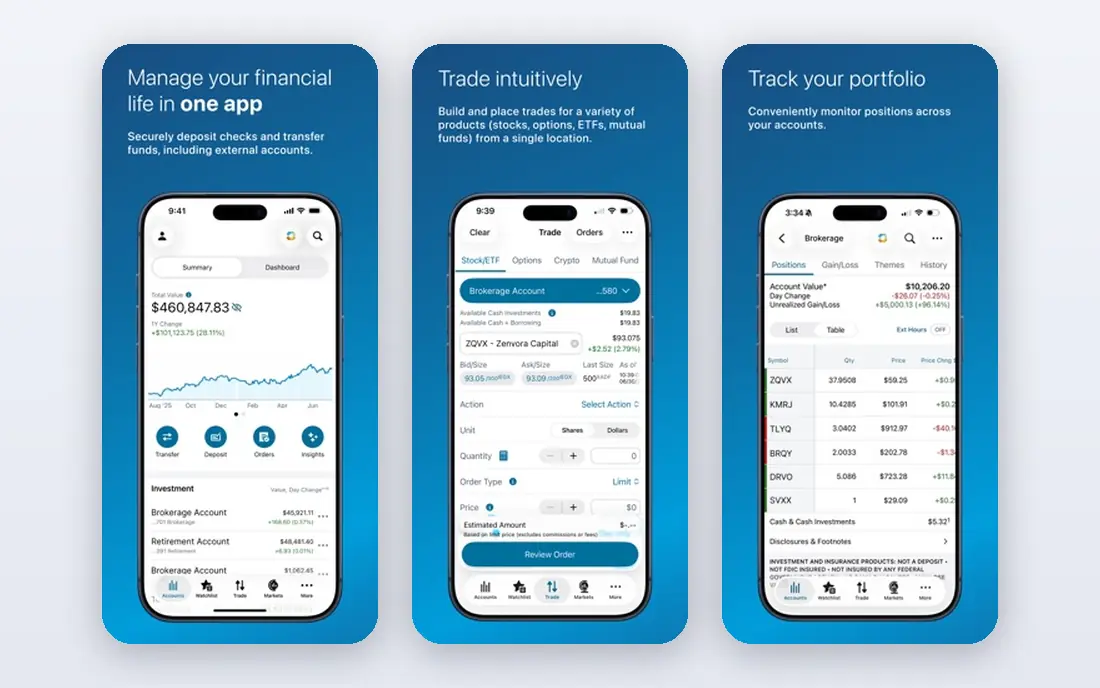
Schwab is our pick for most people who trade actively, because thinkorswim covers charting, options analysis, futures, and paper trading in one account. You can build custom charts, script studies with thinkScript, and practice in paperMoney before risking real money. The learning curve is real, but the depth is the point here.
The catch is that Schwab is a full broker, not a stripped-down trading app, so menus and account types take time to learn. Margin rates are also not the cheapest in this list, so traders who hold large margin balances should compare that cost separately. For stock and options day trading with strong support behind it, Schwab is hard to beat.
- Thinkorswim desktop, web, and mobile at no extra platform fee
- Paper trading through paperMoney
- Wide account and research range
- The platform can feel dense for new traders
- Futures cost $2.25 per contract plus exchange and regulatory fees
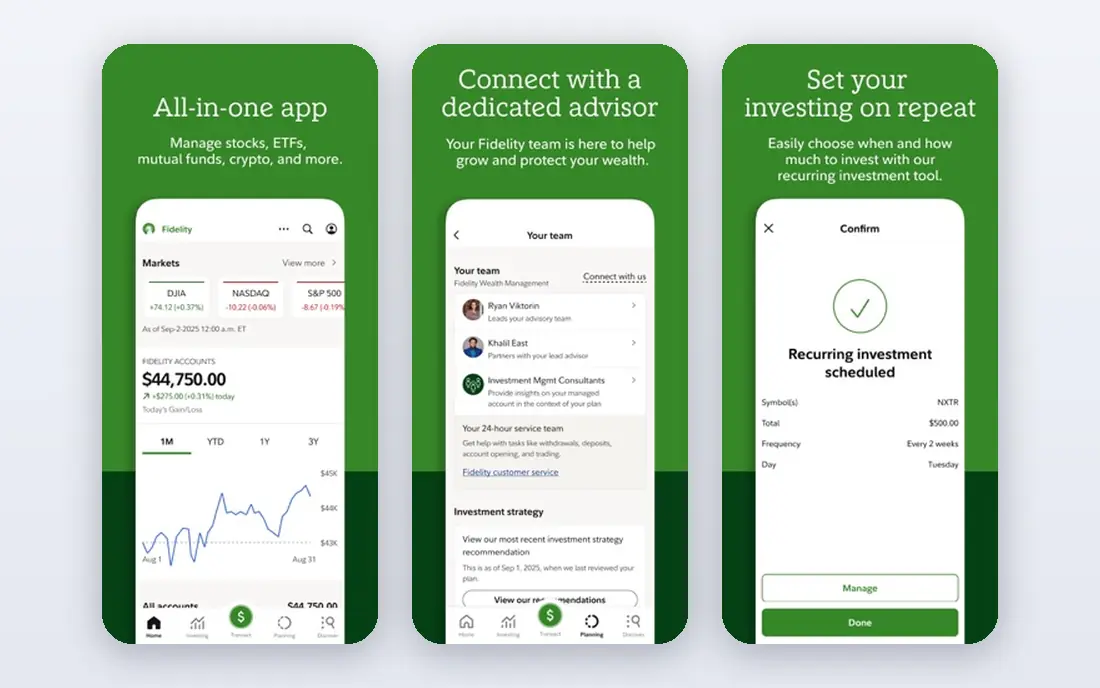
Fidelity suits traders who also want a strong home for retirement and long-term accounts, since the same login covers both. Active Trader Pro gives you Level 2 quotes, advanced order types, and custom layouts, while the web platform stays simpler for quick trades. Research from multiple outside firms is included, which helps when you want a second view before a trade.
The honest trade-off is polish. Fidelity is dependable and well priced, but its desktop platform does not feel as modern as thinkorswim or Webull. If you mainly want a clean mobile day-trading app, another name here may fit better. If you want one broker for trading and investing, Fidelity is a strong default.
- Active Trader Pro desktop platform at no extra charge
- Deep third-party research
- No minimum to open an account
- Active Trader Pro can feel dated next to newer platforms
- No direct spot crypto trading in the main brokerage account for most retail traders
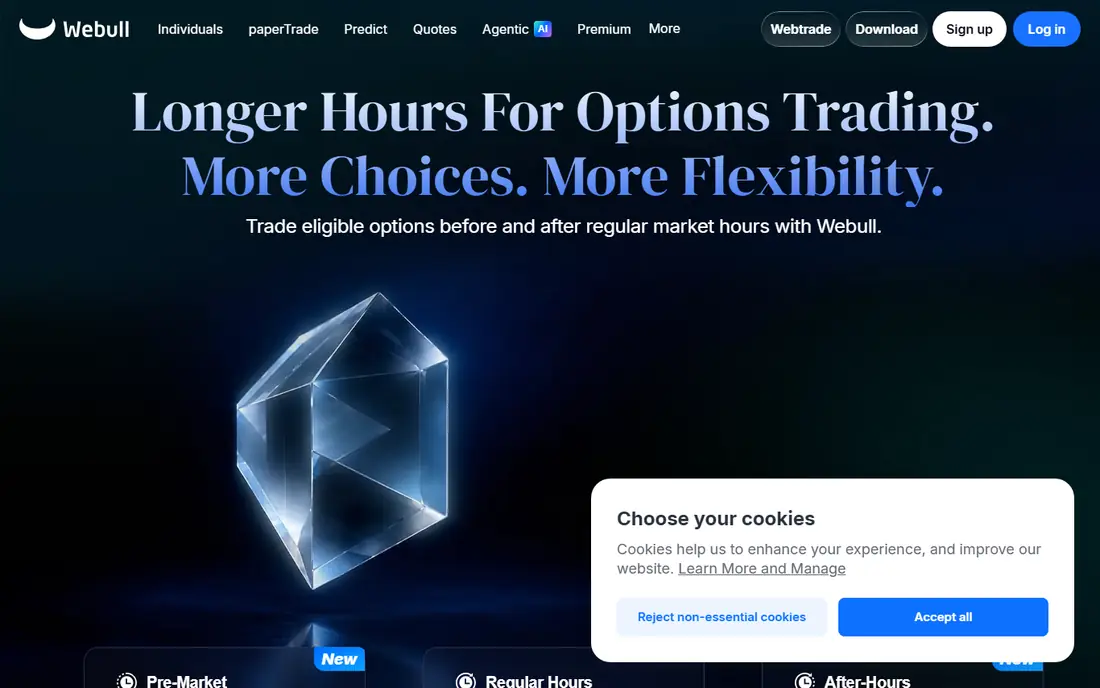
Webull is built for traders who live on their phone or laptop and want pro-style charts without a platform subscription. Its desktop and mobile layouts are customizable, it offers Level 2 and NBBO quotes, and extended hours run from 4 AM to 8 PM Eastern on its published pages. Paper trading lets you test an approach with real-time data before you commit cash.
The weakness is breadth. Webull is less of a full financial home than Schwab or Fidelity, and its research leans more on charts and news than on deep analyst coverage. That matters less if you already know what you want to trade. For fast, low-cost, chart-driven day trading, Webull earns its place.
- $0 commission stock, ETF, and options trading on its published pricing
- Advanced charting with many indicators
- Paper trading and extended hours
- Customer support and research depth trail the large full-service brokers
- Some options trades carry a per-contract regulatory or exchange fee, so check the fee schedule
Interactive Brokers is the platform for traders who outgrow a simple app and want global reach. Its SmartRouting system searches exchanges for execution, and its tiered stock pricing starts at $0.0035 per share for lower monthly volumes and falls as volume rises. Options on the fixed plan are $0.65 per contract, while tiered options range from $0.15 to $0.65 per contract on its published schedule.
The cost of that power is complexity. Setting up Trader Workstation, choosing a pricing plan, and learning its order types takes real time. New traders may prefer a simpler broker first. For high-volume, multi-market, or margin-sensitive traders, Interactive Brokers is often the cheapest serious option once you learn it.
- Access to many global markets
- Tiered pricing that falls with volume
- Low margin rates relative to most US retail brokers
- Trader Workstation has a steep learning curve
- The pricing choice between Lite, fixed, and tiered plans can confuse new accounts
tastytrade was built around options, and its pricing shows it. Stock and ETF options cost $1 per contract to open, capped at $10 per leg, and $0 to close, which helps traders who adjust multi-leg positions often. The platform includes preset strategies, order chains that track every leg, a backtesting tool, and risk analysis that stress-tests a position against price and volatility moves.
The catch is that tastytrade is not trying to be an all-purpose investing app. If you want deep fundamental stock research or mutual funds, look elsewhere. If options are your main day-trading tool, the combination of capped opening commissions and purpose-built options workflows is difficult to match.
- Options to open capped at $10 per leg, $0 to close
- Preset strategies and backtesting tools
- Futures and crypto products in the same platform
- Stock research is thinner than at Schwab or Fidelity
- The interface can feel crowded for beginners
TradeStation is for traders who want to build, test, and automate an idea rather than just place manual trades. EasyLanguage lets you code strategies, RadarScreen scans many symbols at once, and you can trade from TradingView charts through a connected account. US customers trade stocks and ETFs at $0 per trade, and options pricing scales down for multi-leg trades on its published pages.
That depth comes with a learning investment, and the margin rate is a real cost if you borrow. TradeStation also lacks fractional shares, which matters less for day traders than for small long-term investors. If your edge is systematic, TradeStation gives you tools that simpler apps do not.
- EasyLanguage strategy building and backtesting
- Direct TradingView integration
- Extended hours from 6 AM to 8 PM Eastern
- Margin lending starts at 11.75 percent on its published equities page, which is high
- The platform rewards time spent learning it
ETRADE, from Morgan Stanley, sits in the middle of this list on purpose. It is simpler to start with than TradeStation or Interactive Brokers, yet Power ETRADE gives active traders advanced charts, screeners, and options tools. Stock, ETF, and mutual fund trades online are $0, and frequent traders get a lower options rate, which rewards active accounts.
The trade-off is that E*TRADE does not lead any single category. Its futures pricing trails NinjaTrader and tastytrade, and its research, while solid, is not as deep as Fidelity. For traders who want a dependable, well-supported platform without specialist complexity, that middle ground is the appeal.
- Power E*TRADE web and mobile platforms for active traders
- $0.50 per options contract for customers with 30 or more trades in a quarter
- 24/7 phone support
- No physical branches, so support is remote
- Futures cost $1.50 per contract, which is higher than some specialists here
moomoo appeals to cost-focused traders who want a modern app with serious charting. It offers more than 100 technical indicators, Level 2 data under its published conditions, and trading windows that cover pre-market, after-hours, and overnight sessions. Equity options carry no contract fee on its US pricing page, which is a clear saving for frequent options traders.
The catch is in the details. Index options are not free, and some Level 2 access depends on account conditions, so read the pricing page for your account type. Support and account breadth also feel narrower than Schwab or Fidelity. If low options cost and a fast mobile and desktop app matter most, moomoo is worth a close look.
- $0 commission and $0 contract fees for US equity options on its published pricing
- Free Level 2 data with qualifying account conditions
- Extended and overnight trading windows
- Index options carry a $0.50 per contract fee
- Research and banking breadth trail the largest US brokers
NinjaTrader is different from every other name here, because it is futures only. That focus is its strength. The free plan charges $0.39 per side on micro futures and $1.29 per side on standard contracts, while a $99 per month plan lowers those to $0.29 and $0.99, and a $1,499 lifetime plan lowers them further. You also get market replay, advanced order flow tools, and unlimited simulated trading.
The limit is obvious. If you also day trade stocks or options, you will need a second broker. Futures borrowing also means losses can exceed your initial margin quickly, so position sizing matters more than platform choice. For traders who have chosen futures as their market, NinjaTrader is the most focused tool in this list.
- Free platform for charting, backtesting, and simulated trading with no time limit
- Low micro futures commissions
- Built-in risk tools including ATM strategies
- No stocks or stock options, so it cannot be your only broker if you trade equities
- Exchange, clearing, and NFA fees apply on top of commissions
How we picked these
We compared official feature and pricing pages, app store listings, privacy and account disclosures, and public reviews, and we kept only platforms that are open to US retail traders and work in October 2026. We weighted commissions for stocks, options, and futures, charting and order tools, paper trading, market access, and the honest downsides that show up in user feedback. We did not claim hands-on testing, and we did not rank on marketing claims alone. Prices change, so check the broker fee schedule before you fund an account, and confirm pattern day trader rules if your account is under $25,000.
What to check before you open an account
Start with the market you actually trade, not the platform with the longest feature list. A futures trader needs NinjaTrader or a futures-capable broker, an options trader needs capped or low per-contract fees, and a stock trader needs fast charts, Level 2 data, and a paper trading mode. Next, add up the full cost: commissions, exchange and regulatory fees, data fees, and margin interest if you borrow. A $0 stock commission does not mean a $0 trading day.
Watch the rules that change your costs
Pattern day trader rules apply to margin accounts that day trade stocks, and they generally require $25,000 in equity. Futures do not fall under that same stock rule, which is one reason some traders choose futures, but futures borrowing carries its own risk. Check whether your broker offers a cash account option, how it handles unsettled funds, and what happens if you break a rule. Read the margin disclosure before you turn margin on, and start with position sizes you can explain in one sentence.
Test the workflow before you fund it
Use paper trading to place the exact orders you plan to use live, including stops, brackets, and multi-leg options orders. Check how fast charts load during the open, whether alerts work on mobile, and how easy it is to close a position in a hurry. If a platform feels confusing in practice mode, it will feel worse when a trade moves against you. Choose the platform you can operate calmly, not just the one with the lowest advertised fee.
Sources
- https://www.schwab.com/trading
- https://www.fidelity.com/why-fidelity/trading
- https://www.webull.com/active-trading
- https://www.interactivebrokers.com/en/pricing/commissions-stocks.php
- https://tastytrade.com/
- https://www.tradestation.com/trading-products/stocks/
- https://www.morganstanley.com/press-releases/etrade-no-fee-index-mutual-funds-announcement-morgan-stanley
- https://www.moomoo.com/us/learn/what-is-moomoo-trading-platform
- https://ninjatrader.com/pricing/pricing-faqs/