Best Debt Consolidation Companies in 2026: 8 Companies Compared
By ToolNimba Editorial Team October 28, 2026 10 min read

- Top pick
 SoFi
Large loans with member perks
Starting priceSee websiteCheck out SoFiRead our review - Runner-up
 LightStream
Low rates with no fees
Starting priceSee websiteCheck out LightStreamRead our review - Also great
 Discover
Good credit with no fees
Starting priceSee websiteCheck out DiscoverRead our review
How we researched this
We compared official pricing and feature pages, app store listings, privacy policies and public user reviews. Prices change, so check the provider's site before you pay.
Key takeaways
- A debt consolidation loan replaces several balances with one fixed monthly payment, and it only saves money when the new APR is lower than the weighted APR of the debts it replaces.
- LightStream and Discover stand out for no-fee loans, while SoFi and Upstart cover larger amounts and a wider range of credit profiles.
- Prequalification with a soft credit check lets you compare real offers before a hard inquiry, so get at least three quotes before you accept one.
- Loan terms matter as much as rates: a longer term lowers the monthly payment but usually raises the total interest you pay.
- This is not financial advice. Loan terms vary by credit, income, and state, so compare APRs, origination fees, and late fees line by line.
Quick comparison
| Name | Best for | Starting price | Free plan | |
|---|---|---|---|---|
| SoFi | Large loans with member perks | See website | No | Visit |
| LightStream | Low rates with no fees | See website | No | Visit |
| Discover | Good credit with no fees | See website | No | Visit |
 Upgrade | Direct payment to creditors | See website | No | Visit |
 Happy Money | Credit card debt payoff | See website | No | Visit |
 Upstart | Fair credit and thin files | See website | No | Visit |
 LendingClub | Co-borrowers and joint loans | See website | No | Visit |
 Best Egg | Secured and unsecured choice | See website | No | Visit |
The best debt consolidation companies
Debt consolidation works best when it simplifies your payments and cuts your interest cost at the same time. The eight lenders below all offer personal loans that can be used to pay off credit cards and other unsecured debts, and each one fits a different borrower profile.

SoFi is our pick for borrowers who need a larger loan and want extra support around it. Personal loans run from $5,000 to $100,000 with terms of two to seven years, and published APRs in October 2026 ran from 6.99 percent to 35.49 percent with autopay and member discounts. That range is wide, so your credit profile decides where you land, and prequalification gives you a clearer picture before you commit.
The honest catch is the minimum. If you only need $2,000 to clear a single card, SoFi will not fit, and the origination fee option of 0 to 7 percent can reduce the cash you actually receive. On the plus side, SoFi charges no late fees and no prepayment penalty, and members can access career coaching and financial planning help. For a borrower with strong credit and several high-rate cards, those terms make SoFi a strong first quote.
- Loans up to $100,000
- Same-day funding for many approved borrowers
- Direct payment to creditors available
- $5,000 minimum loan
- Lowest rates require autopay and other discounts
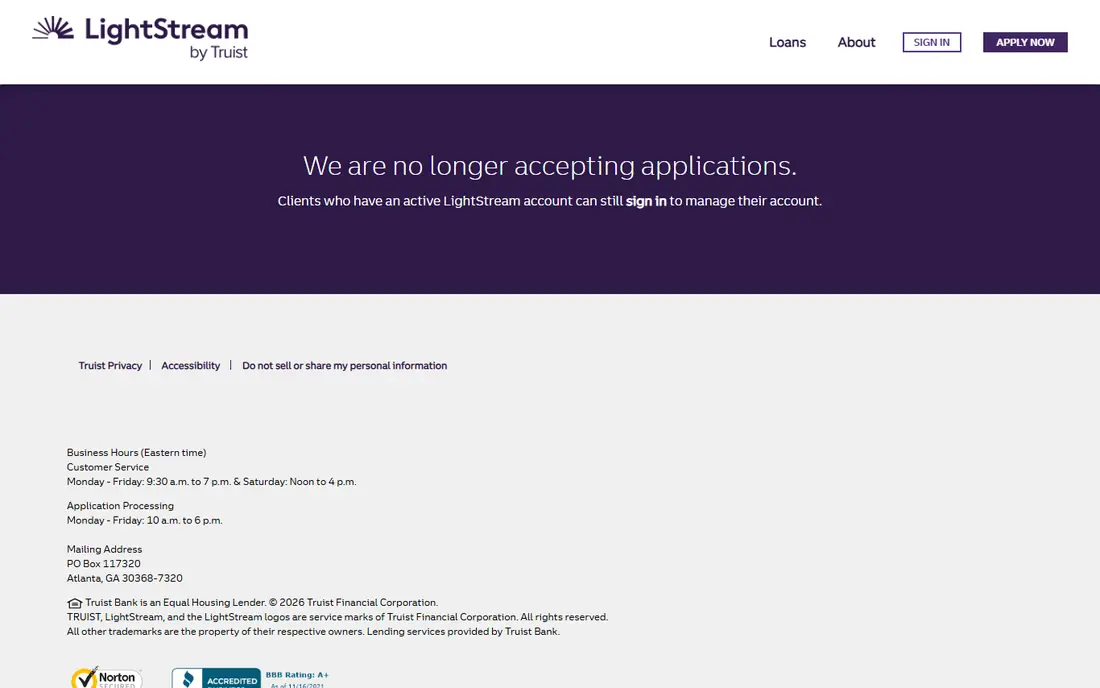
LightStream, the online lending division of Truist, is built around a simple promise: no fees. Published APRs in 2026 started around 6.49 percent with autopay and ran to 24.89 percent, with loan amounts from $5,000 to $100,000 and terms that can stretch well beyond the usual five years for some loan purposes. For a borrower with good to excellent credit, that combination of a low starting rate and zero fees is hard to beat.
The trade-off is access. LightStream tends to favor borrowers with strong credit histories and stable income, so applicants with fair credit may get a better offer elsewhere. Funding can also take a day or more depending on verification. If you qualify, though, the math is clean: what you borrow is what you get, and early payoff costs nothing extra.
- No origination, late, or prepayment fees
- Loans up to $100,000
- Rate-beat program for qualified borrowers
- Best rates require strong credit
- Same-day funding is not guaranteed for every applicant

Discover personal loans run from $2,500 to $40,000 with terms of 36 to 84 months and published APRs from 6.99 percent to 24.99 percent. That makes Discover a practical middle ground: a lower ceiling than SoFi or LightStream, but a clean fee structure and a direct-payment option that sends money straight to your card issuers within one business day of approval in many cases.
The limits to watch are income and use. Discover requires at least $25,000 in individual or household income, and it will not let you use the loan to pay off a Discover or Capital One balance directly. If your debt sits with other issuers and your balance fits under $40,000, Discover is one of the safest no-fee choices on this list.
- No origination, late, or prepayment fees
- Direct payment to card issuers
- Strong customer satisfaction record
- Minimum household income of $25,000
- Loan proceeds cannot pay Discover or Capital One cards directly
Upgrade is a good fit when you want the lender to handle payoff for you. Loans run from $1,000 to $50,000, and published APRs in October 2026 ran from about 7.74 percent to 35.99 percent with autopay. Borrowers who let Upgrade pay creditors directly and sign up for autopay can qualify for rate discounts, which helps when the goal is to close cards for good rather than free up spending room.
The catch is fees. Upgrade may charge an origination fee, deducted from the loan amount, so a $20,000 loan may arrive as less than $20,000 in usable payoff funds. Check the funded amount, not just the approved amount, before you sign. For borrowers with fair to good credit who value the direct-pay feature, Upgrade still earns a place near the top.
- Loans from $1,000
- Direct payment to creditors
- Rate discount for direct payoff and autopay
- Origination fee can apply
- Top APRs are high for weaker credit
Happy Money focuses on one job, and that focus shows in its process. Its Payoff Loan is designed to pay credit card balances directly, with amounts from $5,000 to $50,000 and published APRs from about 8.95 percent to 35.99 percent. Borrowers who are consolidating cards, rather than funding a renovation or a wedding, get a lender that understands that exact goal.
The limitation is scope. If you also want to consolidate a medical bill or a personal loan from another lender, Happy Money may not cover it in the same way. An origination fee can also apply, so compare the APR, which includes fees, rather than the interest rate alone. For pure card consolidation, it remains a strong, focused option.
- Built specifically for credit card payoff
- Direct payment to creditors
- Loans up to $50,000
- Not suited to other loan purposes
- Origination fee may apply
Upstart uses more than a credit score when it underwrites a loan, including education and job history, which can help borrowers with a short credit file. Loans run from $1,000 to $75,000 with terms of three or five years and published APRs from about 6.2 percent to 35.99 percent. That model makes Upstart worth a quote when traditional lenders turn you down or quote a very high rate.
The downside is cost at the top end. Origination fees can reach 12 percent, and the fixed term choices leave less room to stretch a payment. A borrower who qualifies for a low fee and a low APR can still do well here, but anyone facing a double-digit origination fee should run the total cost against a balance transfer card or a credit union loan first.
- Considers education and employment history
- Loans up to $75,000
- Fast funding for many borrowers
- Origination fee up to 12 percent
- Only three- or five-year terms
LendingClub lets two people apply together, which can help when one borrower has stronger credit or income than the other. Personal loans run from $1,000 to $60,000 with published APRs from about 6.53 percent to 35.99 percent, and borrowers can earn a rate discount by using autopay and direct payment to creditors. That structure suits couples or household partners tackling shared card debt.
Origination fees are the main drawback, and they come out of the loan proceeds, so the payoff amount needs careful checking. Funding also tends to take a few business days rather than hours. If a joint application meaningfully improves your rate, those trade-offs are often worth it.
- Joint applications allowed
- Rate discount with autopay and direct payoff
- Loans up to $60,000
- Origination fee may apply
- Funding can take several days
Best Egg offers both unsecured personal loans and a secured option backed by a fixture in your home, which can lower the rate for borrowers who are comfortable with that structure. Unsecured loans run from $2,000 to $50,000 with published APRs from about 6.99 percent to 35.99 percent, and direct payment to creditors is available on many loans. That flexibility helps borrowers who sit between good and fair credit.
The secured route deserves caution. Pledging home fixtures carries real risk if you cannot repay, so only consider it when the rate saving is large and your income is stable. The unsecured version, with an origination fee to check, is the safer default for most card consolidation.
- Secured loan option for lower rates
- Loans from $2,000
- Direct payment to creditors
- Origination fee may apply
- Top APRs are high
How we picked these
We compared official lender pages, published APR ranges, loan amounts, term lengths, fee schedules, and direct-pay options, plus third-party roundups from Bankrate and Money for October 2026. We favored lenders with clear fee disclosure, a direct-payment option, and a track record of funding personal loans for debt payoff. We excluded lead-generation sites that do not lend directly and lenders whose terms could not be confirmed from a lender page or a current review.
What to check before you accept a loan
Start with the APR, not the advertised interest rate, because APR includes most fees and gives a truer cost comparison. Then check the funded amount after any origination fee, the monthly payment at the term offered, and the total interest over the full term.
Compare three offers side by side
Prequalify with at least three lenders using soft credit checks, then line up APR, term, monthly payment, and total cost in one sheet. A lower monthly payment on a longer term can cost thousands more in interest, so do not pick on payment alone.
Decide on direct payment
Direct payment to creditors closes the old balances for you and removes the temptation to spend the loan funds elsewhere. If your lender does not offer it, plan to pay each card the same day the loan funds arrive and confirm each balance hits zero.
Watch for new card spending
Consolidation only works if the old cards stay paid down. Consider keeping one card open for emergencies with a low limit, freezing the others, and building a small cash buffer before you take on a new fixed payment.