Best Debt Relief Companies in 2026: 10 Companies Compared
By ToolNimba Editorial Team October 28, 2026 12 min read

- Top pick
 National Debt Relief
Best overall settlement
Starting price15% to 25% of enrolled debtCheck out National Debt ReliefRead our review - Runner-up
 Freedom Debt Relief
Large debts
Starting price15% to 25% of enrolled debtCheck out Freedom Debt ReliefRead our review - Also great
 Accredited Debt Relief
Larger debts, lower minimum
Starting price15% to 25% of enrolled debtCheck out Accredited Debt ReliefRead our review
How we researched this
We compared official pricing and feature pages, app store listings, privacy policies and public user reviews. Prices change, so check the provider's site before you pay.
Key takeaways
- Debt settlement can reduce what you owe, but it usually hurts your credit for years and is not right for everyone.
- Nonprofit credit counseling is the safer first step for many people, with lower monthly fees and less credit damage.
- National Debt Relief and Freedom Debt Relief are the largest settlement companies, with fees of 15% to 25% of enrolled debt.
- Accredited Debt Relief and CuraDebt accept lower minimum debts, which helps people with smaller balances.
- Never pay upfront fees for settlement, and get every fee, timeline, and tax consequence in writing before you enroll.
Quick comparison
| Name | Best for | Starting price | Free plan | |
|---|---|---|---|---|
| National Debt Relief | Best overall settlement | 15% to 25% of enrolled debt | Free consultation | Visit |
| Freedom Debt Relief | Large debts | 15% to 25% of enrolled debt | Free consultation | Visit |
| Accredited Debt Relief | Larger debts, lower minimum | 15% to 25% of enrolled debt | Free consultation | Visit |
 CuraDebt | Smaller debts and tax debt | 15% to 23% of enrolled debt | Free consultation | Visit |
 Pacific Debt Relief | Personalized settlement help | 15% to 25% of enrolled debt | Free consultation | Visit |
 ClearOne Advantage | Overall savings focus | 18% to 29% of enrolled debt | Free consultation | Visit |
 Americor | Settlement and loan options | 14% to 29% of enrolled debt | Free consultation | Visit |
 JG Wentworth | Wide availability | 18% to 25% of enrolled debt | Free consultation | Visit |
 Money Management International | Nonprofit debt management | $0 to $50 per month | Free consultation | Visit |
 GreenPath Financial Wellness | Nonprofit counseling | $25 to $50 per month | Free consultation | Visit |
The best debt relief companies
These companies cover for-profit settlement and nonprofit debt management plans, so read the type carefully before you compare fees.
Please note: this is not financial advice. Debt settlement usually requires you to stop paying creditors while you save in a special account, which can damage your credit score, lead to collection calls and lawsuits, and leave forgiven debt taxable as income in some cases. A nonprofit credit counselor or a licensed financial adviser can help you compare settlement, a debt management plan, and other options for your situation.
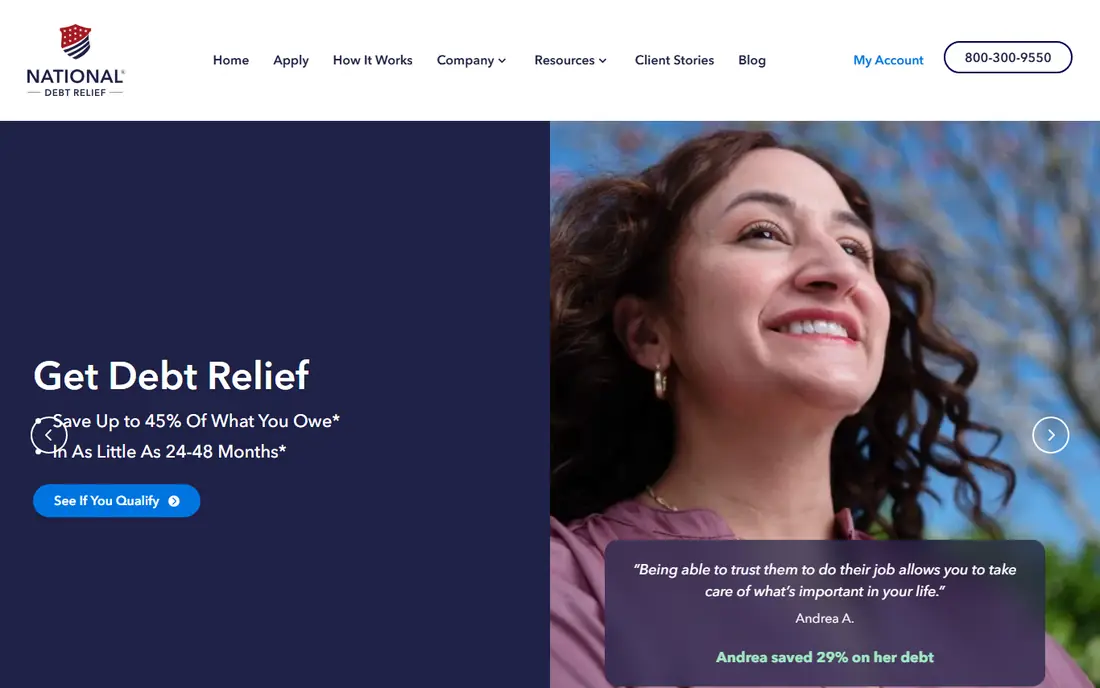
National Debt Relief is our pick for most people who have decided settlement is the right path. It is the largest dedicated settlement firm in the United States, which means its negotiators deal with major card issuers daily. Fees of 15% to 25% of enrolled debt are paid only as settlements are reached, not upfront, which is the legal standard to expect from any settlement company.
The minimum enrolled debt is $7,500, and programs typically run 24 to 48 months. That timeline and the credit damage that comes with missed payments mean settlement should be a considered choice, not a quick fix. If your debt is smaller, or you can afford full payments with lower interest, a nonprofit plan below may serve you better.
- Largest dedicated settlement company
- No upfront fees, fees paid as settlements are reached
- Wide creditor coverage
- Minimum debt of $7,500
- Settlement hurts credit in the short term
- Not available in every state
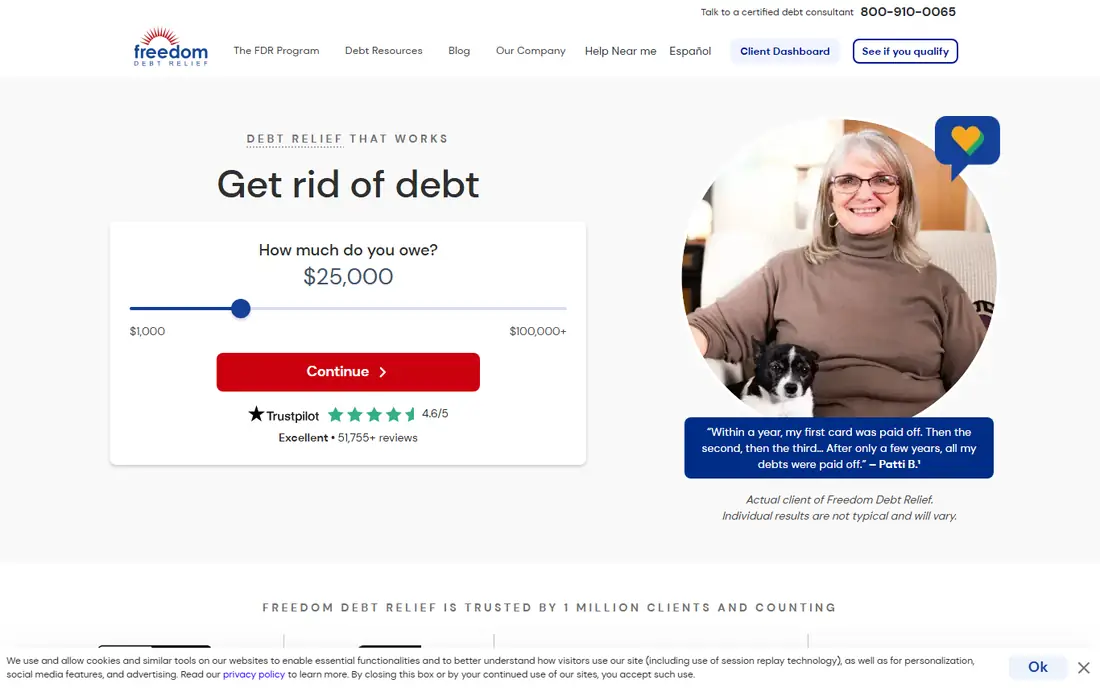
Freedom Debt Relief, now part of Achieve, is the other giant in settlement, with a long operating history and broad creditor coverage. For straightforward credit card and personal loan balances, especially larger ones, that scale matters, since negotiators know what each creditor typically accepts. Fees match the industry range at 15% to 25% of enrolled debt.
Freedom does not cover tax debt, so people with IRS or state tax balances need CuraDebt or another specialist. Program length is typically 24 to 48 months, and credit damage is similar to other settlement firms. If you have a large unsecured balance and want an experienced firm, Freedom is a strong first call alongside National Debt Relief.
- Operating since 2002
- Deep creditor coverage
- Strong for balances above $15,000
- Minimum debt of $7,500
- No tax-debt lane
- Not available in every state
Accredited Debt Relief stands out for its lower $5,000 minimum, which opens settlement to people who do not meet the $7,500 or $10,000 minimums elsewhere. It accepts most unsecured debts, including credit cards, medical bills, personal loans, and some collection accounts, and recent guides list it as available in all 50 states.
Be careful with wording. Accredited sometimes describes its product as consolidation, but debt settlement is not consolidation. Consolidation pays the original debt in full with a new loan or balance transfer, while settlement negotiates a lower payoff and usually involves missed payments. Ask for the exact product, fees, and timeline in writing before you sign.
- Minimum debt of $5,000
- Accepts credit cards, medical bills, and personal loans
- Available in all 50 states in recent guides
- Marketing sometimes calls settlement consolidation, which is a different product
- Fees are still 15% to 25% of enrolled debt
CuraDebt is the best pick in this list if tax debt is part of the problem. Many settlement firms handle only credit cards and loans, while CuraDebt also works on IRS and state tax debt, which often needs a different approach. The $5,000 minimum also helps people with smaller balances who still need structured help.
Fees of 15% to 23% of enrolled debt sit slightly below the top of the industry range, but the total cost still depends on how much debt is settled and over how long. Tax debt cases can be complex, so ask how CuraDebt handles penalties, interest, and payment plans with tax authorities, not just card issuers, before enrolling.
- Minimum debt of $5,000
- Tax debt assistance alongside settlement
- Fees at the lower end of the industry range in some cases
- Smaller firm than National or Freedom
- Program still runs 24 to 48 months
- Credit impact is the same as other settlement firms
Pacific Debt Relief focuses on personalized settlement programs for unsecured debt, with a $10,000 minimum in recent guides. Clients get a dedicated program view and guidance through the saving and negotiation stages, which can help when the process feels long and uncertain. Fees run 15% to 25% of enrolled debt, paid as settlements are reached.
The $10,000 minimum rules out smaller balances. Pacific is a good fit if you have at least $10,000 in unsecured debt and want a more personal service style.
- Personalized program guidance
- Minimum debt of $10,000
- Clear settlement focus on unsecured debt
- Higher minimum than Accredited or CuraDebt
- Fees match the industry range
- Credit damage applies as with all settlement
ClearOne Advantage positions itself on savings after fees, which is the number that actually matters. A low fee on a poor settlement can cost more than a higher fee on a strong settlement, so ask any firm for its expected settlement range and fee total together, not just the fee percentage. ClearOne fees of 18% to 29% of enrolled debt are at the higher end, so that comparison matters here.
The minimum is $10,000, and programs run 24 to 48 months in most cases. ClearOne suits people who want a savings-focused pitch and have a larger balance. Before choosing it over a cheaper-fee rival, compare the estimated total cost, including fees, over the full program, not just the headline percentage.
- Focus on total savings after fees
- Minimum debt of $10,000
- Structured settlement program
- Fees run higher than some rivals at 18% to 29%
- Higher minimum
- Settlement credit damage still applies
Americor offers both settlement and consolidation loan options, which can help people who qualify for a loan but are not sure which path fits. Settlement fees run 14% to 29% of enrolled debt, with the low end below many rivals, though your actual fee depends on your debts, creditors, and state. The minimum is $7,500.
A consolidation loan differs from settlement: you borrow to pay debts in full and pay interest on the new loan. Ask Americor to show both options side by side, with total cost and credit impact, before you choose.
- Fee range starts lower than many rivals at 14%
- Minimum debt of $7,500
- Offers consolidation loans alongside settlement
- Fee range is wide, up to 29%
- Loan options add interest cost if you borrow
- Not available in every state
JG Wentworth is known for structured settlements and lump sums, and its debt resolution arm offers settlement programs in many states, with West Virginia noted as an exception in recent guides. Wide availability matters if you live in a state where smaller firms do not operate, and the brand is easy to research.
The minimum is around $10,000, fees run 18% to 25% of enrolled debt, and some programs run longer than the typical 24 to 48 months. A longer program means more months of missed payments and credit impact, so ask for the expected timeline for your specific debts. If availability is your main constraint, JG Wentworth is worth a consultation.
- Wide state availability
- Well-known brand
- Settlement and resolution programs for larger debts
- Minimum debt around $10,000
- Fees of 18% to 25%
- Programs can run 48 to 60 months in some cases
Money Management International
Best for: Nonprofit debt management
Money Management International, or MMI, is the nonprofit option to try before settlement. As an NFCC member, it offers a free counseling session that produces a budget and a debt management plan quote. In a plan, MMI negotiates lower interest and waived fees with creditors, and you make one monthly payment to MMI, which pays creditors in full over time.
Because you repay the full principal, credit damage is usually far less than settlement, though you must close enrolled cards and the plan takes years. Fees are state-capped, often $0 to $50 per month, and waived for hardship in some cases. If you can afford a full repayment with lower interest, MMI is a safer, cheaper path than any settlement firm here.
- Nonprofit NFCC member
- Free first counseling session
- Debt management plan fees are state-capped, often $0 to $50 per month
- Plans cover unsecured debt only
- You must close enrolled cards
- Interest savings depend on creditor agreements
GreenPath Financial Wellness is another nonprofit NFCC member, and a strong second nonprofit option alongside MMI. Counseling can help you build a budget, understand options, and decide whether a debt management plan fits, without the credit damage of settlement. Plan fees run $25 to $50 per month in recent guides, depending on state and plan.
GreenPath also offers housing counseling and wider financial wellness services, which helps if debt is tied to housing costs or a broader budget problem. Like MMI, its plans cover unsecured debt, and you will usually close enrolled cards during the plan. For many readers, a GreenPath or MMI consultation should come before any settlement firm.
- Nonprofit NFCC member
- Counseling and debt management plans
- Housing and financial wellness services alongside debt help
- Monthly plan fees of $25 to $50
- Plans cover unsecured debt only
- Enrolled cards must usually be closed
How we picked these
We compared company fee disclosures, minimum debt requirements, program lengths, and recent debt relief guides, and we checked that each company homepage loads and belongs to the company named. We included both for-profit settlement firms and nonprofit credit counselors because the right type depends on income, debt size, and credit goals. We favored firms with clear fee ranges, no upfront settlement fees, and wide availability, and we left out firms with no published fee or minimum information. Fees and availability change by state, so confirm both directly with the company before enrolling.
Settlement versus a debt management plan
Settlement aims to pay less than you owe, by negotiating lump sums after missed payments, and it usually damages credit for years. A debt management plan repays the full amount, often at lower interest, through a nonprofit counselor, and it usually damages credit far less. Settlement can make sense when hardship is severe and bankruptcy is the alternative. A plan makes sense when you can afford full repayment if interest drops.
Questions to ask before you enroll
Ask for the total fee in dollars, not just a percentage, the expected program length, which debts are included, and what happens if a creditor sues or refuses to settle. Ask whether forgiven debt may be taxable, and get the answers in writing. If a company asks for fees before it settles a debt, charges a monthly fee that is not explained, or promises a specific savings amount, walk away and get a second opinion.
Cheaper steps to try first
Call creditors directly and ask about hardship programs, lower rates, or payment plans, since some will help without a third party. Check a nonprofit counselor for a free session, and review your budget for subscriptions and costs you can cut for a few months. If debt is unmanageable even after those steps, settlement or bankruptcy advice from a licensed professional may be the honest next step.
Sources
- https://www.nationaldebtrelief.com
- https://www.freedomdebtrelief.com
- https://www.accrediteddebtrelief.com
- https://www.curadebt.com
- https://www.pacificdebt.com
- https://www.clearoneadvantage.com
- https://www.americor.com
- https://www.jgwentworth.com
- https://www.moneymanagement.org
- https://www.greenpath.com
- https://www.financialist.com/guides/best-debt-relief-companies
- https://www.nerdwallet.com/personal-loans/learn/best-debt-settlement-companies