Best Email Marketing Platforms in 2026: 9 Platforms Compared
By ToolNimba Editorial Team October 28, 2026 10 min read

- Top pick
 Mailchimp
Small businesses starting out
Starting price$13 per monthCheck out MailchimpRead our review - Runner-up
 Klaviyo
Ecommerce stores
Starting price$20 per monthCheck out KlaviyoRead our review - Also great
 Brevo
Large lists, low send volume
Starting price$9 per monthCheck out BrevoRead our review
How we researched this
We compared official pricing and feature pages, app store listings, privacy policies and public user reviews. Prices change, so check the provider's site before you pay.
Key takeaways
- Mailchimp remains the easiest all-round start for small lists, with a free plan and paid plans from $13 per month.
- Klaviyo is the strongest pick for online stores, thanks to deep Shopify data and behaviour-based flows, but it gets pricey as lists grow.
- Brevo is the best value for large lists that send rarely, because it charges by emails sent rather than by contacts.
- MailerLite and Sender-style free plans suit tight budgets, but check send limits before you import a large list.
- The cheapest headline price is rarely the cheapest total cost, since contact counting, SMS credits and add-ons change the bill fast.
Quick comparison
| Name | Best for | Starting price | Free plan | |
|---|---|---|---|---|
| Mailchimp | Small businesses starting out | $13 per month | Yes | Visit |
| Klaviyo | Ecommerce stores | $20 per month | Yes | Visit |
| Brevo | Large lists, low send volume | $9 per month | Yes | Visit |
 MailerLite | Clean, affordable newsletters | $10 per month | Yes | Visit |
 ActiveCampaign | Advanced automation and CRM | $19 per month | Free trial | Visit |
 Constant Contact | Simple campaigns and events | See website | Free trial | Visit |
 Omnisend | Stores needing email plus SMS | $16 per month | Yes | Visit |
 GetResponse | All-in-one marketing suite | $19 per month | Free trial | Visit |
 Kit | Creators selling digital products | $33 per month | Yes | Visit |
The best email marketing platforms
The best email marketing software is the one that fits your list size, your send frequency and your store or website. A creator with 500 subscribers needs a different tool than a store sending weekly campaigns to 50,000 buyers. We compared official pricing pages, free plan limits and automation features, plus public reviews, to build this list.
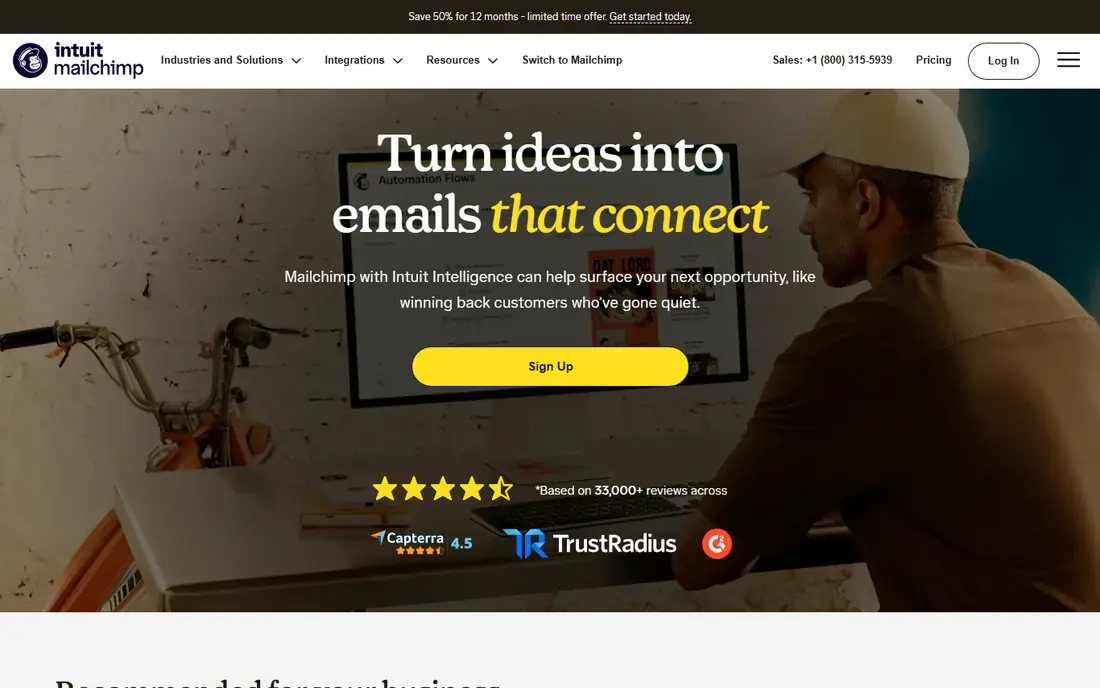
Mailchimp is our pick for most people sending their first newsletter. Setup is guided, templates look good without design skill, and it connects to most website builders, stores and forms. The free plan lets you learn the basics before you pay.
The limits matter as your list grows. Mailchimp counts contacts in a way that can push you into a higher tier sooner than expected, and multi-step automation needs a paid plan. For a small, steady list, it is still the simplest safe choice.
- Huge template library
- Wide integration list
- Friendly setup for beginners
- Free plan is limited
- Costs rise with contacts
- Advanced automation sits on higher plans
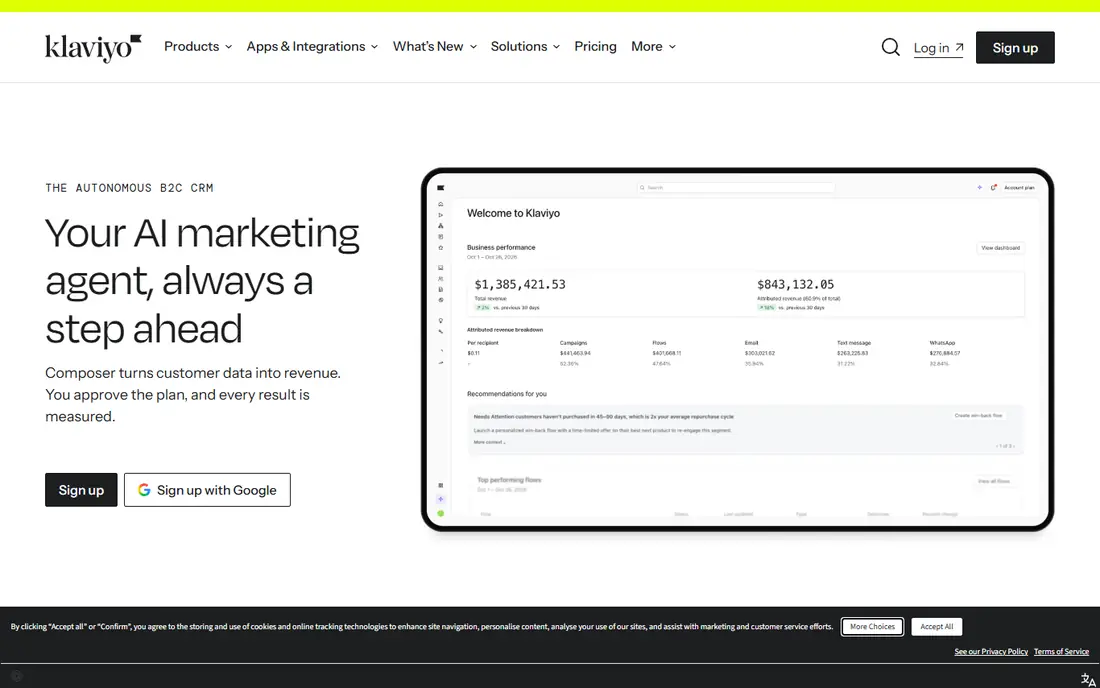
Klaviyo is built for stores that live on email revenue. It pulls purchase history, browsing and product data into segments, then triggers flows for welcome series, abandoned carts and win-back campaigns. For a store doing regular sales, that depth often pays for itself.
Small senders should weigh the cost. The free plan covers up to 250 profiles, and paid pricing rises with active profiles and SMS use. If email is a side channel rather than a main sales channel, a cheaper general tool may fit better.
- Deep Shopify and store data
- Strong flows for abandoned carts and post-purchase
- Predictive analytics
- Price climbs fast at scale
- Learning curve is steeper
- SMS adds extra cost
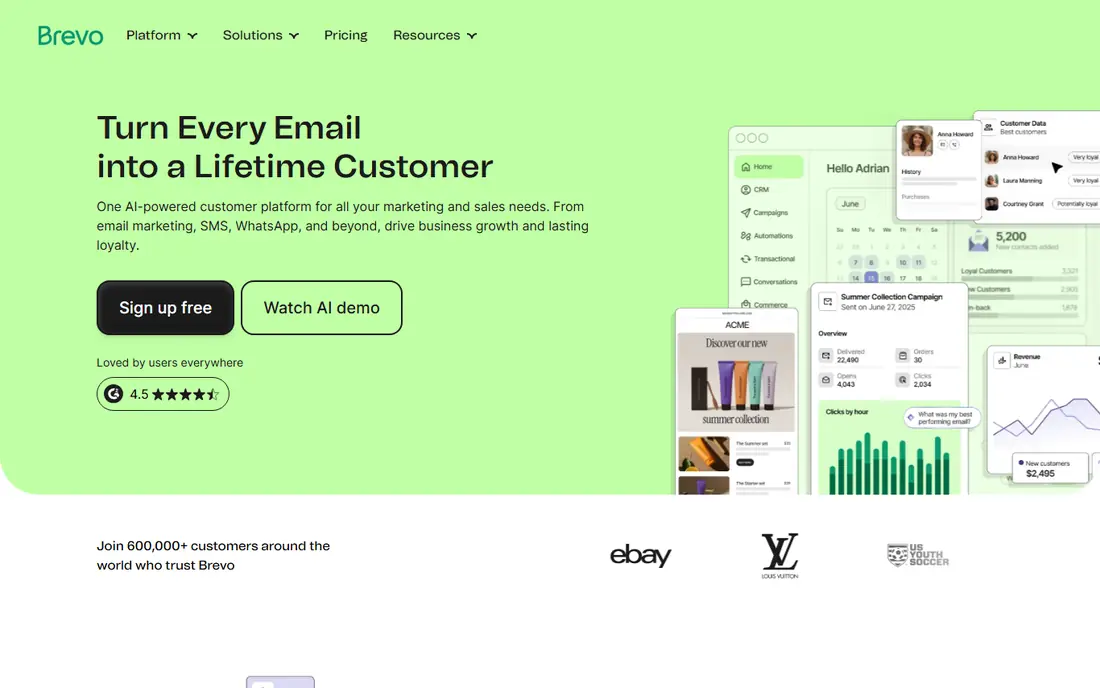
Brevo, formerly Sendinblue, suits businesses with a big list that sends only a few times a month. Because you pay for email volume, a list of 20,000 contacts that gets one monthly newsletter can cost far less than on a per-contact platform. It also adds SMS, chat and a basic CRM in the same account.
Design lovers may find templates and the editor less refined. Reporting is solid for campaigns but less deep for complex customer journeys. For cost control on large, quiet lists, Brevo is hard to beat.
- Charges by emails, not contacts
- Includes SMS and chat options
- Generous free plan
- Templates feel less polished than Mailchimp
- Automation depth trails ActiveCampaign
- Branding on free plan
MailerLite is the calm option in a crowded market. The editor is clean, automation is easy to follow, and pricing stays friendly for newsletters, blogs and small businesses. Many users pick it after finding larger tools too busy or too costly for simple campaigns.
It is not an ecommerce powerhouse. Store integrations and predictive tools are thinner than Klaviyo, and new accounts go through an approval step that can slow a first launch. If your main job is a regular newsletter, MailerLite is a strong, low-friction pick.
- Simple, tidy interface
- Automation on the free plan
- Good value for small teams
- Free plan caps contacts and sends
- Fewer ecommerce features than Klaviyo
- Approval process can delay first sends
ActiveCampaign suits teams that want email to do real work, not just send blasts. Its automation builder handles branching journeys, lead scoring and CRM updates in one place, which helps service businesses and B2B teams nurture leads over weeks. The recipe library gives you starting points for common flows.
Beginners can feel overwhelmed, and there is no permanent free plan, only a trial. Pricing also grows as you add contacts and features. If you need simple newsletters only, this is more tool than you need. If you need journeys, it earns its price.
- Deep automation builder
- Built-in CRM
- Strong segmentation and scoring
- No free plan
- Learning curve for beginners
- Costs rise with contacts and features
Constant Contact has long served small businesses, nonprofits and local organisations that want email without a learning project. Campaigns, events, surveys and social posts sit in one dashboard, and support is geared to users who are not marketers by trade.
Power users will hit limits. Automation is simpler than ActiveCampaign or Klaviyo, and the price for larger lists can exceed leaner rivals. For a church, club, shop or nonprofit sending regular updates, its simplicity is the selling point.
- Very easy campaign builder
- Event and survey tools
- Helpful support for small businesses
- Automation is basic compared with rivals
- Pricing varies by list and plan
- Fewer advanced ecommerce tools
Omnisend is a practical middle ground for online stores. It combines email, SMS and web push, with ready-made flows for welcome, cart recovery and post-purchase follow-up. Setup for Shopify and WooCommerce stores is quick, and the interface stays friendly.
It is less compelling if you do not sell online, since many features assume a product catalogue and order data. SMS credits are an extra cost to model. For a growing store that wants omnichannel messages without Klaviyo pricing, Omnisend is a smart test.
- Email, SMS and push in one tool
- Strong store automation
- Easy pre-built workflows
- Less suited to non-store senders
- Reporting depth trails Klaviyo
- SMS costs add up
GetResponse appeals to marketers who want more than email in one subscription. Landing pages, webinars, signup forms and conversion funnels sit beside campaigns, which suits course sellers, bloggers and small agencies. Automation tools cover most common journeys without a separate CRM.
The breadth is also the drawback. Menus can feel crowded, and comparing plans takes care, since features shift between tiers. If you only need email, a simpler tool may be cheaper. If you will use landing pages and webinars too, GetResponse offers good bundled value.
- Email plus landing pages, webinars and funnels
- Solid automation
- Good template range
- Interface can feel busy
- Pricing tiers can confuse
- Free plan is limited
Kit, formerly ConvertKit, is made for writers, podcasters and course creators rather than general businesses. Its visual automation builder maps subscriber journeys clearly, and commerce tools let creators sell digital products and paid newsletters from the same account. Forms and landing pages are quick to launch.
The price is the catch for hobby creators, since paid plans start above MailerLite and Brevo. Design flexibility is also modest compared with Mailchimp. If you earn from an audience and want email plus sales in one place, Kit fits that job well.
- Built for creators and newsletters
- Visual automation builder
- Tools to sell products and paid newsletters
- Paid plans start higher than rivals
- Fewer store features than Klaviyo
- Design options are simpler
How we picked these
We compared official pricing pages, free plan limits and feature lists, and checked them against recent independent comparisons. We kept only platforms that serve US small businesses and creators in October 2026, with real email sending, automation and list tools. We mixed general tools, ecommerce specialists and creator tools so readers can match a platform to their business type.
We did not claim hands-on testing that did not happen. Where a vendor lists several prices by billing period or list size, we used the lowest paid monthly figure most widely reported and noted See website where pricing was unclear. Confirm limits for your list size before you import contacts.
How to choose an email platform
Start with two numbers: how many contacts you have, and how many emails you send each month. A per-contact platform punishes a large, quiet list, while a per-send platform punishes frequent senders. Model your cost at double your current list size, because growth is the moment surprise bills appear.
Next, list the automations you actually need. A welcome series and a cart recovery flow cover most small businesses. If you need branching journeys, lead scoring or a CRM, shortlist ActiveCampaign or Klaviyo. If you need only campaigns and a signup form, save money with MailerLite, Brevo or Mailchimp.
Finally, test deliverability basics before you commit. Set up your domain authentication, import a small clean list, and send to your most engaged subscribers first. A good platform cannot fix a purchased list or a sudden blast to cold contacts, and poor sender habits hurt every tool equally.
Check the free plan fine print
Free plans differ more than headlines suggest. Some cap contacts, some cap monthly sends, and some remove automation, testing or support. Read the limits for contacts, sends, users and branding, then test the exact features you plan to use. A free plan that lacks automation may cost you more time than a cheap paid plan saves in cash.
Plan for growth and SMS
SMS can double a bill if you add it without modelling credits and carrier fees. Decide early if SMS is a core channel or a nice extra, and compare platforms on combined email plus SMS cost, not email alone. Also check how easy it is to export your list and automations, so you are not locked in if prices change.
Sources
- https://www.mailchimp.com
- https://www.klaviyo.com
- https://www.brevo.com
- https://www.mailerlite.com
- https://www.activecampaign.com
- https://www.constantcontact.com
- https://www.omnisend.com
- https://www.getresponse.com
- https://www.kit.com
- https://www.saleshandy.com/blog/email-marketing-tools/
- https://blog.pinpointe.com/best-email-marketing-tools-by-use-case
- https://feedback-studios.com/blog/email-marketing-cost/