Best Food Delivery App in 2026: 8 Apps Compared
By ToolNimba Editorial Team October 28, 2026 8 min read

- Top pick
 DoorDash
Widest US restaurant choice
Starting priceFreeCheck out DoorDashRead our review - Runner-up
 Uber Eats
Variety and global coverage
Starting priceFreeCheck out Uber EatsRead our review - Also great
 Grubhub
Search, filters, and deals
Starting priceFreeCheck out GrubhubRead our review
How we researched this
We compared official pricing and feature pages, app store listings, privacy policies and public user reviews. Prices change, so check the provider's site before you pay.
Key takeaways
- DoorDash has the widest restaurant coverage in the United States, while Uber Eats is strongest for variety and global reach.
- DashPass, Uber One, and Grubhub+ all cost $9.99 per month, so the best value depends on which app you already use most.
- Menu prices, service fees, and delivery fees together decide the final cost, not the subscription alone.
- ChowNow and Slice suit restaurants that want direct ordering with lower commission pressure.
Quick comparison
| Name | Best for | Starting price | Free plan | |
|---|---|---|---|---|
| DoorDash | Widest US restaurant choice | Free | Yes | Visit |
| Uber Eats | Variety and global coverage | Free | Yes | Visit |
| Grubhub | Search, filters, and deals | Free | Yes | Visit |
 Instacart | Grocery and retail delivery | Free | Yes | Visit |
 ChowNow | Direct restaurant ordering | Free | Yes | Visit |
 Slice | Local pizza shops | Free | Yes | Visit |
 Deliveroo | UK and international delivery | Free | Yes | Visit |
 GoPuff | Fast convenience delivery | Free | Yes | Visit |
The best food delivery app apps
Food delivery apps differ on coverage, fees, and what else they deliver. Some focus on restaurants, some add groceries and retail, and some focus on a single category like pizza or convenience items. The best app is usually the one with the restaurants you actually order from, at a total cost you can accept.
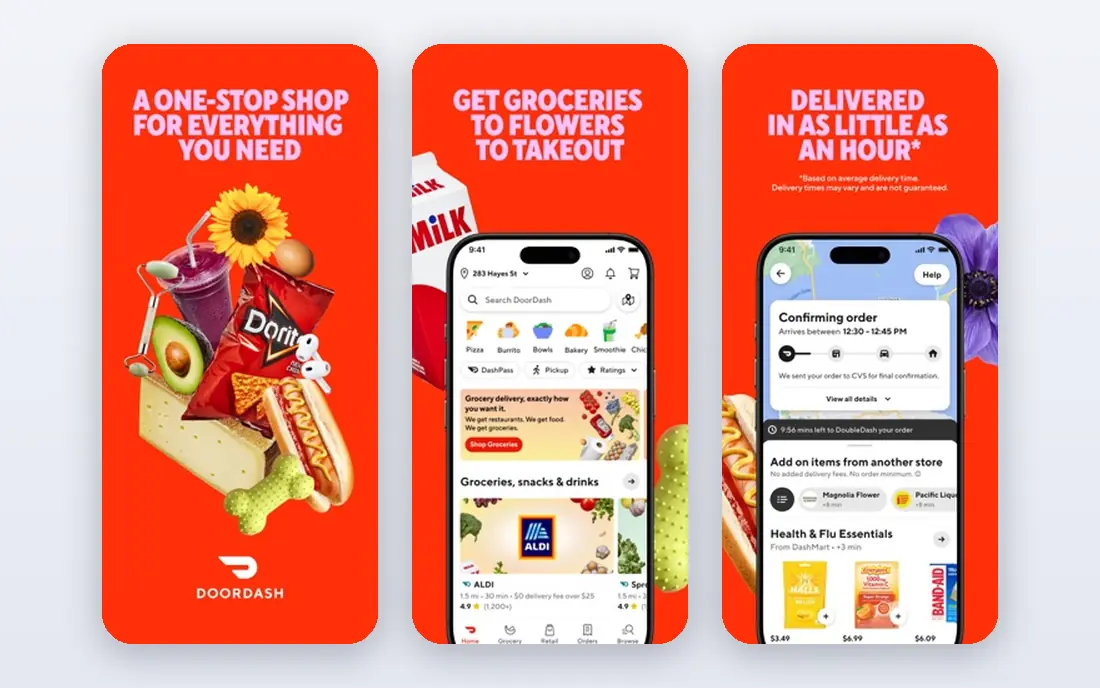
DoorDash is our first pick for most US diners, because it lists the widest range of restaurants in many areas, from national chains to local spots. The app also covers groceries, convenience stores, pet supplies, and retail, so one account handles more than dinner. DashPass, at $9.99 per month, gives $0 delivery fees on eligible orders and other member benefits.
The honest catch is total cost. A delivery order can cost much more than pickup once menu markups, delivery fees, service fees, and tip are added. DashPass helps frequent users, but occasional users should compare the final checkout total across apps before assuming a subscription saves money.
- Very wide US restaurant coverage
- DashPass cuts delivery fees on eligible orders
- Groceries, retail, and convenience also available
- Menu prices and fees can raise the total well above pickup
- Coverage varies outside large cities
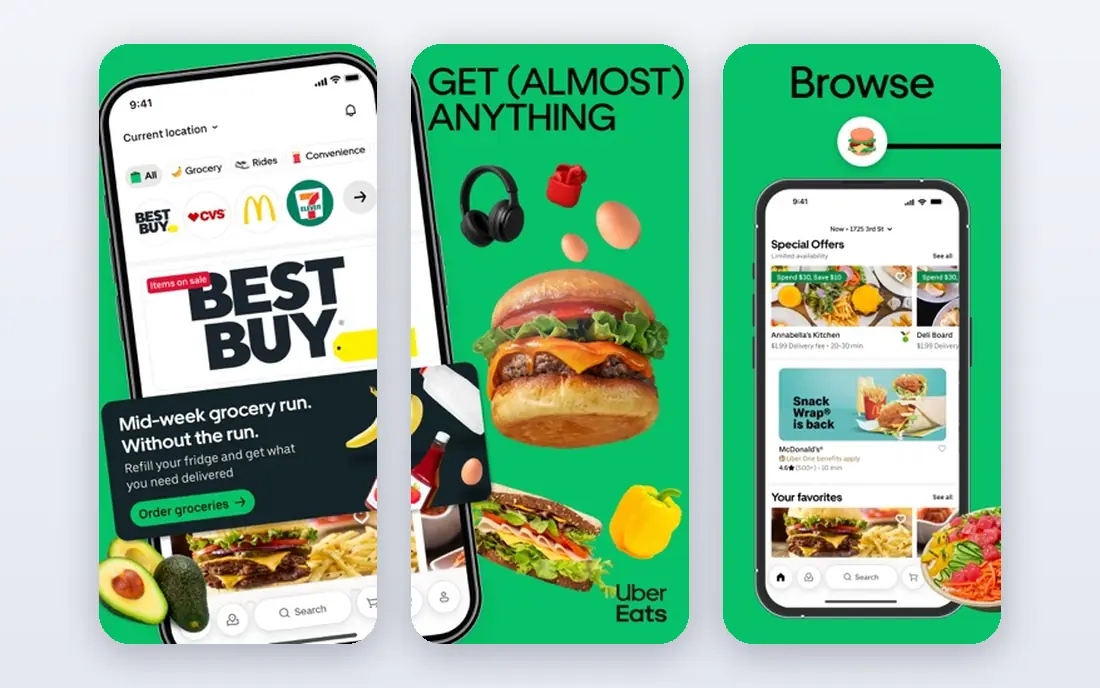
Uber Eats is a strong all-round choice, especially for travelers and city diners who want one app in many places. It covers restaurants, groceries, and convenience items, and its search and deal sections make it easy to find discounts. Uber One, at $9.99 per month, offers $0 delivery fees on eligible orders and other perks across Uber services.
As with DoorDash, the final total matters more than the headline fee. Delivery and service fees change with distance, demand, and restaurant, and tips add more. Uber Eats is best for people who order often enough for Uber One to pay off, or who value its broad coverage.
- Wide restaurant and grocery choice
- Works in many countries
- Uber One bundles delivery and ride benefits
- Fees vary by restaurant and distance
- Some menu prices are higher than in-store prices
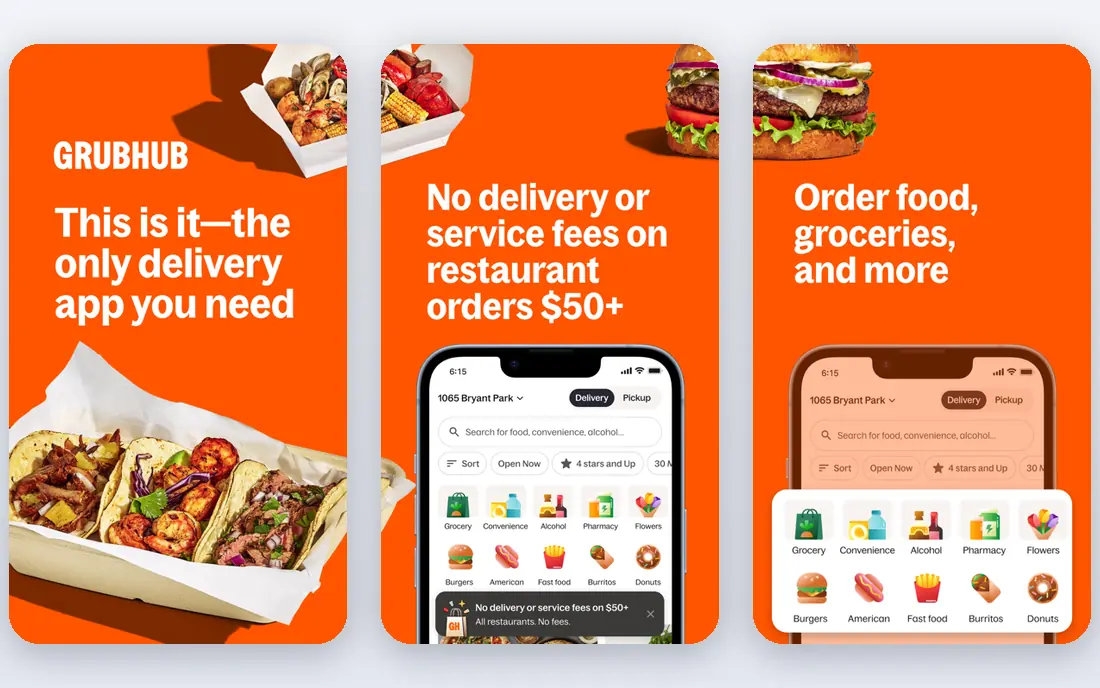
Grubhub has long been a go-to for US diners who want to filter by cuisine, dietary needs, price, and rating. Its deals section and perks program can cut the cost of a regular order, and Grubhub+ at $9.99 per month offers $0 delivery fees on eligible orders. For office lunches and group orders, its filtering saves time.
Coverage is the main limit. In some towns, DoorDash or Uber Eats list more restaurants, so Grubhub works best as a second app to check for a better deal. Compare the same restaurant across apps, since menu prices and fees can differ.
- Strong search and dietary filters
- Frequent deals and perks
- Grubhub+ cuts delivery fees on eligible orders
- Coverage is thinner than DoorDash in some areas
- Fees still apply on many orders
Instacart is the pick when the order is groceries, not a hot meal. It covers major grocery chains, wholesale clubs in some areas, pharmacies, and retail stores, with same-day delivery windows in many cities. Shoppers can message you about replacements, which helps when an item is out of stock.
It is not a direct rival to DoorDash for restaurant dinner, though it does list some prepared foods and retail. Check store pricing, since some stores charge higher prices through Instacart than in-store, and delivery and service fees vary by order size and membership.
- Wide grocery and retail store choice
- Same-day delivery in many areas
- Shopper can message about replacements
- Service fees and markups vary by store
- Restaurant delivery is not its focus
ChowNow takes a different approach: it powers ordering directly for restaurants, rather than running a large marketplace. That often means the restaurant keeps more revenue, and diners may see prices closer to in-store menus. It suits people who already know which local restaurant they want and want to support it directly.
The trade-off is discovery. You will not browse thousands of restaurants in one feed, and delivery availability depends on the restaurant. Use ChowNow for favorite local spots, and a large marketplace when you want to browse or try somewhere new.
- Restaurants keep more of each order
- Direct ordering avoids marketplace markups on many menus
- Pickup and delivery options
- Restaurant choice is smaller than large marketplaces
- Delivery is handled differently by restaurant
Slice is built for one job: ordering from local, independent pizza shops. It lists pizzerias that might be buried on larger apps, makes reordering a favorite pie simple, and often highlights local deals. For pizza night, that focus beats scrolling through a general marketplace.
Its scope is also its limit. Slice does not replace a general delivery app for sushi, salads, or groceries. Keep it as a second app for pizza, especially if you prefer independent shops over national chains.
- Focused on independent pizza shops
- Easy reordering for favorites
- Deals on local pizzerias
- Limited to pizza and related items
- Coverage depends on local shops joining
Deliveroo is the pick for readers outside the United States, especially in the United Kingdom and other markets where it lists a wide range of restaurants. It covers restaurant meals, groceries, and convenience items in many cities, with live tracking from kitchen to door. Its restaurant discovery and deal sections suit regular city diners.
US readers will get less value, since Deliveroo does not operate as a national US marketplace. For those readers, DoorDash, Uber Eats, or Grubhub will list far more local options. Check Deliveroo only if you live in, or travel to, one of its operating countries.
- Strong coverage in UK and many international cities
- Restaurant and grocery options
- Clear order tracking
- US coverage is limited
- Fees vary by restaurant and distance
GoPuff suits late-night and last-minute needs. Instead of restaurant meals, it delivers snacks, drinks, household essentials, and convenience items from its own fulfillment centers, often quickly. That model can beat a grocery app when you need a small basket fast.
It is not a dinner app. GoPuff does not offer the restaurant range of DoorDash or Uber Eats, and its catalog is narrower than Instacart. Use it for convenience top-ups, and a restaurant app for a full meal.
- Fast delivery of snacks, drinks, and essentials
- Late-night availability in many areas
- Simple catalog
- Not for full restaurant meals
- Product range is narrower than grocery apps
How we picked these
We compared official app pages, pricing and subscription pages, app store listings, and public reviews, focusing on apps that are actively available in October 2026. We included large marketplaces, a grocery leader, direct-ordering options, and category specialists, so readers can match an app to how they actually order. Where fees vary by restaurant, distance, or market, we described the range rather than a single total.
How to keep delivery costs down
The app download is free, but the order total is not. Small checks at checkout can save more than a subscription in some months.
Compare the final total, not the delivery fee
A $0 delivery fee does not mean a cheap order. Add menu price, service fee, taxes, and tip, then compare the same items across two apps. Menu markups alone can add more than the delivery fee.
Use subscriptions only if you order often
DashPass, Uber One, and Grubhub+ each cost $9.99 per month. They pay off when you order several times a month from eligible restaurants, but not for a single monthly order. Cancel in months when you cook more.
Try pickup and direct ordering
Pickup removes delivery fees and often uses lower menu prices. For favorite restaurants, check ChowNow or the restaurant own site, since direct orders can be cheaper and leave more revenue with the restaurant.