Best Foraging Apps for Plant Identification in 2026: 8 Apps Compared
By ToolNimba Editorial Team November 13, 2026 10 min read

- Top pick
 PlantNet
Wild plants and citizen science
Starting priceFreeCheck out PlantNetRead our review - Runner-up
 iNaturalist
Community-verified identification
Starting priceFreeCheck out iNaturalistRead our review - Also great
 Seek
Quick free identification with no account
Starting priceFreeCheck out SeekRead our review
How we researched this
We compared official pricing and feature pages, app store listings, privacy policies and public user reviews. Prices change, so check the provider's site before you pay.
Key takeaways
- PlantNet and iNaturalist are the strongest free options for wild plant identification, with scientific backing and community verification.
- PictureThis and PlantSnap are easier for beginners, with care tips and faster answers, but their best features sit behind subscriptions.
- No app is reliable enough on its own to decide whether a wild plant or mushroom is safe to eat, so expert confirmation is essential.
- Seek by iNaturalist is the best no-account starting point for families and casual walkers who want quick, free identification.
- Foraging apps work best as learning tools: identify, cross-check with a field guide, and confirm with a local expert before eating anything wild.
Quick comparison
| Name | Best for | Starting price | Free plan | |
|---|---|---|---|---|
| PlantNet | Wild plants and citizen science | Free | Yes | Visit |
| iNaturalist | Community-verified identification | Free | Yes | Visit |
| Seek | Quick free identification with no account | Free | Yes | Visit |
 PictureThis | Beginner-friendly ID with care tips | $39.99 per year | Yes | Visit |
 PlantSnap | Fast ID with a large database | $21.99 per year | Yes | Visit |
 Flora Incognita | Wild plants in Central Europe | Free | Yes | Visit |
 Picture Mushroom | Mushroom identification | See website | Yes | Visit |
 LeafSnap | Leaf-based identification | See website | Yes | Visit |
The best foraging apps for plant identification
Foraging apps identify plants from photos, which helps walkers, gardeners, and foragers learn what grows around them. They are genuinely useful for learning, but they come with a hard safety limit that matters more than any feature list: an app suggestion is not proof that a wild plant or mushroom is edible. Some edible species have toxic lookalikes, and a wrong identification can cause serious harm. Use these apps to learn and narrow down possibilities, cross-check with a reputable field guide, and get expert confirmation before eating anything wild. If you are unsure, do not eat it.
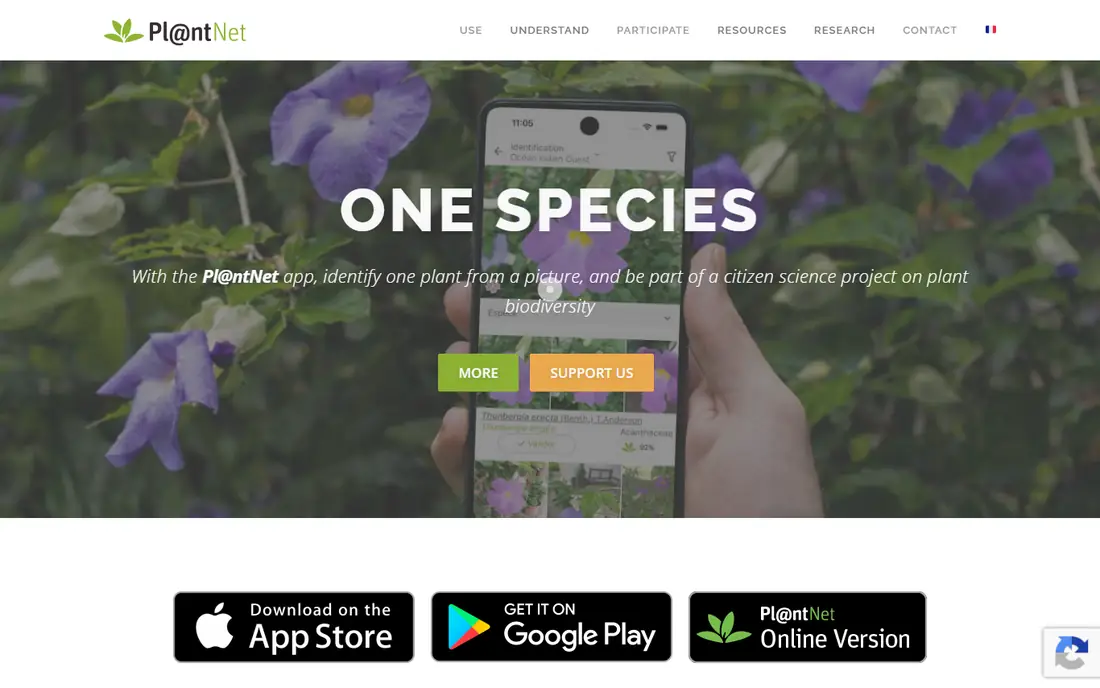
PlantNet is our top pick for foragers because it is built for wild plants rather than houseplant care. It is run with French research institutes, it is free, and it asks users to photograph flowers, leaves, fruit, and bark to improve accuracy. Observations also contribute to a citizen science database, so identifications improve as more people use it.
The trade is polish. PlantNet is less hand-holding than PictureThis, and it works best when you take clear, well-lit photos of several plant parts. Foragers who want a serious identification tool rather than a care app will find it the most trustworthy free option here.
- Free with no in-app purchases listed
- Strong focus on wild plants
- Observations support botanical research
- Less focused on houseplants and care
- Needs good photos for accurate results
- Interface can overwhelm beginners
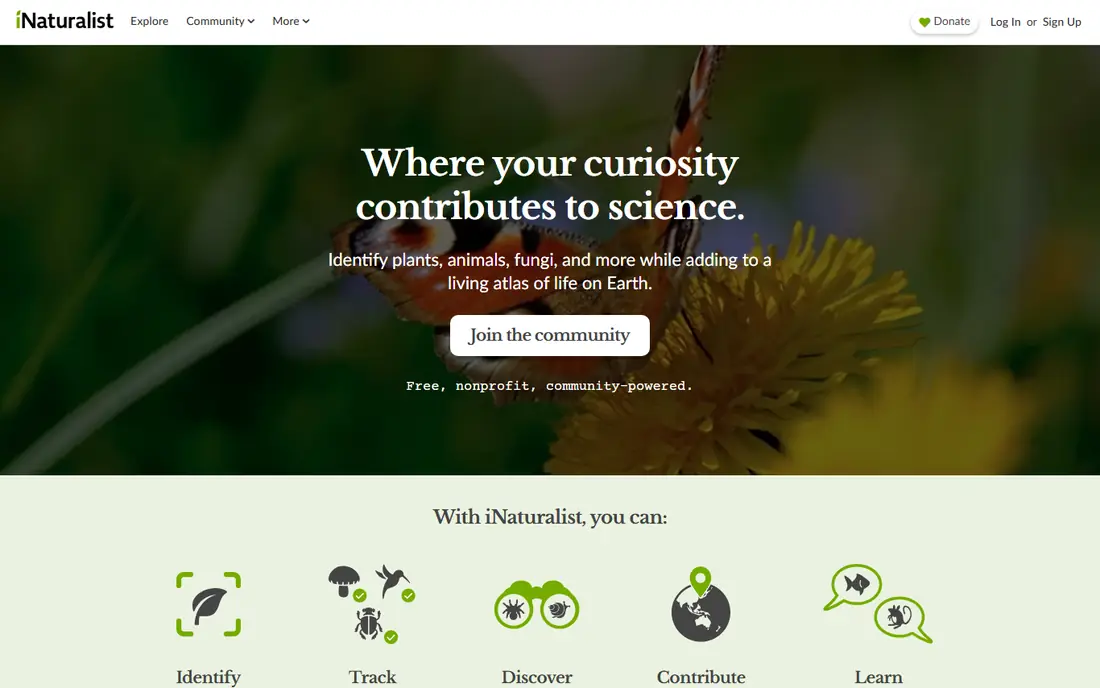
iNaturalist is the best choice when you want a second opinion from people, not just an algorithm. You post an observation with photos and location, the system suggests an identification, and experienced community members confirm or correct it. That verification step is valuable for foragers, since a confirmed identification from knowledgeable users carries more weight than a single AI guess.
The catch is speed. Community verification is not instant, and rare or obscure species may wait longer for confirmation. For learning and for building a record of what you found, though, iNaturalist is unmatched, and it is completely free.
- Free with community verification of observations
- Global database and mapping
- Contributes to real biodiversity science
- Verification takes time and depends on the community
- Slower for rare species
- Interface favors naturalists over casual users
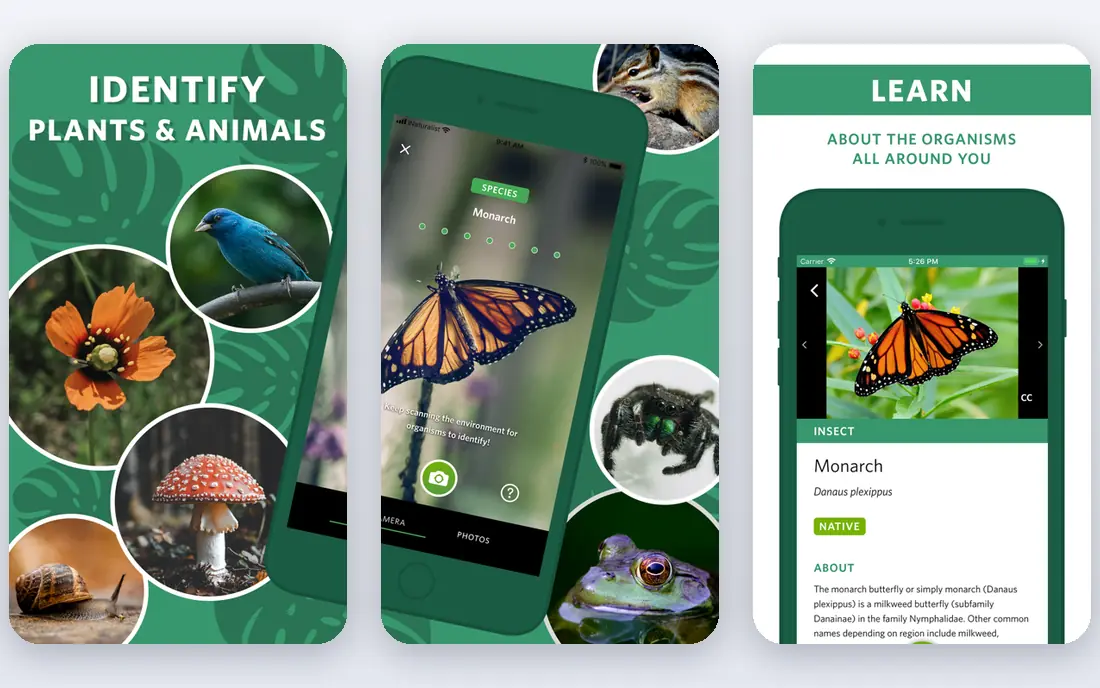
Seek, made by the iNaturalist team, is the easiest way to start identifying plants on a walk. It needs no account, it identifies plants, fungi, and animals through the camera, and it rewards users with badges for new species found. That low friction makes it ideal for families, beginners, and casual foragers who want quick answers.
The limit is depth. Seek gives an AI suggestion without the community verification that makes iNaturalist stronger, so treat its answers as a starting point. For a plant you might eat, always cross-check with PlantNet, iNaturalist, and a field guide.
- Free with no account required
- Fast camera identification
- Challenges and badges make learning fun
- Less detailed than full iNaturalist
- Identification is AI-only without community verification
- Limited for rare species
PictureThis is the most polished app on this list for beginners. Point the camera at a plant, get an identification with care advice, and use disease diagnosis when a plant looks unwell. Its Pro subscription is listed at $39.99 per year in the US app store, and it covers unlimited identifications, care tips, and diagnoses.
For foraging, PictureThis is a useful second opinion but not the best primary tool. Its strength is garden and houseplant care, not wild edibles, and its subscription prompts can frustrate free users. Use it alongside PlantNet when you want a fast answer, and never treat either answer alone as safe for eating.
- Fast, beginner-friendly identification
- Disease diagnosis and care tips
- Large plant database
- Full features require a Pro subscription at $39.99 per year
- Free version pushes the subscription
- Less wild-plant focus than PlantNet
PlantSnap aims to identify a large share of known plant species from a single photo, and it covers mushrooms and succulents as well as ordinary plants. That breadth suits foragers who encounter fungi and unusual species alongside plants. Paid plans are listed from $21.99 per year on some sources, with a lifetime option near $29.99 on others, so check the current app store listing.
The honest weakness is accuracy. Like all photo identification, PlantSnap works best with clear photos in good light, and results vary for similar-looking species. For foraging, that variability is exactly why expert confirmation matters, especially with mushrooms, where mistakes carry high risk.
- Large database covering many species
- Fast identification
- Includes mushrooms, cacti, and succulents
- Premium needed for full features
- Accuracy varies with photo quality
- Subscription pricing varies by listing
Flora Incognita is a research-backed app for identifying wild plants, developed with German research institutions. It is free, it identifies plants from photos automatically, and it focuses on the wild flora of Central Europe with scientific accuracy. Foragers and walkers in that region will find it one of the most reliable free tools available.
The limit is geography. Outside Central Europe, its coverage thins, and users elsewhere should prefer PlantNet or iNaturalist. Within its region, though, Flora Incognita is an excellent companion to a field guide.
- Free and research-backed
- Designed for wild plant identification
- Automatic identification from photos
- Coverage is strongest in Central Europe
- Less useful outside its core region
- Smaller feature set than general apps
Picture Mushroom is included because foragers often ask about fungi specifically, and a dedicated mushroom app gives more relevant information than a general plant app. It identifies mushrooms from photos and provides details on each species, including edibility categories used by its database.
This entry carries the strongest warning on this list. Mushroom identification from a photo alone is not safe, since toxic species can resemble edible ones closely, and details such as spore prints, gill structure, and habitat matter. Use Picture Mushroom to learn and narrow down candidates, then confirm with an experienced mycologist or local fungi group before even considering eating a wild mushroom.
- Dedicated mushroom identification
- Information on edibility categories
- Fast photo-based answers
- Mushroom ID from photos alone is risky
- Premium features cost extra
- Edibility labels must never be treated as safe-to-eat proof
LeafSnap focuses on identifying trees and plants from leaf photos, which suits walkers who want to learn the trees around them. It pairs identification with care tips and reminders, and its database covers many common species. That leaf-first approach is handy in seasons when flowers and fruit are absent.
The drawback is scope. A leaf alone is often not enough to separate similar species, and herbaceous plants without distinctive leaves are harder to identify. For foraging, LeafSnap works best as a learning companion rather than a primary identification tool.
- Identifies trees and plants from leaf photos
- Care tips and reminders
- Useful for learning tree species on walks
- Leaf-only approach struggles without flowers or fruit
- Free version has limits
- Less suited to herbaceous wild plants
How we picked these
We compared plant identification apps that are available in October 2026, work from photos, and genuinely help with wild plants rather than only houseplant care. We favored free and research-backed options for foraging, while including beginner-friendly paid apps for balance. We did not claim hands-on testing; our comparisons rest on official sites, app store listings, and published pricing.
We applied a safety filter throughout. Apps that promised guaranteed edibility answers or encouraged eating based on a photo alone were left out, since that advice is dangerous. Every app here is presented as a learning and narrowing-down tool, not as a final authority on safety.
How to forage safely with an app
Start by identifying with more than one source. Photograph the plant from several angles, including leaves, flowers, fruit, bark, and habitat, then compare results across PlantNet, iNaturalist, and a printed field guide for your region. If sources disagree, treat the plant as unknown.
Next, learn the toxic lookalikes before you learn the edibles. Many edible plants share a genus or appearance with toxic relatives, and knowing what to rule out is more valuable than knowing one edible species. Local foraging groups, extension services, and experienced foragers are the best source for this knowledge.
Finally, follow the standard safety rules: never eat a plant you cannot identify with certainty, never eat a large amount of a new wild food at first, respect local laws on picking, and leave enough for wildlife and other foragers. Apps make learning faster, but they do not replace expertise, and no app result is worth a hospital visit.
Sources
Frequently asked questions
What is the best foraging app for plant identification?
PlantNet is the best overall foraging app, since it is free, research-backed, and focused on wild plants. iNaturalist is the best for community-verified identifications, while Seek is the easiest free starting point. Beginners who want care tips as well may prefer PictureThis as a second opinion.
Can a foraging app tell me if a plant is safe to eat?
No, not reliably on its own. Apps suggest identifications from photos, but edible species can resemble toxic ones, and photo quality, season, and region all affect accuracy. Always cross-check with a field guide and get expert confirmation before eating anything wild, and do not eat a plant you cannot identify with certainty.
Are there free foraging apps for plant identification?
Yes. PlantNet, iNaturalist, Seek, and Flora Incognita are free, with no subscription required for core identification. PictureThis, PlantSnap, and LeafSnap offer free tiers with paid upgrades for full features. For foraging specifically, the free research-backed apps are often the strongest choices.
What is the best mushroom identification app?
Picture Mushroom is a dedicated option for fungi, and PlantSnap and Seek also cover mushrooms. No mushroom app should be treated as safe-to-eat proof, since identification from photos alone is risky. Confirm any wild mushroom with an experienced mycologist or local fungi group before considering eating it.
How accurate are plant identification apps?
Accuracy varies by species, photo quality, and region, and it is highest for common, distinctive plants photographed clearly. Rare species, similar-looking relatives, and poor photos all reduce accuracy. Using several apps plus a field guide, and seeking community verification on iNaturalist, gives a much stronger result than any single app.
Do foraging apps work offline?
Most apps need an internet connection for identification, though some let you save photos and identify them later when you have signal. Plan ahead for walks in areas with poor coverage by downloading a field guide and saving observations to review at home. Do not rely on a single app when you are out of signal range.