Best Futures Trading Platform in 2026: 9 Platforms Compared
By ToolNimba Editorial Team October 28, 2026 11 min read

- Top pick
 NinjaTrader
Futures-first active trading
Starting priceFreeCheck out NinjaTraderRead our review - Runner-up
 Interactive Brokers
Global multi-asset futures
Starting priceSee websiteCheck out Interactive BrokersRead our review - Also great
 Tradovate
Cloud futures trading
Starting priceFreeCheck out TradovateRead our review
How we researched this
We compared official pricing and feature pages, app store listings, privacy policies and public user reviews. Prices change, so check the provider's site before you pay.
Key takeaways
- NinjaTrader is our top futures-first pick, with a free plan, desktop, web and mobile trading, and low micro contract commissions on paid plans.
- Interactive Brokers suits traders who want global futures and other assets in one account, while Tradovate, AMP Futures and Optimus Futures suit cost-focused US futures traders.
- Sierra Chart and TradingView-style charting matter as much as commissions, because order flow, depth and automation tools shape daily trading.
- All-in cost includes exchange, clearing and regulatory fees on top of broker commission, so compare round-turn totals, not just the broker fee.
- This is not financial advice; trading carries risk, and margin-based futures trading can lose more than your initial margin.
Quick comparison
| Name | Best for | Starting price | Free plan | |
|---|---|---|---|---|
| NinjaTrader | Futures-first active trading | Free | Yes | Visit |
| Interactive Brokers | Global multi-asset futures | See website | Yes | Visit |
| Tradovate | Cloud futures trading | Free | Yes | Visit |
 AMP Futures | Platform choice and low cost | See website | Yes | Visit |
 Optimus Futures | Low-cost broker support | See website | Yes | Visit |
 TradeStation | Systematic multi-asset trading | See website | Yes | Visit |
 tastytrade | Futures plus futures options | See website | Yes | Visit |
 Sierra Chart | Order flow and advanced charting | $36 per month | Free trial | Visit |
 Webull | Simple mobile futures trading | Free | Yes | Visit |
The best futures trading platforms
Futures trading rewards low costs, fast execution and tools that match your style, whether that is scalping, day trading or systematic trading. We compared official feature pages, pricing pages, margin schedules, app store listings and public reviews, and we focused on real exchange-traded futures, not CFDs or simulated-only products.
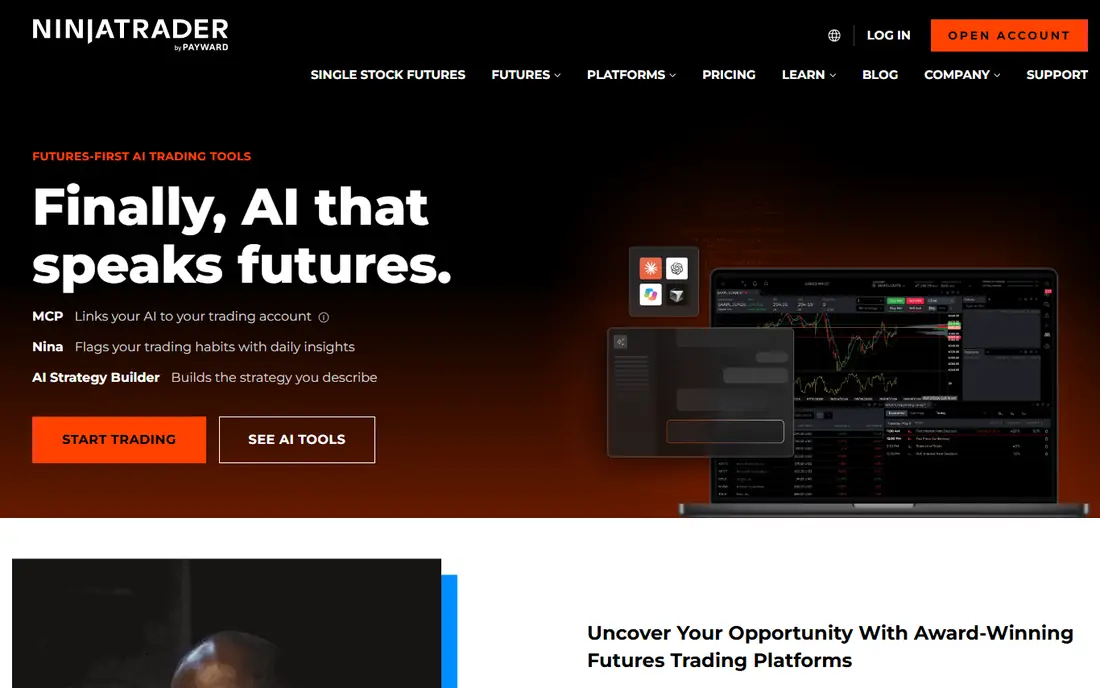
NinjaTrader is the most complete futures-first platform on this list. The free plan lets you trade with a per-side commission, while monthly and lifetime plans lower that commission for active traders. The desktop platform offers a depth-of-market ladder, order flow tools, strategy automation through NinjaScript, and backtesting, which together suit traders who want more than a basic chart and order ticket.
The catch is ecosystem. The lowest commissions and the smoothest setup come when you use NinjaTrader brokerage, and the desktop app takes time to learn. Web and mobile versions help for monitoring, but serious order flow work still happens on desktop. If futures are your main market, NinjaTrader is the default to compare everything else against. This is not financial advice; trading carries risk.
- Free brokerage plan with micro contracts from 0.39 dollars per side before exchange and other fees
- Desktop, web and mobile platforms
- Order flow, automation and backtesting tools
- Best economics sit inside the NinjaTrader brokerage setup
- Desktop platform has a learning curve
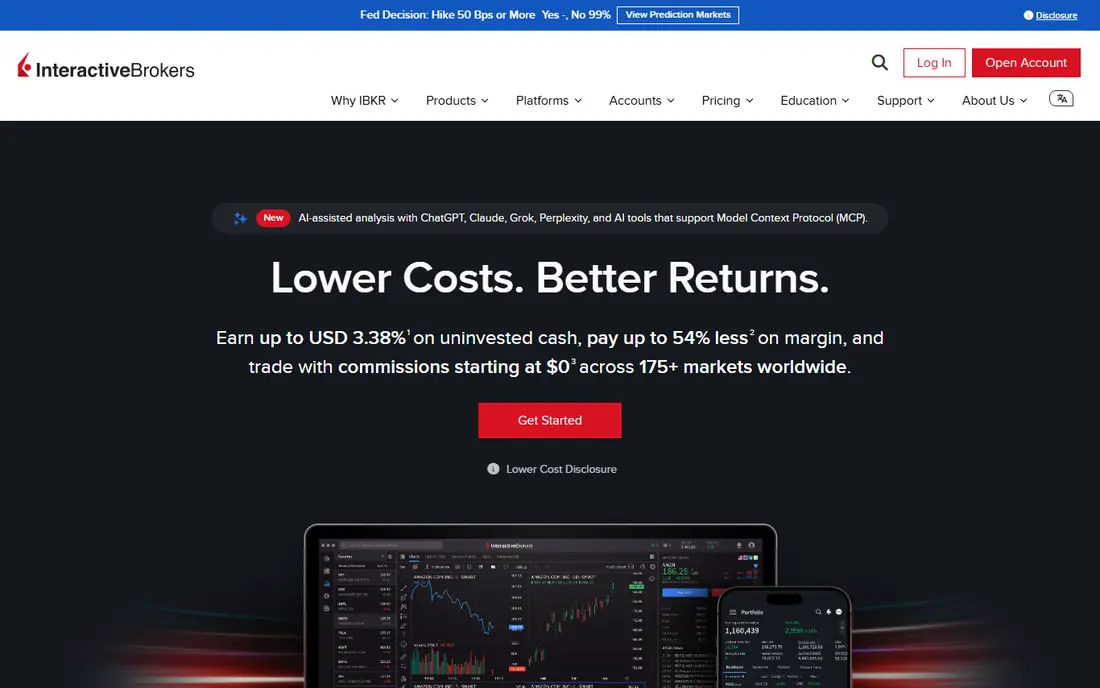
Interactive Brokers suits traders who do not want futures in isolation. One account can hold stocks, options, bonds and futures across many exchanges, which helps with hedging, diversification and cross-margining in some setups. Pricing is tiered by volume, and the first-tier US futures commission is competitive for a multi-asset broker.
The trade-offs are margin and complexity. Day-trading margins are often higher than at specialist futures brokers, so intraday size may be smaller for the same capital. Trader Workstation is powerful but dense, and paper trading is the best way to learn it before funding. If global access matters more than the lowest intraday margin, Interactive Brokers is hard to replace.
- Access to major futures exchanges worldwide
- US futures from 0.85 dollars per contract in the first volume tier, plus exchange and regulatory costs
- Stocks, options and futures in one account
- Margins can be more conservative than specialist day-trading brokers
- Trader Workstation has a steep learning curve
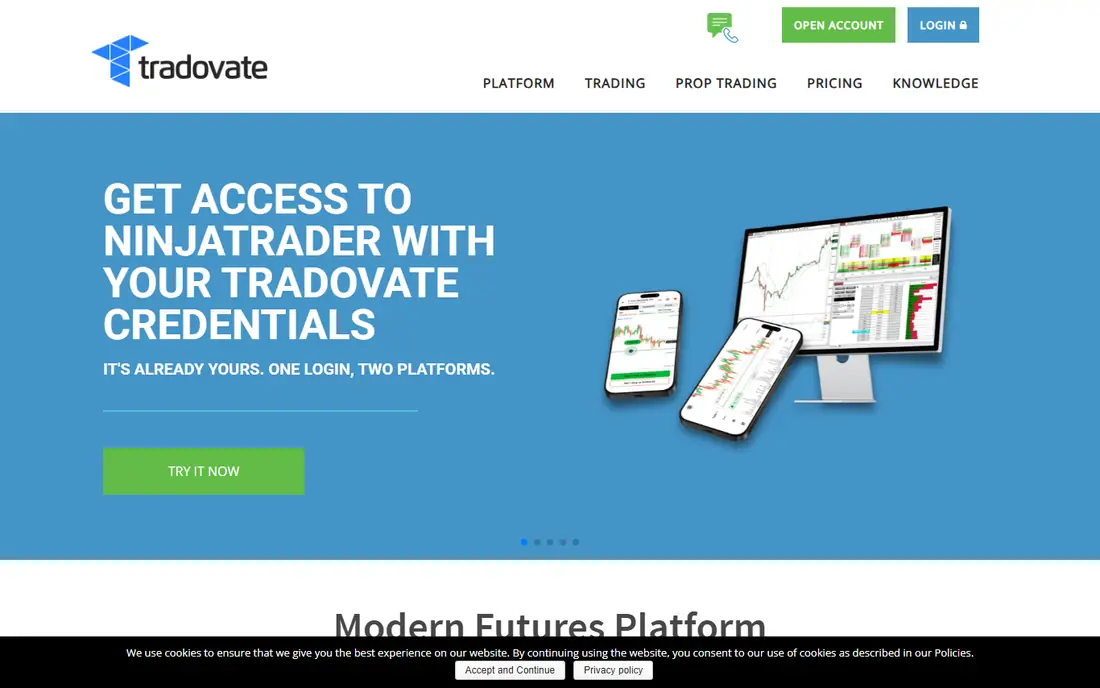
Tradovate, now closely linked with NinjaTrader, suits traders who want futures trading without a heavy desktop install. Because it runs in the cloud, you can move between browser, desktop app and phone with the same account and watchlists. Plans include a free tier, a monthly plan and a lifetime plan, and paid plans reduce per-side commissions.
The limit is tool depth. Tradovate covers charting, depth-of-market trading and basic automation well, but it does not match NinjaTrader or Sierra Chart for order flow and custom studies. For newer futures traders, or for traders who value access from any device over the deepest toolset, Tradovate is a clean, low-friction choice.
- Cloud-based web, desktop and mobile trading
- Free plan plus monthly and lifetime plans that lower commissions
- Simple setup for newer futures traders
- Platform depth is lighter than NinjaTrader or Sierra Chart
- Paid plans are needed for the lowest commissions
AMP Futures is built for traders who already know which platform they want. Instead of locking you into one front end, AMP connects to many third-party platforms, including Quantower, Sierra Chart and others, with low commissions and low intraday margins on popular micro contracts. A low minimum deposit also makes it accessible for smaller accounts.
Choice is both the strength and the catch. Picking a platform, a data feed and a margin setup takes research, and the total cost depends on those choices. AMP suits experienced traders who want to pair a favourite platform with a low-cost broker. Beginners should start with a demo, compare the all-in round-turn cost, and ask support to confirm the setup before funding.
- Access to more than 50 platforms in past listings
- Low all-in rates on micro contracts
- Low day margins and multiple data feed options
- Platform and data choices can confuse beginners
- Exact commission depends on platform, feed and clearing setup
Optimus Futures stands out for support as much as price. Published comparisons list micro contracts from 0.25 dollars per side and standard contracts from 0.75 dollars per side before exchange, clearing and regulatory fees, which is competitive for active traders. The free Optimus Flow platform gives you a capable starting point without a separate software subscription.
The catch is variability. Your final commission and margin can depend on the clearing firm, the platform and the data feed you choose, so the headline rate is not the whole quote. Optimus helps with setup, which reduces that friction, but you should still confirm the all-in round-turn cost for the contracts you trade most. For cost-focused traders who want human help, Optimus is a strong broker-first pick.
- Low per-side commissions on micro and standard contracts before pass-through fees
- Free Optimus Flow platform option
- Broker-assisted setup and low day margins
- Exact pricing and margin depend on clearing firm and data feed
- Platform choice still needs research
TradeStation suits traders who build and test rules. Its desktop platform supports strategy development, backtesting and automation, alongside stocks, options and futures trading. That multi-asset range helps if you trade futures as part of a broader portfolio, rather than as a single-market focus.
Cost is the trade-off. Standard futures commissions in the lowest standard tier are higher than at NinjaTrader, AMP or Optimus, though micro pricing is more competitive. If you trade mainly standard contracts at high volume, compare the tier you will actually reach. For systematic traders who value strategy tools and a single multi-asset account, TradeStation remains a serious option.
- Strong desktop strategy development
- Stocks, options and futures in one ecosystem
- Competitive micro contract pricing in lower volume tiers
- Starting standard contract commission is higher than specialist futures brokers
- Platform learning curve is real
tastytrade fits traders who move between futures and futures options. The interface is cleaner than many professional platforms, and the pricing is easy to understand: standard contracts, micros and futures options each have a published per-side rate before exchange and other fees. That clarity helps when you compare a futures trade with an options-on-futures trade.
The limit is depth for pure futures scalpers. Order flow, footprint charts and depth tools are less specialised than at NinjaTrader or Sierra Chart. Check that your account type supports futures, because not every tastytrade account does. If you want a modern, derivatives-first app with good mobile trading, tastytrade is a strong pick.
- Simple derivatives-focused interface
- Standard futures from 1 dollar per side, micros from 0.75 dollars, and futures options from 1.25 dollars before additional fees
- Strong mobile app
- Order flow tools are lighter than NinjaTrader or Sierra Chart
- Futures are only available on certain account types
Sierra Chart is a platform, not a broker, and it earns its place for traders who live in charts and order flow. It offers footprint charts, volume profile, market depth tools and custom studies, with a reputation for stability during fast markets. Integrated packages, starting at 36 dollars per month for Package 10, allow connections to brokers and data services, while higher packages add advanced studies and market-by-order data.
The catch is setup cost and complexity. The software fee is separate from broker commission and exchange data, and you need the right package for your broker connection. A 21-day trial for new accounts helps you test it, but external data services may need a paid package. If order flow is central to your edge, Sierra Chart paired with a low-cost broker is a powerful combination.
- Very stable platform with hundreds of studies and many order types
- Integrated packages from 36 dollars per month
- Denali data feed and broker connections for futures trading
- Windows-focused
- Exchange data costs extra
- Package choice affects which broker connections are available
Webull is the easiest entry point on this list for someone who already trades stocks and wants to try futures. The app is modern, paper trading lets you practise, and futures sit next to stocks, ETFs and options in one account. That familiarity lowers the barrier for a first micro futures trade.
Depth is the limit. Webull does not offer the order flow, automation or platform choice of NinjaTrader, Sierra Chart or AMP. It is best for smaller, simpler futures trades and for learning, rather than for full-time scalping or systematic futures work. If you want a low-friction start, Webull works, but move to a specialist platform if your futures volume grows.
- Zero-commission stock trading alongside futures
- Micro futures pricing reported at 0.25 dollars per contract in recent comparisons
- Simple mobile app and paper trading
- Futures tools are lighter than specialist platforms
- Advanced order flow and automation are limited
How we picked these
We compared official feature pages, pricing pages, margin schedules, app store listings and public reviews for platforms that offer real exchange-traded futures in October 2026. We gave weight to broker commission, all-in round-turn cost, intraday margin, platform tools, data options and ease of setup. We did not claim hands-on testing of every platform with live money, and we focused on published rates, because commissions, margins and data fees change by contract, volume and clearing setup. Prop challenges and CFD products were not treated as substitutes for a live futures brokerage account.
Costs, margins and risk to check first
Compare the full round-turn cost
Add broker commission, exchange fees, clearing fees and regulatory fees for both sides of the trade. A low broker fee can still lead to a high total if exchange fees are large, and micros and standard contracts have different totals.
Check intraday and overnight margin separately
Intraday margin can be far lower than overnight margin. That extra margin room increases both gains and losses, and a position held past the intraday cutoff can face a margin call. Confirm both margins for each contract before you trade size.
Test on demo before funding
Use a demo or paper account to test order types, depth-of-market trading, data feeds and automation. A platform that feels fast in a demo and matches your workflow is worth more than a small commission saving on a platform you fight every day. This is not financial advice; trading carries risk, and you can lose money quickly when trading on margin.