Best Language Learning Apps in 2026: 9 Apps Compared
By ToolNimba Editorial Team October 28, 2026 11 min read

- Top pick
 Duolingo
Daily habit building
Starting priceFreeCheck out DuolingoRead our review - Runner-up
 Babbel
Structured courses
Starting price$15.99 per monthCheck out BabbelRead our review - Also great
 Rosetta Stone
Immersive pronunciation
Starting price$11.99 per monthCheck out Rosetta StoneRead our review
How we researched this
We compared official pricing and feature pages, app store listings, privacy policies and public user reviews. Prices change, so check the provider's site before you pay.
Key takeaways
- Duolingo is the best free starting point for building a daily habit, but its grammar explanations are thin and it stalls around the intermediate level.
- Babbel is our pick for structured learners who want real grammar and dialogue practice in a European language.
- Pimsleur is the best audio-first option for commuters, because its lessons train listening and speaking without a screen.
- italki is the only option here that gives you live conversation with a human tutor, which matters most once you can form basic sentences.
- No single app will make you fluent on its own, so pair a daily app with speaking practice, reading, or live lessons for real progress.
Quick comparison
| Name | Best for | Starting price | Free plan | |
|---|---|---|---|---|
| Duolingo | Daily habit building | Free | Yes | Visit |
| Babbel | Structured courses | $15.99 per month | No | Visit |
| Rosetta Stone | Immersive pronunciation | $11.99 per month | No | Visit |
 Pimsleur | Audio-only learning | $20.95 per month | No | Visit |
 Busuu | CEFR levels and feedback | $13.99 per month | Yes | Visit |
 Memrise | Vocabulary and video clips | See website | Yes | Visit |
 italki | Live human tutors | $4 per lesson | No | Visit |
 LingQ | Reading and listening input | $13.99 per month | Yes | Visit |
 Mondly | Widest language choice | See website | Yes | Visit |
The best language learning apps
Language apps differ more than their ads suggest. Some teach through games, some through dialogues, some through audio drills, and some connect you with a real teacher. We compared official feature pages, pricing, app store listings, and public reviews to sort them by what they actually do well.
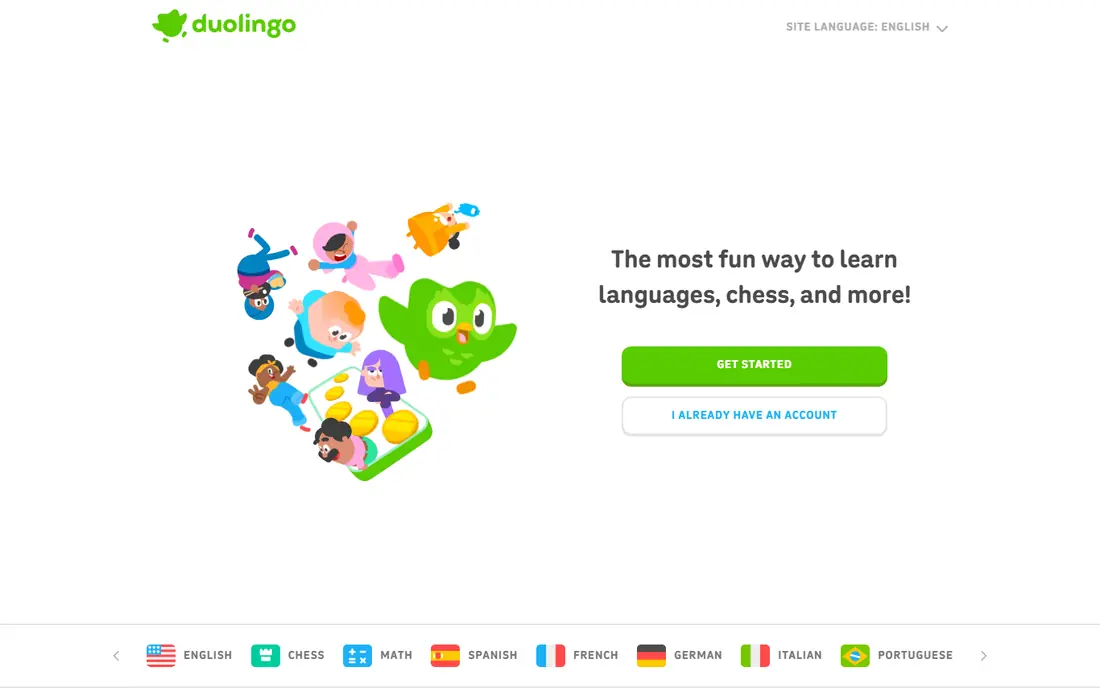
Duolingo wins on habit, not depth. Short lessons, streaks, leagues, and cheerful reminders make it easy to open the app every day, and that daily contact matters more than most learners expect. The free plan covers the core lessons, so you can test a language for weeks without paying, and the range of languages is wider than most paid rivals.
The limits appear once you pass the beginner stage. Grammar is often taught by pattern rather than explanation, so you may know the right answer without knowing why it is right. Speaking practice exists, but the most useful AI conversation features sit in the paid Max tier. Use Duolingo to build a habit and basic vocabulary, then add a tutor or a grammar-focused app when you plateau.
- Free core lessons with ads
- Strong streak and gamification system
- Covers 40 plus languages
- Grammar explanations are thin
- Speaking practice is limited on the free plan
- Progress stalls around intermediate level
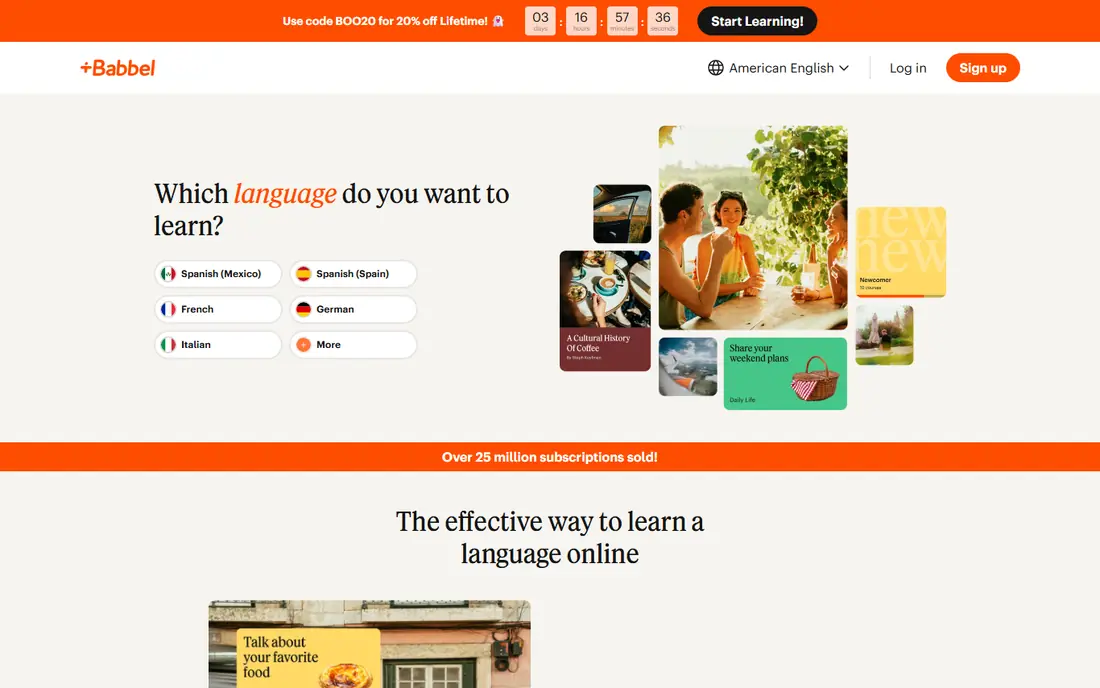
Babbel feels like a course, not a game, and that is its appeal. Lessons are short, usually 10 to 15 minutes, and they build around realistic dialogues such as ordering food, asking directions, or talking about work. Grammar notes explain the rules behind the phrases, which helps learners who get frustrated by guessing from examples alone.
The trade-off is range. With 14 languages, Babbel covers the major European languages well but offers little for learners of Asian, African, or less common languages. There is no full free plan, though you can try the first lesson of a course. If your language is on the list and you want structure, Babbel is the strongest paid self-study pick here.
- Lessons built by language teachers with clear grammar notes
- Dialogue-based practice feels practical
- Speech recognition checks pronunciation
- Only 14 languages
- No full free plan, only a first lesson preview
- Less playful than Duolingo for younger learners
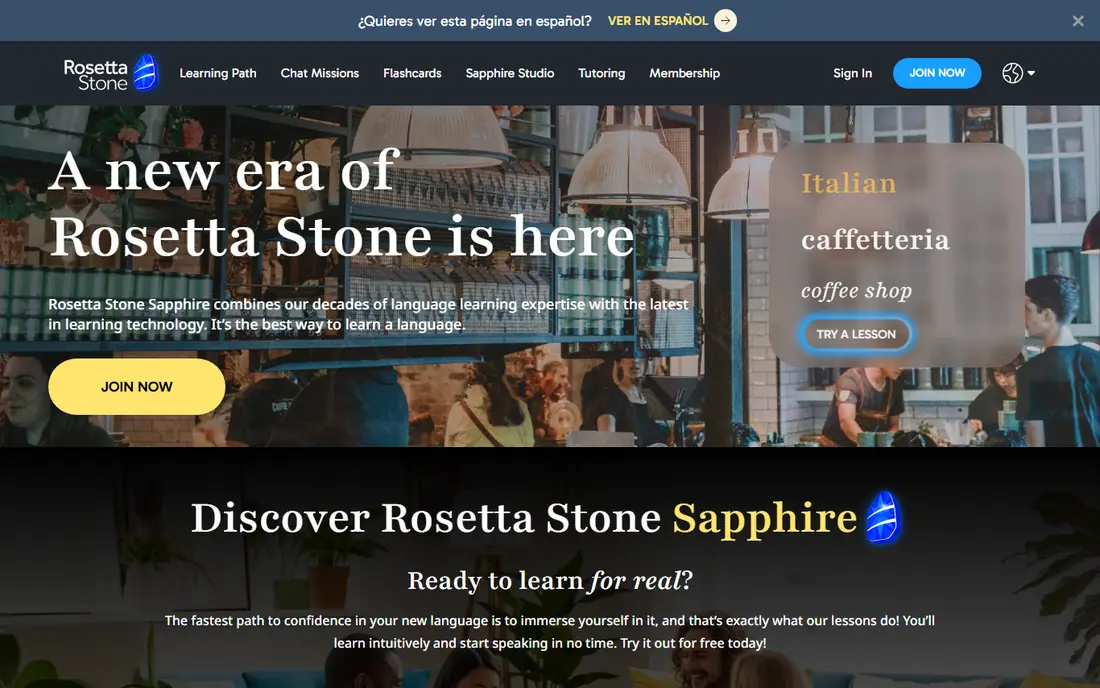
Rosetta Stone teaches without translation, pairing images, audio, and text so you learn words in context. That method suits visual learners and people who want to think in the new language rather than translating in their head. Its TruAccent tool listens to your speech and gives feedback on pronunciation, which remains one of its clearest strengths.
The method has a ceiling. Because grammar is never explained directly, some learners feel stuck guessing at patterns, and the lessons can feel slow compared with Babbel or Duolingo. A lifetime purchase makes sense if you plan to study one language for years, but try the trial first. Rosetta Stone works best as a pronunciation and vocabulary companion, not as your only grammar source.
- Image-based immersion avoids translation crutches
- TruAccent speech recognition gives pronunciation feedback
- Lifetime purchase option available
- Grammar progression is slow and implicit
- Image-guessing can feel repetitive
- No free plan beyond a short trial
Pimsleur is built for your ears. Each lesson is about 30 minutes of listening and speaking, with spaced repetition that brings words back just as you are about to forget them. You answer aloud, which trains the exact skill most app learners neglect: producing sentences under mild time pressure. That makes it ideal for drivers, walkers, and anyone who studies away from a screen.
Reading and writing get little attention, so you will need another tool for scripts, spelling, and grammar. The price is also higher than most app subscriptions, though an all-access plan covers many languages. If your main goal is to speak confidently on a trip or in conversation, Pimsleur earns its cost. If you need to read and write well, pair it with a text-based app.
- 30-minute audio lessons suit commuting and walking
- Spaced repetition builds recall
- Strong focus on speaking aloud from the first lesson
- Light on reading and writing
- Monthly price is high
- Lesson pace can feel slow for fast learners
Busuu stands out because it tells you where you stand. Its courses map to the Common European Framework levels, so you can see whether you are at A1, A2, or B1 and what comes next. That structure helps learners who want to prepare for an exam or track progress over months, not just collect streaks.
The second strength is community correction. You submit writing or speaking exercises, and native speakers in the Busuu community can correct them, which gives you feedback no algorithm can fully replace. The free plan covers basic lessons, while Premium adds offline mode, grammar units, and certificates. Feedback speed depends on how active your language community is, so popular languages benefit most.
- Courses follow CEFR levels from A1 to B2
- Native speakers can correct your writing and speaking exercises
- Offline mode on paid plans
- Only 14 languages
- Best features require Premium
- Community feedback speed varies by language
Memrise is at its best when you want to hear how people actually speak. Short video clips of native speakers, filmed in everyday settings, show pronunciation, rhythm, and slang that textbook audio often misses. Combined with spaced repetition flashcards, that makes it a strong vocabulary builder, especially for learners who already have a main course and need more words and listening practice.
As a complete course, it is weaker. Grammar is not taught in the depth Babbel offers, and lesson progression can feel loose. The free plan is usable for core vocabulary, while Pro adds offline mode and extra features. Think of Memrise as a supplement: use it for 10 minutes a day alongside a structured app, and your listening will improve faster than with either tool alone.
- Native-speaker video clips show real pronunciation and usage
- Spaced repetition supports vocabulary retention
- Free plan covers core courses
- Less structured as a full course than Babbel
- Paid pricing varies by store and plan
- Grammar teaching is light
italki is not really an app in the same sense as the others here. It is a marketplace where you book live video lessons with teachers and tutors around the world. That human contact is the point: a tutor can correct your pronunciation in real time, explain a grammar point in your own terms, and hold a conversation at exactly your level. No AI tutor matches that yet.
The trade-off is effort and variability. You must browse tutor profiles, read reviews, and book sessions, and quality varies, so trial lessons matter. Prices start low for community tutors and rise for professional teachers, and you pay per lesson rather than by subscription. For intermediate learners who have plateaued on apps, a weekly italki lesson is often the fastest way forward.
- One-to-one lessons with professional teachers or community tutors
- More than 150 languages
- You choose the teacher, schedule, and price
- No structured course to follow on its own
- Lesson quality varies by tutor
- Scheduling takes more effort than opening an app
LingQ takes the opposite approach from most apps: instead of short gamified drills, it lets you read and listen to real content and learn words in context. You import articles, stories, or podcast transcripts, tap unknown words to save them, and review them later with spaced repetition. That input-heavy method suits intermediate learners who want to move from textbook sentences to real language.
Beginners may find it confusing at first, because there is no fixed lesson path to follow. The free plan limits how many words you can save, while the paid plan removes that cap. If you already know the basics and you want to read news, novels, or blogs in your target language, LingQ is a powerful next step. If you are starting from zero, begin with Duolingo or Babbel first.
- Learn from real articles, books, and podcasts you choose
- Built-in dictionary and vocabulary tracking
- Covers 50 plus languages
- Interface can overwhelm beginners
- No guided course structure
- Best content requires importing or finding your own material
Mondly earns its place through breadth. With 41 languages, it covers options that Babbel and Busuu skip, which matters if you are learning a less common language or want to sample several before committing. Daily lessons, vocabulary builders, and a chatbot for conversation practice keep sessions short and varied, and the app includes augmented reality features for vocabulary in some languages.
Depth is uneven. Popular languages have fuller courses, while smaller languages may feel thinner, and grammar teaching is lighter than Babbel. The free plan gives you a daily lesson to try, with paid plans opening full courses and a lifetime option. Mondly is a good choice when language availability is your deciding factor, or when you want a low-pressure daily supplement.
- Covers 41 languages, including less common options
- Chatbot conversation practice and AR features
- Daily lessons keep practice short
- Depth varies by language
- Grammar explanations are limited
- Full features require a paid plan
How we picked these
We compared official feature pages, pricing pages, app store listings, and public reviews, and we favored apps that are active in 2026, teach a real range of skills, and state their pricing clearly. We included a mix of free, subscription, and pay-per-lesson models, plus audio, visual, reading, and live-tutor approaches, so learners with different schedules and goals can find a fit. We did not claim hands-on testing, and we note where pricing varies by plan length or store.
How to choose a language app that fits your goal
Match the app to the skill you need most. If you have never studied the language, start with a habit builder such as Duolingo or a structured course such as Babbel. If you can already read basic sentences but freeze when speaking, add Pimsleur for audio drills or italki for live conversation. If you read well but understand little spoken language, Memrise video clips and LingQ listening practice will help more than another vocabulary game.
Build a routine you will keep
Short daily sessions beat occasional long ones for most learners. Aim for 15 to 30 minutes a day, at the same time if possible, and review words you have already learned before adding new ones. Use the app for daily practice, then add one real-world habit: a weekly tutor session, a podcast in the language, or reading a short article. That combination is what turns app progress into usable skill.
Check the language and level before you pay
Not every app covers every language well, and course depth varies by language. Check that your language has a full course, not just a short sampler, and look for a level test or CEFR mapping if you are past beginner stage. Use free plans and trials first, and confirm the renewal price and cancellation steps before subscribing.
Sources
- https://www.duolingo.com
- https://www.babbel.com
- https://www.rosettastone.com
- https://www.pimsleur.com
- https://www.busuu.com
- https://www.memrise.com
- https://www.italki.com
- https://www.lingq.com
- https://www.mondly.com
- https://bestlanguageapp.com/
- https://www.italki.com/en/blog/best-apps-for-learning-languages
- https://global.nexteuropa.com/skill-development/best-language-learning-apps/