Best Lead Generation Tools for Small Businesses in 2026: 10 Tools Compared
By ToolNimba Editorial Team October 28, 2026 11 min read

- Top pick
 HubSpot
Free CRM and inbound capture
Starting priceFreeCheck out HubSpotRead our review - Runner-up
 Apollo
Outbound database and sequences
Starting price$49 per user per monthCheck out ApolloRead our review - Also great
 OptinMonster
Website popups and capture
Starting price$7 per monthCheck out OptinMonsterRead our review
How we researched this
We compared official pricing and feature pages, app store listings, privacy policies and public user reviews. Prices change, so check the provider's site before you pay.
Key takeaways
- HubSpot is the best free starting point, since its free CRM, forms, landing pages, and chat capture leads in one system.
- Apollo is the best all-in-one outbound pick for small teams, since it pairs a contact database with enrichment and sequences.
- OptinMonster and Leadpages suit teams that need to convert existing website traffic, rather than find new contacts.
- Calendly closes the gap between interest and a meeting, which is where many small businesses lose leads.
- Price by lead volume and credits, not just by monthly fee, since database and enrichment credits drive the real cost.
Quick comparison
| Name | Best for | Starting price | Free plan | |
|---|---|---|---|---|
| HubSpot | Free CRM and inbound capture | Free | Yes | Visit |
| Apollo | Outbound database and sequences | $49 per user per month | Yes | Visit |
| OptinMonster | Website popups and capture | $7 per month | No | Visit |
 Leadpages | Fast landing pages | See website | Free trial | Visit |
 Calendly | Lead to meeting booking | Free | Yes | Visit |
 Instantly | High-volume cold email | See website | Free trial | Visit |
 Snov.io | Affordable email finder and drip | $39 per month | Yes | Visit |
 Hunter | Email finding and verification | $34 per month | Yes | Visit |
 LinkedIn Sales Navigator | LinkedIn prospecting | $99 per user per month | Free trial | Visit |
 Pipedrive | Small team pipeline and capture | $19 per user per month | Free trial | Visit |
The best lead generation tools for small businesses
Lead generation for a small business has two halves: capturing interest from people who visit your site, and finding new prospects who fit your customer profile. The tools below cover both halves, plus the scheduling step that turns interest into a meeting. We compared official pricing, free plans, and feature pages to build this list.
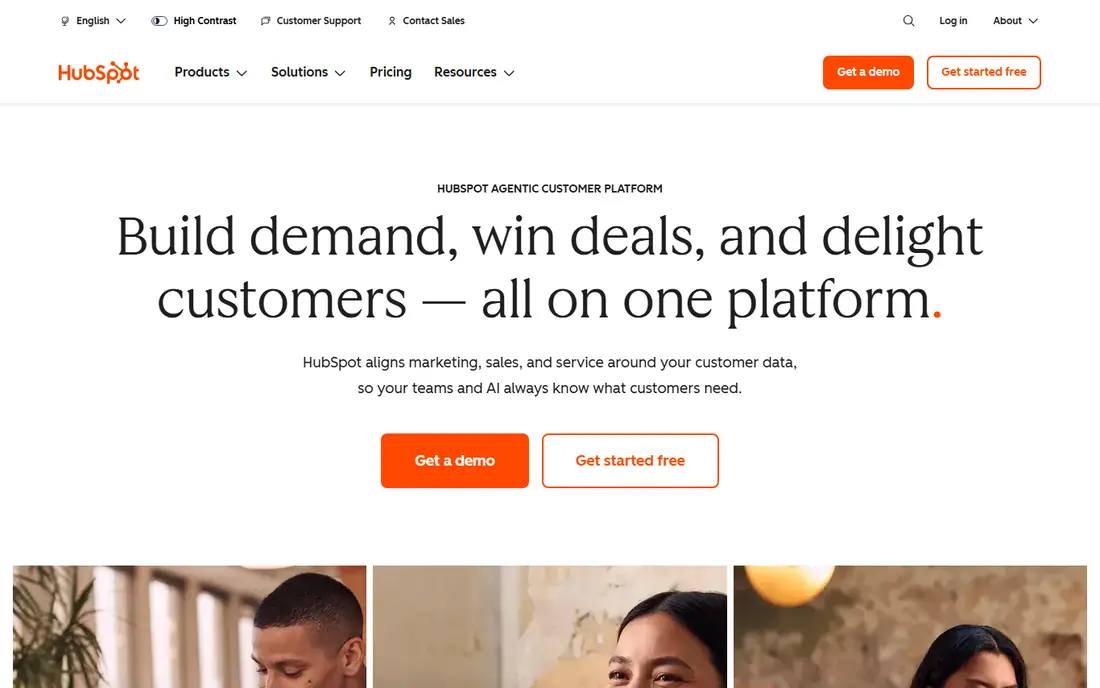
HubSpot is the default starting point for small businesses because its free tier does more than most paid tools. You can capture leads with forms and chat, store them in a CRM, and follow up without buying a separate system. That completeness matters for a small team that cannot afford a stack of tools that do not talk to each other.
The catch is growth cost. Paid HubSpot plans rise with contacts and features, and advanced automation sits on higher tiers. Start free, use the CRM well, and upgrade only when a specific workflow justifies it. For inbound leads, HubSpot remains the most complete free base on this list.
- Free CRM with forms, popups, live chat, and landing pages
- Lead routing and lifecycle stages included
- Large integration library
- Costs rise sharply on paid Marketing Hub plans
- Contact-based pricing needs care as lists grow
- Advanced automation needs higher tiers
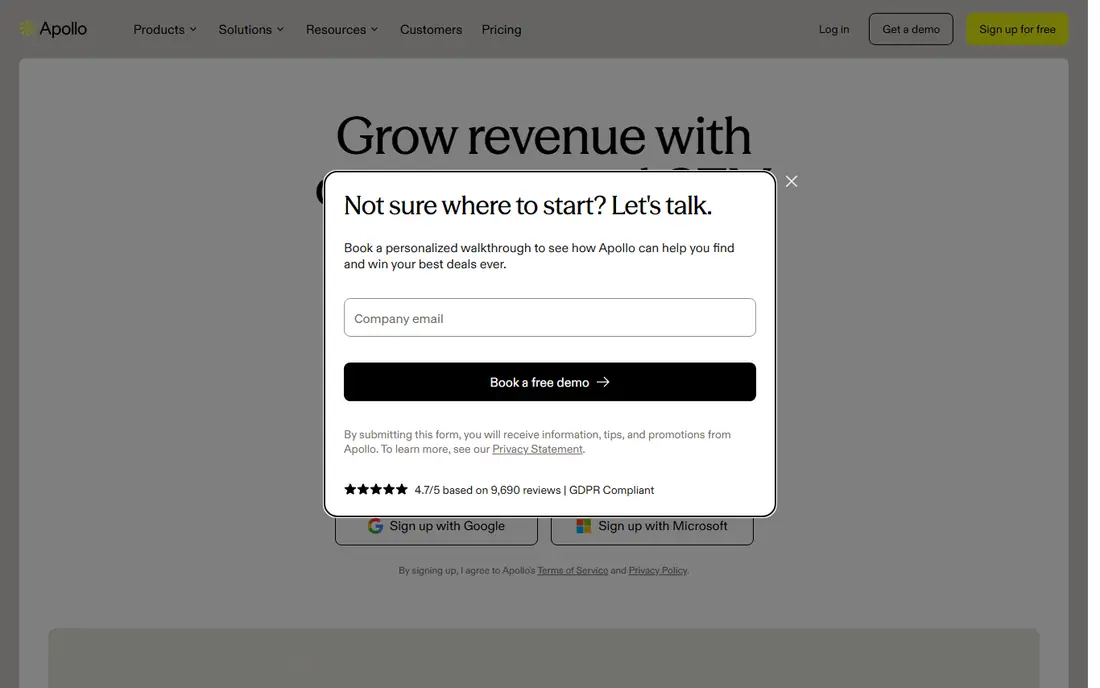
Apollo suits small B2B teams that need to find prospects, not just capture website visitors. Its database lets you filter by title, company size, and industry, verify emails, and start sequences without leaving the tool. That all-in-one flow replaces a separate data provider and outreach tool for many small teams.
Apollo does not replace a website capture tool, so pair it with HubSpot forms or a landing page tool for inbound leads. Data quality also varies by market, so test it on your target industries first. For outbound prospecting on a budget, Apollo is the most practical pick here.
- Large B2B database with search and enrichment
- Email sequences and dialer in one tool
- CRM sync for Salesforce and HubSpot
- Data accuracy varies by region
- Outbound only, with no inbound capture depth
- Credit limits can bite on large lists

OptinMonster converts traffic you already have. Its exit-intent popups, timed offers, and targeted campaigns can turn a visitor who was about to leave into an email subscriber or demo request. A/B testing helps small teams learn which offer actually works, rather than guessing.
OptinMonster cannot create traffic on its own, so it suits sites with steady visitors but low conversion. Popups also need restraint: too many, or badly timed, popups hurt trust. Used for one clear offer per page, OptinMonster is a cheap way to lift lead capture without rebuilding a site.
- Exit-intent popups, slide-ins, and on-site targeting
- A/B testing for offers
- Integrations with email tools and CRMs
- No free plan
- Only helps if you already have website traffic
- Popup design needs care to avoid annoying visitors
Leadpages helps small businesses launch a focused landing page for an ad, offer, or event without a developer. Its templates cover lead magnets, webinars, and sales pages, and its built-in forms and A/B testing let you improve conversion quickly. That speed matters when a campaign has a short window.
Leadpages is not a full website or CRM, so pair it with HubSpot or another CRM for follow-up. Pricing has differed across comparison sources, so confirm the current plan for your page and traffic limits. For campaign landing pages, it remains a fast and focused tool.
- Fast landing page builder with templates
- Forms, popups, and A/B testing included
- Simple analytics for conversion
- Pricing has varied across sources, so check the current plan
- Less flexible than a full website builder
- Advanced features need higher plans
Calendly closes a common leak: a lead shows interest, then drops off during back-and-forth scheduling emails. A booking link lets that lead pick a time, syncs with your calendar, and sends reminders, which raises show rates. For small service businesses, that one step can matter more than another lead source.
Calendly does not find leads, so it works best after a capture or outreach tool. Paid plans add routing, forms, and workflows that help larger teams. Start free with one booking link on your site and emails, and upgrade only when routing or team features become necessary.
- Simple booking links and calendar sync
- Routing and round-robin for teams
- Forms and CRM integrations on paid plans
- Free plan covers basic booking only
- Advanced routing and workflows need paid plans
- It captures meetings, not new prospects on its own
Instantly suits teams that run high-volume cold email outreach and need inbox rotation, warm-up, and deliverability controls. Its analytics show reply rates and bounce issues, which helps teams fix domain and list problems before they hurt sender reputation. That focus makes it popular for outbound-heavy small businesses.
Cold email also carries compliance and reputation risks if lists are poor or messages are untargeted. Use verified data, honor opt-outs, and follow CAN-SPAM and local rules. Instantly is a sending tool, not a data or CRM tool, so pair it with Apollo or Hunter for list quality and HubSpot for follow-up.
- Unlimited sending accounts on some plans
- Email warm-up and deliverability tools
- Campaign analytics for outreach teams
- Pricing has varied across sources
- Cold email needs careful list quality and compliance
- Not a CRM or inbound capture tool
Snov.io is a budget-friendly way for small teams to find emails, verify them, and run drip campaigns. Its credit system suits solo founders and tiny teams that do not need a large database subscription. The verifier reduces bounces, which protects your domain when you start outreach.
The database is smaller than enterprise tools, so match rates vary by industry and region. Drip campaigns are capable for simple sequences, but teams that need multichannel outreach may outgrow it. For affordable outbound on a small list, Snov.io is a practical starting point.
- Email finder, verifier, and drip campaigns in one tool
- Credit-based pricing suits small volumes
- CRM integrations for common platforms
- Database depth is thinner than Apollo or ZoomInfo
- Drip features are simpler than dedicated outreach tools
- Credit use needs tracking
Hunter solves the email gap for small businesses: find a work email for a company or person, verify it, and add it to your CRM. Its domain search is simple, its bulk verifier helps clean a list before outreach, and its free tier lets you test accuracy on your own market.
Hunter will not find phone numbers, company data, or intent signals, so it works best beside Apollo, Snov.io, or a CRM. For teams whose main problem is missing or bad emails, Hunter is a cheap and focused fix that protects deliverability from the start.
- Simple domain search and email finder
- Bulk verification reduces bounces
- Clear credit pricing and a free tier
- Email only, with no phone or firmographic depth
- Not a full lead generation platform on its own
- Free credits are limited
LinkedIn Sales Navigator is the best prospecting tool when your buyers live on LinkedIn. Its advanced search, saved leads, and alerts help reps track job changes, company growth, and posts that signal timing. InMail credits also give a way to reach people outside your network.
The price is high for a small team, and it only covers LinkedIn, so you still need email finding and a CRM for follow-up. If your market is not active on LinkedIn, a broader database such as Apollo will serve you better. For B2B teams that sell through LinkedIn daily, Sales Navigator is worth its cost.
- Advanced LinkedIn search by title, company, and role
- Lead lists, alerts, and InMail credits
- Strong fit when LinkedIn is where buyers are
- High price per user for small teams
- LinkedIn only, with no email database depth
- Results depend on profile completeness and activity
Pipedrive suits small sales teams that need a clear pipeline more than a marketing suite. Its visual deal board, lead inbox, and capture forms make it easy to see where each lead sits and what happens next. The AI assistant can help draft follow-ups and summarize deals, which saves time for tiny teams.
Pipedrive is a CRM first, not a prospect database or outreach platform, so pair it with Apollo or Hunter for finding leads. Marketing automation is also lighter than HubSpot. For a team that wants a simple, visual CRM to work leads through to close, Pipedrive is a strong and affordable choice.
- Visual pipeline that small teams learn fast
- Lead capture forms and AI sales assistant
- Integrations with email and calendar tools
- Lead database and outreach features are lighter than Apollo
- Marketing automation is less deep than HubSpot
- Per-user pricing adds up
How we picked these
We compared official pricing and free plan pages, capture features, database coverage, and CRM fit, and we favored tools that a small business can start on free or for under $50 per month. We left out enterprise-only platforms such as ZoomInfo and Cognism as primary picks for most small businesses, since their annual contracts fit larger teams. Prices change, so confirm the current plan on the vendor site before you buy.
Build a small lead system, not a tool collection
Start with a CRM, one capture tool, and one prospecting tool. HubSpot free covers CRM and capture, Apollo or Hunter covers prospecting, and Calendly covers booking. That trio handles inbound, outbound, and meetings without a stack that no one maintains.
Measure cost per worked lead
Track how many leads each tool produces, how many get a reply or meeting, and how many close. A cheap tool that produces unworked leads costs more in time than a pricier tool that produces fewer, better leads. Review that cost per worked lead each month, and drop tools that do not earn their place.
Protect your sender reputation
Verify emails before outreach, honor opt-outs promptly, and keep cold email volumes modest at first. A burned domain hurts every future campaign, while a clean list and relevant messages build reply rates over time. Small businesses recover slowly from deliverability damage, so caution pays.
Sources
- https://www.hubspot.com
- https://www.apollo.io
- https://www.optinmonster.com
- https://www.leadpages.com
- https://www.calendly.com
- https://www.instantly.ai
- https://www.snov.io
- https://hunter.io
- https://www.linkedin.com
- https://www.pipedrive.com
- https://www.enginy.ai/blog/best-lead-generation-tools-for-small-businesses
- https://www.flozic.ai/blog/best-lead-generation-software