Best LLM Visibility Tools in 2026: 8 Apps Compared
By ToolNimba Editorial Team October 28, 2026 11 min read

- Top pick
 Profound
Enterprise AI search programs
Starting priceSee websiteCheck out ProfoundRead our review - Runner-up
 Peec AI
Dashboard-first brand tracking
Starting priceSee websiteCheck out Peec AIRead our review - Also great
 Otterly AI
Low-cost AI monitoring
Starting price$29 per monthCheck out Otterly AIRead our review
How we researched this
We compared official pricing and feature pages, app store listings, privacy policies and public user reviews. Prices change, so check the provider's site before you pay.
Key takeaways
- Most teams should start with a focused tracker, not an enterprise platform, and add prompts only for pages and products they can actually improve.
- Prompt-level tracking matters more than a single visibility score, because the same brand can win on product comparisons and lose on pricing questions.
- Citation sources are a practical next step, since fixing a cited help page, review page, or comparison page is often faster than writing a new post.
- Price rises fast with prompt volume, competitors, and regions, so check those limits before judging a starting price.
- Semrush and Ahrefs suit teams that already use those suites, while dedicated tools suit teams that need AI answers as the main report.
Quick comparison
| Name | Best for | Starting price | Free plan | |
|---|---|---|---|---|
| Profound | Enterprise AI search programs | See website | Free trial | Visit |
| Peec AI | Dashboard-first brand tracking | See website | Free trial | Visit |
| Otterly AI | Low-cost AI monitoring | $29 per month | Free trial | Visit |
 Semrush AI Visibility Toolkit | SEO teams already using Semrush | See website | Free trial | Visit |
 Ahrefs Brand Radar | SEO and competitor research | See website | No | Visit |
 Scrunch | Content built for AI answers | See website | No | Visit |
 AthenaHQ | Citation and competitor analysis | See website | Free trial | Visit |
 Writesonic | Monitoring plus content creation | See website | Free trial | Visit |
The best LLM visibility tools
AI answers now shape a first impression before many people click a result. These tools track where a brand appears in those answers, which sources get cited, and how competitors compare. We compared official feature pages, pricing pages, and public reviews to build this shortlist.
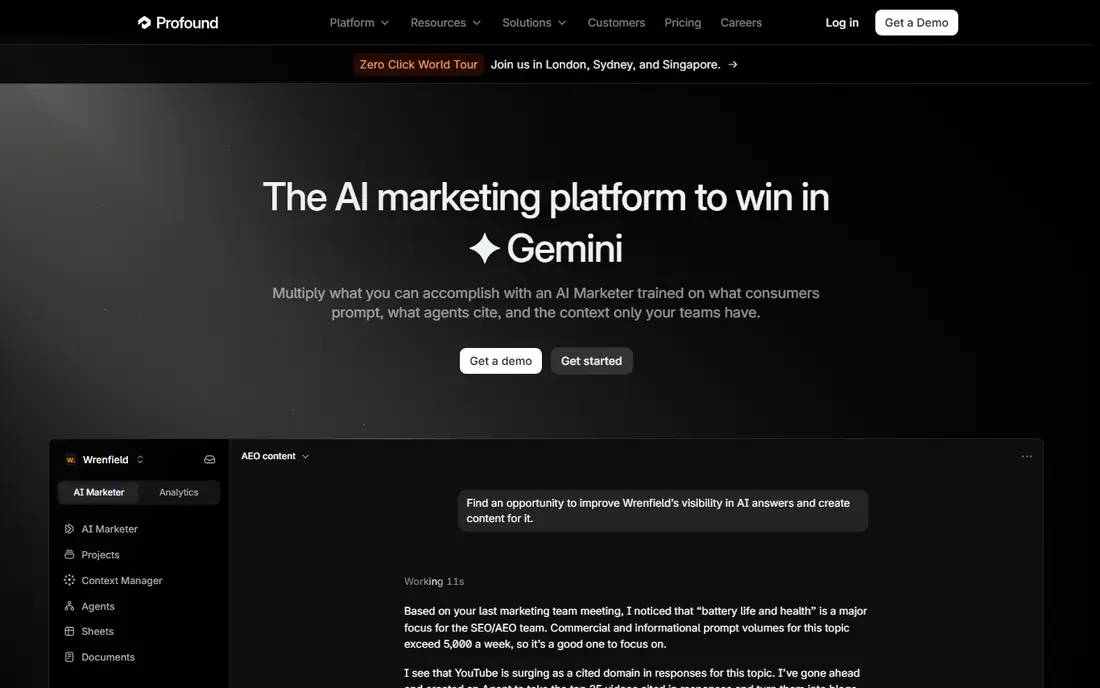
Profound is our pick for larger brands that need a structured AI search program rather than a quick check. It tracks brand mentions across AI engines, compares share of voice with competitors, and surfaces the prompts where a brand is missing, misrepresented, or weakly cited. That structure helps a marketing lead turn a weekly report into a clear list of pages to fix, pages to create, and claims to clarify.
The catch is scope and cost. A small site with a handful of pages may not need this depth, and teams without someone to act on the findings can end up with impressive charts and little change. Profound fits best when one owner reviews prompts each week, agrees the priority fixes, and tracks whether later answers change.
- Covers several major AI engines
- Prompt-level brand and competitor reporting
- Action-oriented insights for content and search teams
- Pricing is not published in a simple starting tier
- Setup can be heavier than a small tracker
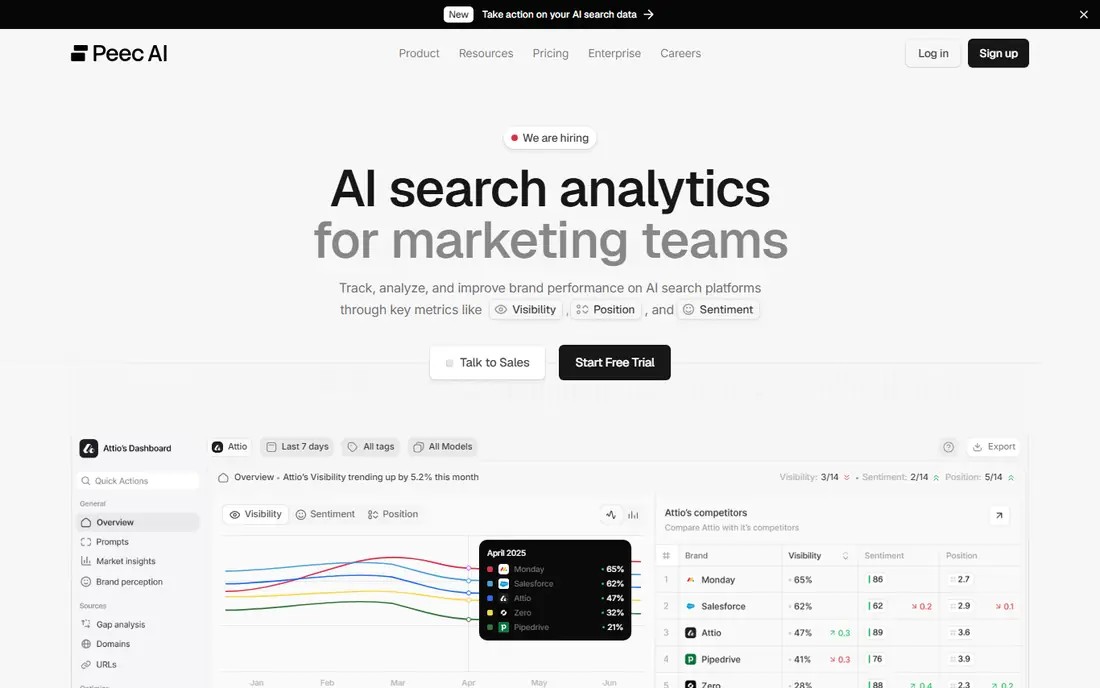
Peec AI works well for marketing teams that want a report they can open, understand, and share without a long setup. Its dashboards put brand visibility, sentiment, and competitor mentions in one place, which makes it easier to spot a sudden drop or a rival gaining ground on a key topic. Product-level tracking is also useful for companies with more than one offer, since a flagship product and a newer product rarely perform the same way in AI answers.
The honest limit is scale. A team that starts with a modest prompt set may need to upgrade as it adds competitors, products, or countries. Before signing up, list the prompts that map to real buying questions and keep the set tight. That discipline keeps the dashboard focused and the bill easier to defend.
- Clear dashboards for brands and competitors
- Prompt tracking across AI platforms
- Product-level tracking on higher plans
- Costs can rise with more prompts and markets
- Some advanced features sit on higher tiers
Otterly AI is a sensible first step for a small business, freelancer, or agency that wants regular AI visibility data without an enterprise contract. It follows brand mentions and share of voice across AI platforms and shows trends over time, so a team can see whether a content update or a press mention moved the needle. The price point makes it easier to test AI tracking for a few months before committing to a larger platform.
It is less suited to teams that want the tool to draft the fix as well as find the gap. Otterly AI tells you what is happening, and your team still needs to decide what to change on the site. For many small teams, that split is fine, because the main value is knowing which prompts deserve attention first.
- Low starting price for small teams
- Tracks share of voice over time
- Alerts help teams spot changes early
- Monitoring focus means fewer built-in content fixes
- Larger prompt sets cost more
Semrush AI Visibility Toolkit
Best for: SEO teams already using Semrush
Semrush is our pick for teams that already plan search work inside Semrush. The AI Visibility Toolkit adds prompt-level visibility and competitor share to a platform that already covers keywords, technical issues, and content gaps. That pairing matters, because an AI answer problem is often also a content clarity problem, a missing page, or a weak citation source. Seeing both sides in one workflow saves time.
The trade-off is that Semrush is a large platform. A team that only wants a simple AI tracker may find the wider toolset distracting, and the total cost depends on the base plan and any AI add-on. It fits best when SEO reporting already goes to stakeholders through Semrush and AI visibility can join that same report.
- Pairs AI visibility data with keyword, backlink, and audit data
- Useful competitor comparisons
- Familiar reporting for SEO teams
- Can feel broad if you only need AI tracking
- AI features may require a suitable Semrush plan or add-on
Ahrefs Brand Radar suits teams that want to understand the link between search authority and AI mentions. If a competitor keeps appearing in answers, Ahrefs helps a team check that rival's pages, links, and content depth in the same place. That context can explain a gap that a prompt chart alone cannot, such as a stronger comparison page or a better-cited guide.
The catch is fit. Ahrefs is a full SEO platform, so buying it only for Brand Radar is hard to justify for a small team. It makes most sense for SEO teams that already use Ahrefs for audits, keyword research, and competitor tracking and want AI brand data alongside those reports.
- Strong competitor and authority research
- Useful for tracing why a brand or rival gets cited
- Familiar interface for SEO users
- AI visibility is part of a wider SEO suite
- Entry cost can be high for a single-purpose need
Scrunch takes a different angle from pure trackers. Instead of only reporting mentions, it focuses on how content performs when AI systems read, summarize, and cite it. That makes it a good fit for publishers, SaaS companies, and agencies whose main asset is a library of guides, docs, and comparison pages. Small changes to headings, facts, definitions, and source links can change how often a page is cited.
The limit is that Scrunch is not the cheapest way to check a brand name once a week. Teams that want a light monitor should start elsewhere. Teams that publish often, and want each major page to earn citations, will get more from its content-first approach.
- Focus on how content performs in AI answers
- Helps teams improve machine-readable structure
- Useful for content-led brands
- Published pricing is not a simple self-serve tier
- Less suited to teams that only want basic monitoring
AthenaHQ stands out for teams that ask why, not just where. Its citation analysis helps a team see which sources AI systems trust for a topic and how a competitor's page earns that citation. That detail turns a vague goal, such as better AI visibility, into concrete work, like adding a clear definition, a comparison table, or a source that an AI system can verify.
The downside is effort and price. The reports reward a team that reviews them often and updates pages in response. A brand that checks once a quarter may not see enough change to justify the cost. For a team with dedicated search or content ownership, AthenaHQ is one of the more analytical options here.
- Deep citation analysis
- Competitor comparison features
- Focus on why a rival is cited instead of your brand
- Pricing can be high for small teams
- Best value needs regular review by a dedicated owner
Writesonic suits a small team that needs to find a visibility gap and draft a fix in the same workflow. Its AI visibility features track brand presence, while its writing tools help a team produce or revise the page that should earn the citation. That pairing can shorten the loop from report to published update, which is often where AI visibility projects stall.
The honest catch is depth. A large enterprise team that needs deep prompt intelligence, multi-market reporting, and detailed citation analysis may prefer Profound or AthenaHQ. A lean team that publishes weekly and wants one tool for tracking and drafting will find Writesonic a practical middle ground.
- Combines AI visibility tracking with content tools
- Useful for small content teams
- Faster path from finding to draft
- Visibility depth is thinner than dedicated enterprise trackers
- Content tools add scope some teams do not need
How we picked these
We compared official feature pages, pricing pages, app and platform descriptions, privacy and data notes where available, and public reviews for each tool. We favored tools that clearly track brand mentions across more than one AI engine, show prompt-level results, and offer competitor comparison. We left out tools that only claim AI optimization without showing how brand visibility is measured, and we did not include ToolNimba itself. Prices change often in this fast-moving category, so check the vendor pricing page before you buy.
What to check before you pay
Start with your prompt list, not the dashboard. Write 20 to 50 prompts that mirror real questions from buyers, including comparisons, pricing, alternatives, and problem-led searches. Run those prompts through a trial and check whether the results feel relevant to your business. A tool that tracks hundreds of generic prompts is less useful than one that tracks the questions that lead to sales calls.
Check prompt limits and markets
Ask how many prompts, competitors, and regions are included, and what happens when you exceed them. A low starting price can rise quickly once you add a second market or a close rival. Also check how often prompts refresh, since weekly data may be enough for content planning but too slow for a brand issue.
Check citation sources, not just scores
A visibility score tells you that you are behind. A citation list tells you what to fix. Look for the pages AI systems cite for your top prompts, then check whether those pages are yours, a partner's, or a competitor's. Fixing facts, adding a clear summary, and linking to a primary source often helps more than publishing a new post on the same topic.
Check who will act on the report
Assign one owner and a weekly review time before you pay. That person should turn findings into page updates, new FAQs, or outreach to a cited source. Without that step, even the best tracker becomes a report that no one opens.