Best Marketing Automation Platform for Startups in 2026: 9 Platforms Compared
By ToolNimba Editorial Team October 28, 2026 10 min read

- Top pick
 HubSpot Marketing Hub
All-in-one CRM and automation
Starting priceFreeCheck out HubSpot Marketing HubRead our review - Runner-up
 ActiveCampaign
Deep automation journeys
Starting price$15 per monthCheck out ActiveCampaignRead our review - Also great
 Mailchimp
Beginners and email-first teams
Starting price$13 per monthCheck out MailchimpRead our review
How we researched this
We compared official pricing and feature pages, app store listings, privacy policies and public user reviews. Prices change, so check the provider's site before you pay.
Key takeaways
- HubSpot is the safest all-in-one starting point for startups that want CRM, forms, email, and automation in one system with a free tier.
- ActiveCampaign is our pick for startups that need deeper automation logic and are willing to learn a more powerful builder.
- Mailchimp and Brevo suit email-first startups on a tight budget, since both offer free plans and low entry prices.
- Klaviyo is the clear pick for ecommerce startups, since its flows tie directly to store revenue and customer behavior.
- Price by contacts and sends, not just by headline monthly cost, since contact limits and send limits drive the real bill as you grow.
Quick comparison
| Name | Best for | Starting price | Free plan | |
|---|---|---|---|---|
| HubSpot Marketing Hub | All-in-one CRM and automation | Free | Yes | Visit |
| ActiveCampaign | Deep automation journeys | $15 per month | Free trial (14 days) | Visit |
| Mailchimp | Beginners and email-first teams | $13 per month | Yes | Visit |
 Klaviyo | Ecommerce lifecycle marketing | $20 per month | Yes | Visit |
 Brevo | Budget email and SMS | $9 per month | Yes | Visit |
 Moosend | Simple automation on a budget | $9 per month | Free trial (30 days) | Visit |
 Kit | Creators and newsletter startups | $25 per month | Yes | Visit |
 MailerLite | Simple newsletters and automation | $10 per month | Yes | Visit |
 EngageBay | Small teams on one platform | See website | Yes | Visit |
The best marketing automation platforms for startups
Marketing automation for a startup should save time without adding a second job. The platforms below cover welcome journeys, lead nurturing, abandoned cart flows, and simple scoring, but they differ in price, learning curve, and how well they fit ecommerce, B2B, or creator businesses. We compared official pricing, free plans, and feature pages to build this list.
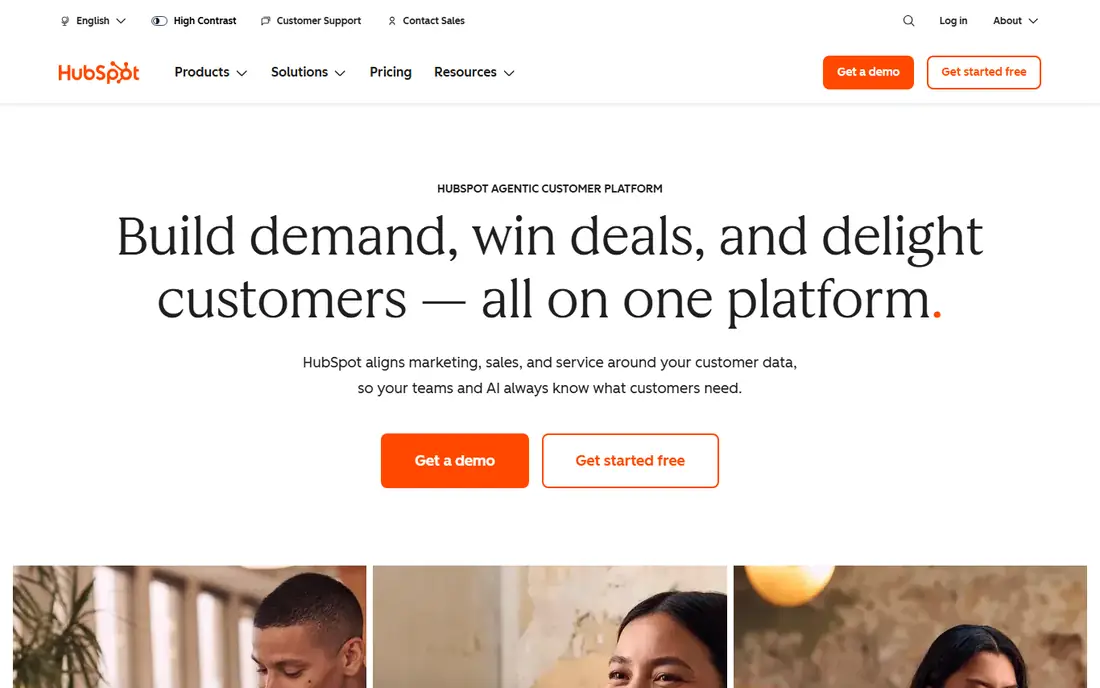
HubSpot is the easiest safe choice for a startup that wants one system for contacts, forms, email, and deals. The free tier covers the basics, and paid Starter plans add automation and landing page tools without forcing a move to another platform. That continuity matters when a startup hires its first marketer and does not want to rebuild its whole stack.
The catch is price at scale. Advanced workflows, custom reporting, and some AI features require Professional plans that cost far more than Starter. Start free, use the CRM well, and upgrade only when a specific workflow or report justifies the jump. For many startups, HubSpot is the platform they grow into, not out of.
- Free CRM, forms, landing pages, and basic email included
- Automation grows with the business
- Large integration library
- Powerful automation and reporting sit on higher-priced plans
- Seat and contact costs can rise as the team grows
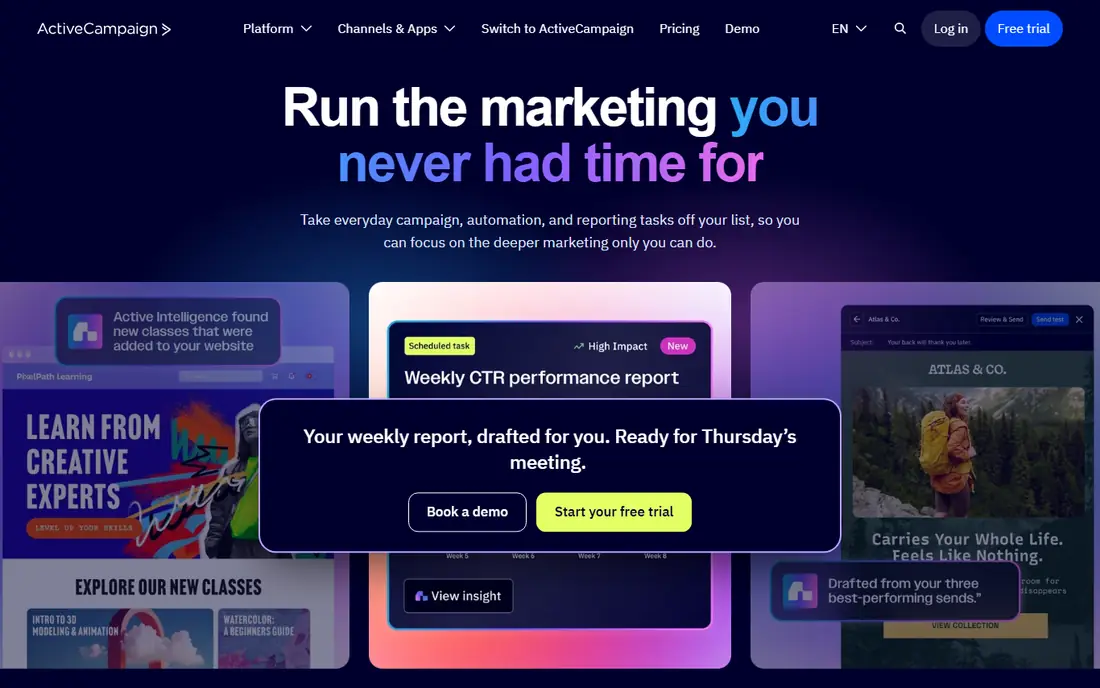
ActiveCampaign wins for startups that live or die by journeys. Its builder lets you branch on behavior, tags, site visits, and purchases, and its automation templates give small teams a head start on welcome, nurture, and win-back flows. Site tracking and a built-in CRM mean you can trigger messages from real behavior, not just list membership.
Beginners may find the depth daunting at first, and there is no free tier to learn slowly. If your startup sends simple newsletters only, ActiveCampaign is more than you need. If you need behavior-based journeys and scoring from day one, it is the best value in this list.
- Visual automation builder with conditions, splits, and goals
- Built-in CRM and site tracking
- Strong deliverability reputation
- Interface can overwhelm beginners
- No permanent free plan
- Pricing rises with contacts
Mailchimp remains the simplest way for a startup to send good-looking email fast. Its drag-and-drop builder, templates, and journey builder cover welcome emails, product updates, and basic ecommerce flows without training. The free plan lets a new business test email before it has revenue to spend.
The limit appears as you grow. Deeper segmentation, behavioral targeting, and multivariate testing sit on higher plans, and contact counting needs care. Mailchimp suits email-first startups that value speed over deep automation, and it pairs well with a separate CRM if you later need one.
- Easy builder and large template library
- Free plan for up to 500 contacts
- Customer journey builder on paid plans
- Advanced automation is limited on lower plans
- Unsubscribed contacts can count toward limits unless archived
Klaviyo is built for stores. Its flows for welcome, abandoned cart, post-purchase, and win-back tie directly to orders, so a startup can see revenue per email rather than just opens. Segmentation on purchase history, browsing, and predicted value helps small stores send fewer, more relevant messages.
Non-ecommerce startups will find less value here, since many features assume a product catalog and order data. SMS costs also add up if you enable that channel. For a Shopify or ecommerce startup, Klaviyo is often the first paid marketing tool that pays for itself in recovered carts.
- Deep Shopify and ecommerce integrations
- Revenue tracking per flow and campaign
- Strong segmentation on purchase behavior
- Less suited to non-ecommerce B2B startups
- Costs scale with contacts and SMS use
Brevo, formerly Sendinblue, is the budget champion for startups with a large list but modest send volume. Since pricing follows emails sent rather than contacts stored, a startup can keep a growing list without an immediate price jump. The free plan covers daily sending for very small teams, and paid plans add automation and SMS.
The trade-off is depth and polish. Its automation builder is capable for welcome and nurture flows, but it lacks the branching depth of ActiveCampaign. If budget is the main constraint and email plus SMS are the main channels, Brevo is a strong, honest choice.
- Pricing by email volume, not contact count
- Free plan with 300 emails per day
- Email, SMS, and WhatsApp in one platform
- Automation templates are simpler than ActiveCampaign
- Design tools are less polished than Mailchimp
Moosend suits startups that want automation without a large bill or a steep learning curve. Its editor is straightforward, its automation recipes cover common journeys, and its price stays low for small lists. For a team that needs to send newsletters, build a landing page, and run a welcome flow, Moosend covers the basics well.
Larger teams may miss deeper CRM features and a wider integration set. Moosend also has less brand recognition in the US, so check support hours and integration coverage for your stack. As a low-cost starter, it punches above its price.
- Low entry price with a wide range of automation triggers
- Easy editor for newsletters and landing pages
- Good for small teams
- Smaller integration library than HubSpot or Mailchimp
- Advanced reporting is lighter than larger platforms
Kit, formerly ConvertKit, is built for creators, coaches, and newsletter-led startups. Its model centers on subscribers rather than lists, so one person can sit on several sequences without duplicate billing quirks. Visual automations, forms, and landing pages make it easy to turn content into an email list and then into sales.
B2B startups that need lead scoring, deal pipelines, and CRM depth will find Kit thin. Ecommerce teams will miss Klaviyo-style revenue flows. For a content-led startup where the newsletter is the product, Kit is a clean and focused choice.
- Subscriber-first model with visual automations
- Landing pages and forms built for creators
- Simple tagging and sequences
- Less suited to ecommerce or complex B2B scoring
- Entry paid price is higher than some email tools
MailerLite is a calm, affordable option for startups that mainly need newsletters, simple automations, and landing pages. Its editor is easy to learn, its free plan covers early growth, and its paid plans stay modest for small lists. Small teams that do not need a full CRM often find MailerLite enough for the first year or two.
The limit is automation depth. Complex branching, scoring, and multi-channel journeys are lighter here than in ActiveCampaign or HubSpot. If your marketing is mostly a weekly newsletter plus a welcome sequence, that simplicity is a plus. If you need deep behavior flows, look higher on this list.
- Clean editor and simple automation
- Free plan for small lists
- Landing pages and forms included
- Automation depth is limited compared with ActiveCampaign
- Fewer advanced ecommerce features than Klaviyo
EngageBay targets small businesses that want an all-in-one platform without HubSpot pricing. It combines a CRM with email marketing, automation, landing pages, and social tools, so a tiny team can run marketing and sales from one login. The free plan lets you test the core workflow before paying.
The trade-off is scale and ecosystem. Integrations, templates, and community resources are thinner than the larger platforms, and advanced automation is less powerful than ActiveCampaign. For a very small startup that wants one affordable system and simple journeys, EngageBay is worth a trial.
- CRM, email, automation, and landing pages in one low-cost system
- Free plan for basic use
- Simple setup for small teams
- Smaller ecosystem and support footprint than HubSpot
- Advanced features are less deep than specialist tools
How we picked these
We compared official pricing and free plan pages, automation features, CRM fit, and ecommerce support, and we favored platforms that a startup can start on free or for under $25 per month. We left out enterprise-only platforms such as Marketo and Salesforce Marketing Cloud for most startups, since their pricing and setup fit larger teams. Prices change, so confirm contact and send limits on the vendor site before you commit.
How to choose for a startup
Start with your main channel. Ecommerce startups should shortlist Klaviyo first. Creator and newsletter startups should shortlist Kit and MailerLite. B2B startups that need CRM plus marketing should shortlist HubSpot and ActiveCampaign. Budget-first teams should shortlist Brevo and Moosend.
Price by growth, not by day one
A free plan that caps at 500 contacts feels generous until a lead magnet works. Model your cost at 1,000, 5,000, and 10,000 contacts, and check whether unsubscribed contacts count toward the limit. That model often changes the cheapest pick.
Test one real journey
During a trial, build a welcome journey, a lead nurture flow, and one re-engagement email. Check deliverability, reporting, and how hard it is to segment by behavior. A platform that looks good in a demo can feel slow when you build real flows, so test with your own content and list.
Keep the CRM question open
If you already use a CRM, pick a marketing tool that syncs with it cleanly. If you have no CRM, an all-in-one platform saves integration work. Either way, avoid a tool that traps your contacts in a format you cannot export, since switching costs rise with list size.
Sources
- https://www.hubspot.com
- https://www.activecampaign.com
- https://mailchimp.com
- https://www.klaviyo.com
- https://www.brevo.com
- https://www.moosend.com
- https://kit.com
- https://www.mailerlite.com
- https://www.engagebay.com
- https://mkceo.com/articles/marketing-automation/top-5-marketing-automation-small-business.html
- https://technologyadvice.com/marketing-automation/