Best Online Learning Platforms in 2026: 8 Learning Platforms Compared
By ToolNimba Editorial Team October 28, 2026 10 min read

- Top pick
 Coursera
University and career certificates
Starting price$59 per monthCheck out CourseraRead our review - Runner-up
 Udemy
Single courses you keep
Starting priceSee websiteCheck out UdemyRead our review - Also great
 edX
Free university course audits
Starting priceFreeCheck out edXRead our review
How we researched this
We compared official pricing and feature pages, app store listings, privacy policies and public user reviews. Prices change, so check the provider's site before you pay.
Key takeaways
- Coursera is the strongest choice when a recognized certificate or university-backed course matters, with Coursera Plus at $59 per month.
- Udemy suits one-off skills, because you buy a single course and keep it, rather than paying a monthly fee for a whole catalog.
- Khan Academy remains the best free option for school-level maths, science, and test preparation, with no subscription needed for its core lessons.
- Skillshare and MasterClass serve different goals: Skillshare is project-based creative learning, while MasterClass is polished, expert-led inspiration.
- edX lets you audit many university courses for free, so you can test the teaching style before paying for a verified certificate.
Quick comparison
| Name | Best for | Starting price | Free plan | |
|---|---|---|---|---|
| Coursera | University and career certificates | $59 per month | Free trial (7 days) | Visit |
| Udemy | Single courses you keep | See website | Yes | Visit |
| edX | Free university course audits | Free | Yes | Visit |
 Skillshare | Creative project classes | See website | Free trial | Visit |
 LinkedIn Learning | Workplace skills | See website | Free trial | Visit |
 Khan Academy | Free school and college basics | Free | Yes | Visit |
 MasterClass | Expert-led video classes | See website | No | Visit |
 Codecademy | Hands-on coding practice | See website | Yes | Visit |
The best online learning platforms
A learning platform is only useful if you finish the course, so the right choice depends on your goal, your budget, and how you like to learn. The eight platforms below cover career certificates, creative skills, coding, and completely free study.
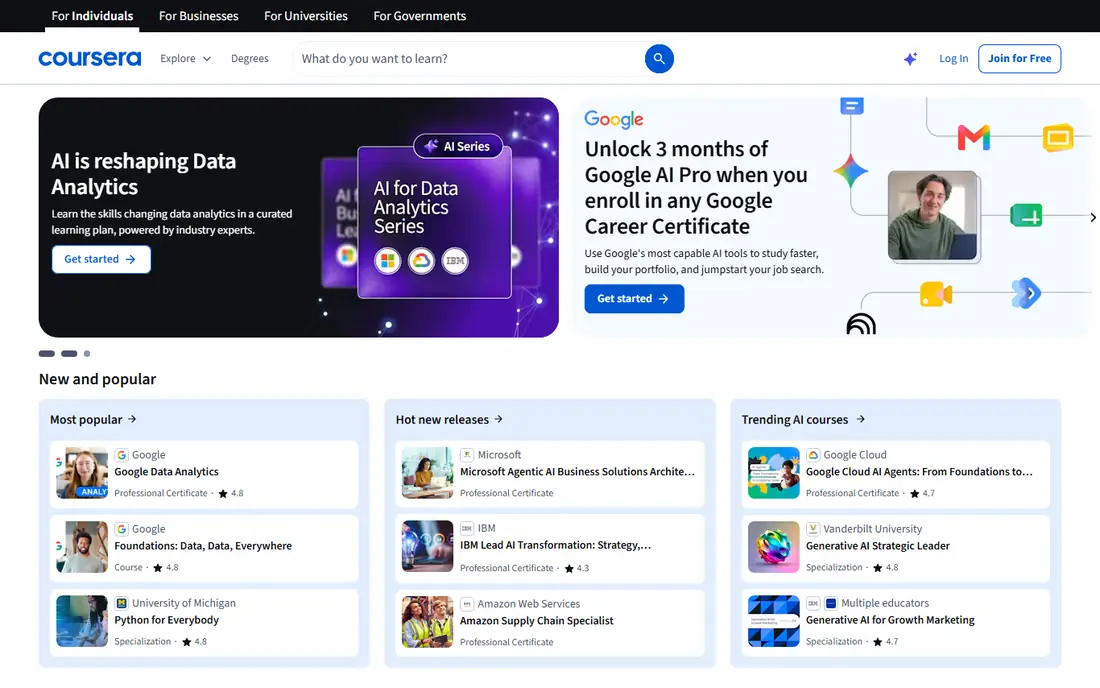
Coursera Plus costs $59 per month and gives access to more than 10,000 courses, projects, specializations, and professional certificate programs, with a 7-day free trial on monthly billing. That breadth makes it a practical choice for a career change, where you may need several related courses rather than one narrow tutorial.
The honest catch is pace. A professional certificate that takes months to finish will cost several months of subscription, so a slow learner can pay more than the price of a single Udemy course. Audit a course first where that option exists, and check whether the specific program you want carries the Coursera Plus badge before subscribing.
- Courses from universities and companies such as Google and IBM
- Certificates you can add to a resume or LinkedIn profile
- Free audit on many courses
- Degrees and some programs are excluded from Plus
- Monthly cost adds up if you learn slowly
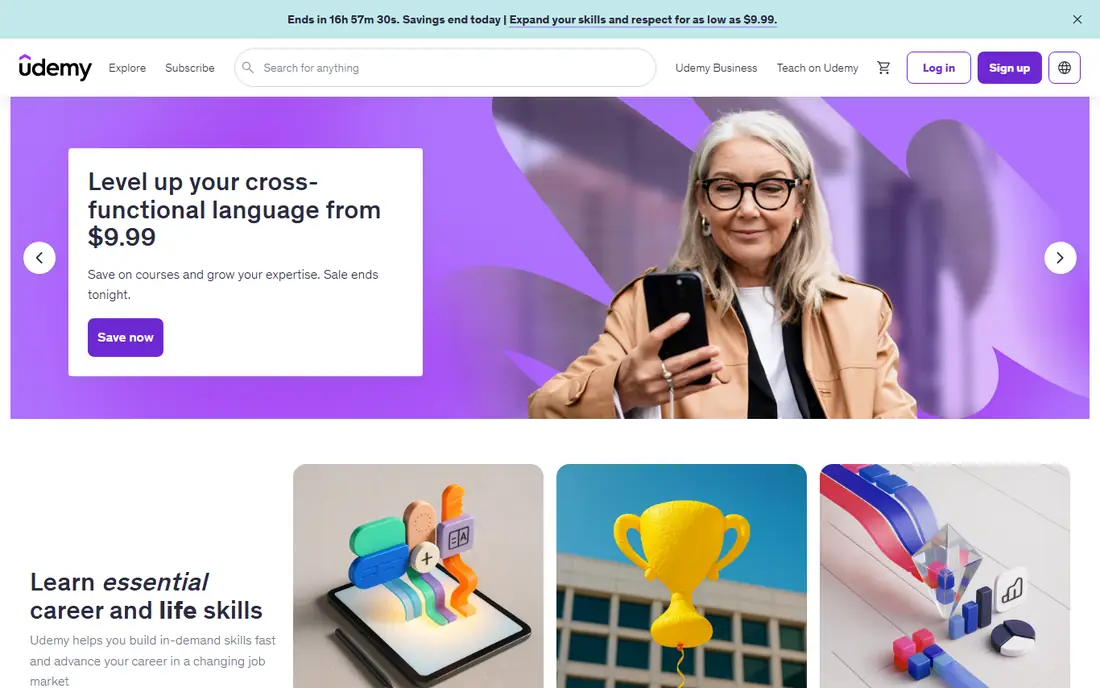
Udemy works like a bookstore for courses. You pick a single topic, such as Excel, Python, photography, or guitar, and you pay for that course alone. Sales are frequent, so the price you see on a given day may differ from the list price, which is why we list the starting price as See website rather than a single figure.
That model suits a learner with one clear gap to close. It suits it less well for someone who wants a structured path toward a credential, because courses are made by individual instructors with no shared curriculum. Read recent reviews for the specific course, not just the platform, and check when it was last updated.
- Buy one course at a time
- Lifetime access to courses you purchase
- A very large catalog of practical topics
- Quality varies by instructor
- Certificates are completion certificates, not university credentials
edX grew out of university partnerships, and that academic tone still shows in its courses. Many courses can be audited for free, which means you watch lectures and read materials without graded assignments or a certificate. That free route is ideal for learning a subject for its own sake.
Paying for a verified certificate adds graded work and a credential you can share, and longer MicroMasters and degree programs go further still. The trade-off is cost and commitment: a verified track is a real course with deadlines in some cases, not a casual video playlist. Start with an audit to confirm the level fits you.
- University-level courses from well-known institutions
- Free audit track on many courses
- Verified certificates and longer programs available
- Verified certificates cost extra, often $50 to $300
- Course schedules can be less flexible than on-demand marketplaces
Skillshare is built around making something, not just watching a lecture. Classes in illustration, graphic design, writing, video, and photography usually end with a project you can share, and that structure helps learners who stall on theory alone. Recent comparisons put the annual plan at about $13.99 per month, but pricing and trial length have varied, so check the current page before you pay.
The limit is credential value. A Skillshare class will not carry the same weight with an employer as a Coursera certificate, and advanced professionals may outgrow the catalog quickly. For a hobby, a side project, or a first step into a creative skill, that trade-off is usually fine.
- Short, project-based creative classes
- Useful for design, illustration, writing, and photography
- Community projects for feedback
- No university-backed credentials
- Class quality varies, and depth is limited on advanced topics
LinkedIn Learning focuses on workplace skills: management, communication, Excel, project tools, and popular software. Courses are short and consistent in style, which makes it easy to finish a course in a lunch break or two. Completed courses can appear on your LinkedIn profile, where a hiring manager may see them.
Access is the complication. Many people reach LinkedIn Learning through LinkedIn Premium, an employer, or a library, rather than buying it alone, so the price you pay depends on that route. That is why we list See website here. If you already have access through work or a library, it is a strong free-at-the-point-of-use option.
- Short, practical business and software courses
- Certificates display on a LinkedIn profile
- Many employers and libraries offer access
- No standalone plan in the usual sense for many users, since access often comes through LinkedIn Premium
- Depth is limited on technical topics
Khan Academy is a nonprofit, and its core lessons are free without a trial or a card. Students, parents, and adult learners returning to basics will find structured maths, science, computing, history, and test preparation, with practice exercises that check understanding as you go. For school-age learners and for adults rebuilding foundations, it is hard to argue with free.
What it does not offer is a job credential. There is no certificate to show an employer, and professional topics such as advanced marketing or cloud certification sit elsewhere. Use Khan Academy to build the foundation, then move to Coursera, edX, or a specialist platform when you need proof of a job skill.
- Completely free core lessons
- Strong maths, science, and test preparation
- Short videos with practice exercises
- No certificates for job applications
- Limited coverage of advanced professional topics
MasterClass sells access to famous teachers, and the production quality shows it. A cooking class from a celebrated chef or a writing class from a well-known author feels closer to a documentary than a lecture, and that can be motivating when a drier course would lose you. Annual billing applies, with recent comparisons putting plans from about $10 per month on annual billing upward, so check the current tiers before subscribing.
The honest limit is depth. You watch, you take notes, and you may get a workbook, but you do not get graded assignments, tutor feedback, or a credential that an employer will weigh heavily. Treat MasterClass as inspiration and a starting point, and pair it with a practice-based platform when you need a working skill.
- High production quality
- Classes taught by well-known practitioners
- Broad range from cooking and writing to business and music
- No certificates of value to employers
- Teaching is mostly watch-only, with limited assignments or feedback
Codecademy differs from video-heavy platforms because you write code from the first lesson. Short explanations are followed by exercises in the browser, with instant feedback when your code is wrong. That loop suits learners who learn by doing and who get restless watching long lectures.
A free tier covers basic courses, while paid plans open full career paths, projects, and certificates. Recent comparisons put paid plans from about $15 per month on annual billing, but check the vendor page for the current figure. If your goal is a non-coding subject, Codecademy is not the right catalog at all, so match the platform to the skill first.
- Interactive coding in the browser
- Structured paths for Python, JavaScript, and data work
- Free tier for basic courses
- Paid plans are needed for full paths and certificates
- Less suited to non-coding subjects
How we picked these
We compared official feature pages, pricing pages, and course catalogs, along with app store listings and public reviews, for platforms that serve ordinary learners in the United States. A platform made the list only if it is actively available, covers a distinct learning goal, and states its pricing or free option clearly enough to judge. We left out platforms built only for schools or companies, and platforms that only sell courses rather than teach them.
How to pick a platform for your goal
Start with the outcome you need, not the catalog size. If you need a credential for a job search, shortlist Coursera and edX first and compare the exact certificate, not just the course title. If you need one practical skill this month, Udemy or Codecademy will usually cost less and finish faster than a subscription. If you are exploring a hobby, Skillshare or MasterClass will keep you engaged, and Khan Academy covers the free foundations underneath all of them.
Try before you pay, and set a finish date
Use free audits, free tiers, and trials to take the first two lessons of a course before paying. If the teaching style does not hold your attention in those lessons, it will not hold it in lesson twenty. Set a finish date when you subscribe, and cancel if you have not opened the course in two weeks, since an unused subscription is the most common waste in online learning.
Check what the certificate actually proves
A completion certificate shows you finished a course. A verified university or company certificate shows graded work from a named institution. Employers treat those differently, so read the certificate description on the course page and do not assume every certificate on a platform carries equal weight.