Best Options Trading Platform in 2026: 9 Platforms Compared
By ToolNimba Editorial Team October 28, 2026 11 min read

- Top pick
 thinkorswim (Charles Schwab)
All-round tools and education
Starting priceSee websiteCheck out thinkorswim (Charles Schwab)Read our review - Runner-up
 Fidelity
Value and research
Starting priceSee websiteCheck out FidelityRead our review - Also great
 Robinhood
Beginners on mobile
Starting priceFreeCheck out RobinhoodRead our review
How we researched this
We compared official pricing and feature pages, app store listings, privacy policies and public user reviews. Prices change, so check the provider's site before you pay.
Key takeaways
- Robinhood and Webull charge $0 per options contract, while most full-service brokers charge $0.65 per contract, which adds up fast for active traders.
- thinkorswim from Charles Schwab and tastytrade offer the deepest options tools, including multi-leg strategies, risk graphs, and paper trading.
- Fidelity stands out for value, with $0.65 per contract, no account fees, and no extra surcharge on many index options that some rivals add.
- Beginners should favor a simple app with education and paper trading over the most powerful desktop platform, then graduate when strategies get complex.
- This is not financial advice. Options trading carries risk, including the risk of losing more than your initial stake on some strategies, so learn position sizing before you trade real money.
Quick comparison
| Name | Best for | Starting price | Free plan | |
|---|---|---|---|---|
| thinkorswim (Charles Schwab) | All-round tools and education | See website | No | Visit |
| Fidelity | Value and research | See website | No | Visit |
| Robinhood | Beginners on mobile | Free | Yes | Visit |
 Webull | Mobile-first active traders | Free | Yes | Visit |
 tastytrade | Options-first active traders | See website | No | Visit |
 Interactive Brokers | Professional and global traders | See website | No | Visit |
 E*TRADE | Casual traders with strong tools | See website | No | Visit |
 SoFi Invest | Simple beginner trading | Free | Yes | Visit |
 TradeStation | Technical and active traders | See website | No | Visit |
The best options trading platforms
Options platforms differ more than stock apps do. Contract fees, multi-leg order tools, risk analysis, and education change the cost and the learning curve, so the right pick depends on how often you trade and how complex your strategies are.
thinkorswim (Charles Schwab)
Best for: All-round tools and education
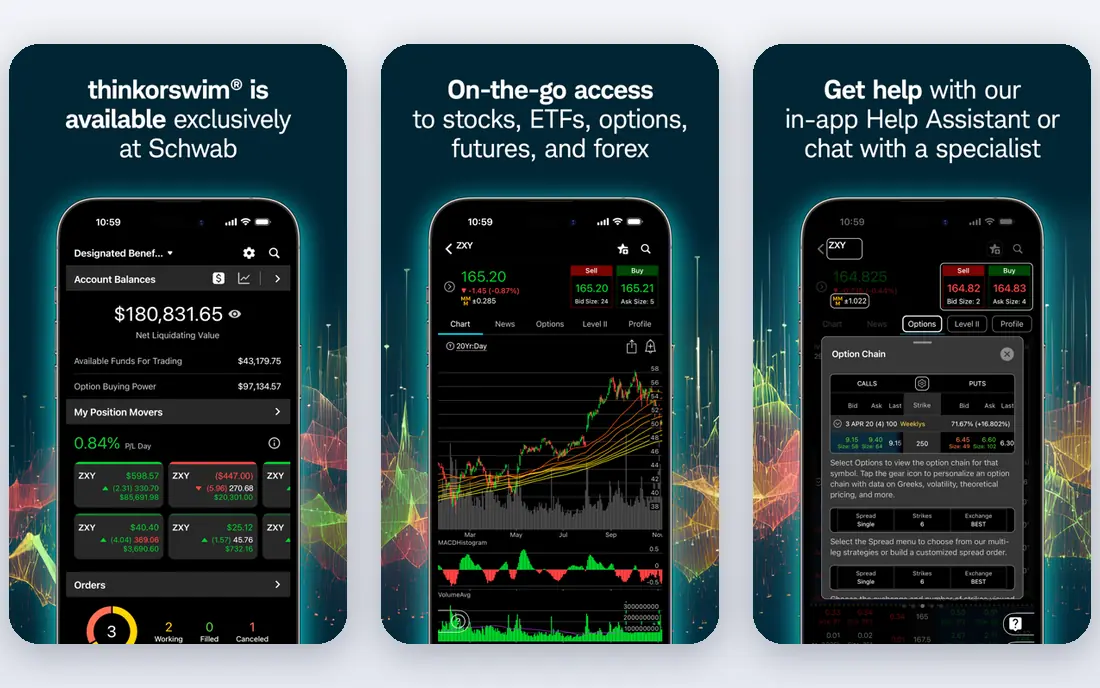
thinkorswim is the platform many serious options traders learn on, and for good reason. You can build multi-leg spreads, view profit and loss graphs before you place the order, backtest ideas, and practice in paper trading without risking cash. Schwab pairs that power with a large education library, so a beginner can move from a covered call to an iron condor inside one platform.
The cost is standard for a full-service broker at $0.65 per contract, plus regulatory fees, and index options can carry an extra exchange fee at Schwab that Fidelity does not add. The desktop app also has a steep learning curve, so new traders should start with the web or mobile version and paper trading. For traders who want one platform that grows with them, thinkorswim is our top all-round pick.
- Deep options chains, risk graphs, and paper trading
- Strong education library
- $0.65 per contract for most equity options
- Desktop platform can overwhelm new traders
- Index options may carry extra exchange fees
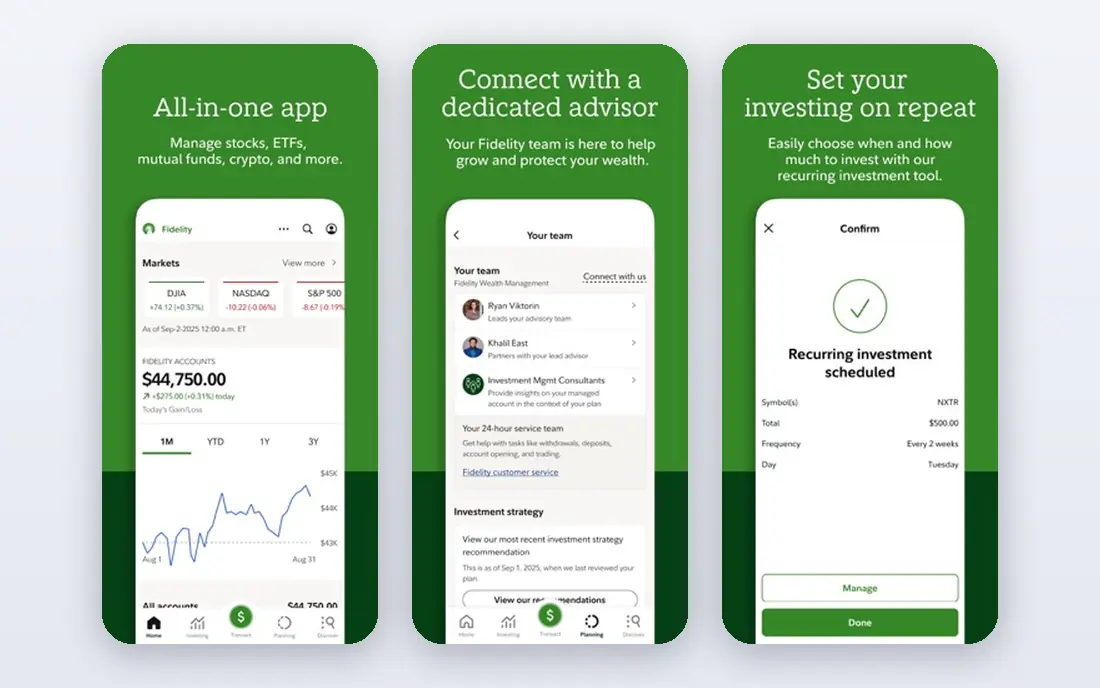
Fidelity earns its place on value alone. Equity options cost $0.65 per contract, there are no account or inactivity fees, and Fidelity does not add the index-options surcharge that Schwab applies, which matters if you trade SPX-style products. Research, screeners, and retirement planning tools sit in the same account, so long-term investors do not need a second broker for options.
Active Trader Pro, Fidelity's desktop tool, works well but looks less modern than thinkorswim, and its options workflow is less tailored than tastytrade's. Mobile trading is capable for single-leg and simple spread orders. If you trade options a few times a month and also hold long-term investments, Fidelity gives you low friction and low fees in one place.
- $0.65 per contract with no account or inactivity fees
- No added surcharge on many index options
- Strong research and planning tools
- Active Trader Pro feels dated next to thinkorswim
- Options education is solid but less options-first than tastytrade
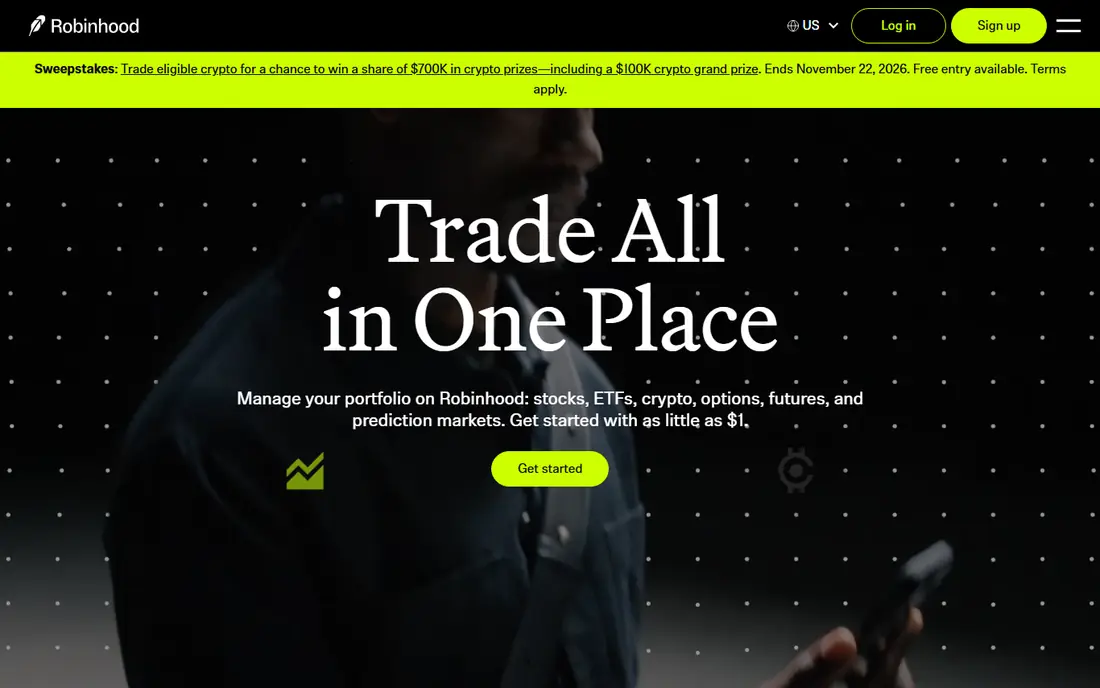
Robinhood is the easiest door into options trading. The app is clean, the account minimum is $0, and options carry no commission and no per-contract fee, which removes the cost barrier that stops many beginners from practicing with small positions. That simplicity makes it a good first app for single-leg calls and puts and for learning how options prices move.
The limits appear quickly for active traders. Charting, options chains, and research are basic compared with thinkorswim or tastytrade, and new accounts face approval levels that limit complex spreads. Robinhood Gold adds features for a monthly fee, but check the current price before subscribing. Start here to learn, and keep a second platform in mind if you move to multi-leg strategies.
- $0 commission and $0 per-contract fees on options
- $0 account minimum
- Clean mobile app
- Limited advanced tools and research
- Options approval levels restrict complex strategies for new accounts
Webull suits traders who live on their phone but want more charting than Robinhood offers. Equity options carry no per-contract fee, the mobile app packs in technical indicators and options chains, and you can trade options inside an IRA, which some beginners use for a tax-advantaged learning account. Paper trading is also available for practice.
Education and research are the weak spots. Webull offers community content and basic lessons, but not the structured options curriculum you get from Schwab or tastytrade. Fees for index options and regulatory charges still apply, so read the fee schedule. For a mobile-first trader who wants zero contract fees and deeper charts, Webull is a strong pick.
- $0 per-contract fees on equity options
- Strong mobile charting
- Options trading available in a Webull IRA
- Research and education are thinner than Schwab or Fidelity
- Customer support can be slower at peak times
tastytrade was built by options traders, and it shows in every screen. Opening an options trade costs $1.00 per contract, closing costs $0, and the fee is capped at $10 per leg, which keeps large spreads affordable. The platform handles multi-leg orders quickly, shows probability and risk data clearly, and its video education library is one of the best for learning spreads, strangles, and iron condors.
The trade-off is breadth. If you also want deep stock research, retirement planning, and banking in one account, Fidelity or Schwab will feel more complete. tastytrade also suits active traders more than buy-and-hold investors. For a trader whose main activity is options, tastytrade is hard to beat on cost and workflow.
- Built for options with $1.00 to open and $0 to close, capped at $10 per leg
- Fast multi-leg orders
- Strong options education
- Less suited to long-term stock investing
- Stock and ETF research is thinner than Fidelity
Interactive Brokers is the professional end of this list. High-volume traders can pay as little as about $0.15 per contract under tiered pricing, and the platform covers options on stocks, indexes, futures, and foreign markets from one account. Tools like Probability Lab and Volatility Lab help advanced traders model outcomes, and margin rates are often lower than at retail brokers.
That power comes with complexity. Trader Workstation has a steep learning curve, and the fee schedule has tiers and minimums that need reading before you trade. Beginners should not start here unless they have a mentor or prior experience. For professionals and high-volume traders, Interactive Brokers offers the lowest costs and the widest reach.
- Very low per-contract fees at volume, from about $0.15
- Global market access
- Professional tools like Probability Lab
- Complex platform and fee schedule
- Beginners can feel lost without prior trading experience
ETRADE, now part of Morgan Stanley, gives casual traders a middle path. The standard web platform handles simple options orders cleanly, while Power ETRADE adds advanced charting, risk analysis, and streaming data for traders who want more. Options cost $0.65 per contract, with a lower $0.50 rate for traders who place 30 or more stock, ETF, or options trades per quarter, according to published 2026 comparisons.
The main drawback is that you pay a contract fee while Robinhood and Webull charge none, so frequent small traders should do the math. Having two platforms can also confuse a beginner who is not sure which one to open. For a trader who wants a trusted full-service broker with a good active-trader upgrade path, E*TRADE fits well.
- Power E*TRADE for active traders
- $0.65 per contract, dropping to $0.50 for frequent traders
- Solid education
- Standard contract fee is higher than Robinhood or Webull
- Platform choice between web and Power E*TRADE can confuse new users
SoFi Invest is built for beginners who want to start without a complex platform. Options trading carries no commission and no per-contract fee, the interface stays simple, and educational content explains basics in plain terms. That combination makes SoFi a good first broker for a new trader who wants to try a covered call or a protective put with a small position.
Advanced traders will outgrow it fast. Multi-leg strategies, detailed risk graphs, and professional screening are limited compared with the platforms above. SoFi also works best as part of a wider SoFi account, with banking and lending nearby, which suits members who already use SoFi. Start here for simplicity, and move to thinkorswim or tastytrade when your strategies need more tools.
- Commission-free options with no per-contract fees
- Simple interface
- Education built for newer traders
- Limited advanced options tools
- Fewer order types and strategies than thinkorswim or tastytrade
TradeStation appeals to traders who build and test their own strategies. Charting is deep, the desktop platform supports custom indicators and backtesting, and options cost $0.60 per contract, slightly under the $0.65 standard at several rivals. That mix suits a technical trader who already knows how to read a chart and wants to automate parts of a workflow.
Beginners get less hand-holding here. Options education is present but not as options-first as tastytrade, and the pricing tiers for different plans can confuse a first-time account opener. If you trade actively, value charting, and want a small fee saving per contract, TradeStation deserves a trial. If you are new, start with a simpler app first.
- $0.60 per contract
- Powerful charting and strategy testing
- Desktop and web platforms
- Smaller education library for options beginners
- Pricing tiers need careful reading
How we picked these
We compared official fee schedules, options approval levels, platform tools, mobile apps, paper trading, and education, plus 2026 comparisons from Finder and other broker roundups. We favored platforms that are available in the United States, publish per-contract fees clearly, and support at least basic multi-leg orders. We excluded brokers whose options fees could not be confirmed or whose platforms had no real options chain or risk view.
How to choose an options platform
Start with how you will actually trade, not with the longest feature list. A beginner who trades twice a month needs low fees, clear education, and paper trading. An active trader who trades spreads daily needs low per-contract costs, fast multi-leg entry, and risk graphs. Match the platform to that pattern, then test it with paper trades before funding it fully.
Count the contract fees first
Multiply your expected contracts per month by the per-contract fee. At $0.65, 100 contracts a month costs $65 in contract fees alone, before regulatory fees. At $0, that cost disappears, which is why Robinhood, Webull, and SoFi appeal to frequent small traders, while tastytrade's $10 per-leg cap appeals to large spread traders.
Test multi-leg orders in paper trading
Place a vertical spread and an iron condor in paper trading, and check how clearly the platform shows max profit, max loss, and breakeven. If you cannot read those numbers before you submit, the platform is not ready for real spreads, no matter how low its fees look.