Best Ovulation Tracker App in 2026: 8 Apps Compared
By ToolNimba Editorial Team November 13, 2026 10 min read

- Top pick
 Flo
Easy tracking plus content
Starting priceFreeCheck out FloRead our review - Runner-up
 Clue
Science-first tracking
Starting priceFreeCheck out ClueRead our review - Also great
 Natural Cycles
Temperature-based system
Starting priceSee websiteCheck out Natural CyclesRead our review
How we researched this
We compared official pricing and feature pages, app store listings, privacy policies and public user reviews. Prices change, so check the provider's site before you pay.
Key takeaways
- This is not medical advice. Predictions are estimates, and they are not a guarantee of ovulation or pregnancy timing.
- Flo suits users who want an easy tracker with health content and a large community, while Clue suits users who want a science-first, plain design.
- Natural Cycles is different, because it is a temperature-based system with regulatory clearance as contraception in some markets, not just a tracker.
- Privacy matters with cycle data, so check where data is stored, whether it is sold, and whether you can delete it before you log sensitive details.
Quick comparison
| Name | Best for | Starting price | Free plan | |
|---|---|---|---|---|
| Flo | Easy tracking plus content | Free | Yes | Visit |
| Clue | Science-first tracking | Free | Yes | Visit |
| Natural Cycles | Temperature-based system | See website | Free trial | Visit |
 Glow | Fertility community | Free | Yes | Visit |
 Ovia | Pregnancy and cycle tracking | Free | Yes | Visit |
 Fertility Friend | Detailed charting | Free | Yes | Visit |
 Premom | Ovulation test tracking | Free | Yes | Visit |
 Apple Health | Private on-device tracking | Free | Yes | Visit |
The best ovulation tracker app
Ovulation trackers estimate your fertile window from cycle dates, symptoms, temperature, or test results. Calendar-only estimates are the least reliable, while temperature and hormone test data add more signal. We compared official app pages, feature pages, and app store listings, and we kept only apps that are still available in 2026. If you are trying to conceive, avoiding pregnancy, or have irregular cycles, speak with a healthcare professional about the right method for you.

Flo is the most widely used cycle tracker in this list, and its strength is ease of use. You log period dates, symptoms, mood, and other signals, and Flo predicts your next period and fertile window. Health articles, symptom explainers, and a community forum sit alongside the tracker.
That content helps users who want to learn about cycles, not just log dates. The app also covers pregnancy and postpartum modes, so it can follow you through different life stages without switching apps. Premium adds more insights, partner sharing, and extra content.
The limits are prediction accuracy and privacy history. Calendar-based predictions weaken with irregular cycles, and Flo has faced regulatory scrutiny over past data practices, so read the current privacy policy before you log sensitive data. For easy, everyday tracking, Flo remains a strong pick.
- Easy cycle and symptom logging
- Large health content library
- Community features
- Predictions are estimates
- Premium needed for full features
- Past privacy concerns need a careful read
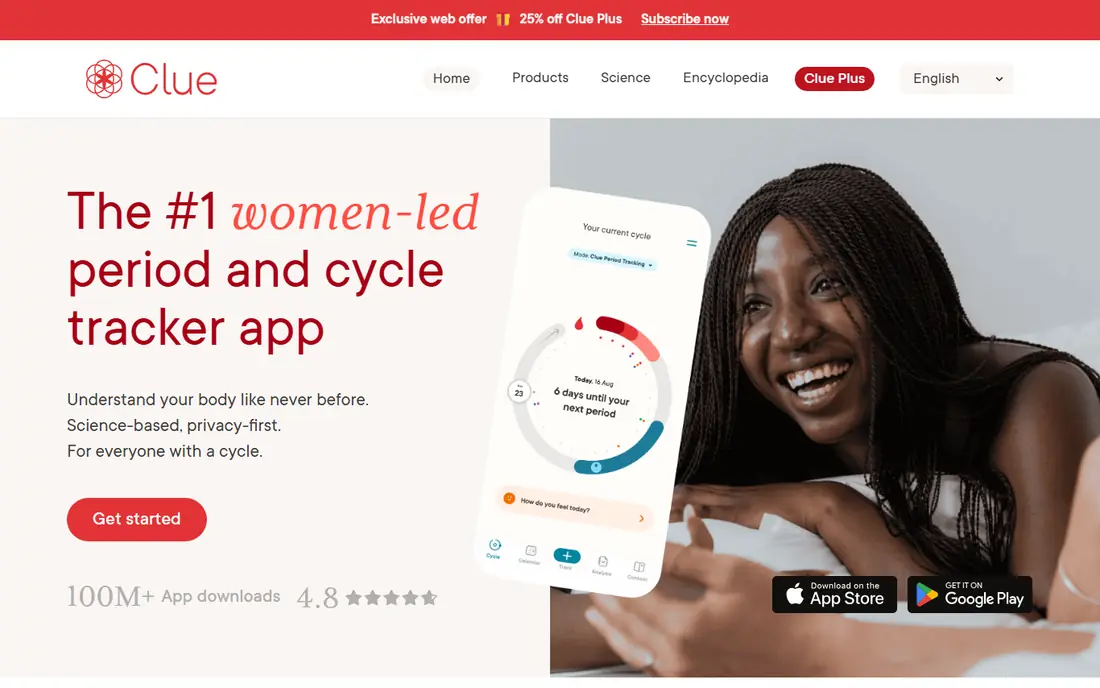
Clue takes a plainer, science-first approach to cycle tracking. You log period, symptoms, pain, mood, and other signals, and Clue predicts period and fertile days from that history. The design avoids pink, floral cliches, and keeps the focus on data and patterns.
That flexibility helps users with irregular cycles, because Clue lets you track many signals and see patterns over time, rather than forcing a fixed 28-day model. The company is based in Berlin, and its privacy approach under European rules is a draw for users who care about data handling.
The limits are similar to Flo. Predictions are estimates, and they are less reliable when cycles vary a lot. Clue Plus adds deeper analysis and predictions, while the free version covers core tracking. For a calm, data-focused tracker, Clue is our pick for privacy-conscious users.
- Plain, science-based design
- Flexible tracking for irregular cycles
- Berlin-based privacy approach
- Predictions are still estimates
- Premium needed for full analysis
- Less community content than Flo
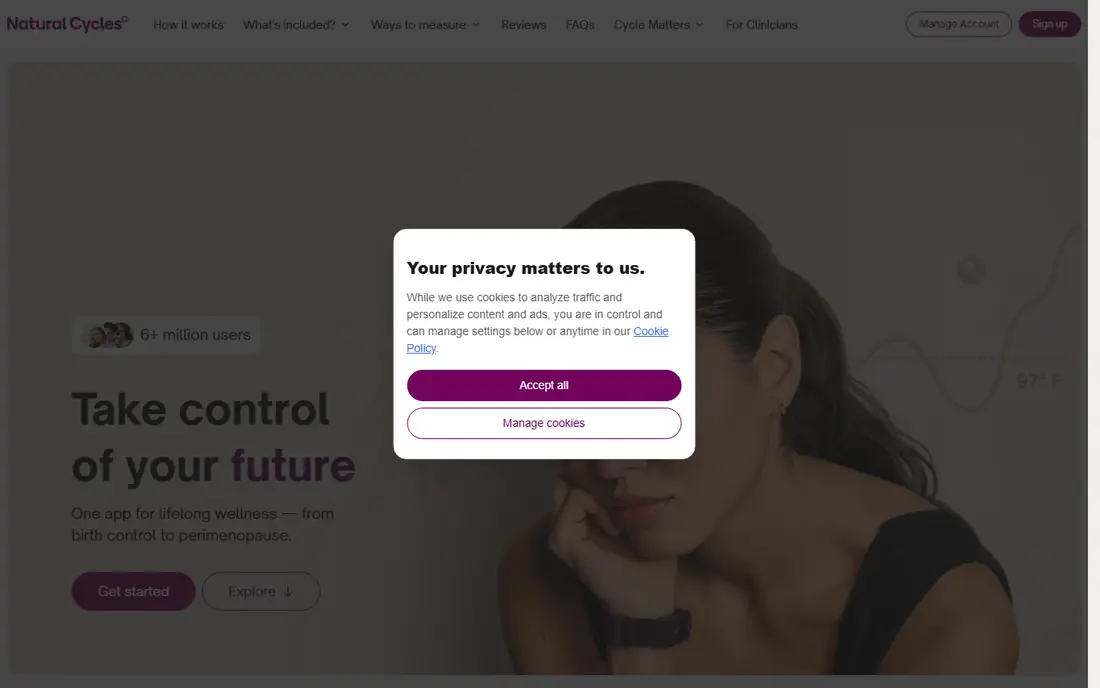
Natural Cycles is not a simple calendar tracker. You measure basal body temperature each morning, or sync a wearable, and the algorithm gives a daily red or green day status. Green days mean not fertile on that day, while red days mean use protection or abstain if you are avoiding pregnancy. That measurement step is why it holds regulatory clearance as contraception in some markets.
That distinction matters. A calendar app estimates from past dates, while Natural Cycles confirms ovulation from a temperature shift after it happens. That makes it more useful for planning, although it still requires consistent daily data and careful use on red days.
The trade-offs are effort and price. You need a thermometer or wearable, daily logging, and a subscription, with no free tier in many listings. Irregular sleep can also make temperature data less reliable. If you want a temperature-based system and are willing to log daily, Natural Cycles is the clearest option in this list.
- Temperature-based daily status
- Regulatory clearance as contraception in some markets
- Wearable links
- Needs daily temperature data
- No free plan in many listings
- Less suited to irregular sleep
Glow focuses on fertility and trying to conceive, with cycle tracking, ovulation predictions, and a large community forum. You can log symptoms, temperature, test results, and other signals, and share data with a partner. That community and partner support helps users who are trying to conceive and want peer support.
The app also covers pregnancy and baby tracking through related Glow apps, so it can follow a longer journey. Content on fertility, health, and trying to conceive sits alongside the tracker, which helps users who want context, not just dates.
The limits are prediction accuracy and free-version ads. Like other calendar trackers, Glow estimates are less reliable with irregular cycles, and full features need a premium plan. For fertility-focused tracking with community support, Glow is a strong pick.
- Fertility tracking plus community
- Partner sharing
- Health and fertility content
- Predictions are estimates
- Premium needed for full features
- Ads on the free version
Ovia offers free cycle, fertility, pregnancy, and parenting tracking in one family of apps. Cycle tracking covers period, ovulation estimates, symptoms, and mood, while pregnancy mode adds kick counters, milestones, and health content. That range suits users who want one app across life stages.
Employer-sponsored access can add extra coaching and content, although the core app is free for most users. That makes Ovia a low-cost option for basic tracking, especially for users who also want pregnancy tools later.
The limits are ads and prediction reliability. Free tracking includes ads, and estimates are still calendar-based unless you add temperature or test data. Read the data sharing terms, because Ovia has faced scrutiny over data practices in the past. For free, broad tracking, Ovia is a practical choice.
- Free core tracking
- Pregnancy and parenting modes
- Employer-sponsored options
- Ads on the free version
- Predictions are estimates
- Data sharing terms need a check
Fertility Friend is the classic charting app for users who want detail. You can log basal temperature, cervical mucus, ovulation tests, symptoms, and medications, and see them on a single chart. That depth helps users who are working with a clinician or who want to understand their own patterns in detail.
Analysis tools highlight ovulation, coverline, and cycle patterns, which is useful when you are trying to conceive and want more than a simple calendar estimate. The app has a long history, and its charting approach is trusted by many fertility-focused users.
The interface feels dated compared with Flo or Clue, and full analysis needs a VIP premium plan. New users may need time to learn the charting terms. For detailed, data-rich charting, Fertility Friend remains a top pick, especially for users who value depth over design.
- Detailed temperature and symptom charting
- Strong analysis tools
- Long history in fertility tracking
- Interface feels dated
- Premium needed for full analysis
- Learning curve for new users
Premom is built around ovulation predictor tests. You photograph a test strip, and the app reads the line strength and tracks it over days, which helps you spot the LH surge that usually comes before ovulation. That test-based signal is more direct than a calendar estimate alone.
Cycle tracking, temperature logging, and symptom tracking sit alongside the test reader, so you can combine several signals on one chart. That combination helps users who are trying to conceive and want to time testing and intercourse more precisely.
The limits are test cost and photo quality. You need to buy test strips, and a poor photo can affect the reading. Premium adds more analysis and features, while the free version covers core test tracking. For test-based tracking, Premom is a focused and useful choice.
- Ovulation test photo analysis
- Cycle and fertility tracking
- Test and temperature logging
- Predictions depend on test quality
- Premium needed for full features
- Test costs add up
Apple Health, on iPhone, offers cycle tracking that stays on your device and is encrypted. You log period dates, symptoms, and spotting, and the app predicts your next period and fertile window. That privacy model is the main draw for users who do not want cycle data on a third-party server.
The tracking is basic compared with Flo or Fertility Friend. There is no community, no test photo analysis, and no detailed charting, but for simple period and ovulation estimates, it covers the core job. Apple states that cycle tracking estimates should not be used as birth control.
Apple Health suits iPhone users who want private, free, simple tracking. If you need detailed fertility tools, community, or Android support, choose another app on this list. If privacy is your top priority, Apple Health is hard to beat.
- Free
- On-device, encrypted cycle data
- Simple period and symptom logging
- IPhone only
- Basic predictions
- No community or detailed fertility tools
How we picked these
We compared official app pages, feature pages, and app store listings for apps that are still available in 2026. We favored apps with real cycle and ovulation tracking, clear privacy terms, and a fit for different goals, from simple period tracking to fertility charting. We did not claim hands-on testing.
We also separated trackers from contraception systems, because that distinction affects safety. Only a system with regulatory clearance and a measurement-based method should be treated as contraception, and even then it needs careful daily use. Calendar trackers are estimates, not birth control.
What to check before you choose
Start with your goal. If you want simple period tracking, a basic app is enough. If you are trying to conceive, test and temperature data help more than a calendar alone. If you are avoiding pregnancy, use a method approved for that purpose and speak with a healthcare professional.
Next, check privacy. Read where data is stored, whether it is sold or shared, and whether you can export and delete it. Cycle data is sensitive, so choose an app whose terms you trust, and consider on-device tracking if privacy is your top concern.
Finally, combine signals when accuracy matters. A calendar estimate plus a positive ovulation test plus a temperature shift gives a clearer picture than any one signal alone. Log consistently for a few cycles, and do not rely on a single app prediction for a high-stakes decision.
Sources
Frequently asked questions
How accurate are ovulation tracker apps?
Accuracy varies by method. Calendar estimates are the least reliable, especially with irregular cycles, while temperature and hormone test data add more signal. All predictions are estimates, and they should not be treated as a guarantee.
Can an ovulation tracker be used as birth control?
Only a system with regulatory clearance for contraception, used exactly as directed, is meant for that purpose. Most trackers in this list are not birth control, and Apple Health states its estimates should not be used as birth control. Speak with a healthcare professional about contraception.
What is the best free ovulation tracker?
Flo, Clue, Ovia, and Apple Health all offer useful free tracking. Flo and Clue cover core tracking well, Ovia adds pregnancy modes, and Apple Health offers private on-device tracking for iPhone users.
Do I need ovulation tests or temperature data?
Not for basic period tracking, but they help when you are trying to conceive or want a clearer fertile window. Tests predict ovulation is near, while temperature confirms it happened, so the two together give prediction plus confirmation.
How do I protect my cycle data?
Choose an app with clear privacy terms, limit data sharing, use a strong passcode, and check whether you can delete your data. On-device tracking, such as Apple Health, keeps data off third-party servers, which some users prefer.