Best Phone Company in 2026: 10 Carriers Compared
By ToolNimba Editorial Team October 28, 2026 11 min read

- Top pick
 Verizon
Widest coverage and premium plans
Starting price$65 per monthCheck out VerizonRead our review - Runner-up
 T-Mobile
Fast 5G and perks
Starting price$50 per monthCheck out T-MobileRead our review - Also great
 AT&T
Major-carrier family plans
Starting price$50 per monthCheck out AT&TRead our review
How we researched this
We compared official pricing and feature pages, app store listings, privacy policies and public user reviews. Prices change, so check the provider's site before you pay.
Key takeaways
- The best phone company depends on where you live and how much data you use, not on a single national ranking.
- Verizon, T-Mobile, and AT&T run the major networks, and most cheaper carriers use one of those networks.
- Mint Mobile and Visible offer the lowest prices for many single-line users, but Mint requires multi-month prepayment for its best rates.
- T-Mobile and Verizon offer the most perks on premium plans, while AT&T suits families that want a major carrier at a mid-range price.
- Check coverage at your home, work, and commute before switching, since a cheap plan on a weak local network is a bad deal.
Quick comparison
| Name | Best for | Starting price | Free plan | |
|---|---|---|---|---|
| Verizon | Widest coverage and premium plans | $65 per month | No | Visit |
| T-Mobile | Fast 5G and perks | $50 per month | No | Visit |
| AT&T | Major-carrier family plans | $50 per month | No | Visit |
 Mint Mobile | Low-cost prepaid value | $15 per month | Free trial | Visit |
 Visible | Simple unlimited on Verizon network | $25 per month | No | Visit |
 Google Fi Wireless | International travel and flexible data | $20 per month | No | Visit |
 US Mobile | Custom plans and network choice | $10 per month | No | Visit |
 Cricket Wireless | AT&T network with taxes included | $30 per month | No | Visit |
 Metro by T-Mobile | Low-cost unlimited on T-Mobile | $40 per month | No | Visit |
 Consumer Cellular | Simple plans and older users | $20 per month | No | Visit |
The best phone companies
These carriers cover major networks, low-cost prepaid, and simple plans, so start with coverage in your area, then compare price for the data you actually use.
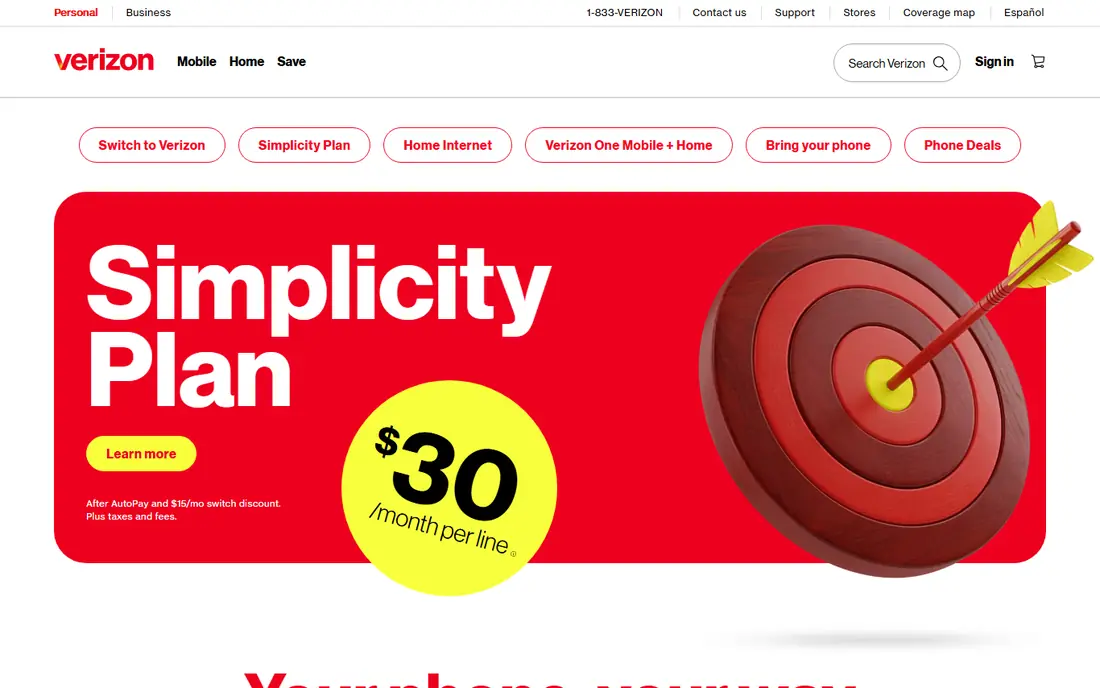
Verizon is our pick if coverage is the top priority, especially outside cities. Its Unlimited Welcome plan is listed at $75 per month, or $65 with autopay in recent October 2026 comparisons, and higher plans add premium data, hotspot allowances, and perks. That breadth is why many families and travelers stay with Verizon despite the price.
The cost is the honest catch. A single line on a premium Verizon plan can pass $100 per month before device payments, and taxes and fees add more. If you live in a city with strong T-Mobile or AT&T coverage, a cheaper carrier may give you the same daily experience for far less. If you travel rurally or need the most consistent signal, Verizon is hard to replace.
- Broad nationwide coverage, including many rural areas
- Strong premium unlimited plans
- Wide phone and device support
- Highest prices among major carriers
- Taxes and fees are extra on many plans
- Entry plan has fewer perks
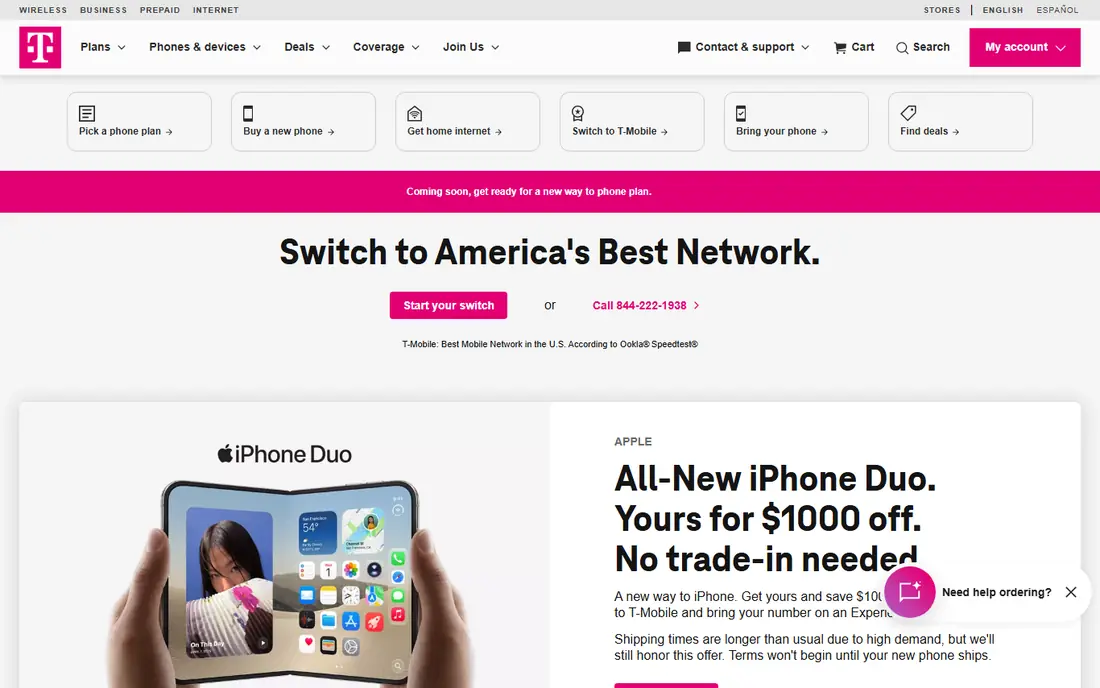
T-Mobile is the best major carrier for many city and suburban users. Its 5G network is fast in many metro areas, and higher plans include perks such as streaming services and larger hotspot allowances. The entry Essentials Saver plan is listed at $55 per month, or $50 with autopay in recent comparisons, which undercuts Verizon and AT&T entry pricing in some cases.
Rural coverage is the main caveat. In some rural areas, T-Mobile signal is thinner than Verizon, so check a coverage map and ask neighbors before switching. For most urban users who want a major carrier with good speeds and useful perks, T-Mobile is a strong default.
- Strong 5G speeds in many cities
- Perks such as streaming services on higher plans
- Taxes and fees included on some plans
- Rural coverage can lag Verizon in some areas
- Premium plans are expensive
- Entry plans have fewer perks
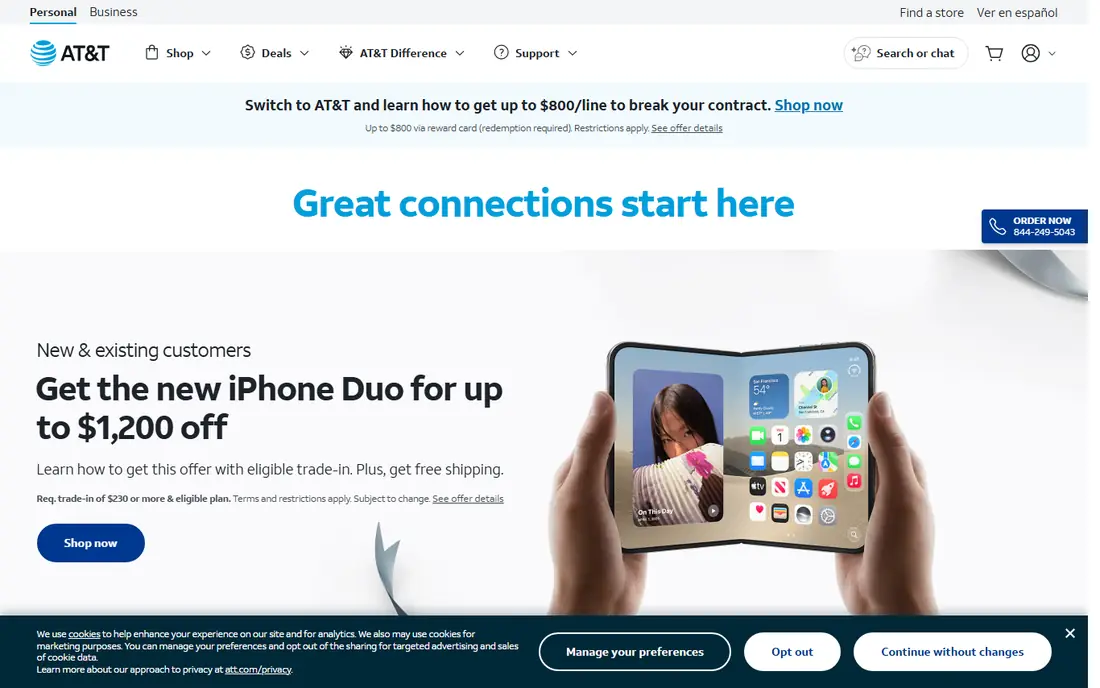
AT&T sits between Verizon and T-Mobile on many measures: broad coverage, solid speeds, and family pricing that improves with more lines. Its Value plan is listed at $60 per month, or $50 with autopay in recent comparisons, and higher plans add hotspot data and premium features. Stores and support are widely available, which helps if you prefer in-person help.
Single-line users pay a premium for that major-carrier experience, and the best value usually appears on multi-line plans. If you have a family and want a major carrier without Verizon prices, AT&T is worth a quote. If you only need one line, compare Mint, Visible, and US Mobile first.
- Strong nationwide coverage
- Good family plan pricing with multiple lines
- Wide device and store support
- Entry plan lacks some premium features
- Taxes and fees are extra
- Premium plans are costly for a single line
Mint Mobile is the best value pick for many single-line users. It runs on the T-Mobile network, and its 6GB plan is listed at $15 per month on a 12-month plan, with unlimited at $30 per month on the same annual billing. That is far below major-carrier single-line prices, and the service is simple to set up with an eSIM or SIM card.
Prepayment is the trade-off. The lowest prices require paying for 3, 6, or 12 months up front, and the unlimited plan slows after 40GB of high-speed data. If you use a lot of hotspot data or need in-store support, Mint may frustrate you. If you want a low bill and use T-Mobile coverage well, Mint is hard to beat.
- Very low prices on T-Mobile network
- Simple prepaid plans
- Unlimited plan at $30 per month on annual billing
- Best prices require 12-month prepayment
- Data slows after 40GB on unlimited
- Customer support is mainly online
Visible, owned by Verizon, offers unlimited data on the Verizon network for $25 per month on its base plan, with taxes and fees included. That simplicity is the appeal: one price, unlimited data, no annual prepayment, and Verizon coverage. The higher Visible+ plans add faster 5G access and more hotspot data for users who need it.
During busy times, Visible data can be deprioritized behind Verizon postpaid customers, so speeds may dip in crowded areas. Support is online, not in stores. If Verizon coverage is best where you live and you want unlimited data without a Verizon premium price, Visible is the first carrier to check.
- Unlimited data on the Verizon network
- Taxes and fees included
- Simple plans with no annual prepayment required
- Data can slow during congestion on the base plan
- Support is online only
- Fewer perks than Verizon premium plans
Google Fi Wireless suits travelers and light data users. The Flexible plan starts at $20 per month for unlimited talk and text, plus $10 per GB of data, so a light user can pay far less than a flat unlimited plan. International roaming is a real strength, with coverage in many countries without swapping SIM cards on supported plans.
Heavy data users will pay more on Flexible than on a flat unlimited plan from Mint or Visible, and Fi unlimited plans start higher. Some features, such as network switching, work best on Pixel and select Android phones, though iPhones can use Fi with some limits. If you travel abroad or use little data, Fi is a strong, flexible choice.
- Flexible plan charges $20 plus $10 per GB
- Strong international roaming
- Works on T-Mobile and US Cellular networks
- Unlimited plans cost more than Mint or Visible
- Best features favor Pixel and select Android phones
- Data costs add up for heavy users
US Mobile lets you build a plan around your actual use, starting with a Light plan at $10 per month for 2GB in recent comparisons. You can choose a network, add data, and move between plans as needs change, and taxes and fees are included in the listed price. That flexibility suits light users, second lines, and families with mixed data needs.
The range of options can feel complex at first, and the top unlimited plan at $44 per month is not the cheapest unlimited option here. If you know your data use and want a tailored plan rather than a one-size plan, US Mobile is a good fit. If you want the simplest possible choice, Visible or Mint may be easier.
- Light plan from $10 per month
- Choice of networks
- Taxes and fees included
- Flexible data options
- Plan options can confuse first-time buyers
- Premium unlimited costs more than Mint or Visible base plans
Cricket Wireless, owned by AT&T, gives you AT&T network access with simpler pricing and store support. Its Sensible 10GB plan is listed at $35 per month, or $30 with autopay, and unlimited plans start higher with taxes included. That makes the monthly bill predictable, and in-person stores help if you prefer not to manage everything online.
Some Cricket plans cap speeds, so heavy video streaming may feel slower than on AT&T postpaid. Very light users can also find cheaper plans at Mint, US Mobile, or Tello. If AT&T coverage is best in your area and you want store support with a predictable bill, Cricket is a solid mid-range carrier.
- Runs on AT&T network
- Taxes and fees included
- Stores for in-person help
- Sensible 10GB plan at $30 with autopay
- Data speeds can be capped on some plans
- Premium features cost more
- Less value for very light users
Metro by T-Mobile offers unlimited 5G data on the T-Mobile network from $40 per month, with taxes and fees included on many plans. Stores are widely available, and there is no annual contract, which makes switching simpler than a major-carrier contract. For users who want T-Mobile coverage and unlimited data at a lower price than T-Mobile postpaid, Metro is a practical option.
As with other prepaid brands, data can be deprioritized during congestion, and premium perks such as streaming bundles are thinner than on T-Mobile postpaid plans. Promotions change often, so confirm the current price and terms in store or online before signing up. If T-Mobile coverage works for you, Metro gives you unlimited data without a premium bill.
- Unlimited 5G data on T-Mobile network
- Taxes and fees included
- Stores widely available
- No annual contract
- Data can slow during congestion
- Fewer premium perks than T-Mobile postpaid
- Plan details vary by store and promotion
Consumer Cellular is built for simplicity. Plans start at $20 per month with autopay for a basic 1GB plan, and unlimited plans are available for heavier users. Support is a selling point for many customers, especially those who want help by phone rather than chat or a forum, and there is no long contract to sign.
Heavy data users will find better value at Mint or Visible, and coverage depends on which underlying network serves your area. If you want a simple bill, clear plan choices, and helpful support, and you use a modest amount of data, Consumer Cellular is a good fit. It is especially popular with older users who value straightforward service.
- Simple plans from $20 per month with autopay
- US-based support reputation
- No long contract
- AARP member discounts where offered
- Uses AT&T and T-Mobile networks, so coverage varies
- Data allowances are modest on low plans
- Less suited to heavy data users
How we picked these
We compared carrier pricing pages and recent October 2026 plan comparisons, and we checked that each carrier homepage loads and belongs to the company named. We favored carriers with nationwide US service, clear published pricing, and a distinct use case, from major networks to low-cost prepaid. Prices are single-line rates with autopay where noted, and they exclude device payments unless stated. Taxes, fees, and promotions vary, so confirm the total monthly cost before switching.
How to choose a phone company
Start with coverage, then data, then price. Check each carrier coverage map for your home and work addresses, and ask people nearby which carrier works well, since maps can overstate signal indoors. Then check your last few bills for actual data use, not the plan size you think you need.
Match the plan to your data use
Light users under 5GB per month should look at Mint, US Mobile, Consumer Cellular, or Google Fi Flexible. Moderate users from 5GB to 20GB can save with Mint, Cricket, or Metro. Heavy users and families should compare unlimited plans from Visible, Metro, Mint, and the major carriers, including hotspot limits and deprioritization rules.
Before you switch
Confirm your phone is not locked to a carrier and is compatible with the new carrier, and check whether you can keep your number. Porting is usually free, but do not cancel the old plan until the new line is active, or you may lose the number. If you owe device payments, factor the payoff into the switch cost.
Sources
- https://www.verizon.com
- https://www.t-mobile.com
- https://www.att.com
- https://www.mintmobile.com
- https://www.visible.com
- https://fi.google.com
- https://www.usmobile.com
- https://www.cricketwireless.com
- https://www.metrobyt-mobile.com
- https://www.consumercellular.com
- https://www.usmobile.com/blog/best-cell-phone-plans/