Best Plant Identifier App in 2026: 9 Apps Compared
By ToolNimba Editorial Team November 13, 2026 8 min read

- Top pick
 PictureThis
Plant ID plus care guides
Starting priceSee websiteCheck out PictureThisRead our review - Runner-up
 Pl@ntNet
Free scientific identification
Starting priceFreeCheck out Pl@ntNetRead our review - Also great
 Seek by iNaturalist
Free nature exploration
Starting priceFreeCheck out Seek by iNaturalistRead our review
How we researched this
We compared official pricing and feature pages, app store listings, privacy policies and public user reviews. Prices change, so check the provider's site before you pay.
Key takeaways
- Pl@ntNet, Seek by iNaturalist, and iNaturalist are fully free and suit nature lovers who want identification without a subscription push.
- PictureThis, PlantSnap, Planta, Blossom, and PlantIn add care reminders, disease checks, and light and water help for houseplant owners.
- LeafSnap and Google Lens offer quick photo identification, with Google Lens covering far more than plants alone.
- No app is reliable enough to judge whether a wild plant is safe to eat, so check with an expert before tasting anything.
Quick comparison
| Name | Best for | Starting price | Free plan | |
|---|---|---|---|---|
| PictureThis | Plant ID plus care guides | See website | Yes | Visit |
| Pl@ntNet | Free scientific identification | Free | Yes | Visit |
| Seek by iNaturalist | Free nature exploration | Free | Yes | Visit |
 iNaturalist | Community nature records | Free | Yes | Visit |
 PlantSnap | Large plant database | See website | Yes | Visit |
 LeafSnap | Quick photo identification | See website | Yes | Visit |
 Planta | Houseplant care reminders | See website | Yes | Visit |
 Blossom | Houseplant care and diagnosis | See website | Yes | Visit |
 PlantIn | Care guides and botanist help | See website | Yes | Visit |
The best plant identifier apps
These apps identify plants from a photo, but they differ in cost, care tools, and community features.
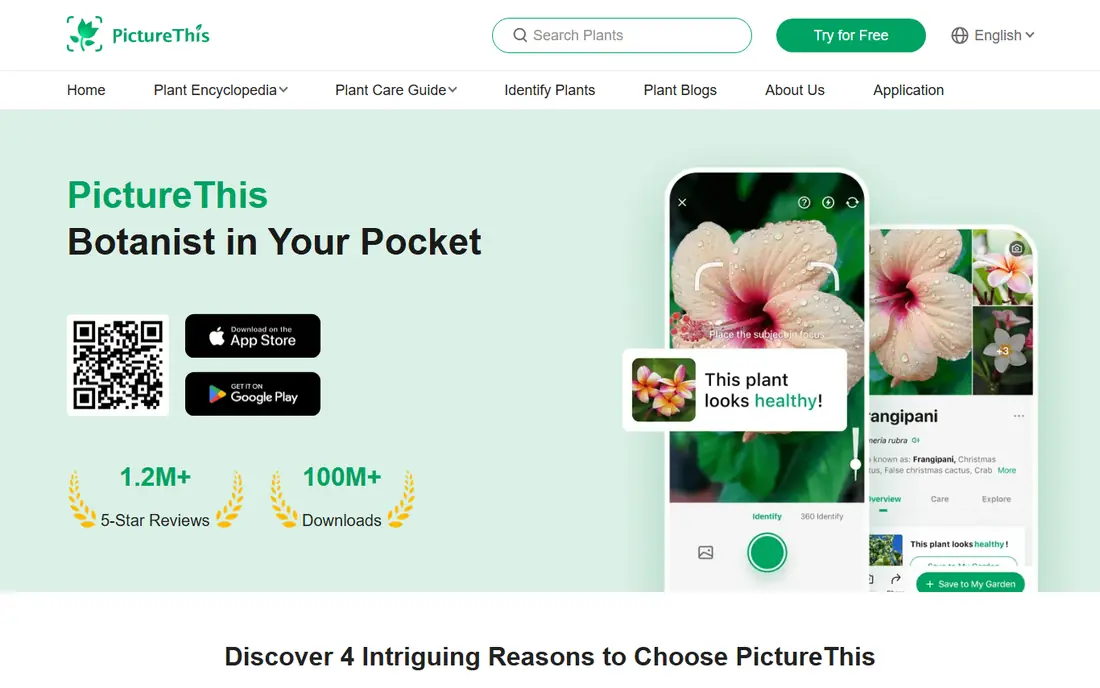
PictureThis is the most popular paid plant app for houseplant owners, and its identification from a single photo is quick and easy to use. It adds disease diagnosis, toxicity notes, care guides, and reminders, which help beginners keep plants alive after the ID step. Its plant encyclopedia also gives background on many species.
The free version is limited, and the app pushes its paid plan often, which can frustrate users who only want an occasional ID. Recent comparisons list a yearly paid plan at about 29.99 dollars, though app store pricing varies by region, so check the listing before you subscribe.
- Fast photo identification
- Disease diagnosis
- Care guides and reminders
- Full features need a paid plan
- Subscription prompts are frequent in the app
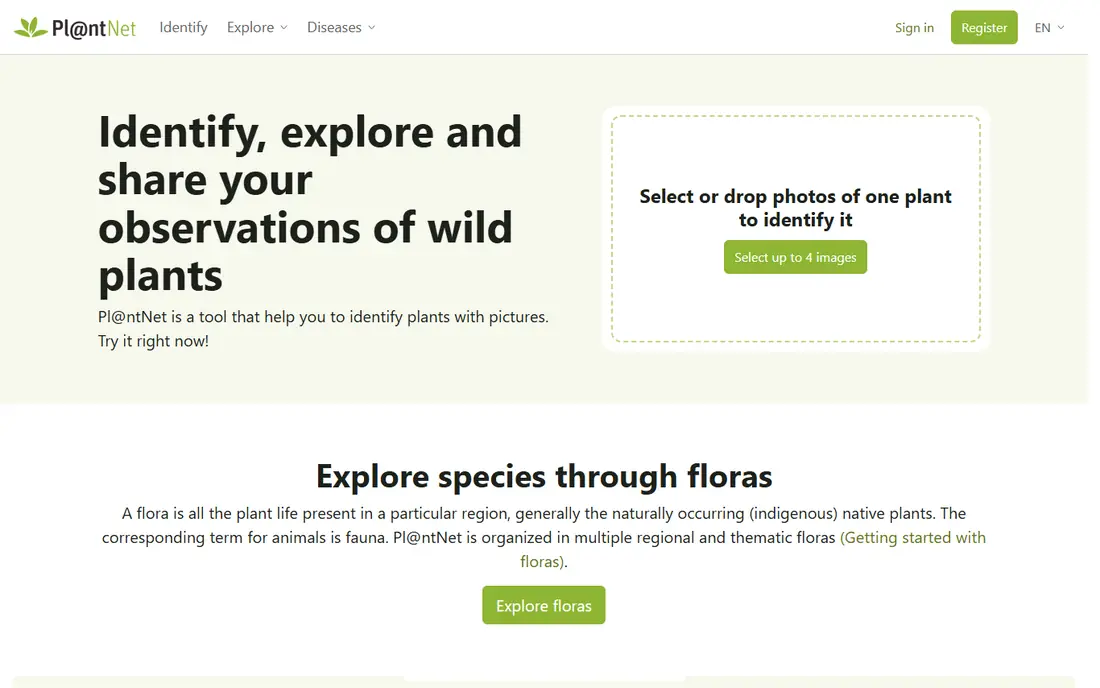
Pl@ntNet is a citizen science project that lets you identify plants for free, with no subscription. You can submit several photos of the same plant, such as flowers, leaves, and overall shape, which improves the suggestions. Its database comes from user submissions and research partners, giving it a scientific focus that many paid apps lack.
The trade-off is polish. Care reminders, disease tools, and houseplant guides are thinner here than in PictureThis or Planta. Pl@ntNet fits gardeners, students, and nature walkers who want a reliable ID and do not need a full care app.
- Completely free
- Citizen science database
- Multiple photos per plant improve results
- Interface is plainer than paid rivals
- Care guides are limited

Seek by iNaturalist is a free app that uses your camera to identify plants, fungi, and animals in the wild. It adds challenges and badges that encourage outdoor learning, which makes it a good pick for families and beginners. Because it is free with no subscription push, you can use it as often as you like.
It is not a houseplant care app. You will not get watering reminders or disease treatment plans here, so pair it with a care app if you keep many indoor plants. For walks and garden visits, Seek is one of the easiest free options.
- Completely free
- Identifies plants and wildlife
- Challenges make learning fun
- No plant care reminders
- Identification is broader than plants alone
iNaturalist is the fuller community platform behind Seek. You can upload observations, get suggestions from the app and from other users, and build a record of what you have seen. That community check is valuable when an automatic ID is uncertain, because other naturalists can confirm or correct it.
For a quick houseplant ID, iNaturalist can feel slower than PictureThis. Its strength is accuracy over time and contribution to science, not instant care advice. Use it when you want a second opinion or when you enjoy recording nature.
- Completely free
- Large community confirms IDs
- Records help science
- Slower than instant ID apps for some species
- Interface suits nature recording more than care
PlantSnap identifies plants from a photo and offers care information for many species, with a database that recent comparisons describe as large. It suits travelers and gardeners who encounter a wide range of plants, because its coverage is broad. Community features let you explore plants found by other users.
The free tier is limited, and paid pricing has been listed at about 19.99 dollars a year in some comparisons, with app store prices varying. Check the current listing and the free limits before you subscribe, and test it on plants you already know to judge its accuracy for your area.
- Large species database
- Care guides
- Community features
- Full features need a paid plan
- Paid pricing varies by store listing
LeafSnap focuses on quick identification from a leaf or plant photo, with care tips and disease diagnosis beside the ID. Its simple flow suits beginners who want an answer fast, without learning a complex app. It also covers trees and other plants that some houseplant apps handle less well.
As with other freemium apps, the best features sit behind a paid plan, and results depend heavily on photo quality. Take clear photos in good light, include leaves and flowers when you can, and treat uncertain IDs as a starting point for further checking.
- Simple photo ID
- Disease diagnosis in the app
- Care tips
- Paid features are gated
- Accuracy varies by species and photo quality
Planta is mainly a care app that also identifies plants, which makes it a good second step after an ID app. You add your plants, answer questions about light and pot size, and get watering and care schedules adjusted to your home. Its light meter uses your phone camera to judge whether a spot suits a plant.
If identification is your only need, a free ID app will be faster and cheaper. Planta fits owners with several houseplants who want reminders and care plans in one place, and who are willing to pay for the full schedule features.
- Smart watering schedules
- Light meter
- Care reminders tailored to each plant
- Identification is secondary to care
- Full features need a paid plan
Blossom combines plant identification with disease diagnosis, watering reminders, and care guides, in a design aimed at houseplant owners. Its diagnosis tool can flag common problems from a photo, which helps beginners act sooner when a plant looks unwell. Care reminders keep watering and feeding on track.
The free tier covers basic ID and some care features, while fuller tools need a subscription. As with PictureThis, check the app store price and the trial terms before you commit, and cancel the trial promptly if you decide not to keep it.
- Plant ID
- Disease diagnosis
- Watering reminders and care guides
- Paid plan needed for full care tools
- Subscription prompts in the app
PlantIn, also called PlantIn Plant Identifier, offers identification, care tips, reminders, disease diagnosis, and access to botanist consultations on some plans. Its guides cover watering, light, and common problems, which helps new plant owners build confidence. The app also includes a light meter and a water calculator in recent comparisons.
The full feature set needs a paid plan, and botanist help may not be instant. PlantIn fits owners who want care support and expert input beside identification, rather than a quick free ID alone.
- Care guides and reminders
- Disease diagnosis
- Botanist consultation options
- Paid plan needed for full features
- Consultation availability varies
How we picked these
We compared official app pages, app store listings, and recent 2026 comparisons of plant identification apps. We favored apps active in October 2026, that state a clear free tier or paid plan, and that cover free scientific ID, community recording, and paid houseplant care. We did not claim hands-on testing, and we did not treat any app result as certain.
How to get a better identification
Take several clear photos: one of the whole plant, one of leaves, and one of flowers or fruit when present. Avoid blurry, dark, or distant shots, and note where you found the plant. If two apps disagree, trust the one that matches the leaf shape, flower, and growth habit together, and check a trusted botanical guide for confirmation.
A safety note on wild plants
Never eat a wild plant based only on an app result. Apps can confuse similar species, and some lookalikes are toxic. The same caution applies to mushrooms and to plants for pets and children: check toxicity with a trusted source or a vet before allowing contact.
Sources
- https://picturethisai.com
- https://identify.plantnet.org
- https://www.inaturalist.org/pages/seek_app
- https://www.inaturalist.org
- https://www.plantsnap.com
- https://www.leafsnap.com
- https://planta.app
- https://blossomplant.com
- https://myplantin.com
- https://myplantin.com/blog/best-plant-identification-apps
- https://percy.garden/app-picks/best-plant-identification-apps
Frequently asked questions
What is the best free plant identifier app?
Pl@ntNet, Seek by iNaturalist, and iNaturalist are fully free and do not push a subscription. Pl@ntNet suits plant-focused ID, while Seek and iNaturalist cover wildlife too.
Can plant apps identify a plant from one photo?
Yes, for many common species, but accuracy improves with several photos of leaves, flowers, and overall shape. Treat uncertain results as suggestions, not final answers.
Do plant apps tell you if a plant is toxic to pets?
Many paid apps include toxicity notes, including PictureThis and PlantIn. Still, check a trusted veterinary or botanical source before letting a pet near an unknown plant.
Which app is best for houseplant care?
Planta and Blossom focus most on care schedules and reminders, while PictureThis and PlantIn combine ID with care guides and diagnosis. Choose based on whether you need reminders or diagnosis more.
Are plant identification apps accurate?
They are often right for common species and less reliable for rare plants, hybrids, or poor photos. Independent comparisons have ranked Pl@ntNet among the most accurate plant-specific apps, but no app is perfect.