Best Sales Intelligence Tools B2B Contact Data in 2026: 9 Tools Compared
By ToolNimba Editorial Team October 28, 2026 10 min read

- Top pick
 ZoomInfo
Enterprise data depth
Starting priceSee websiteCheck out ZoomInfoRead our review - Runner-up
 Apollo
All-in-one prospecting
Starting priceFreeCheck out ApolloRead our review - Also great
 Cognism
Compliant European data
Starting priceSee websiteCheck out CognismRead our review
How we researched this
We compared official pricing and feature pages, app store listings, privacy policies and public user reviews. Prices change, so check the provider's site before you pay.
Key takeaways
- Apollo is the best starting point for small teams because it combines contact data, email sequences, and a dialer with a free plan.
- ZoomInfo offers the deepest enterprise data and intent coverage, but its price is custom and usually suited to larger teams.
- Cognism is the strongest pick for teams selling into Europe or working under strict privacy rules.
- Credit systems drive the real cost, so check how many credits an email, a phone number, and an enrichment use before you buy.
Quick comparison
| Name | Best for | Starting price | Free plan | |
|---|---|---|---|---|
| ZoomInfo | Enterprise data depth | See website | No | Visit |
| Apollo | All-in-one prospecting | Free | Yes | Visit |
| Cognism | Compliant European data | See website | No | Visit |
 Lusha | Quick contact lookups | $37 per month | Yes | Visit |
 LinkedIn Sales Navigator | Relationship prospecting | See website | Free trial (30 days) | Visit |
 UpLead | Verified contact data | See website | Free trial (7 days) | Visit |
 Hunter | Email finding and verification | $34 per month | Yes | Visit |
 RocketReach | Large profile database | See website | Free trial | Visit |
 Clay | Custom enrichment workflows | See website | Free trial | Visit |
The best sales intelligence tools for B2B contact data
Sales intelligence tools answer two questions: who should you contact, and when is the right time to reach them. The tools below cover both jobs, from large contact databases to intent signals and custom enrichment. Prices vary widely, so match the tool to your team size and your main bottleneck.
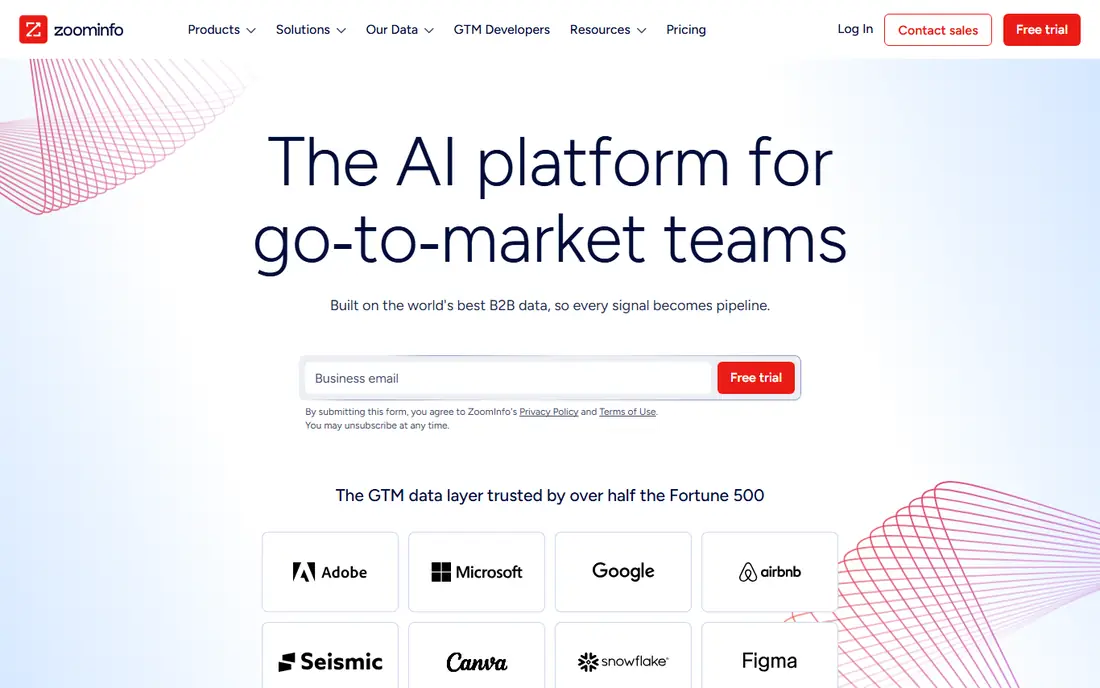
ZoomInfo is the default enterprise pick for a reason. It offers deep contact coverage, direct-dial numbers, company firmographics, technographics, org charts, and intent signals that show which accounts are researching topics related to your product. For account-based teams running high-volume outbound, that depth saves research time.
The catch is cost and commitment. Pricing is custom and often starts in five figures per year for small teams, according to third-party pricing reports. Small teams should trial Apollo or Lusha first and move to ZoomInfo only when data depth, phone coverage, or intent becomes the limiting factor.
- Very large contact and company database
- Intent data and org charts
- Strong CRM integrations
- Custom pricing can be high for small teams
- Contracts and seat minimums may apply
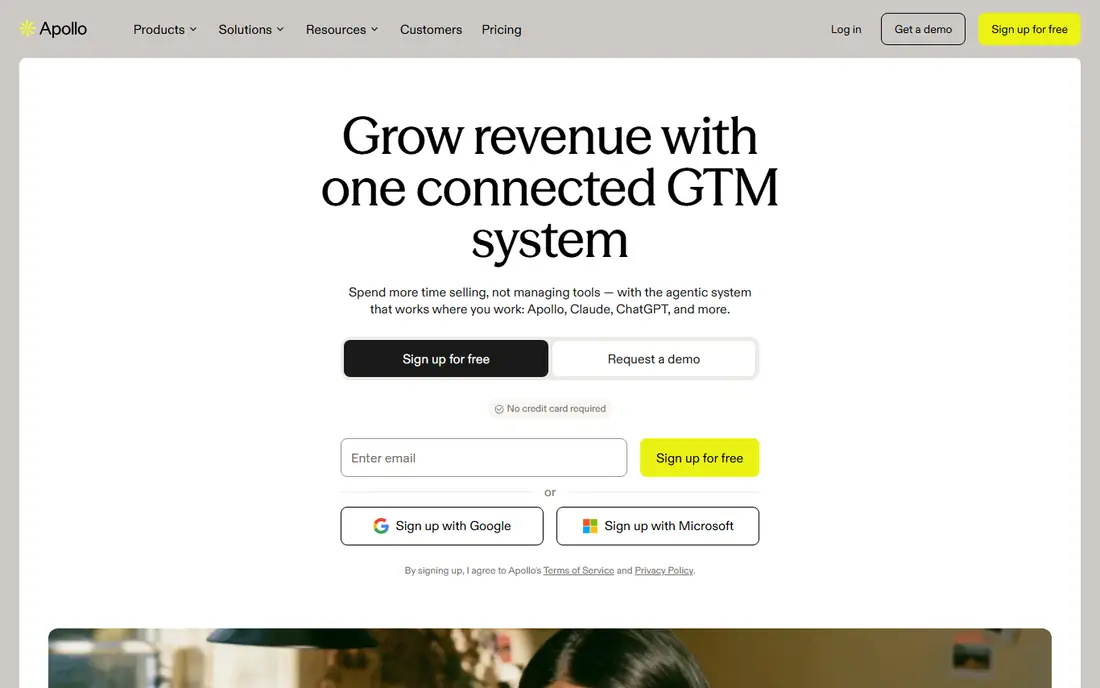
Apollo suits startups and mid-market teams that want one tool for finding contacts, sending sequences, and making calls. The free plan lets you test the database and sequencing before paying, and Basic costs $49 per user per month billed annually. Professional at $79 per user per month adds a dialer, AI research, and more credits.
Credits are the honest catch. Every plan runs on a shared credit pool, and phone numbers, enrichment, and AI research use credits at different rates. Estimate your monthly prospecting volume before you choose a tier, and check whether unused credits roll over, because in most cases they do not.
- Free plan available
- Large contact database
- Email sequences and dialer in one tool
- CRM sync
- Credit limits control real usage
- Data quality varies by region and niche
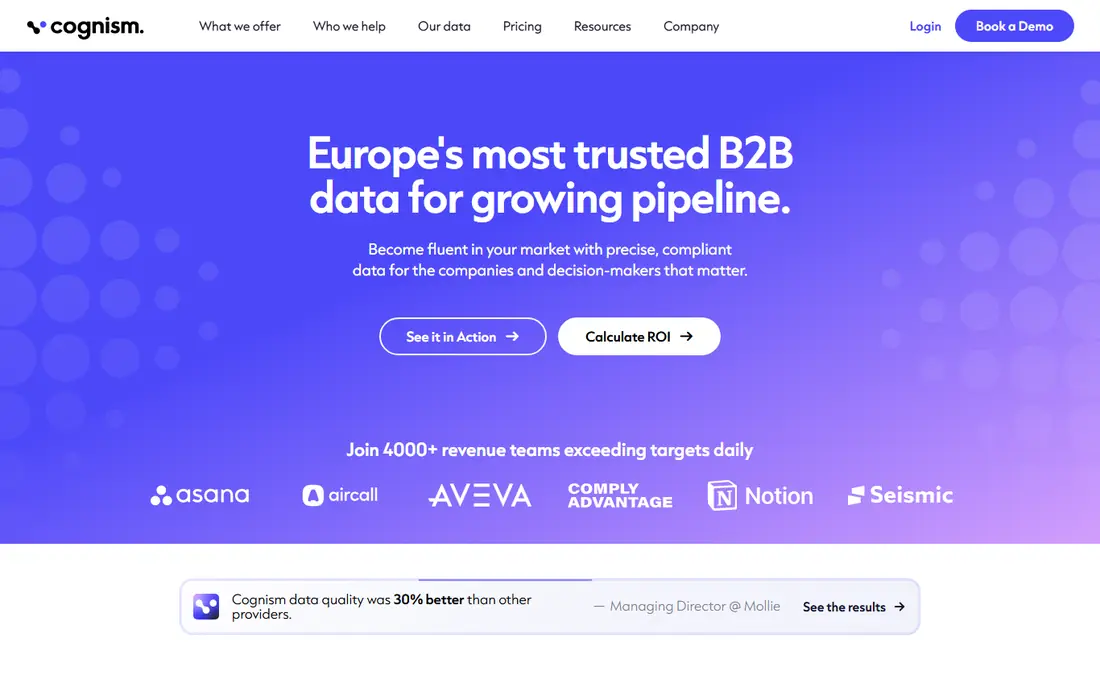
Cognism is the pick for teams selling into Europe or operating under strict privacy rules. Its Diamond Data includes phone-verified mobile numbers, and its platform includes compliance checks, do-not-call registry suppression, and consent-aware data handling. That matters when a wrong number or a bad list can create legal and reputation risk.
Pricing is custom and typically enterprise-level, so Cognism fits teams with a real international motion rather than a solo founder testing outbound. If your market is mainly the US and your budget is small, Apollo or UpLead may cover your needs for less.
- Phone-verified mobile numbers
- Strong European coverage
- GDPR and CCPA compliance tools
- Do-not-call suppression
- Enterprise pricing
- Less suited to very small teams on a tight budget
Lusha is best when your workflow starts on LinkedIn or a company website and you need a verified email or phone number fast. The browser extension shows contact details on the profile you are viewing, which keeps prospecting inside the tools reps already use. Paid plans start at $37 per month in recent listings, with a free plan for light use.
The limit is scale. Lusha is excellent for individual lookups and small lists, but teams running large outbound campaigns may prefer a full database with sequencing built in. Use Lusha as a lookup layer, or pair it with a sequencer if your team already has a CRM workflow.
- Free plan available
- Browser extension for LinkedIn lookups
- Buying signals and intent features
- Simple to use
- Credit-based pricing
- Bulk prospecting is weaker than Apollo or ZoomInfo
LinkedIn Sales Navigator is not a contact database in the usual sense, but it is often the most accurate source for who works where right now. Advanced search, saved lead and account lists, job change alerts, and InMail help account executives work strategic accounts and warm up relationships before a cold email.
The gap is contact details. Sales Navigator does not reliably give direct emails or phone numbers, so most teams pair it with Apollo, Lusha, or Cognism to fill in contact data. Core pricing has been listed around $99.99 per user per month in some reports and higher in others, so confirm the current price on LinkedIn before budgeting, and use the trial to test search coverage in your niche.
- Most current professional profiles
- Advanced search and lead lists
- Job change alerts and InMail
- No direct phone numbers in most cases
- Price is per seat and adds up for teams
UpLead positions itself on accuracy. It verifies emails in real time, and it has offered credits back when data bounces, which reduces the waste that comes from stale lists. Filters for industry, company size, technology used, and job title help small teams build targeted lists without enterprise pricing.
The trade-off is coverage depth. In some niches and regions, UpLead will return fewer contacts than ZoomInfo or Apollo, so test a sample list in your market before committing. For teams that value clean data over sheer volume, that accuracy focus is a real advantage.
- Real-time email verification
- Credit refunds for bad data in many cases
- Technographic and firmographic filters
- Database is smaller than ZoomInfo in some niches
- Paid plans are needed for serious volume
Hunter is a specialist tool, and that focus is its strength. It finds email addresses for a domain, verifies them, and helps you send outreach from a connected mailbox. Starter costs $34 per month billed annually, with a free plan offering a small monthly credit allowance. Pricing is per account, not per seat, which can help small teams.
Hunter does not replace a full sales intelligence platform. It has little phone data, no org charts, and limited intent signals. Use it when email is your main channel and you already have a list of target companies, or pair it with a broader database for phone-first outreach.
- Free plan available
- Simple email finder and verifier
- Bulk tools and domain search
- Clear credit pricing
- Focused on email, not phone data or intent
- No built-in dialer or sequencing depth
RocketReach suits teams that need to find people across companies, roles, and social profiles quickly. Its database includes hundreds of millions of profiles, with emails, phone numbers where available, and social links that help reps personalize outreach. The browser extension and bulk lookup tools fit research-heavy workflows.
Accuracy is the watch-out. Like any large database, older or less-maintained profiles can be stale, so verify key contacts before a high-value outreach. Check the current plan limits and credit rules on the pricing page, because lookup and bulk enrichment can consume credits faster than expected.
- Very large profile database including social links
- Browser extension
- Bulk lookup and enrichment options
- Pricing is not fully transparent on the public site for all tiers
- Data accuracy varies by profile age
Clay is different from the databases above. Instead of giving you one database, it lets you build a workflow that pulls from many data sources, enriches a list, scores accounts, and writes personalized outreach inputs. That flexibility suits RevOps teams and agencies that need custom prospecting, not just a search box.
The catch is complexity and cost. Clay takes time to learn, and enrichment steps consume credits, so a large list can become expensive if you add many data sources to every row. Start with a small, well-defined list, test one workflow end to end, and only then scale it to your full target market.
- Combines many data sources in one workflow
- AI research and enrichment steps
- Strong for targeted account lists
- Learning curve
- Pricing and credit use can grow fast on large lists
How we picked these
We compared official feature pages, pricing pages, app store listings, privacy policies, and public reviews for sales intelligence tools that are actively sold in October 2026. We looked at database coverage, email and phone accuracy claims, intent signals, compliance handling, CRM integrations, and the real cost of credits and seats. We favored tools with a distinct job, such as all-in-one prospecting, European compliance, quick lookups, or custom enrichment, rather than listing near-identical databases.
How to choose a sales intelligence tool
Start with your bottleneck. If reps cannot find enough accurate contacts, a database such as ZoomInfo, Apollo, or Cognism is the fix. If reps have contacts but outreach lands cold, intent data, job change alerts, and timing signals from tools such as ZoomInfo, 6sense-style intent, or Sales Navigator may matter more. If your list is already built, an enrichment tool such as Clay or Hunter may be enough.
Check data in your market
Run the same test list through two shortlisted tools before you buy. Check how many of your target accounts appear, how many emails verify, and how many direct dials you actually get. A database that is strong in US tech may be thin in European manufacturing or in a niche vertical, and that gap only shows up in a real test.
Watch the total cost
Add up seats, credits, add-ons, and CRM sync costs. A low seat price with tight credit limits can cost more than a higher seat price with generous credits. Check credit expiry, refund rules for bounced data, contract length, and whether every seat must be on the same plan. For small teams, a free plan with a clear upgrade path is often safer than an annual enterprise contract.