Best Trading App for Beginners in 2026: 9 Apps Compared
By ToolNimba Editorial Team October 28, 2026 10 min read

- Top pick
 Fidelity
Best all round beginner broker
Starting priceFreeCheck out FidelityRead our review - Runner-up
 Charles Schwab
Retirement and long term investing
Starting priceFreeCheck out Charles SchwabRead our review - Also great
 Robinhood
Simplest mobile start
Starting priceFreeCheck out RobinhoodRead our review
How we researched this
We compared official pricing and feature pages, app store listings, privacy policies and public user reviews. Prices change, so check the provider's site before you pay.
Key takeaways
- Most major US brokers now charge $0 commission on online stock and ETF trades, so education, account types, and support matter more than headline commission.
- Fidelity and Schwab offer the broadest beginner package, with retirement accounts, research, and fractional shares in one place.
- Robinhood and Webull offer the simplest mobile start, but their research and account range are thinner than full service brokers.
- This is not financial advice, and trading carries risk, including the risk of losing money you invest.
Quick comparison
| Name | Best for | Starting price | Free plan | |
|---|---|---|---|---|
| Fidelity | Best all round beginner broker | Free | Yes | Visit |
| Charles Schwab | Retirement and long term investing | Free | Yes | Visit |
| Robinhood | Simplest mobile start | Free | Yes | Visit |
 Webull | Charts and practice trading | Free | Yes | Visit |
 SoFi Invest | Banking plus investing in one app | Free | Yes | Visit |
 Vanguard | Low cost index funds | Free | Yes | Visit |
 E*TRADE | Options and research for new traders | Free | Yes | Visit |
 Interactive Brokers | Low cost global access | Free | Yes | Visit |
 Public | Social learning and fractional shares | Free | Yes | Visit |
The best trading app for beginners apps
A good beginner app should make the first trade clear, explain what you own, and help you avoid costly mistakes. The brokers below all offer $0 online stock and ETF commissions in the US, so we compared them on fractional shares, retirement accounts, education, research, and support.
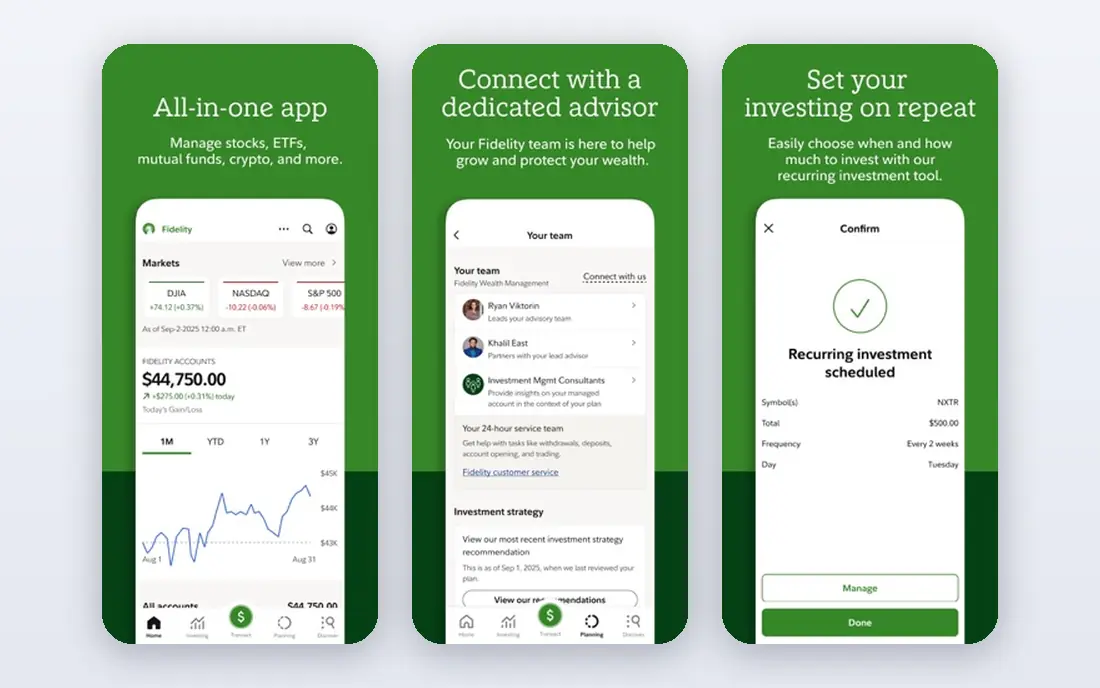
Fidelity is our pick for most beginners because it covers the full journey in one account. You can start with a small fractional share order, open a Roth IRA when you are ready, and later use more advanced tools without opening a second brokerage. The education library covers basic concepts, retirement planning, and how to build a diversified portfolio.
The catch is breadth. The same depth that makes Fidelity useful long term can feel overwhelming on day one. Start with the basic trade screen and the learning center, and ignore advanced tools until you actually need them. This is not financial advice, and you should check fees and account terms on Fidelity before opening an account.
- $0 online stock and ETF commissions, with fractional shares from $1
- IRAs, custodial accounts, and a large education library
- 24 hour phone support on many accounts
- App and website offer many features, which can feel busy at first
- Advanced tools take time to learn
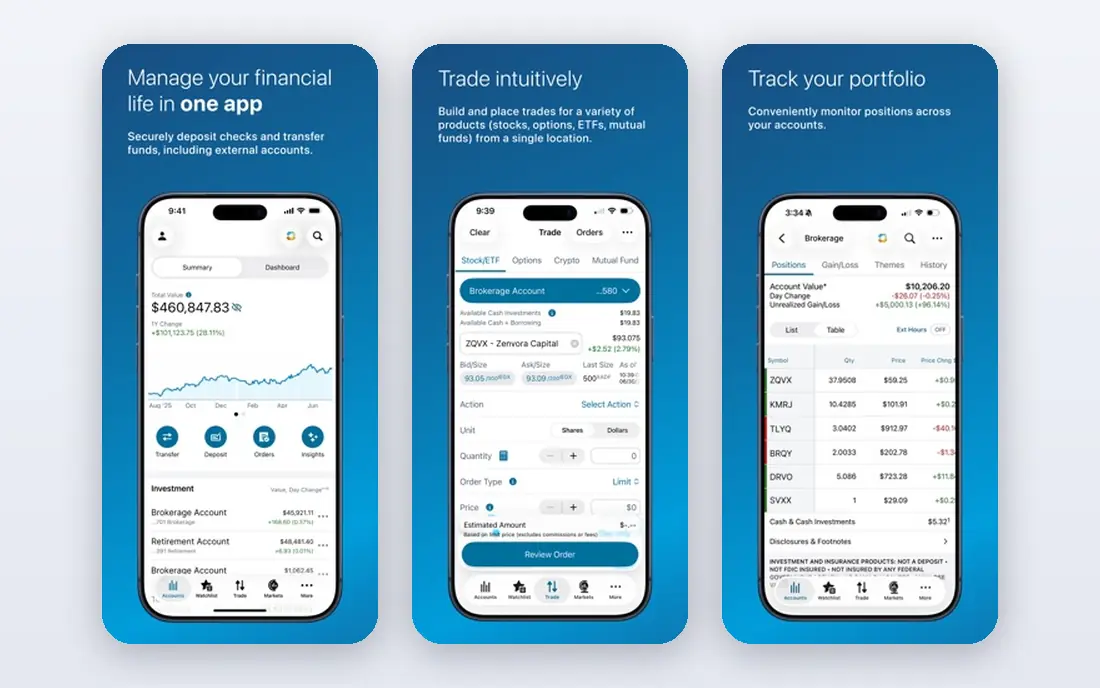
Schwab suits beginners who want a long term home for investing and retirement. The platform pairs a standard brokerage account with IRAs, planning tools, and research, and its support reputation is strong for new investors who want help by phone or in a branch.
The honest catch is fractional coverage. Schwab Stock Slices covers many stocks, but ETF fractional buying is more limited than at Fidelity or Robinhood, so check whether the funds you want can be bought in small dollar amounts. For whole share ETF and retirement investing, that limit matters less.
- $0 online stock and ETF commissions
- Strong retirement planning tools and IRA options
- Schwab Stock Slices for fractional shares in many stocks
- Fractional ETF coverage is more limited than some rivals
- Some mutual funds still carry transaction fees
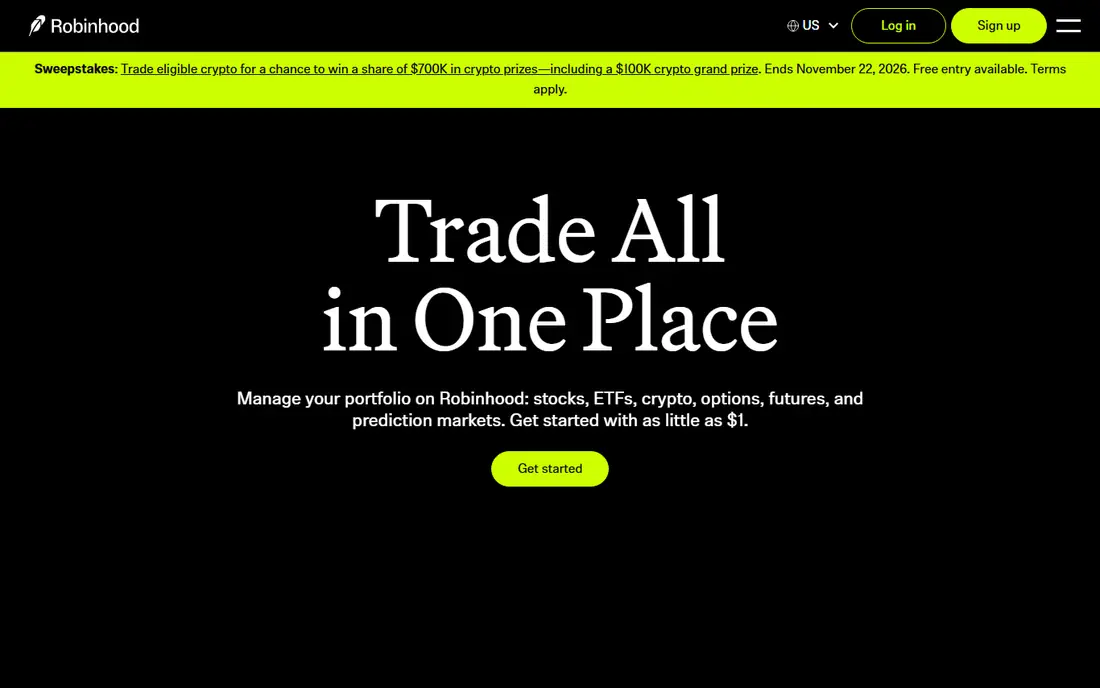
Robinhood is the easiest app here to learn in an afternoon. The trade screen is short, fractional shares let you start with $1, and stocks, ETFs, options, and crypto sit in one mobile app. That simplicity is why many first time investors start here.
The trade off is depth. Research, retirement planning, and mutual fund choice are limited compared with Fidelity or Schwab, so long term investors often add a second broker later. Robinhood also charges a transfer out fee if you move a full account elsewhere, so keep that in mind before you build a large portfolio there.
- Very simple mobile interface
- $0 stock and ETF commissions with fractional shares from $1
- No account minimum listed for a standard account
- Research tools are thinner than full service brokers
- No mutual funds, and support is mainly in app
Webull fits beginners who want to learn by watching charts and testing ideas. Paper trading is a useful feature, because you can place practice trades, see how orders work, and learn from mistakes without risking cash. The charts and screeners go further than Robinhood, which helps as your interest grows.
The catch is complexity. A new investor who only wants to buy an index fund may find the data heavy layout distracting. Use paper trading first, and keep real trades simple until you understand order types and risk. Trading carries risk, and practice results do not guarantee real results.
- $0 stock and ETF commissions with fractional shares from $1
- Paper trading lets you practice without real money
- Advanced charts and screeners for learners who want data
- No mutual funds in the core offering
- Interface can feel busy for a complete beginner
SoFi Invest suits people who already use SoFi for banking and want investing in the same app. Active investing covers stocks and ETFs, while automated investing builds a portfolio for you based on your goals and risk level. That hands off option helps beginners who do not want to pick stocks.
The limit is depth. If you later want detailed research, a wide mutual fund range, or advanced trading tools, you may need a second broker. For a first portfolio, especially a small automated one, SoFi keeps the start simple.
- $0 stock and ETF commissions with fractional shares from about $5
- Automated investing option for hands off portfolios
- Banking, loans, and investing in one app for SoFi customers
- Research and trading tools are lighter than full service brokers
- Fractional minimum is higher than $1 rivals
Vanguard is the classic choice for index fund investors. Its own ETFs and mutual funds are known for low costs, and the platform suits a buy and hold plan built around broad funds rather than frequent trading. That focus keeps the experience calm, which many beginners need.
The catch is the mobile experience and fractional scope. If you want to buy small slices of many different single stocks, Fidelity or Robinhood cover more names. If your plan is mainly Vanguard ETFs and retirement funds, Vanguard remains a strong, low cost home.
- $0 online stock and ETF commissions
- Low cost Vanguard funds and ETFs with a long track record
- Fractional buying for Vanguard ETFs from $1
- App and website feel less modern than mobile first rivals
- Single stock fractional buying is limited to Vanguard products
E*TRADE, now part of Morgan Stanley, suits beginners who want research depth from the start. Screeners, market commentary, and education help you learn how to compare stocks and funds, and the platform scales up to more advanced trading tools when you are ready.
The honest catch is options cost and complexity. Options trading carries added risk and a per contract fee, and it is not a good first step for most beginners. Use E*TRADE for stocks, ETFs, and learning first, and treat options as a later topic only after you understand the risks.
- $0 online stock and ETF commissions
- Strong research, screeners, and education
- Power E*TRADE platform for traders who want more tools later
- Options carry a per contract fee
- Interface has many features, so beginners should start with the basic screens
Interactive Brokers suits beginners who want low costs and global access in one account, and who are comfortable learning a more detailed platform. IBKR Lite offers $0 US stock and ETF commissions, while the wider platform covers international stocks, options, and other products.
The trade off is learning curve. The desktop and mobile tools offer more settings than a simple app, so new users should start with basic orders and the education material. If you only want a simple US portfolio, Fidelity or Schwab will feel easier.
- $0 commissions on IBKR Lite for US stocks and ETFs
- Fractional shares from $1 on many stocks and ETFs
- Access to a wide range of global markets and account types
- Platform can feel complex for a complete beginner
- Lite and Pro pricing tiers need a careful read
Public fits beginners who learn by following context and discussion. The feed shows what other investors are watching, with company information alongside trades, which can help a new investor understand why a stock moves. Fractional shares from $5 keep small starts possible.
The catch is scope. Without mutual funds, and with lighter research than Fidelity or Schwab, Public works best as a learning and small portfolio app, not as a complete retirement platform. Check account terms before opening, and remember that social posts are not financial advice.
- $0 stock and ETF commissions with fractional shares from $5
- Social feed and company context that help beginners learn
- IRAs and a clean mobile design
- No mutual funds
- Research depth is thinner than full service brokers
- Some account fees apply in specific cases
How we picked these
We compared official pricing and fee pages, account types, fractional share minimums, and education libraries, along with public reviews. We favored brokers that are still open to new US retail accounts, that charge $0 online stock and ETF commissions, and that offer a clear beginner path, whether that is education, fractional shares, or a simple app. We left out brokers with unclear fees, or that focus mainly on complex products unsuitable for beginners.
How to choose your first trading app
Start with your goal, not the app with the most features. If your goal is retirement saving, pick a broker with strong IRA options and low cost funds. If your goal is learning how markets work, pick a simple app with fractional shares and paper trading, and keep your first amounts small.
Keep costs and risk in view
A $0 commission does not mean trading is free of cost or risk. Options fees, transfer fees, spreads, and taxes can still apply, and investment values can fall. Set a budget you can afford to lose, avoid borrowed money for your first trades, and review your portfolio on a schedule rather than reacting to every price move.
Use education before you trade more
Read the broker education pages on order types, diversification, and retirement accounts before you add complex products. A diversified ETF portfolio, held for the long term, is a common beginner approach, but it still carries market risk. This is not financial advice, and a qualified adviser can help with decisions tied to your own situation.