Best Wealth Management Apps in 2026: 8 Apps Compared
By ToolNimba Editorial Team November 12, 2026 9 min read

- Top pick
 Betterment
Hands-off goal investing
Starting price$5 per monthCheck out BettermentRead our review - Runner-up
 Wealthfront
Tax-focused investing
Starting price0.25% per yearCheck out WealthfrontRead our review - Also great
 Fidelity Go
Beginners under $25,000
Starting priceFreeCheck out Fidelity GoRead our review
How we researched this
We compared official pricing and feature pages, app store listings, privacy policies and public user reviews. Prices change, so check the provider's site before you pay.
Key takeaways
- This is not financial advice; investing carries risk, and the right app depends on your goals, time horizon, and comfort with risk.
- Fidelity Go and Schwab Intelligent Portfolios suit fee-conscious beginners, while Betterment and Wealthfront suit hands-off investors who want tax tools.
- Empower suits larger balances that want human advisors plus a full net-worth dashboard, but its minimum and fee are higher.
- Acorns suits habit building with small, regular amounts, while Vanguard suits low-cost index investors who want a large, established manager.
- Always check management fees, fund expenses, cash allocation, and tax features, because those costs compound over years.
Quick comparison
| Name | Best for | Starting price | Free plan | |
|---|---|---|---|---|
| Betterment | Hands-off goal investing | $5 per month | No | Visit |
| Wealthfront | Tax-focused investing | 0.25% per year | No | Visit |
| Fidelity Go | Beginners under $25,000 | Free | No | Visit |
 Schwab Intelligent Portfolios | Fee-conscious investors | Free | No | Visit |
 Empower | Larger balances with advisors | 0.89% per year | Yes | Visit |
 Vanguard Digital Advisor | Low-cost index investing | 0.20% per year | No | Visit |
 SoFi Automated Investing | Simple automated investing | See website | No | Visit |
 Acorns | Small regular investing | $3 per month | Free trial | Visit |
The best wealth management apps
Wealth management apps range from simple automated portfolios to hybrid services with human advisors. We compared official fee and minimum pages, account types, tax features, planning tools, and advisor access, then grouped each app by the investor it serves best. This is not financial advice; trading and investing carry risk, and past returns do not predict future results.
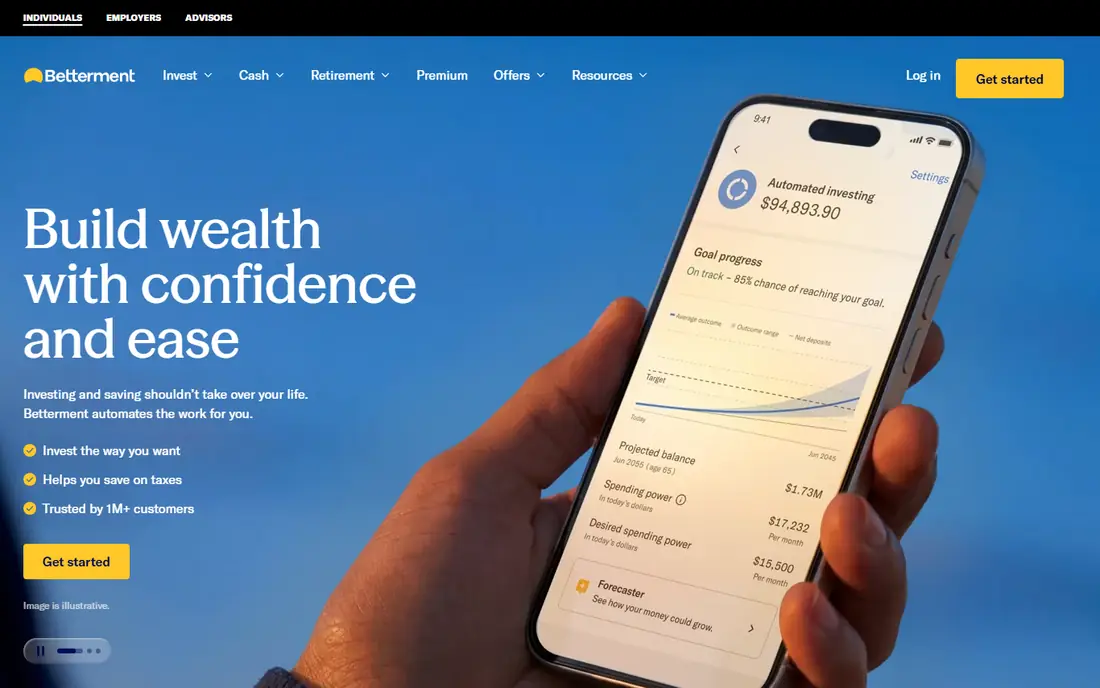
Betterment suits investors who want to set a goal, fund it regularly, and let the portfolio adjust. It offers taxable accounts, IRAs, and other account types, with automatic rebalancing and tax-loss harvesting features that help taxable investors manage tax drag. The Digital plan is accessible with no stated minimum in many comparisons, while Premium adds unlimited human advisor access at a higher fee and minimum.
The trade-off is that human advice costs more. If you want regular advisor contact, check the Premium minimum and fee before you assume it is included. For hands-off investors who rarely need an advisor, the Digital plan covers the core job well.
- Goal-based planning and automatic rebalancing
- Tax-loss harvesting on eligible plans
- Human advisor access on Premium
- Premium plan needs a high minimum
- Fees rise with the Premium tier
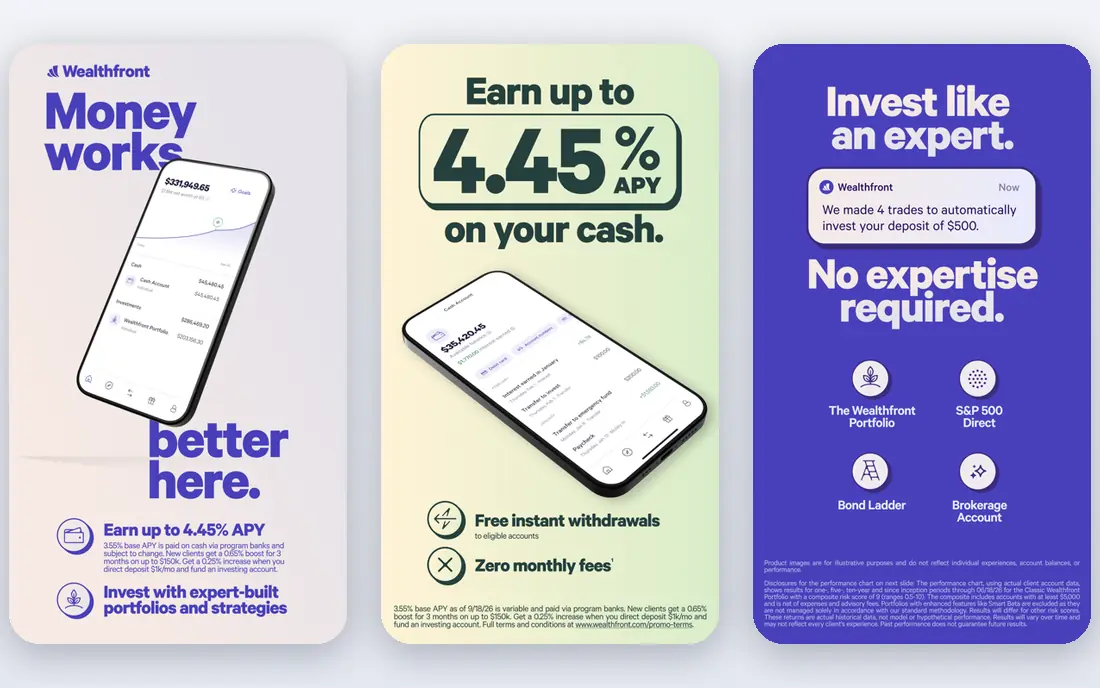
Wealthfront appeals to tax-sensitive investors with taxable accounts. Its automated tax-loss harvesting runs daily in third-party comparisons, which can help offset gains over time, though results depend on your tax situation and account mix. The minimum is modest, and the fee is a flat annual percentage.
If you want to talk to a human advisor, Wealthfront is not the best fit, because it is built as a digital-first service. It also offers less value inside an IRA, where tax-loss harvesting does not apply in the same way. Use it when automation and tax management matter more than advisor calls.
- Daily tax-loss harvesting in comparisons
- Low minimum for a robo-advisor
- Clear automated portfolio management
- No human advisor access
- Tax features help taxable accounts most, not IRAs
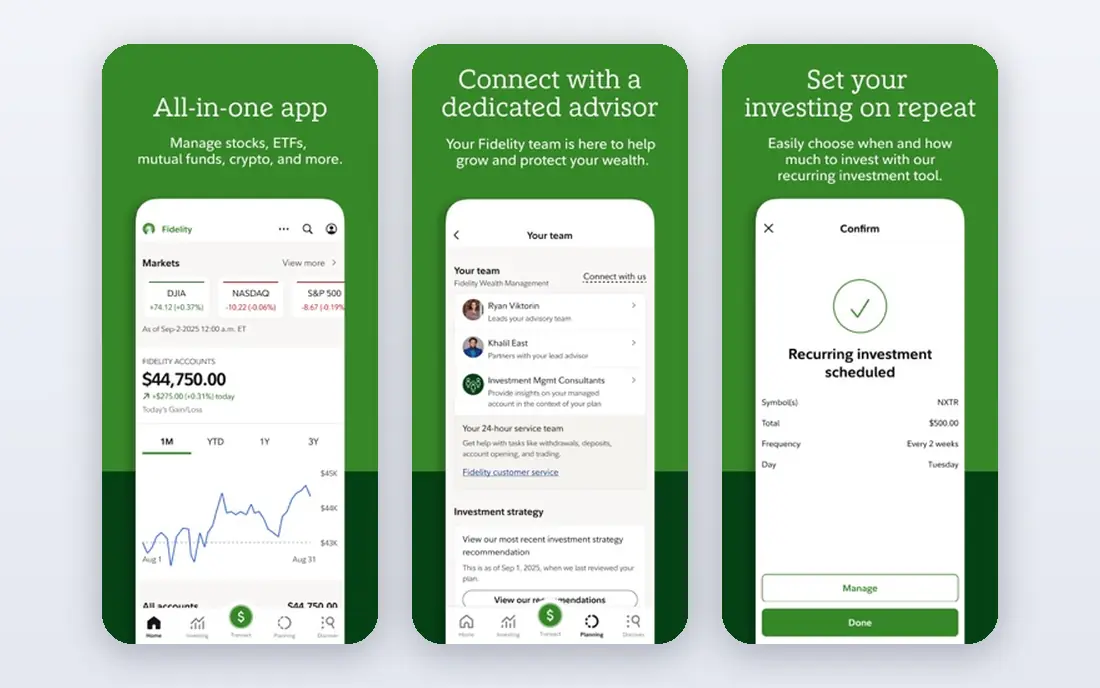
Fidelity Go is one of the easiest ways for a beginner to start automated investing. There is no minimum to open in comparisons, only a small amount to start investing, and no advisory fee for balances under $25,000. At higher balances, a percentage fee applies and coaching access becomes available.
That structure makes Fidelity Go ideal for early savers who want a trusted brand and a simple portfolio. Larger investors should compare the fee above $25,000 with other robo-advisors, and check whether the coaching and planning tools match what they need.
- No advisory fee under $25,000 in comparisons
- Low amount needed to start investing
- Coaching access at higher balances
- Advisory fee applies above $25,000
- Tax-loss harvesting is limited compared with Wealthfront
Schwab Intelligent Portfolios
Best for: Fee-conscious investors
Schwab Intelligent Portfolios stands out because it charges no management fee in comparisons, though underlying fund expenses still apply. That makes it attractive for investors who dislike percentage fees, especially at larger balances. It also connects well to Schwab brokerage and banking accounts, which helps investors who already use Schwab.
The main catch is the minimum and the cash allocation. You need a larger starting balance than with Fidelity Go or Betterment, and part of the portfolio sits in cash, which can lower returns when markets rise. Check the current cash allocation and minimum before you move a large balance.
- No management fee in comparisons
- Broad account types
- Strong brokerage and banking links
- Higher minimum than some rivals
- Cash allocation can drag returns in some market conditions
Empower offers two useful layers. Its free tools let anyone track net worth, accounts, and retirement planning in one dashboard, while its managed service pairs algorithmic portfolios with human advisors for larger clients. That combination suits investors who want a full picture of their wealth, not just one investment account.
Managed investing needs a high minimum and carries a higher fee than a pure robo-advisor, with tiered pricing that falls as balances grow. If your balance is below the minimum, use the free tools for planning and choose a lower-cost robo-advisor for investing.
- Free net-worth dashboard and planning tools
- Dedicated advisors for managed clients
- Tiered fees fall at larger balances
- High minimum for managed investing
- Fee is higher than pure robo-advisors
Vanguard Digital Advisor suits investors who trust low-cost index investing and want a disciplined, automated portfolio. Its fee is lower than most robo-advisors in comparisons, and its portfolios lean on broad index funds rather than complex strategies. That simplicity helps long-term investors avoid chasing trends.
It is less suited to investors who want detailed financial planning or regular advisor calls. If you want a full planning relationship, a hybrid service such as Empower or Betterment Premium may fit better, even at a higher fee.
- Low fee in comparisons
- Vanguard index funds at the core
- Simple, disciplined portfolios
- Limited human advisor access
- Planning tools are narrower than hybrid rivals
SoFi Automated Investing suits people who already use SoFi for banking or loans and want investing in the same app. Onboarding is straightforward, portfolios are automated, and the broader SoFi app keeps cash, credit, and investing in one place. That convenience matters for beginners who dislike juggling several apps.
Because fee details have varied in third-party comparisons, confirm the current fee and minimum on the SoFi site before you invest. Also check tax-loss harvesting and account types, since SoFi is simpler than tax-focused rivals.
- Simple onboarding
- Links to SoFi banking and lending products
- Human guidance options in comparisons
- Fee and minimum details have varied across sources
- Tax tools are more limited than Wealthfront
Acorns helps people who struggle to invest regularly. Round-ups invest spare change from purchases, while recurring investments add a set amount on a schedule. That habit-building design suits beginners and younger savers who want investing to feel automatic.
The flat fee needs care at very small balances, because $3 a month is a large percentage of a $100 account. As the balance grows, the fee becomes less significant. If you already invest larger amounts regularly, a percentage-fee robo-advisor may cost less in relative terms.
- Round-ups and recurring investments build a habit
- Simple plans for individuals and families
- Easy to start with small amounts
- Flat monthly fee can be high as a percentage of a tiny balance
- Less suited to complex planning
How we picked these
We compared official fee, minimum, and feature pages, plus third-party fee comparisons, and checked that each homepage loads and matches the product. We favored apps with clear fees, broad account types, automatic rebalancing, and honest limits on advisor access. We did not claim hands-on testing, and where fees varied across sources we wrote See website. This article is educational only and is not financial advice.
How to choose a wealth app
Start with your balance, your need for advice, and your tax situation. Those three factors narrow the list faster than any feature table.
Compare total cost, not just the headline fee
Add the management fee, underlying fund expenses, and any cash drag from required cash allocations. A free management fee with a large cash allocation can cost more than a low percentage fee on a fully invested portfolio. Check the current fee schedule before you transfer funds.
Match advisor access to your needs
Pure robo-advisors suit investors who are comfortable without human help. Hybrid services suit investors who want planning, tax guidance, or reassurance during market falls. Do not pay for advisor access you will never use, and do not skip it if a major life event needs planning help.
Check account types and tax tools
Make sure the app supports the accounts you need, such as taxable accounts, Roth IRAs, traditional IRAs, and 529 plans where relevant. Tax-loss harvesting helps taxable accounts most, while IRA investors should focus on fees, diversification, and contribution limits.
Start small and review yearly
Fund a new app with an amount you can afford to leave invested, set recurring contributions if that fits your budget, and review fees, allocation, and goals once a year. Avoid frequent switching, because transfers and tax events can erase small fee savings.
Sources
- https://www.betterment.com
- https://www.wealthfront.com
- https://www.fidelity.com
- https://www.schwab.com
- https://www.empower.com
- https://www.vanguard.com
- https://www.sofi.com
- https://www.acorns.com
- https://www.mymillennialguide.com/best-robo-advisors/
- https://www.unbiased.com/discover/financial-advice/empower-personal-strategy-review
Frequently asked questions
What is the best wealth management app for beginners?
Fidelity Go and Betterment are strong starting points for beginners, because both offer simple onboarding and automated portfolios. Fidelity Go suits smaller balances with no fee under $25,000 in comparisons, while Betterment suits goal-based investors who want planning tools.
Are robo-advisors safe?
Robo-advisors offered by established firms typically hold client assets with a custodian and carry SIPC protection for brokerage accounts, but investing itself carries market risk and SIPC does not protect against market losses. Check the custodian, disclosures, and account protection details on each provider site before investing.
How much do wealth management apps charge?
Fees vary widely, from no management fee at Schwab Intelligent Portfolios in comparisons to around 0.89 percent per year at Empower for managed clients. Always add fund expenses and check cash allocation, because those costs affect long-term returns.
Do I need a human financial advisor?
Not everyone does. Automated portfolios suit investors with straightforward goals and a long horizon. A human advisor helps more with complex tax planning, estate issues, business income, or major life changes, and hybrid services offer a middle path.
Can I use a wealth app for retirement accounts?
Yes, most apps on this list support IRAs and taxable accounts, and some support other account types. Check contribution limits, withdrawal rules, and tax treatment for your account type, and consider professional tax advice for large rollovers.
What is the minimum to start investing?
Minimums range from no minimum to open at Fidelity Go in comparisons, to $5,000 at Schwab Intelligent Portfolios, to $100,000 for Empower managed investing. Choose an app whose minimum fits your current balance, and avoid stretching to meet a minimum you cannot sustain.