Best Workout Tracker App in 2026: 9 Apps Compared
By ToolNimba Editorial Team October 28, 2026 11 min read

- Top pick
 Strong
Fast, minimal gym logging
Starting priceFreeCheck out StrongRead our review - Runner-up
 Hevy
Social gym logging
Starting priceFreeCheck out HevyRead our review - Also great
 JEFIT
Large exercise library and programs
Starting priceFreeCheck out JEFITRead our review
How we researched this
We compared official pricing and feature pages, app store listings, privacy policies and public user reviews. Prices change, so check the provider's site before you pay.
Key takeaways
- Strong and Hevy are the best simple gym loggers, with fast set entry and clear progress charts.
- Fitbod and Alpha Progression suit lifters who want suggested weights and reps, rather than just a blank log.
- Boostcamp is the best choice for following coach built programs, with a large program library on its free tier.
- Nike Training Club is the best free guided option for home and gym workouts that need no gym log at all.
Quick comparison
| Name | Best for | Starting price | Free plan | |
|---|---|---|---|---|
| Strong | Fast, minimal gym logging | Free | Yes | Visit |
| Hevy | Social gym logging | Free | Yes | Visit |
| JEFIT | Large exercise library and programs | Free | Yes | Visit |
 Fitbod | AI generated adaptive workouts | $12.99 per month | Free trial | Visit |
 Boostcamp | Coach built programs | Free | Yes | Visit |
 Alpha Progression | Guided progressive overload | Free | Yes | Visit |
 Nike Training Club | Free guided workouts | Free | Yes | Visit |
 Strava | Tracking runs, rides, and workouts | Free | Yes | Visit |
 Caliber | Coach designed strength plans | Free | Yes | Visit |
The best workout tracker apps
A workout tracker should be fast between sets, clear about progress, and honest about what it does next. We compared simple loggers, program followers, adaptive planners, and guided workout apps, so you can pick by training style rather than by app store rank alone.
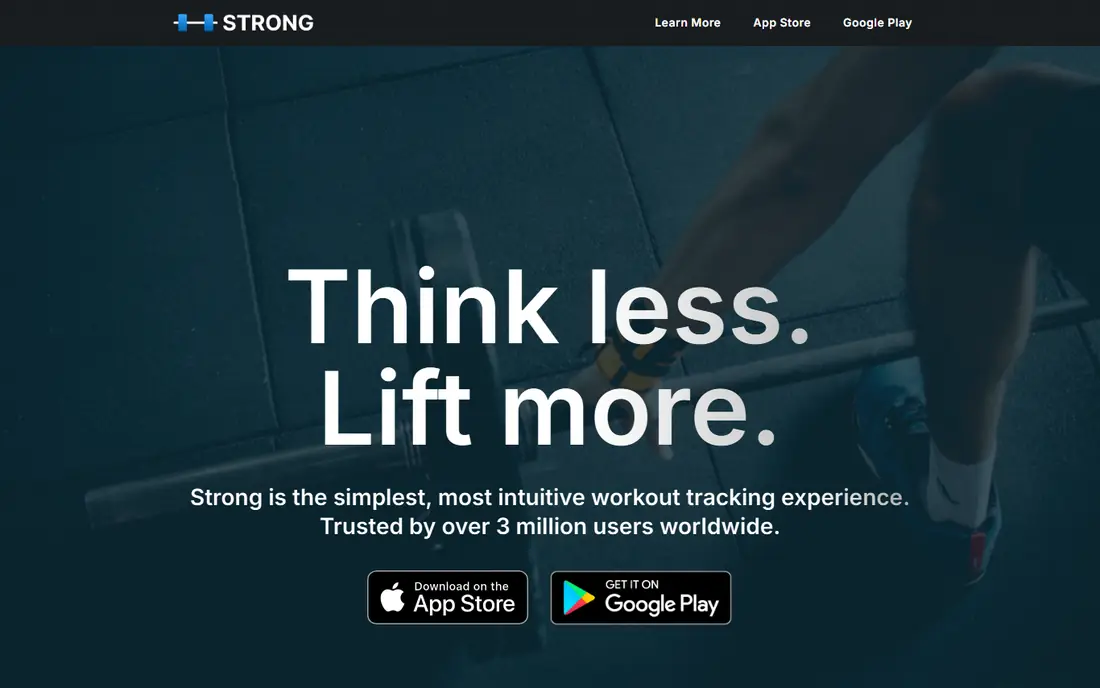
Strong is the logger we recommend first for lifters who already know their program. Start a workout, tap sets as you finish them, and the app records weight, reps, and rest without extra screens. Progress charts show personal records and volume over time, and the interface stays calm even during a heavy session.
The free plan caps the number of routines you can save, with recent app store comparisons listing three routines on free. Pro is listed at $4.99 per month or $29.99 per year in recent comparisons, and it adds unlimited routines, CSV export, and deeper analytics. If you want a digital notebook that never gets in the way, Strong is a strong starting point.
- Very fast set entry
- Clear progression charts
- Apple Watch support and offline logging
- Free plan caps routines
- Advanced export and analytics need Pro
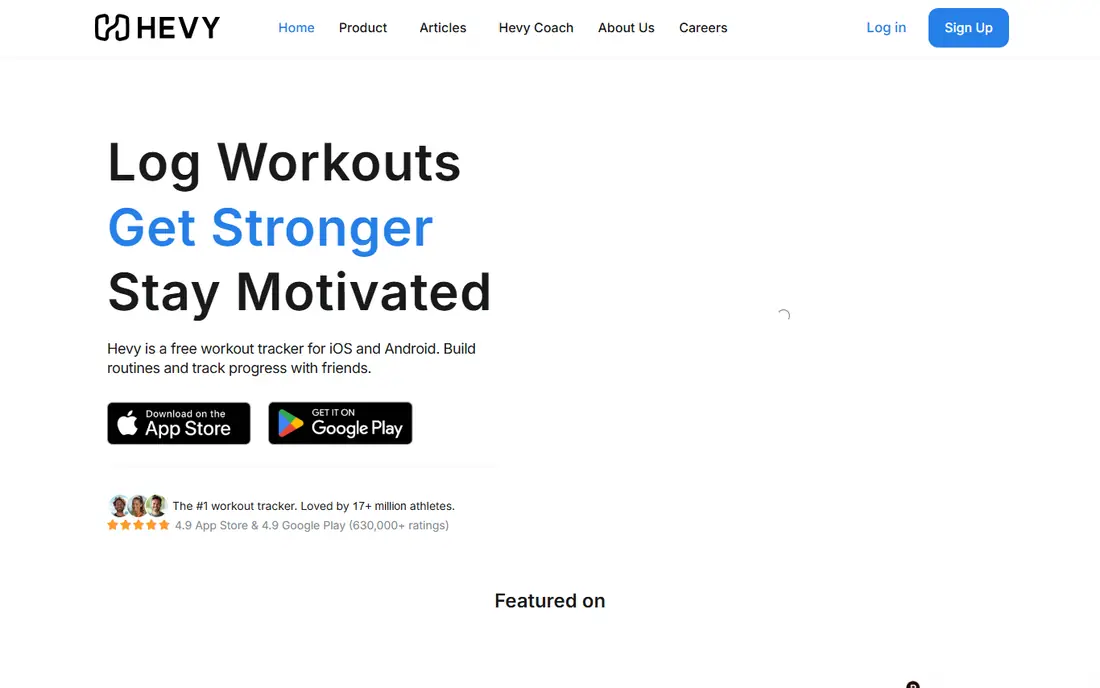
Hevy combines a clean gym log with a social feed, which helps if training with friends keeps you consistent. Build routines from templates, log sets quickly, and share workouts with people you follow, while progress photos and body measurements track change beyond the barbell. The app runs on iOS, Android, web, and watches, with offline logging for gyms with weak signal.
Free limits include capped routines and custom exercises in recent comparisons, with Pro listed at $2.99 to $3.99 per month or $23.99 per year depending on the page. Hevy suits lifters who want a modern log with a community layer, without the complexity of a full coaching app. If you train alone and want the fastest log, Strong is slightly simpler.
- Clean logging with templates
- Social feed to follow friends
- Progress photos and body measurements
- Free plan caps routines and custom exercises
- Some features need Pro

JEFIT is the pick for lifters who want a deep exercise library and ready made programs. You can search by muscle group and equipment, follow community routines, and track body measurements alongside lifting progress. Animated guides and muscle maps help when you meet an unfamiliar movement in a new program.
The free version is ad supported, and Elite is listed at $12.99 per month or $69.99 per year in recent comparisons, adding advanced analytics and adaptive planning. JEFIT feels busier than Strong or Hevy, but that depth is the point: if you like browsing programs and learning new movements, it gives you more to explore.
- More than 1,400 exercises with guides
- Large community program library
- Body measurement and rest timer tools
- Free version includes ads
- Advanced analytics and adaptive plans need Elite
Fitbod builds each session for you, rather than asking you to pick every exercise. Tell it your equipment, available time, and training goal, and it suggests weights, reps, and exercises that adapt as you log results and recovery. That makes it a good fit for home gym users, hotel gyms, and lifters who want variety without writing a program.
There is no permanent free plan, only a trial, with Elite listed at $12.99 to $15.99 per month or $79.99 to $95.99 per year depending on the page and billing period. Fitbod is less suited to powerlifters following a strict competition program, where a fixed plan matters more than variety. For general strength training with guidance, it removes a lot of planning friction.
- Workouts adapt to equipment, recovery, and past performance
- Large exercise library with videos
- Apple Watch and health app sync
- No permanent free plan
- Price higher than simple loggers
- Generated workouts need review for sport specific goals
Boostcamp is the best choice if you want to follow a proven program rather than build your own. Its library includes thousands of programs, with many coach designed plans for powerlifting, bodybuilding, and general strength, plus tools like a plate calculator, rest timer, and exercise swaps. The free tier includes a large program library, which is rare among program apps.
Pro is listed at $14.99 per month or $59.99 per year in recent comparisons, adding unlimited tools and an AI coach in some pages. Boostcamp suits lifters who trust a structured plan and want to see what others on the same program are doing. If you prefer total freedom in every session, Strong or Hevy will feel less constrained.
- Large library of coach built programs
- Plate calculator and rest timer
- Community forums per program
- Less flexible for fully custom programming
- Some advanced tools need Pro
Alpha Progression sits between a simple log and a full coach. The free version includes unlimited logging, custom plans, exercise videos, a rest timer, body measurements, and CSV export without ads. Pro adds a plan generator, a workout generator, and set by set weight and rep recommendations that respond to your logged performance, plus progress charts and periodization tools.
Pro is listed at $12.99 per month or $79.99 per year in recent reviews, with a 14-day trial on the annual plan for eligible new users. The guidance is only as good as your entries, so log reps honestly and keep technique consistent. For lifters focused on progressive overload who want clear next targets, Alpha Progression is a thoughtful middle ground.
- Permanent free version with unlimited logging
- Set by set weight and rep suggestions in Pro
- 795 exercise videos
- Best guidance needs Pro
- Recommendations depend on accurate logging
Nike Training Club is the best free guided workout app on this list, and it needs no gym log to be useful. Workouts cover strength, conditioning, core, yoga, Pilates, and recovery, with trainer led sessions and multi-week programs for home and gym training. You can filter by equipment, time, and level, which helps when you train in a small space or while traveling.
It is not a replacement for Strong or Hevy if you want detailed set by set lifting records. NTC tracks completed workouts and activity, but it does not offer the same progression charts for barbell lifts. Pair it with a logger if you lift seriously, or use it alone if guided sessions are what keep you moving.
- Completely free with no subscription
- Trainer led strength, HIIT, yoga, and mobility workouts
- Programs for gym and home
- Not a detailed gym set logger
- Limited custom program building
Strava is the default tracker for runners and cyclists, and it also records general workouts, walks, and gym sessions. GPS tracking, segments, routes, and a social feed make outdoor training more engaging, and it syncs with most watches, bike computers, and fitness apps. The free plan covers core activity tracking, while a paid subscription adds deeper analysis, training plans, and route tools.
Strength lifters will find its gym logging basic next to Strong or Hevy, with no detailed set progression system. Strava suits people whose main training is cardio, or lifters who want one place for runs and rides alongside a separate gym log. If community and routes motivate you, Strava is hard to replace.
- Free tracking for runs, rides, walks, and gym workouts
- Strong community and route features
- Syncs with watches and apps
- Detailed training analysis needs a paid subscription
- Strength logging is basic compared with gym apps
Caliber offers coach designed strength training with a free core experience, which suits lifters who want structure without paying for a full coaching service. Programs are built around strength goals, and the app tracks workouts, progression, and personal records in a clear layout. It is a good middle option between a blank logger and a high priced coaching app.
The limits are scope and price clarity. Caliber is focused on strength, so runners and class based trainers will get less from it, and paid coaching tiers should be checked on the vendor site before subscribing. If you want a guided strength plan and you do not want to write your own program, Caliber deserves a trial alongside Boostcamp and Fitbod.
- Coach designed strength programs
- Free core training plans
- Progress tracking for strength goals
- Less suited to general cardio tracking
- Some coaching features need a paid plan
How we picked these
We compared official feature pages, app store listings, and pricing pages, and we checked public reviews for logging speed, program quality, and free plan limits. We included simple loggers, adaptive planners, program followers, and guided workout apps, because a runner, a powerlifter, and a home exerciser need different tools. We kept only apps that are actively maintained and available on iOS or Android in October 2026, and we used app store pricing where vendor web pricing was not published.
How to choose the right workout tracker
Match the app to how you train, not to how many features it lists, because the best tracker is the one you use between sets.
Lifting, cardio, or guided classes
Lifters who know their program should pick Strong or Hevy for fast logging, or JEFIT for a larger library. Lifters who want a plan should try Boostcamp, Alpha Progression, or Caliber, and lifters who want adaptive sessions should try Fitbod. Runners and cyclists should start with Strava, and people who want guided classes should start with Nike Training Club.
Free plan or paid plan
Check routine caps, ad support, and whether progress charts, export, and program tools need a paid plan. Strong and Hevy free plans cap routines, JEFIT free includes ads, and Fitbod has no permanent free plan. A free plan that covers your core training is a good long-term home, while a plan that blocks a daily habit will push you to pay.
Offline and watch support
Gyms often have weak signal, so offline logging and watch support matter more than they seem at first. Strong, Hevy, and Fitbod offer watch apps, and most gym loggers support offline entry with later sync. Test logging a full workout in your gym before you commit to a paid plan, including rest timers and set editing.